
Reviewed · LEXINGTON AND CONCORD TOURS
Full-Day Minivan Tour of Revolutionary Boston, Lexington and Concord
Boston history hits harder with a guide. This full-day minivan route strings together the major Revolutionary-era stops in Boston, Lexington, and Concord, with quick orientation visits and story-based narration that helps the locations click into place.
I really like two things about this kind of day. First, the air-conditioned private minivan keeps the whole schedule sane, especially if you arrive after jet lag or after a walking tour day. Second, the tour is built around a guide who can turn well-known names into clear scenes, and the writing style you hear is the kind that makes facts stick, not just get recited.
The main drawback is also the nature of the format: it is a packed, stop-heavy day. Several sights are brief photo and orientation moments, so if you like to linger and read every exhibit wall, you may want to plan a follow-up visit on your own.
In This Review
- Key highlights that make this Revolutionary route work
- Touring Boston, Lexington, and Concord without fighting transit
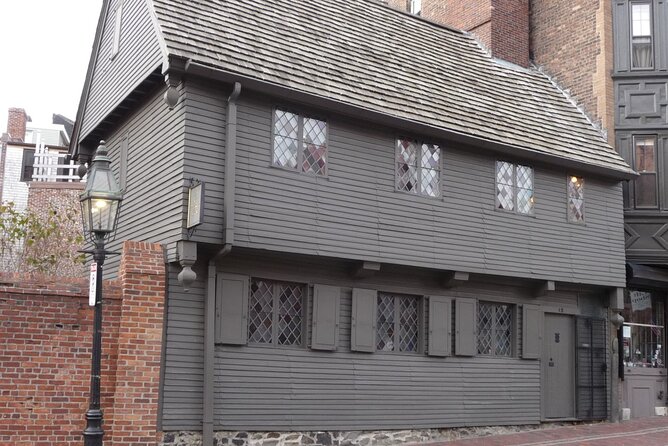
- Starting at the Paul Revere House: the architecture lesson you can see
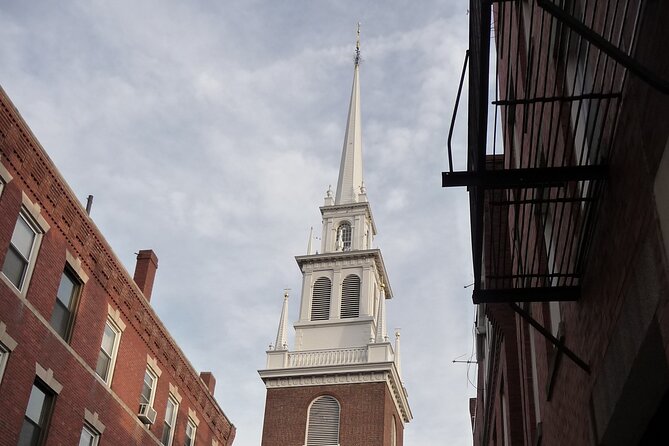
- Old North Church and USS Constitution: the war story in two moods
- Faneuil Hall, Old State House, and Granary Burying Ground: where arguments became action
- Boston Common, King’s Chapel, Louisburg Square, and Acorn Street: the city you can actually walk
- Old South Meeting House and the Tea Party Ships Museum: seeing anger in public space
- Hancock-Clarke House and Buckman Tavern: the chase moments before Lexington
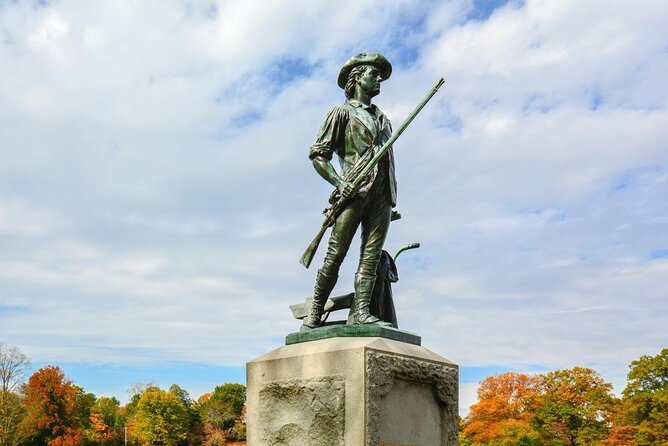
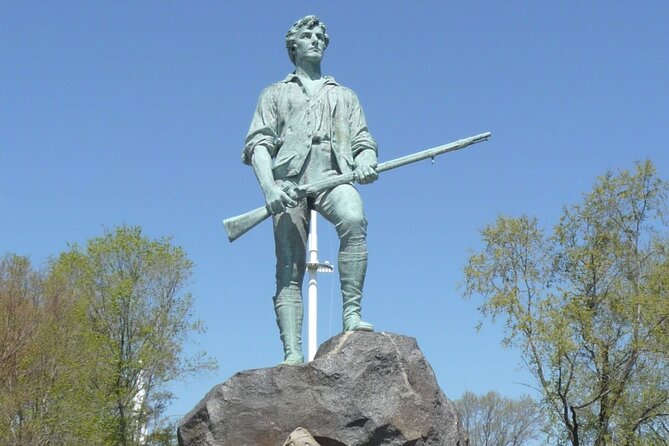
- Lexington Green and the debate about origins: a site with one big story
- Old North Bridge in the national park: the best chance to slow down
- Concord writers and thinkers: Orchard House, Emerson House, and Walden Pond
- Washington’s Headquarters and Longfellow House: the era comes full circle
- Price, group size, and when the $975 per group feels fair
- Who this tour suits best, and who might want a different style
- Should you book this Revolutionary Boston and Concord minivan tour?
- FAQ
- How long is the full-day minivan tour?
- How much does the tour cost?
- Is pickup offered?
- Is the tour private?
- What transportation is included?
- Is lunch included?
- Are the stops free in terms of admission?
- What language is the tour offered in?
- Are tickets handled digitally?
- Can I cancel and get a full refund?
Key highlights that make this Revolutionary route work
- Private group up to 6 means you control the pace more than on a big bus, and pickup feels more personal
- Air-conditioned minivan plus bottled water keeps you comfortable across Boston, Lexington, and Concord
- Story-driven stops connect names like Paul Revere and Sam Adams to what happened nearby
- Old North Bridge time includes a longer visit with an 8-minute video and exhibits, not just a quick look
- Concord literary sites and Thoreau country balance Revolutionary history with what inspired later American voices
- Packing a lot in 6 hours is realistic when you care about seeing the key places first, then going deeper another day
Touring Boston, Lexington, and Concord without fighting transit
A good history day needs two things: good order and good logistics. This tour uses a comfortable, air-conditioned minivan and offers pickup at your home, hotel, or another convenient spot, which saves you the hassle of stitching together trains, rideshares, and walking between scattered sites.
The schedule is designed for “get your bearings fast.” Many stops are short exterior looks or quick entry moments, so you leave with a mental map of what to prioritize later. If you have limited time in Boston, or if you already did a walking tour, this format can feel like a smart reset day.
Because it’s a private tour, your group stays together. That matters at places where timing and crowd flow can be unpredictable, especially around the Freedom Trail-type areas in central Boston.
More trips out to Lexington and Concord:
- 90-Min Narrated Trolley Tour of Lexington and Concord, MA★ 4.5 · 358 reviews
- From Boston: Full-Day Historical Lexington & Concord Tour★ 4.8 · 111 reviews
- Lexington & Concord 250th Birthday Tour with Concord Museum Entry★ 4.5 · 83 reviews
Starting at the Paul Revere House: the architecture lesson you can see
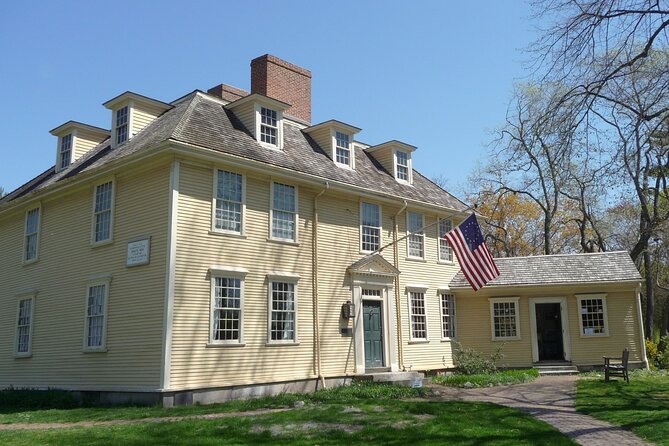
You begin at the Paul Revere House, often described as the oldest house in Boston proper. This stop is more than a name on a sign. You get a real sense of how Puritan-era architecture shaped New England building styles that lasted for generations.
It’s also a great “tone-setter” for the whole day. Before you move to churches, meeting houses, and battle-adjacent landmarks, the Revere House gives you a visual baseline for what “Boston life” looked like before the shooting starts.
The time is short, so treat it as an orientation stop. If you want to read every last detail at your own speed, you’ll likely want to come back later. But as a first introduction to the era, it does its job quickly.
Old North Church and USS Constitution: the war story in two moods
Next up is Old North Church and the historic site connected to Longfellow’s famous line about signals. Even if you’ve heard the phrase before, hearing the explanation in context helps it feel less like a quote and more like a plan made under pressure.
From there, you shift to USS Constitution, the oldest commissioned warship in the world. This is where the narration tends to land differently. Instead of political debate, you get material power, maritime danger, and why naval strength mattered so much in the Revolutionary period.
Right after USS Constitution, you also get time to visit a museum and see exhibits related to the events around that area. The pairing is useful: ship exterior first, museum context second. It helps you understand what you’re looking at, not just that it is old.
If you care about military history as much as political history, this section is a strong value chunk of the day.
Faneuil Hall, Old State House, and Granary Burying Ground: where arguments became action
Faneuil Hall Marketplace is called the cradle of liberty for a reason. You see the setting where the Sons of Liberty met to plan and argue their way toward revolution. Even if you only get a quick look, you get the geography of the movement, and that makes later stops easier to follow.
Old State House adds the darker edge. Nearby events tie into the Boston Massacre, and this is where “protest” starts to feel real and dangerous. This kind of stop works best when your guide links it back to cause and effect, so you understand why tension escalated rather than just collecting names.
Granary Burying Ground is a different kind of payoff. Seeing gravesites of Samuel Adams, Paul Revere, John Hancock, and other Revolutionary-era figures turns history into faces. It’s also a reminder that revolution was made by people with families, reputations, and stakes.
These stops are brief, but they are deliberately chosen as your personal “map markers.” You’ll likely remember these exterior looks later when you’re reading or watching documentaries.
Boston Common, King’s Chapel, Louisburg Square, and Acorn Street: the city you can actually walk
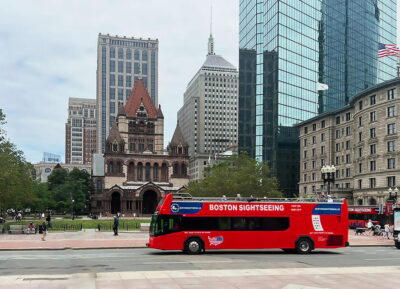
Boston Common is the country’s oldest public park, established in the 1600s. You get a short visit, but it helps you picture how the city’s public spaces worked as part of everyday life, not just as background in a history book.
King’s Chapel is a sharp contrast. Built in 1742 to replace an earlier wooden church, it’s a reminder that the city changed its institutions even while old tensions simmered. It’s a fast stop, but it gives you the “Boston church evolution” context that many self-guided routes miss.
Then you move into Beacon Hill flavor with Louisburg Square and Acorn Street. Acorn Street is Boston’s most photographed street, and you can see why. The point here is not endless walking, it’s perspective. You’ll spot the kinds of streets and neighborhoods that shaped the day-to-day world of the people in your history lesson.
If you want real quiet time for photographs, this tour will not feel like a slow stroll. But it is an efficient way to cover the classic visuals without losing hours getting around.
A few other harbor-city days to consider


Old South Meeting House and the Tea Party Ships Museum: seeing anger in public space
Old South Meeting House is where meetings that led to the Boston Tea Party come into focus. This stop helps you connect ideas to action, because it shows you where people gathered to decide what to do next.
Then comes Boston Tea Party Ships & Museum, with replica ships in the harbor. This is a hands-on style moment compared to the exterior looks. You get a sense of the scale and setting, and the museum format gives you a break from constant street-facing narration.
This segment is valuable because the events here were not just violent theater. They were political theater with messages aimed at specific audiences. The museum and ship replicas help you picture how it would have looked from the water and from the shore.
If your group includes teens or first-time visitors, this is often where attention stays high, because you can connect story to a physical scene.
Hancock-Clarke House and Buckman Tavern: the chase moments before Lexington
Hancock-Clarke House is a pivotal stop in the countdown. You see where Paul Revere woke Sam Adams and John Hancock to warn them the British might be coming. The key value here is the immediacy. It compresses days of planning into one urgent night.
Buckman Tavern brings the next step closer to the morning of the fighting. The Lexington militia awaited the arrival of British troops before the skirmish on Lexington Green. Again, the “why here” matters. The stop helps you understand that movement and waiting were part of the same story.
These are short stops, so keep expectations realistic. You’re not here for a long sit-down. You’re here to understand the sequence, then move on with your mental timeline intact.
Lexington Green and the debate about origins: a site with one big story
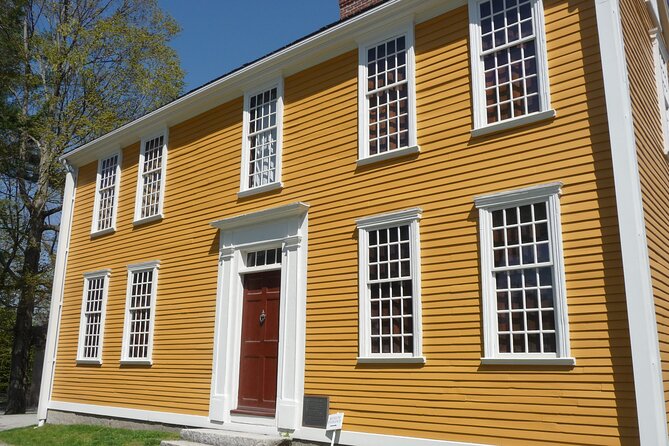
Lexington Green gives you more time than most stops, about 15 minutes. This is where you go from political talk to the first shots of the next day, and it is also the place where many people associate the origin of the Second Amendment idea.
Even if you’ve read about Lexington Green before, seeing it in the flow of the day is powerful. It turns the site from an entry in a guidebook into a moment inside a chain of decisions, warnings, and preparations.
The practical advice: wear comfortable shoes and be ready to stand. The time is long enough to absorb, but not long enough to wander. If you want to spend extra time here, you can always add your own return later.
Old North Bridge in the national park: the best chance to slow down
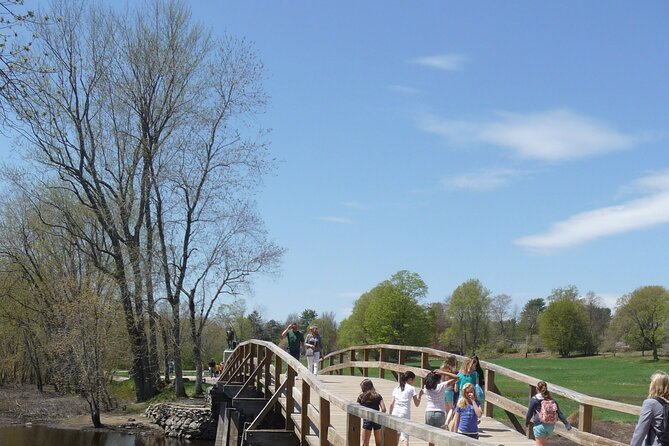
Old North Bridge is a longer stop, with about 40 minutes in the visitors center and surrounding exhibits. You also get an eight-minute video presentation tied to the fateful night in 1775 when shots were first fired by patriots at the British.
This stop is the anchor of the whole “how it felt” section of the day. The video and exhibits help make the night feel specific, not vague. It’s the rare moment in an otherwise fast schedule where you actually get to sit with details for a bit.
If you only remember one stop from the day, make it this one. It’s built for understanding, not just sightseeing.
Concord writers and thinkers: Orchard House, Emerson House, and Walden Pond
Now you shift from Revolution to the ideas that followed. That change is not random. Concord is where American writing and thinking took on a particular shape, and the tour includes the key names tied to that tradition.
Louisa May Alcott’s Orchard House connects to Little Women and shows where Alcott and her sisters grew up and wrote. It’s a calmer stop, but it lands with emotion for anyone who loves classic American literature, especially younger readers.
Ralph Waldo Emerson House is about influence. This is a quick look, but it helps you understand why Concord became a magnet for big ideas.
Walden Pond State Reservation gives you about 10 minutes at Thoreau’s pond. Even with limited time, you get the sense of the place that sparked one of his most famous works. If you’re the type who likes to read nature writing, this stop is a worthwhile payoff after the heavier Revolutionary sites.
Washington’s Headquarters and Longfellow House: the era comes full circle
The day ends with Longfellow House Washington’s Headquarters National Historic Site. This stop matters because it ties the Continental Army to later literary life, since the site was George Washington’s home when he commanded the army and later became Henry Wadsworth Longfellow’s home.
It is a smart closing move. You end not just with one historical moment, but with how the places kept living in American culture after the revolution.
Timing is tight like the rest of the route, so think of this as a “see it, connect it, remember it” finale. If you want a deep reading of exhibits here, plan a separate half day or museum-focused visit.
Price, group size, and when the $975 per group feels fair
This tour costs $975 per group, up to 6 people, for about six hours. That sounds steep if you’re thinking in per-person terms, but group pricing is what makes it workable.
Here is how I’d judge the value. You’re paying for three things that are hard to DIY without time and stress:
- a private minivan and pickup, which replaces multiple transit steps
- a guided narrative that connects stops into one chain of cause and effect
- a tight “greatest hits plus context” schedule across three connected areas
When it’s priced by group, it can be good value for families and friend groups who want a history day without playing taxi driver. It also tends to be a smart move if you are visiting Boston for the first time and want a structured primer before you go independent.
One practical data point: the experience is booked about 149 days in advance on average. That’s your hint to book early if you have a specific date window, because private group tours can go fast.
Who this tour suits best, and who might want a different style
This is a strong fit if you want to:
- get history context fast instead of piecing it together on your own
- cover Boston, Lexington, and Concord in one day without logistics pain
- travel with a small group and stay together in one vehicle
- prefer guided storytelling over reading everything on your own
It may not be ideal if you:
- want long museum hours and lots of free time
- dislike quick stops where you see a place, learn the story, then move on
- plan to photograph every street and read every sign in detail without returning later
If you want the best of both worlds, do this first. Use the day to learn the main storyline and identify what you want to revisit.
Should you book this Revolutionary Boston and Concord minivan tour?
I’d book it if you’re short on time, you care about understanding the sequence of events, and you want the comfort of a private vehicle with a guide who can make the facts feel like scenes.
Skip it only if you are the type who needs long, quiet, self-paced visits with no schedule pressure. This tour is built for momentum and clarity, not for spending half a day inside one exhibit hall.
If you book, treat it like an intelligent first chapter. Then pick one or two places from the day for a longer return, like Old North Bridge for exhibits or whichever sites capture your interest most once you know the bigger story.
FAQ
How long is the full-day minivan tour?
It runs for approximately 6 hours.
How much does the tour cost?
It is $975 per group, up to 6 people.
Is pickup offered?
Yes. You can be picked up at your home, hotel, or any convenient location.
Is the tour private?
Yes. It is a private tour/activity, and only your group participates.
What transportation is included?
You travel in an air-conditioned minivan, with bottled water included.
Is lunch included?
No. Lunch is not included, but a lunch break time is allowed.
Are the stops free in terms of admission?
The stop details provided list admission ticket free for multiple sites. Ticketed entry details may vary by stop, but the itinerary information you have indicates free admission for the listed moments.
What language is the tour offered in?
The tour is offered in English.
Are tickets handled digitally?
Yes. A mobile ticket is offered.
Can I cancel and get a full refund?
Yes. Free cancellation is available if you cancel up to 24 hours in advance of the experience start time for a full refund.
Written up lately around the harbor
- Boston’s Beacon Hill: Private Walking Tour
★ 5.0 · 1 review - Boston’s Chinatown: Small Group Walking Tour
★ 5.0 · 1 review - Self-Guided Scavenger Hunt: Boston Back Bay & Beyond
★ 4.0 · 1 review - Flynn Cruise Port Boston to Boston hotels – Arrival Private Transfer
★ 5.0 · 1 review - Boston to Woods Hole & Martha’s Vineyard Ferry Private Chauffeur Service
★ 4.0 · 1 review - Classic Martha’s Vineyard 1-Day Escape from Boston
★ 5.0 · 1 review - Private Vacation Photoshoot with Photographer in Boston
★ 5.0 · 1 review
Lexington and Concord Tours, compared.
90-Min Narrated Trolley Tour of Lexington and Concord, MA
Read our review →
Lexington & Concord 250th Birthday Tour with Concord Museum Entry
Read our review →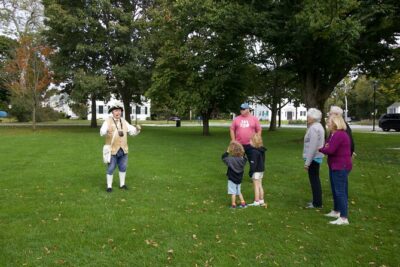
Lexington, MA Battle Green Walking Tour with Costumed Guide
Read our review →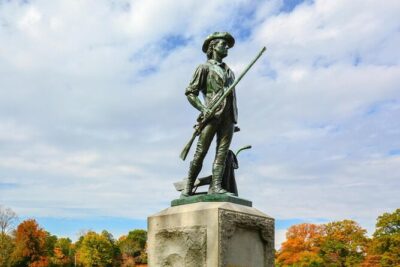
Lexington & Concord 3 hour private tour from Boston
Read our review →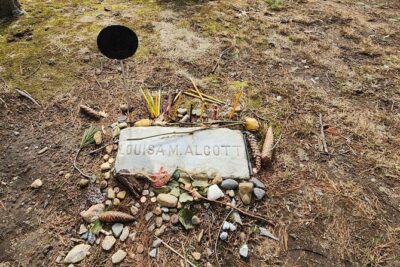
Private Day Trip to Lexington and Concord from Boston
Read our review →
Private City Tour of Boston, Lexington, and Concord
Read our review →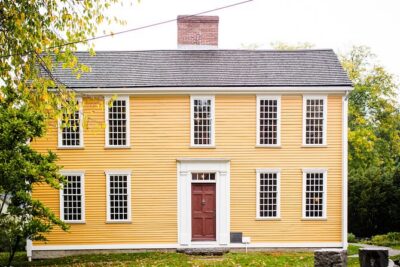
Boston Lexington and Concord Revolutionary War full day tour
Read our review →Browse the lists this tour appears in