
Reviewed · SALEM TOURS
Salem Merchants and Mansions Guided Architecture Walking Tour
Salem feels different when you learn its buildings. I love how this walk connects architectural details to the people who made Salem wealthy, and I love that you get a real historian’s tone without drowning in witch lore. One thing to plan for is that it is an outdoor route with no public restrooms along the way.
You start in the heart of town, then keep moving through a string of recognizable spots, from Derby Square to the Salem Common and the McIntire District style streets nearby. Guides like Topher, Henry, and Seán are repeatedly singled out for being friendly and story-driven, which makes the architecture feel like a living timeline.
At $36 per person for roughly 1.5 to 2 hours, it is a practical use of your time if you want the “why” behind Salem’s famous buildings, not just photos. It is also straightforward: you do not enter buildings or cemeteries, so you are paying for interpretation, not ticketed indoor exhibits.
In This Review
- Key Things That Make This Salem Walking Tour Worth Your Time
- Setting Off From Derby Square: What to Expect Before You Walk
- Old Town Hall to the Custom House: Salem Through Maritime Money
- Derby House and Narbonne House: Georgian Style and First Period Changes
- Salem Common: From Marshy Ground to the Second Empire Era
- Hawthorne Hotel and Church Street: Small Stops That Teach Big Patterns
- Witch City Mall and the Bewitched Statue: Pop Culture With a Purpose
- What $36 Buys You, and How to Judge the Value
- How to Make It Comfortable: Shoes, Weather, and Timing
- Should You Book the Salem Merchants and Mansions Architecture Tour?
- FAQ
- Where do I meet for the Salem Merchants and Mansions guided walk?
- How long is the tour, and what’s the pace like?
- Do we enter any buildings or cemeteries on this tour?
- Is the tour fully outside, and are restrooms available along the route?
- Are admission tickets included for the stops?
- Is the tour dog friendly?
- Can I get a refund if I cancel?
Key Things That Make This Salem Walking Tour Worth Your Time
- Merchants first, witch stories second, so you leave with context you can actually use on your own
- Licensed guide plus an architectural guide of Salem, which helps you keep the details straight after the walk
- A route that reads like a timeline, from maritime trade to Georgians and later Second Empire and Greek Revival
- One included admission stop, while the rest stay outside, so you can keep moving on foot
- Stops that connect architecture to movie culture, including the Bewitched statue by the end
- Small-group feel up to 40 people, plus a route designed to stay walkable and understandable
Setting Off From Derby Square: What to Expect Before You Walk
Meet at 32 Derby Square in Salem at 11:00am, and plan on about 1 hour 30 minutes to 2 hours total. You will get a mobile ticket, and confirmation arrives at booking. It runs rain or shine, so the weather will decide what you wear, not whether you walk.
This is an outdoor activity only. You will not go inside buildings or cemeteries, and that changes the whole experience in a good way: you focus on sightlines, façades, street layout, and what those exteriors say about wealth, style, and power. The tour group can be up to 40 travelers, so bring patience if you are visiting in peak season.
You can also bring dogs, since it is dog friendly, and service animals are allowed. If someone in your group cannot stand for long periods, this is not the best match, since you are on your feet for most of the tour.
More time up in Salem:
- History and Hauntings of Salem Guided Walking Tour★ 5.0 · 14,564 reviews
- Salem’s Best Ghost Tour★ 4.5 · 4,186 reviews
- Salem Voodoo, Vampires, and Ghosts Guided Walking Tour★ 5.0 · 1,931 reviews
Old Town Hall to the Custom House: Salem Through Maritime Money
The tour begins at Salem Old Town Hall, a classic start because it puts you in the right mindset: you are about to read the city through civic and commercial forces. From there, the walk pushes you out of “theme park Salem” and into the Salem that traded, built, and branded itself.
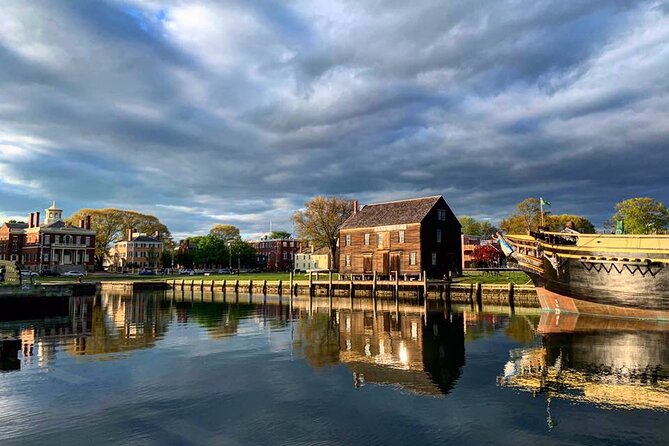
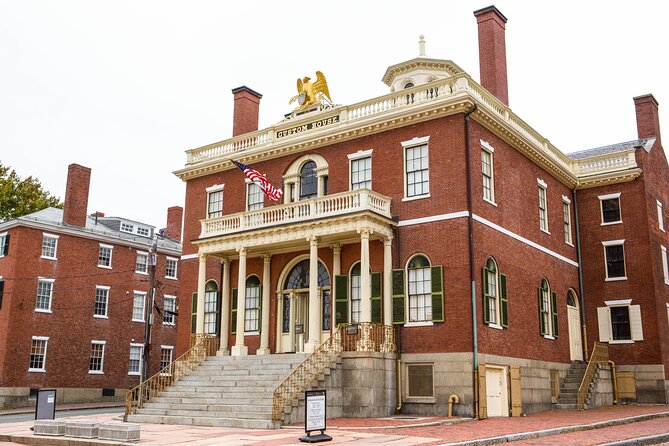
One of the most interesting early stops is the Custom House. This is where you learn about Salem’s spice trade, and you hear the story behind the city motto, including why Salem has it. Even better, you point out where the old ship-building yard used to be, near the area where you will see Adirondack chairs in the open space at the far end.
If you are wondering why these buildings look the way they do, this stop is a key. When a city gains wealth from long-distance trade, it shows up in materials, proportions, and the confident way merchants put their names on the skyline. You will start to notice that Salem architecture does not just look old, it looks purposeful.
Then the tour shifts toward a “look out, not in” approach. From near Derby Wharf, you discuss the mansions visible from that vantage point. That is an efficient trick for a walking tour: you get perspective without needing an indoor ticket.
Derby House and Narbonne House: Georgian Style and First Period Changes
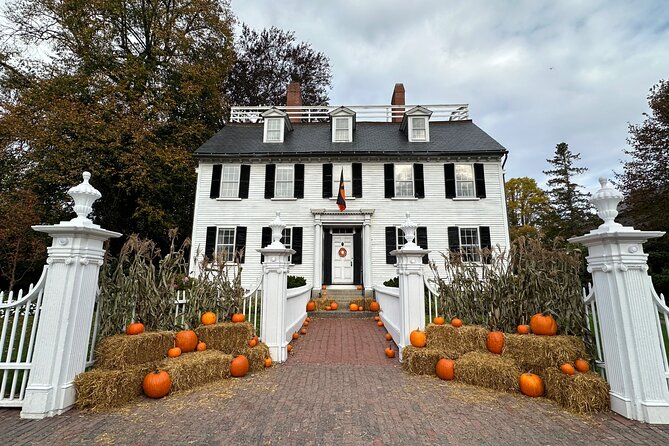
Next you work into the meat of the architecture lesson with the Derby House. Here, the focus is Georgian architecture, and the key idea is how a building that looks almost restrained can still signal major wealth. The guide ties the design choices to the rise of Salem and New England merchants, so you understand this style as a statement of power, not just an aesthetic category.
Then comes Narbonne House, which is your lesson in how old buildings were not frozen in time. You see how 17th-century First Period architecture could be modified and expanded, so the house grows as the owners’ needs and resources grow. For you, this is a helpful reminder: Salem buildings often have layers, and a straight-on photo can miss that story.
The tour keeps moving with the Daniels House Historic Site, where you get more discussion and interpretation without needing to step inside. Even when a stop is short, it matters because it adds to your mental map: you start linking specific architectural traits to specific eras instead of treating everything as “old Salem.”
Salem Common: From Marshy Ground to the Second Empire Era
If you want one stop that explains how Salem changed socially and economically, it is Salem Common. The guide points out the location tied to Hocus Pocus, but the bigger value is what happens right after that reference. You learn that the Common was once marshy, with unusable ground in the 17th and early 18th centuries.
Then the story pivots into landscaping and ambition. Salem Common evolves into a manicured pleasure park by the 19th century, and by the mid-to-late 19th century it becomes a fashionable district again, reflecting Salem’s last big gasp of wealth and mansions. You will also learn what styles show up in that phase, including Second Empire and Greek Revival, which helps you recognize what you see later around town.
This stop includes an admission ticket. Since the tour is outdoor-only overall, think of this as a specific access point or permitted area connected to the Common, not a whole indoor museum visit. You still keep your momentum, but you get one “paid entry” moment where the guide’s explanation and your experience line up.
Hawthorne Hotel and Church Street: Small Stops That Teach Big Patterns
After Salem Common, the walk keeps rewarding you with architectural commentary at the Hawthorne Hotel. Even though the stop is brief, the point is clear: you are training your eyes. You learn to notice how building scale, symmetry, and details connect back to the era that produced them.
Then you move to Peabody Essex Museum, not for an indoor tour here, but for a discussion that helps you understand the variety of collection homes associated with the museum. This is a smart pause because it gives you a next step if you want more depth after your walk. You leave knowing there is more to see, but you do not lose time trying to pack museum browsing into a walking tour.
Next is Church Street, another quick but useful exterior architecture stop where the guide helps you read the street itself as part of the story. Architecture in Salem is not just a set of stand-alone buildings, it is a grid of choices that turn wealth into neighborhoods.
Then you get to Saint Peter’s Episcopal Church, and the emphasis is on religious heritage and how religion shaped community life. The stop does not ask you to memorize doctrine. It gives you a practical lens: how a city’s beliefs and institutions show up in architecture and in the way the community organizes around those buildings.
More of Boston crossed at walking pace:

Witch City Mall and the Bewitched Statue: Pop Culture With a Purpose
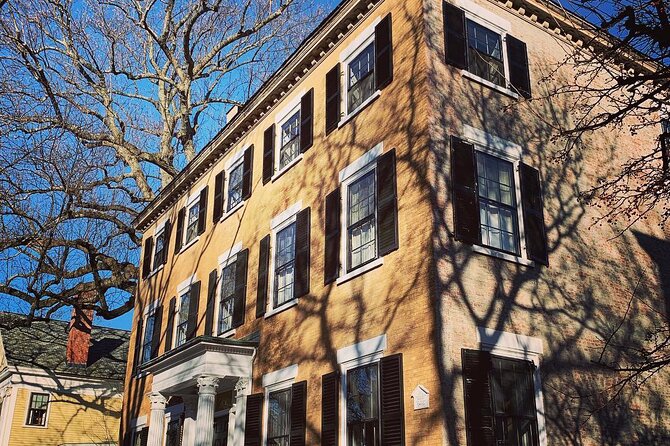
By the time you reach Witch City Mall, you are not just doing a detour to a famous name. You get one more architectural check-in, so the ending stays aligned with the tour’s theme. You also get a final stretch of recognizability, including the Bewitched Statue of Elizabeth Montgomery, which the guide discusses.
This is where the tour’s branding earns its keep. You get pop culture familiarity, but the guide uses it as a bridge so you remember where you are in Salem’s broader story. For many first-time visitors, that is exactly what you want at the end: a memorable landmark that helps you anchor the facts you learned earlier.
The tour ends at the Bewitched Sculpture in Salem, which is a friendly finish point because you can pivot to dinner or browsing without needing to backtrack. You still get the structure of a coherent walking loop, not a random “drop you here” experience.
What $36 Buys You, and How to Judge the Value
This tour costs $36 per person and runs about 1.5 to 2 hours. That is a fair price when you think about what you are actually buying: interpretation from a licensed guide and an architectural guide of Salem. You are not paying for a long museum admission day, and you are not paying extra for multiple building entries since none of the stops involve entering indoor sites.
One included element helps justify the total too: an admission ticket is included at Salem Common. At the other stops, it is more of a “view and learn” format, with admission tickets generally not included. So if your main goal is to explore exteriors and understand context, the pricing fits.
I also like the way the tour avoids the usual trap of spending half your time in transit. The route is built around walkable stops you can actually see, and the guide’s pacing keeps the story connected to what you are looking at right now.
How to Make It Comfortable: Shoes, Weather, and Timing
Wear comfortable shoes. Salem sidewalks add up quickly, and this route is designed for standing and walking rather than frequent long sit-down breaks. The guidance is clear: dress according to conditions, since the tour runs rain or shine, and you should expect to keep walking unless the guide stops for safety.
There are no public restrooms on the route, so you will want to plan ahead. Also, since you do not enter buildings or cemeteries, you cannot rely on restrooms inside stops to rescue you.
Group size can be up to 40, so it helps to show up a few minutes early. That way, you start smoothly from Derby Square and you can settle your expectations about spacing on a busy downtown route.
If you are traveling with kids, note that children must be accompanied by a ticketed adult. The experience is described as suitable for most travelers, but it is still a long enough standing and walking stretch that you should consider stamina and attention span.
Should You Book the Salem Merchants and Mansions Architecture Tour?
Book it if you want to understand Salem beyond the obvious. This is the kind of tour where you leave with a practical mental map of how merchants, trade, and changing wealth shaped what you see: Georgian restraint, First Period layering, and later 19th-century styles made visible around the Common.
Skip it if you are hoping for mostly indoor stops or you want lots of hands-on museum time. It is outdoor-only, there is limited ticketing for entry (with just one included admission element), and you will be standing for the duration.
If you have limited time in Salem, this is one of the better ways to get your bearings fast through buildings and street-level perspective. I also recommend pairing it with a separate museum stop afterward if you want more depth, since the walk sets up what to look for next.
FAQ
Where do I meet for the Salem Merchants and Mansions guided walk?
You meet at 32 Derby Square, Salem, MA 01970 at 11:00am.
How long is the tour, and what’s the pace like?
The tour lasts about 1 hour 30 minutes to 2 hours and is an outdoor walking experience.
Do we enter any buildings or cemeteries on this tour?
No. It is outdoor only, and you do not enter buildings or cemeteries.
Is the tour fully outside, and are restrooms available along the route?
The tour is outdoor only. There are no public restrooms on the tour route, so you will want to plan accordingly.
Are admission tickets included for the stops?
Not across the board. Admission tickets are generally not included at most stops, but an admission ticket is included for Salem Common.
Is the tour dog friendly?
Yes. The tour is dog friendly, and service animals are allowed.
Can I get a refund if I cancel?
Yes. There is free cancellation, and you can cancel up to 24 hours in advance for a full refund. If you cancel less than 24 hours before the start time, the payment is not refunded.
Written up lately around the harbor
- High Witch History Walking Tour of Salem
★ 5.0 · 1 review - Haunted Salem Ghost Tour
★ 2.0 · 1 review - Multilingual Self-Guided Audio Ghost Tour in Salem
★ 5.0 · 1 review - Salem Private Half Day Tour from Boston, groups 5-6
★ 5.0 · 1 review - From Boston: Salem & Hammond Castle Semiprivate Day Trip
★ 5.0 · 1 review - Family Friendly Ghostly Tales of Salem
★ 5.0 · 1 review - Tales of Salem Halloween Guided Walking Tour
★ 4.5 · 2 reviews
Salem Tours, compared.
History and Hauntings of Salem Guided Walking Tour
Read our review →



Mysteries and Murders of Salem Guided Night-Time Walking Tour
Read our review →
Wicked Awesome Tours: Witch Trial History and Salem Haunts!
Read our review →Browse the lists this tour appears in