Reviewed · FOOD
️ Boston Most Famous Foodie Tour (Private & All-Inclusive)
Boston in three hours can sound rushed, yet this private foodie-style route is built to connect landmarks with food stops. I like that it also makes major Boston sights feel manageable, with a guide who keeps the pace steady. One catch: at least one past booking felt more history-heavy than food-forward, so you may want to clarify what food tastings look like for your group.
You start near the New England Aquarium and end at Haymarket, which is convenient if you want to keep exploring right after. The itinerary also threads in big-name stops that many first-timers list, from the Freedom Trail to Old North Church and the Paul Revere House.
This is priced at $288 per person, so it only makes sense if you value a private guide and a tight plan. If you’re the type who just wants to wander and snack on your own, you might find the structure feels too scheduled.
In This Review
- Key points to know before you go
- A 3-hour Boston sampler that mixes famous sights with food breaks
- Start at the Aquarium T, end at Haymarket like a pro
- Freedom Trail highlights in a tight timeline
- Market time at Faneuil Hall Marketplace and Quincy Market
- Revolutionary War stops: Paul Revere House and the Bunker Hill Monument
- North End storytelling: Old North Church and the feel of the streets
- From Old State House to Boston’s cemetery and civic power
- Cambridge and nature stops: Harvard Museum of Natural History
- Franklin Park Zoo and the zoo-lovers’ payoff
- Aquarium, museums, and the art and baseball side of Boston
- Customization and the Manny factor: get the guide to match your mood
- Price and value: $288 for a private 3-hour plan
- Should you book the Boston Most Famous Foodie Tour?
- FAQ
- How long is the Boston Most Famous Foodie Tour?
- How much does the tour cost?
- Is this a private tour?
- Where do you start and where do you end?
- What language is the tour offered in?
- Is mobile ticketing available?
- What if the weather is bad or the minimum number of travelers is not met?
Key points to know before you go
- Private, all-inclusive structure means only your group, with a guide driving the plan
- Freedom Trail coverage includes key sites like Old North Church, the Granary Burying Ground, and more
- Food-friendly stops focus on market areas such as Faneuil Hall Marketplace and Quincy Market
- Guide quality matters, with one standout mention of Manny by name
- Built for quick orientation, wrapping famous Boston history and sights into a single route
- Easy subway handoff at the end, since you finish near Haymarket
A 3-hour Boston sampler that mixes famous sights with food breaks
Think of this tour as a fast way to get your bearings. Instead of doing one attraction at a time, you link major Boston anchors together, then you get built-in moments to eat or buy snacks around the stops. That combo is what makes it appealing for people who want both the story and the cravings handled in one go.
The itinerary reads like a greatest-hits list: the Freedom Trail, Revolutionary War landmarks, North End icons, and major public places like the Aquarium and Old State House. Because the tour runs about three hours, you’re not looking at long museum deep sessions. You’re getting quick context, good photo angles, and smart places to pause for food.
The best part is the flexibility. The tour is designed so you can adjust based on your interests, which matters in a city where everyone wants something different. One person might want colonial history, another wants seafood and market energy, and your guide can steer how the route feels.
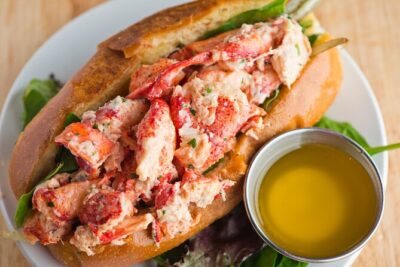
Other New England plates worth ordering:
- Boston Food & History: Pizza, North End & Freedom Trail★ 5.0 · 1,772 reviews
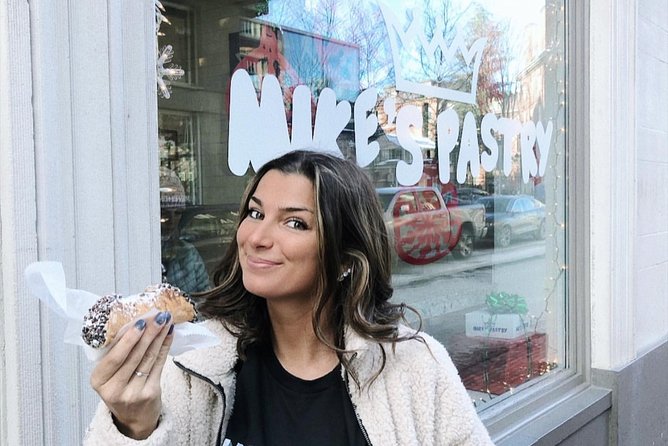
- Boston North End Food Tour of 6+ Tastings, Cannoli, Lobster Roll★ 5.0 · 1,404 reviews
- Boston’s North End Food Tour: Italian Flavors & Heritage Walk★ 5.0 · 1,322 reviews
Start at the Aquarium T, end at Haymarket like a pro
Meeting at Aquarium T Station (183 State St) is a practical choice. It’s central, easy to reach by transit, and it lines up nicely with the New England Aquarium stop early in the route. If you’re arriving from downtown hotels or points along the Red Line, you’re not fighting Boston traffic before you even start.
You also finish at Haymarket (136 Blackstone St). That matters more than it sounds. After the tour, you’re already near a busy transit hub, and the guide helps you get on the subway. If your afternoon includes more sightseeing, shopping, or dinner plans, ending at Haymarket keeps things smooth.
Because it’s near public transportation and you’re moving through downtown and nearby neighborhoods, you avoid the common problem of tours that start and end in inconvenient spots.
Freedom Trail highlights in a tight timeline
The Freedom Trail is famous for good reason: a 2.5-mile path with 16 significant locations tied to early American history. In a three-hour private tour, you’re not walking the whole trail start to finish. Instead, you’re hitting the most story-heavy, first-timer-friendly checkpoints.
You’ll encounter stops that explain how Boston functioned as a stage for the American Revolution. A big theme is how communication, government, and public spaces shaped decisions. That’s why sites like Old North Church and the Old State House are so effective on a guided route, even if you only spend a little time at each place.
At Old North Church, the famous signal story comes up: one if by land, two if by sea. This isn’t just trivia. It’s a great example of how Boston’s religious and civic landmarks intersected with real-world events. Even with short stops, the guide can help you connect the dots fast.
The Granary Burying Ground brings a different kind of context. It’s the city’s third-oldest cemetery, founded in 1660, and it’s the kind of place where a quick guided explanation helps you notice names and dates you might otherwise miss. If you’re drawn to human stories behind historical events, this is the sort of stop that lands well.
Market time at Faneuil Hall Marketplace and Quincy Market
If you came for the foodie angle, this is where you’ll feel it. The tour includes Faneuil Hall Marketplace, a cluster of historic market buildings plus a promenade with stores and restaurants. You get a dedicated window there (listed as about 15 minutes, with admission free for the stop itself), which is enough time to reset your hunger and pick a snack strategy.
Then there’s Quincy Market, a historic market complex near Faneuil Hall, built in 1824 to 1826. You’ll also learn the naming story connected to Mayor Josiah Quincy and how the market’s construction avoided tax or debt. That kind of detail makes the space feel less like a food court and more like a historic civic project.
This is also the part where the tour concept can swing either way depending on expectations. Some people want actual tastings, while others are happy to use the guide to point you toward the best places to eat right then or later. One past review noted a mismatch: the experience felt more historical than food-focused even though the tour title suggests foodie time. So my practical advice is simple: ask your guide how the food portion works for your date. If you want specific tastings, confirm that early.
Revolutionary War stops: Paul Revere House and the Bunker Hill Monument
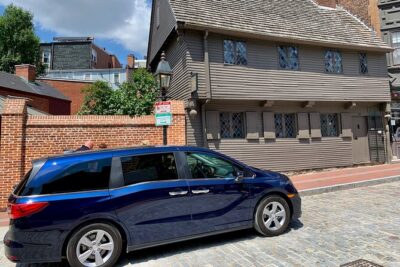
Two stops that help Boston history click are the Paul Revere House and the Bunker Hill Monument. The Paul Revere House was built around 1680 and served as the colonial home of the American patriot during the Revolutionary era. When you see a home from that period through a guide’s lens, it’s easier to understand why personal residences, not just battlefields, mattered so much.
The Bunker Hill Monument is all about scale and significance. It was erected to commemorate the Battle of Bunker Hill, fought on June 17, 1775, and often described as one of the first major battles between British and Patriot forces. On a guided route, your guide can connect the monument to the bigger story of escalation and momentum.
A quick warning, but not a dealbreaker: because the tour is only about three hours, you should expect shorter stops. That can be perfect if you like the “see it, learn it, move on” rhythm. If you want long, slow museum-style time, you’ll likely want to pair this tour with a follow-up visit.
A few other harbor-city days to consider
North End storytelling: Old North Church and the feel of the streets
North End landmarks are the kind of places you can revisit later, but doing them with a guide first helps you understand why the neighborhood is so storied. The tour includes Old North Church at 193 Salem Street, and it’s famous for the signal legend tied to Paul Revere.
Once you know the story, the area around the church makes more sense. The architecture, the street layout, and the placement of major landmarks all start to feel intentional. Even if you only get a short visit, the guided explanation helps you notice details you would otherwise walk right past.
If you’re hungry, this is also the region where you can usually find food easily after the tour. Your best move is to decide if you want to eat during the guided market stops or save room for a meal nearby once the tour ends.
From Old State House to Boston’s cemetery and civic power
Boston’s civic spaces matter, and the tour nudges you toward that. The Old State House, built in 1713, was the seat of the Massachusetts General Court until 1798 and it’s one of the oldest public buildings in the United States. Standing in front of a building like that, you start to see how government and public life shaped daily choices during turbulent years.
Then you get a different angle with the Granary Burying Ground. Cemeteries often feel quiet and generic until someone gives you a reason to look closer. Knowing it dates back to 1660 and serves as a long-running record of the city adds weight to what you’re seeing.
This combination is useful if you’re trying to avoid the trap of only seeing battle history. Boston wasn’t just camps and battles. It was courts, meetings, churches, and ordinary places where decisions were made.
Cambridge and nature stops: Harvard Museum of Natural History
One itinerary item that changes the vibe is the Harvard Museum of Natural History, located in the University Museum Building on Harvard’s campus in Cambridge. Natural history is a solid counterweight to the political and Revolutionary stops, and it gives your brain a breather.
You might not get a full museum tour in a three-hour format, so treat this as an orientation stop. The value comes from seeing where the collection sits and getting a guide’s quick framing of what makes natural history worth caring about.
If you’re traveling with kids or anyone who likes science alongside history, this stop can make the entire experience feel less one-note. If your group is strictly focused on eating and Revolutionary sites, you can still enjoy it, but you may want to spend extra time later on whatever you find most interesting.
Franklin Park Zoo and the zoo-lovers’ payoff
The tour also includes Franklin Park Zoo, a 72-acre zoo in Boston operated by Zoo New England. Zoos can be a great way to break up a sightseeing itinerary, but they also vary a lot by season and what’s open.
Because the tour duration is limited, your zoo time is best treated as a taste, not a full visit. Still, it’s a fun and practical option if you want something more than just museums and monuments, especially for families or travelers who don’t want another crowd-heavy indoor stop.
If your priority is food and classic downtown history, you may feel this is a stretch of the route. If your priority is “show me Boston in one go,” it fits the idea.
Aquarium, museums, and the art and baseball side of Boston
The tour starts with the New England Aquarium, which is more than a headline. It’s listed as including the Simons IMAX Theatre and the New England Aquarium Whale Watch, operating April through November. That whale watch detail is useful, because it tells you the aquarium is a seasonal experience, not just a building you pass.
Even if you do not plan to ride anything special, the aquarium stop helps set a modern tone early. It balances the older, Revolutionary-era landmarks that dominate the Freedom Trail story.
On top of that, the route includes a mix of shopping and cultural pauses. Copley Place is a shopping mall in Back Bay, and it’s anchored by department store Neiman Marcus as of May 2020. You might not come to Boston just for a mall, but it can work as a quick indoor break and a place to grab something easy to eat.
Then there’s Fenway. You’ll get a stop tied to Isabella Stewart Gardner’s museum, which opened after her husband died in 1898. Also included is Fenway Park, with the note that it’s the oldest Major League Baseball stadium still in use (built in 1912) and that there’s a one-hour walking tour. Even if you don’t do the full tour, hearing why Fenway matters adds real context to what you’re looking at.
This mix is a smart way to prevent “history fatigue.” You get colonial landmarks, then you get art and baseball that many visitors connect with faster.
Customization and the Manny factor: get the guide to match your mood
The biggest quality signal from feedback is that the guide experience can make or break it. One past review specifically called out Manny for being great, which suggests the guide is doing more than reading facts off a page.
That’s also where you should be careful with expectations. The same review that praised the guide also said the outing did not match what they expected from a food tour, because it felt more like a historical tour. That doesn’t mean the tour is bad. It means the balance may depend on the guide’s approach and your group’s interests.
So here’s my practical suggestion if food is your top priority: before you start, tell the guide what you mean by foodie. Do you want guided tastings, quick restaurant recommendations, or just built-in opportunities to eat where the route naturally passes? Once your guide understands the difference, the customization should work in your favor.
Price and value: $288 for a private 3-hour plan
At $288 per person, this is not a budget walking tour. It’s priced like a private guided experience with a structured route through multiple neighborhoods and major landmarks.
The value equation is pretty straightforward:
- You’re paying for privacy, so you control pace and questions.
- You’re paying for time efficiency, because the route hits many recognizable stops in about three hours.
- You’re paying for a guide who can connect the story, so the stops feel like one narrative instead of scattered sightseeing.
If you’re a couple, a small family, or a group of friends who want to avoid standing in lines and instead get a guided plan, the cost can start to feel reasonable. If you’re solo or on a tight budget, you might be better off using transit and focusing on just one or two core areas.
Also, the term all-inclusive in the tour title sets an expectation. The provided details emphasize a private tour and a foodie-sightseeing blend, but it does not spell out exact food quantities. That means you should treat the itinerary as both sights and food opportunities, not a guaranteed buffet.
Should you book the Boston Most Famous Foodie Tour?
Book it if you want a guided starter circuit for Boston that combines classic history with market-friendly breaks. It’s especially good for first-time visitors, couples, and people who enjoy the idea of turning famous landmarks into a walkable story.
Skip it or ask more questions first if you want a clearly defined sequence of food tastings as the main event. Based on one mismatch noted with the guide’s approach, you’ll want to confirm what the foodie part looks like for your day and group.
If you do book, go in with a plan for how you’ll spend your hunger. Use the market stops for snacks, then decide after the tour whether you’ll follow the guide’s leads for a full meal near wherever you end, since finishing near Haymarket makes that easy.
FAQ
How long is the Boston Most Famous Foodie Tour?
The tour lasts about 3 hours.
How much does the tour cost?
It costs $288.00 per person.
Is this a private tour?
Yes. It is a private tour, so only your group will participate.
Where do you start and where do you end?
The tour starts at Aquarium T Station, 183 State St, Boston, MA 02109, and ends at Haymarket, 136 Blackstone St, Boston, MA 02109.
What language is the tour offered in?
The tour is offered in English.
Is mobile ticketing available?
Yes, the tour includes a mobile ticket.
What if the weather is bad or the minimum number of travelers is not met?
The experience requires good weather. If it’s canceled due to poor weather, you’ll be offered a different date or a full refund. It also requires a minimum number of travelers, and if it’s canceled for that reason you’ll be offered a different date or a full refund.
Written up lately around the harbor
- Boston’s Beacon Hill: Private Walking Tour
★ 5.0 · 1 review - Boston’s Chinatown: Small Group Walking Tour
★ 5.0 · 1 review - Self-Guided Scavenger Hunt: Boston Back Bay & Beyond
★ 4.0 · 1 review - Flynn Cruise Port Boston to Boston hotels – Arrival Private Transfer
★ 5.0 · 1 review - Boston to Woods Hole & Martha’s Vineyard Ferry Private Chauffeur Service
★ 4.0 · 1 review - Classic Martha’s Vineyard 1-Day Escape from Boston
★ 5.0 · 1 review - Private Vacation Photoshoot with Photographer in Boston
★ 5.0 · 1 review
Food, compared.
Boston Food & History: Pizza, North End & Freedom Trail
Read our review →
Boston North End Food Tour of 6+ Tastings, Cannoli, Lobster Roll
Read our review →
Boston’s North End Food Tour: Italian Flavors & Heritage Walk
Read our review →
Boston Pizza Lovers Food and History Walking Food Tour
Read our review →
Boston’s Politically Incorrect North End Food Tour
Read our review →
North End & Little Italy Food Tour with Local Dishes
Read our review →