
Reviewed · SALEM TOURS
Best Historic Overview of Salem Walking Tour
Salem is more than witches. This 90-minute, one-mile walk gives you a clear orientation to the city’s early settlement, revolution-era power, and 1692 tragedy. It’s built for getting your bearings fast, with a guide who strings together big-picture stories and small, specific details.
I love that the route hits major anchors you can build on later: Old Burying Point Cemetery (dating to 1637) and the Salem Witch Trials memorial. I also like the practical pace, the frequent stops for photos and context, and the fact that the tour covers maritime Salem and the American Revolution, not just witchcraft.
One thing to consider: this is still a walking tour on old streets with narrow, uneven sidewalks and cobblestones. If sound is an issue for you, position yourself closer to the guide, since the area can get noisy.
In This Review
- Key Highlights You’ll Actually Feel on Your Walk
- Price and Timing: How $30 Lands for a 90-Minute Salem Primer
- Where It Starts and How the Walk Really Feels on Your Feet
- Stop by Stop: What Each Location Adds to the Salem Big Picture
- The Salem Historical Tours kickoff: from 1626 to the Age of Sail
- Red’s Sandwich Shop: a revolutionary meeting point in plain sight
- Old Burying Point Cemetery (1637): the weight of place
- Salem Witch Trials Memorial: 20 benches, 20 lives
- Turner’s Seafood at Lyceum Hall: trials on the grounds, Bell after that
- Salem Old Town Hall: maritime wealth and a few famous oddities
- The Merchant: George Corwin, Washington, and Amelia Earhart nearby
- Rockafellas Restaurant: churches, meetings, and statehood vibes
- Bewitched Sculpture in Lappin Park: TV, but with a real twist
- Salem YMCA: Bell’s telephone work and an unusual home story
- The Witch House: last direct ties to 1692
- Wesley United Methodist Church and Leslie’s Retreat
- The Guide Factor: Stories, Humor, and Staying on Track
- What You Get That You Might Miss on Your Own
- Practical Tips to Get More From the 1-Mile Route
- So, Should You Book This Salem Historic Walking Tour?
- FAQ
- What is the duration of the Salem walking tour?
- How much does the tour cost?
- What time does the tour depart, and when should I arrive?
- Where is the meeting point and where does it end?
- Is the tour in English?
- Does the tour include food or drinks?
- Does the guide use any equipment to help you hear?
- Is this tour suitable for people with mobility or accessibility concerns?
- Can I cancel for a full refund?
Key Highlights You’ll Actually Feel on Your Walk
- Start at 8 Central St at 12 pm, then move through Salem’s core with a tight, easy-to-follow flow
- Old Burying Point Cemetery (1637) gives you instant perspective on how long this community has been here
- Witch Trials memorial benches for the 20 executed make the 1692 story tangible, not vague
- Lyceum Hall and Turner’s Seafood connection ties the trials to later Salem innovation, including Alexander Graham Bell
- Maritime and Revolution stops link Salem’s wealth after independence to famous names and events
- Smallish group cap (40 travelers) helps the guide manage questions and keep the pace steady
Price and Timing: How $30 Lands for a 90-Minute Salem Primer
At $30 per person for about 1 hour 30 minutes, this tour is priced like a smart “starter pack” for first-timers. You’re paying for orientation, storytelling, and a guided route that hits a lot of meaningful ground in a short time. With a group size capped at 40, it usually feels more organized than the big, free-for-all-style walks you sometimes see in Salem.
The timing matters too. It departs at 12 pm, and you check in 15 to 20 minutes early at Salem Historical Tours office, 8 Central St. In October, plan around heavy traffic and crowds. Salem’s streets can get slow, and parking can take longer than you expect, so build in extra buffer.
If you’re visiting only part of a day, this is a strong move because it returns you to the downtown area afterward, where you can keep exploring on your own.
More time up in Salem:
- History and Hauntings of Salem Guided Walking Tour★ 5.0 · 14,564 reviews
- Salem’s Best Ghost Tour★ 4.5 · 4,186 reviews
- Salem Voodoo, Vampires, and Ghosts Guided Walking Tour★ 5.0 · 1,931 reviews
Where It Starts and How the Walk Really Feels on Your Feet
The meeting point is simple: 8 Central St, Salem, MA. The tour ends back in downtown Salem, and your guide can help point you toward where you want to go next. That handoff is useful because Salem has a lot of walkable clusters, and it’s easy to drift in the wrong direction when you’re in a hurry.
The walk itself is about one mile total over 90 minutes, with frequent stops to look, listen, and take in the sites. That “frequent stops” piece is what makes it work, but it also means you spend time standing around historic locations, often on uneven surfaces.
Accessibility note you should take seriously: sidewalks can be narrow and uneven, with bricks, cobblestones, and stairs. If mobility is a concern, you’ll want to judge your ability to complete the full one-mile walk within the allotted time.
Stop by Stop: What Each Location Adds to the Salem Big Picture
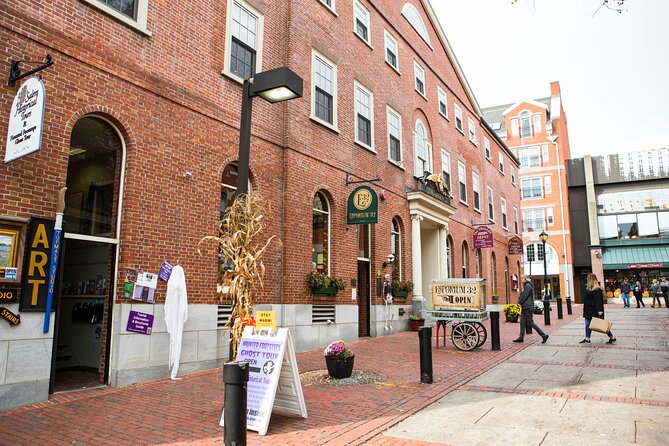
The Salem Historical Tours kickoff: from 1626 to the Age of Sail
The tour begins at Salem Historical Tours & Haunted Footsteps Ghost Tour, and that first stop sets the tone. You get a fast orientation to why Salem is often called the birthplace of the United States of America, but the guide also frames Salem beyond witch lore.
Expect a sweeping timeline that runs from Salem’s founding in 1626 into the American Revolution era, then forward into Salem’s role in the Age of Sail and even into the 21st-century Salem you see today. The guide is meant to cover as many locations as possible, which is helpful if you’re short on time.
What makes this opening work is that it gives you a mental map. You start to see the city as an evolving place, not just a set of famous buildings.
Red’s Sandwich Shop: a revolutionary meeting point in plain sight
Next is Red’s Sandwich Shop, where you visit the location connected to revolutionaries meeting to discuss plans for possible war with England. This is one of those Salem moments where history hides in a spot that looks ordinary.
The value here is perspective. You’ll stop thinking of the Revolution as something that happened only in textbooks. It happened in meeting rooms, conversations, and decisions on streets that are still here.
More of Boston crossed at walking pace:

Old Burying Point Cemetery (1637): the weight of place
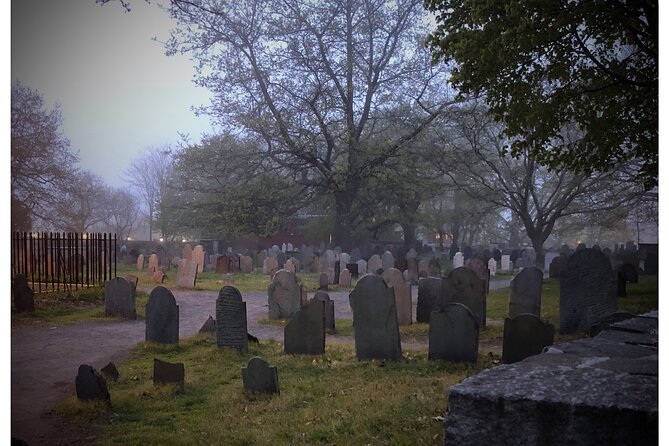
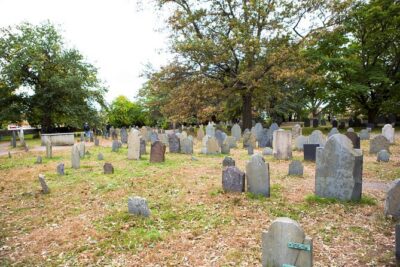
Then you’re at Old Burying Point Cemetery, Salem’s oldest cemetery and one of the oldest in the country, dating back to 1637. This is where the tour does something smart: it anchors 17th-century Salem with names you can picture.
You’ll learn about the resting places of Puritans and prominent figures, including judges John Hathorne and Bartholomew Gedney, along with Nathaniel Mather, Samuel McIntire, Simon Forrester, and Richard Derby.
Drawback to be aware of: cemeteries are quiet, reflective stops, but they’re still outdoors. Wear comfortable shoes and give yourself a moment to actually take it in. If you try to speed through, you’ll miss why this stop is such a strong emotional anchor for the rest of the walk.
Salem Witch Trials Memorial: 20 benches, 20 lives
The tour moves to the Salem Witchcraft Trials memorial, dedicated to the 20 people executed in the 1692 hysteria. This memorial has a bench for each person, including the name, date of execution, and form of execution, with symbolism built into the design.
This stop is not about ghost stories. It’s about consequences. Seeing the 20 individually named entries makes the tragedy feel real and specific, and it helps you understand why Salem’s conscience was shaken in a way that still shapes the city.
If you’re sensitive to dark history, this is the point where you may want to slow down. You don’t have to rush. Let your brain catch up.
Turner’s Seafood at Lyceum Hall: trials on the grounds, Bell after that
At Turner’s Seafood at Lyceum Hall, you connect 1692-era Salem to later “inventor Salem.” The guide ties in Bridget Bishop, the first woman executed for witchcraft in 1692, who lived on the grounds.
Then you get the pivot: in 1877, Alexander Graham Bell performed the first public demonstration of the telephone here. So you’re standing in a space that holds two different Salem identities: fear and innovation, tragedy and progress.
One practical tip: bring your questions. This stop naturally invites follow-ups, like how Salem changed over time while still keeping buildings and traces of earlier lives.
Salem Old Town Hall: maritime wealth and a few famous oddities
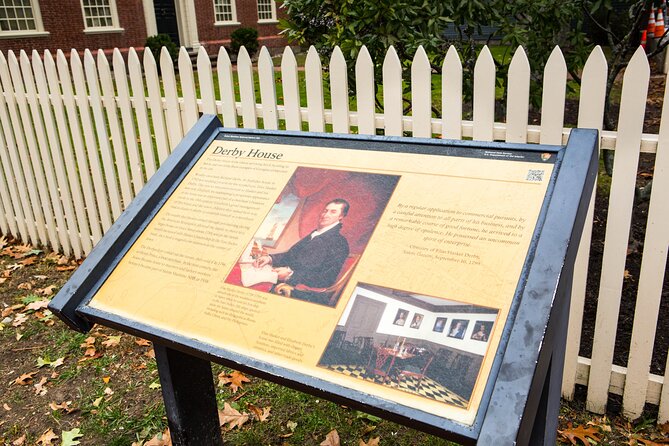
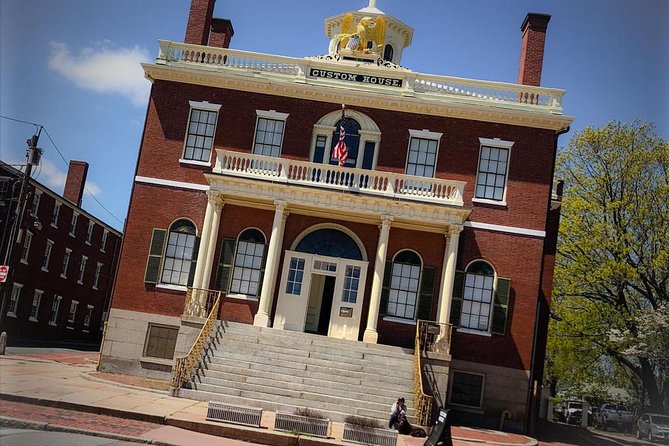
Next is Salem Old Town Hall, where you hear about maritime history that began right after the American Revolution. From 1790 to 1812, Salem was the richest port in the country, and Elias Haskett Derby became America’s first millionaire in 1793.
You’ll also hear a couple of Salem pop-culture and fun history connections: portions of Hocus Pocus were filmed here, and Harry Houdini was put in the jail across the street, with the detail that he wasn’t under arrest, the police chief just wanted to see if he could break out.
This stop works well for history buffs and also for people who want a “real world” feel. You see how a once-incredibly wealthy port city had resources, buildings, and stories that kept generating headlines.
The Merchant: George Corwin, Washington, and Amelia Earhart nearby
At The Merchant stop, the guide tells stories connected to George Corwin, the high sheriff during the 1692 Witchcraft Trials, who lived on the grounds where the building now sits.
You’ll also learn that George Washington visited Salem and stayed in a room that’s now called the Washington Room. And close by, Amelia Earhart taught English in the Salem Commercial School, just one block away.
What I like about this part of the walk is the contrast. Salem isn’t only a one-issue story. It shows up in national leadership and in later 20th-century American life.
Rockafellas Restaurant: churches, meetings, and statehood vibes
Then you’ll visit Rockafellas Restaurant in a building that was the fourth location of the first church. You’ll also hear about the earlier church sites at that same spot.
There’s also an interesting political-location angle: the Town House Square building was on that spot, and it ties to revolutionary-era Massachusetts governance, with a local congress of representatives meeting there before going to Ipswich, Concord, and eventually the Continental Congress in Philadelphia.
If you like history that connects to specific places, this stop is worth paying attention to. It’s easy to miss the political “staging ground” when you’re just walking past restaurant signs.
Bewitched Sculpture in Lappin Park: TV, but with a real twist
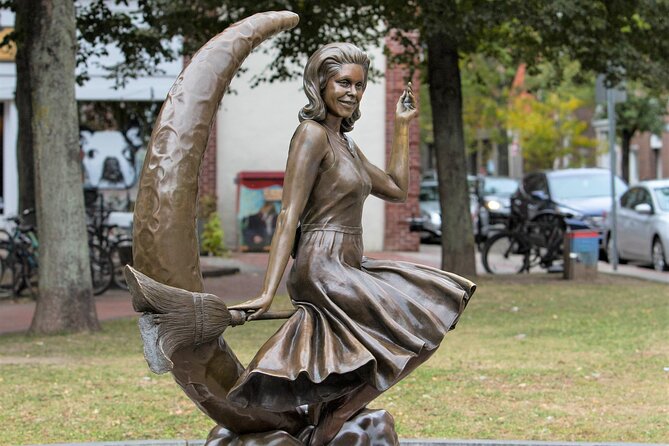
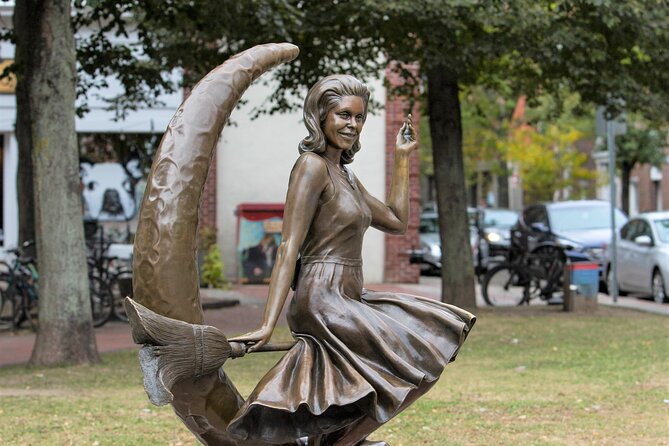
At Bewitched Sculpture in Lappin Park, you’ll see Samantha Stevens from the TV show, with details about the show shooting episodes on location in Salem. The best part is the irony built into the stop: the statue sits on land that was owned by hanging judge John Hathorne.
This is a fun palate cleanser after heavier memorial and trial stops. But it’s not completely unserious. It keeps Salem’s witch identity in view while reminding you that the city’s relationship to that past can be complicated and, yes, occasionally ironic.
Salem YMCA: Bell’s telephone work and an unusual home story
Next is Salem YMCA, where you get a building-linked story about Alexander Graham Bell. Before the YMCA was here, Mrs. Brown had a home on the site, and Bell lived there, educated her grandson, and then took the train to Boston to teach at Boston University. He also worked on the telephone in an attic laboratory.
This stop is a great example of why this tour is more than a witch playlist. Salem didn’t only make headlines in the 1600s. It also became a place tied to major technological change later on.
The Witch House: last direct ties to 1692
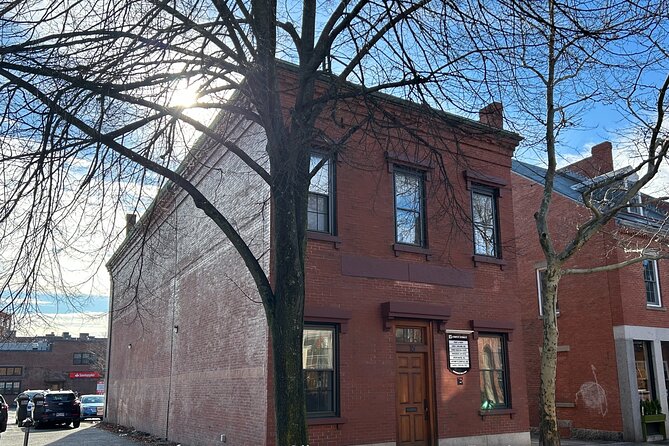
Then you’ll see the Witch House at Salem, associated with Judge Jonathan Corwin. It was built in the 1660s, and Corwin bought it in 1675. The tour emphasizes a careful point: no witches lived here, but it is the last Salem home with direct ties to the 1692 Witchcraft Trials.
That distinction matters. It keeps the story grounded in what the place can truly tell you, instead of blurring it for drama.
Wesley United Methodist Church and Leslie’s Retreat
The tour ends at Wesley United Methodist Church, tied to an event called Leslie’s Retreat at the North Bridge. You’ll hear about 140 redcoats led by Colonel Leslie trying to cross the river to take weapons and cannons from the other side, and colonists stopping them by pulling up the draw bridge. No shots were fired, and the British left empty handed.
The guide also connects this event to the wider timeline by noting it preceded Lexington and Concord by two months.
This is a good final beat because it reframes Salem as an active stage in the Revolution, not just a side plot.
The Guide Factor: Stories, Humor, and Staying on Track
This tour’s quality lives and dies by the guide. The format is designed for clarity: a local and professional guide with an amplifier so everyone can hear.
In recent tours, guides named Bob, Glenn, Amber, Anna, and Stosha show up in feedback for being energetic and for tying details together. A few reviews also highlight a dry sense of humor and quick answers to questions.
That said, there are two practical realities you should keep in mind. Historic streets get noisy, and if you end up farther back, hearing can be harder. Also, some tours can lean toward trivia and storytelling rather than straight facts. If you prefer a very direct lecture style, arrive with a clear expectation: you’re buying a walking story tour, not a museum script.
If you want the best experience, stand where you can hear, and don’t be shy about asking for a bit more context when a story feels too fast.
What You Get That You Might Miss on Your Own
A self-guided walk through Salem can be fun, but it has a common problem: you miss the connections. This route is built to link themes.
You’ll notice that Salem’s story is told in strands:
- 17th-century settlement and the lasting power of people and property
- 1692 hysteria, made personal through memorial details and trial ties
- the way Salem rebuilt and expanded its identity after the Revolution, especially through maritime wealth
- the later transformation into a place associated with invention, like the telephone connection tied to Bell
This tour helps you understand why Salem feels like it’s always referencing its past. When you leave, you’re not just holding photos. You’re holding a framework.
Practical Tips to Get More From the 1-Mile Route
A few things will make your tour smoother:
- Wear comfortable walking shoes. The surface is uneven, with bricks, cobblestones, and stairs.
- Plan for standing. The itinerary uses short time at each stop, but you’ll still be upright and listening.
- Bring your questions. Several stops connect big names with specific locations, like Bell at Lyceum Hall and Washington ties near the Merchant.
- If you’re short on time, aim for this early enough to use it as a map for the rest of your day.
Also, if you’re driving, know that traffic and parking can be difficult. Parking is available in garages on New Liberty, Bridge, and Congress Streets, and in lots at Church Street, Front Street, and Klopp Alley. Metered parking is near the tour area, and you can use the Passport Smart Phone App for meters. Bus parking is available on New Derby Street and Hawthorne Boulevard.
So, Should You Book This Salem Historic Walking Tour?
I’d book it if you want a fast, structured Salem orientation that goes beyond witch trials. The $30 price makes sense when you factor in the number of major stops and the way the guide stitches maritime and Revolution-era Salem into the same story.
You should think twice if you strongly prefer minimal standing, very quiet environments, or a slow, museum-like pace. Historic Salem sidewalks can be tough, and the one-mile walk is still a walk.
Best fit:
- First-time Salem visitors who want a smart overview
- People who love connections, names, and place-based storytelling
- History fans who want Salem’s Revolution and maritime era treated with real time and attention
If that sounds like you, this is one of the easiest ways to start making Salem click.
FAQ
What is the duration of the Salem walking tour?
It runs for about 1 hour 30 minutes.
How much does the tour cost?
The price is $30.00 per person.
What time does the tour depart, and when should I arrive?
The tour departs at 12 pm. Check in 15 to 20 minutes before your tour time at the Salem Historical Tours office at 8 Central Street.
Where is the meeting point and where does it end?
You start at 8 Central St, Salem, MA 01970, and the tour ends in downtown Salem. The guide can help direct you to where you want to go next.
Is the tour in English?
Yes, the tour is offered in English.
Does the tour include food or drinks?
No food and drink are offered, but snacks are available for purchase.
Does the guide use any equipment to help you hear?
Yes, the guide uses an amplifier so everyone can hear.
Is this tour suitable for people with mobility or accessibility concerns?
The tour is about one mile long over 90 minutes with narrow and uneven sidewalks, bricks, cobblestones, and stairs. Each participant must be able to complete the one-mile tour within the timeframe.
Can I cancel for a full refund?
Yes, you can cancel for free up to 24 hours in advance for a full refund.
Revolutionary Salem on Foot
- Wicked Awesome Tours: Witch Trial History and Salem Haunts!
★ 5.0 · 1,032 reviews - Best Salem Witch Trials Historical Walking Tour
★ 4.0 · 743 reviews - Salem Night Tour: Haunt and History Guided Night Tour
★ 4.5 · 673 reviews - Salem, MA: History and Hauntings Guided Walking Tour
★ 4.8 · 651 reviews
Written up lately around the harbor
- High Witch History Walking Tour of Salem
★ 5.0 · 1 review - Haunted Salem Ghost Tour
★ 2.0 · 1 review - Multilingual Self-Guided Audio Ghost Tour in Salem
★ 5.0 · 1 review - Salem Private Half Day Tour from Boston, groups 5-6
★ 5.0 · 1 review - From Boston: Salem & Hammond Castle Semiprivate Day Trip
★ 5.0 · 1 review - Family Friendly Ghostly Tales of Salem
★ 5.0 · 1 review - Tales of Salem Halloween Guided Walking Tour
★ 4.5 · 2 reviews
Salem Tours, compared.
History and Hauntings of Salem Guided Walking Tour
Read our review →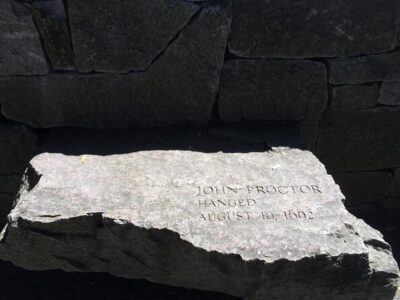


Mysteries and Murders of Salem Guided Night-Time Walking Tour
Read our review →
Wicked Awesome Tours: Witch Trial History and Salem Haunts!
Read our review →Browse the lists this tour appears in