
Reviewed · HISTORICAL TOURS
Boston 101 Best Historical Walking Tour
Boston turns into a timeline in 90 minutes. This Boston 101 walk stitches together graves, churches, meeting halls, and street-corner moments that helped shape the American Revolution. You get the big names and the human stakes, with stops designed to make the city feel readable fast.
What I like most: I love how many entry points are free, so your money goes to the guide and the thinking, not gate fees. I also love the pacing and storytelling, including the kind of light humor that helps the details stick without turning it into a lecture.
One possible drawback: you do not go inside King’s Chapel, so if you want lots of indoor time or deep artifact viewing, you’ll want to pair this with a separate site visit.
In This Review
- Key Highlights You’ll Notice Right Away
- Why This 90-Minute Boston Walk Works for First Timers
- Price, Tickets, and What You Get for $30
- Meeting at Tremont Street, Ending at Faneuil Hall
- Granary Burying Ground: Paul Revere and the Boston Massacre Dead
- King’s Chapel: First Anglican Roots, Plus a Big Architectural Payoff
- King’s Chapel Burying Ground: 1630 Connections and Two Big Stories
- Government Center: British Occupation, a Lost Church Site, and Bell’s Lab
- Boston Massacre Site: Standing Where Tension Turned to Violence
- Faneuil Hall Marketplace: Meetings, Bunker Hill, and Evacuation Day
- Boston Common: From Early Land Deals to Witches and Military Encampment
- Court Square and the Boston Gaol: Who Went to Jail in the 1600s?
- The Best Fit: Who Should Book This Tour
- Should You Book Boston 101 Best Historical Walking Tour?
- FAQ
- How long is the Boston 101 Best Historical Walking Tour?
- How much does the tour cost?
- Where does the tour start and end?
- What time does the tour begin?
- Is the tour offered in English?
- Is admission included for the stops?
- What is included in the tour price?
- Can I cancel for a refund?
Key Highlights You’ll Notice Right Away
- Granary Burying Ground connects names to events, including figures tied to the Boston Massacre
- Two historic cemeteries in one loop, letting you compare Puritan-era burial traditions
- You stand on the Boston Massacre site, so the political fallout feels immediate
- Faneuil Hall Marketplace brings the Revolution to everyday streets
- Boston Common to Court Square shows the same land used for worship, punishment, and power
- Small-group feel (max 30) helps the guide keep your attention through the whole 90 minutes
Why This 90-Minute Boston Walk Works for First Timers
This tour is built for getting your bearings without getting lost in facts that blur together. Boston can feel layered, like you need a map and a history degree at the same time. Here, the stops are chosen so you see the physical places first, then the story clicks in around them.
I like that it moves in a clean arc through the city, rather than doing a random grab bag. You start with early colonial life at cemeteries and a church, then you slide forward into revolutionary pressure and public action at places like the Boston Massacre site and Faneuil Hall. By the time you reach Boston Common and Court Square, you’ve seen how government, faith, and punishment all happened on the same streets.
And because it’s only about 1 hour 30 minutes, you’re not stuck in an all-day slog. It’s ideal if you’re doing other Boston plans the same day and still want a real grounding in the story.
More of Boston crossed at walking pace:
- Boston: Freedom Trail History Small Group Walking Tour★ 5.0 · 6,450 reviews
- Harvard University Campus Guided Walking Tour★ 4.5 · 3,632 reviews
- Boston Freedom Trail Walking Tour with Costumed Guide★ 4.5 · 2,531 reviews
Price, Tickets, and What You Get for $30
At $30 per person for an approximately 90-minute guided walk, this is the kind of price that feels fair for a focused city lesson. You’re paying for interpretation: someone points out what matters, explains why it mattered, and keeps the timeline straight while you’re walking.
A big value point is that many stops list entry as free at the site level. That means you’re not continually paying extra just to stand on a corner and look around. You also get a mobile ticket, and the guide uses images as part of the presentation, which helps when you’re looking at modern buildings that no longer match the past.
Language is English, and the group is capped at 30 travelers. That cap matters, because when groups get too big on tight sidewalks, questions and flow can suffer. Here, the size is small enough for the guide to keep moving at a human pace.
Meeting at Tremont Street, Ending at Faneuil Hall
The tour starts at Tremont St opp Temple Pl, Boston, MA 02108, with a 11:00 am start time. It ends at Faneuil Hall Marketplace in Boston, MA 02109. That ending point is smart. You’re not walking out into the middle of nowhere at the finish, and Faneuil Hall is a natural hub for food, coffee, and more exploring.
The walk is a city-walking style experience, so expect you’ll cover several blocks. It’s not described as a slow meander with long bus-style stops. Instead, it’s more like: stop, learn, look, move on. Most people can participate, and it’s near public transportation, which helps if you’re hopping between neighborhoods.
One more practical tip: since the tour includes cemeteries and outdoor street corners, dress for weather and bring water if it’s warm. You’ll spend real time standing still for stories, including at the Boston Massacre site.
Granary Burying Ground: Paul Revere and the Boston Massacre Dead
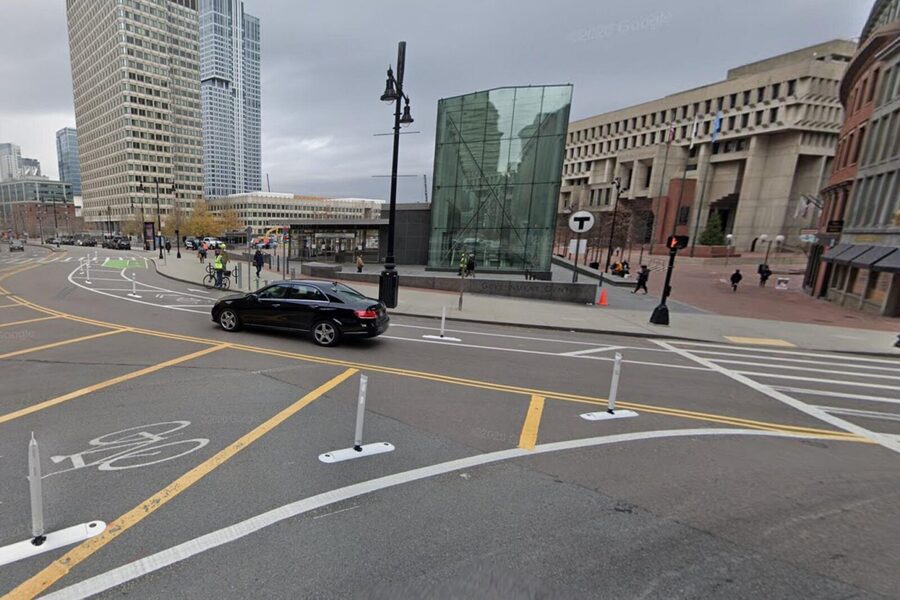
You begin at Granary Burying Ground, established in 1660. This is where the tour earns its “Boston 101” name, because you can’t talk about the early United States without stepping through the reality of early families and early conflicts.
Here’s what makes this stop powerful: you’ll see headstones tied to the Revolutionary era, including Paul Revere, Sam Adams, John Hancock, and the parents of Benjamin Franklin. Those names are famous enough to feel familiar. The cemetery setting does the useful work of making them feel less like textbook entries and more like real people rooted to a specific place.
The stop also includes the graves of men killed in the Boston Massacre. That detail shifts the way you think about the event. Instead of seeing it as a random violent episode, you see it as something with immediate, physical consequences that families carried for the rest of their lives.
What to watch for: look closely at how the stones mark identity and status. Even without deep research, you’ll notice that this burial ground is a record of who mattered and how the community remembered its own.
Possible consideration: cemeteries can feel quiet and somber, especially if you’re expecting lighter sightseeing. But that tone is part of the point, and it pairs well with the next stops that move from remembrance into protest and power.
King’s Chapel: First Anglican Roots, Plus a Big Architectural Payoff
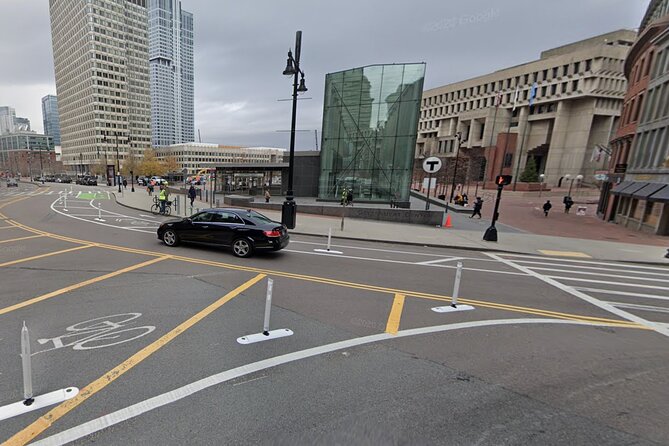
Next up is King’s Chapel, established in 1686 and noted as the first Anglican congregation in the greater Boston area. The tour does not include interior viewing here, but you still get to marvel at the structure outside.
Even if you’re not going in, this is still a high-impact stop. Why? Because the exterior communicates the religious and cultural tension that played into politics. Boston was not one-uniform place. Faith, identity, and authority overlapped, and buildings like this helped show who had influence.
You’ll also hear about tours connected to the chapel, including the idea of seeing crypts below the main room and the bell in the steeple. The key thing for you is that this walk is about context and orientation, not full building access. If you want the full inside experience, consider booking a separate chapel visit later.
What to watch for: stand back and take in proportions. Religious architecture can look impressive from a distance for a reason, and the guide will help you connect those visual choices to the era.
Possible consideration: if you’re expecting a big interior experience at each stop, you may feel a little teased at this one. The tradeoff is you keep momentum and save time for the mass-impact locations like the massacre site and Faneuil Hall.
Other walks through revolutionary Boston:
King’s Chapel Burying Ground: 1630 Connections and Two Big Stories
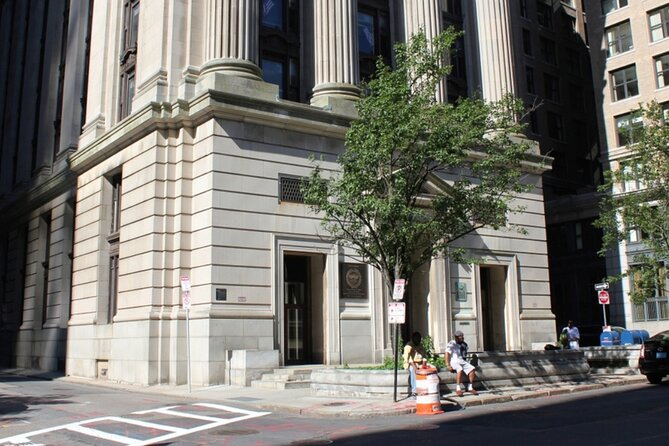
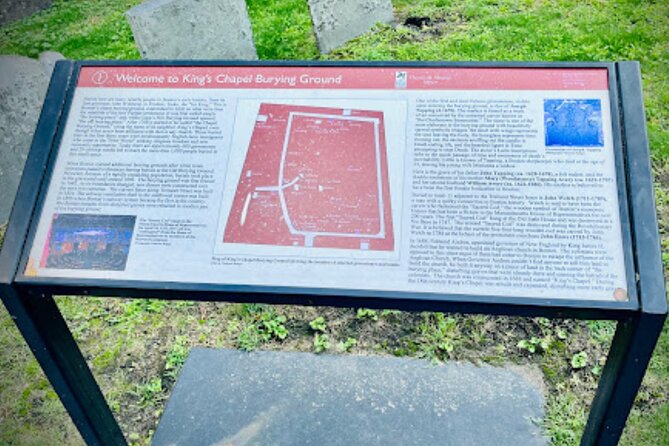
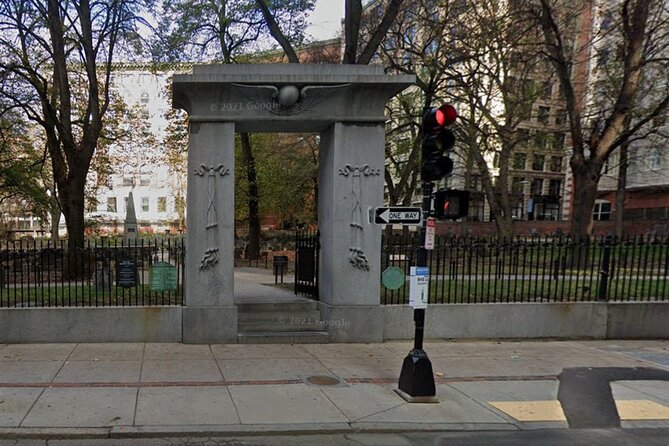
After King’s Chapel, you head to King’s Chapel Burying Ground, established in 1630, the same year Boston was founded. This stop is like a shortcut into the earliest civic identity of the town.
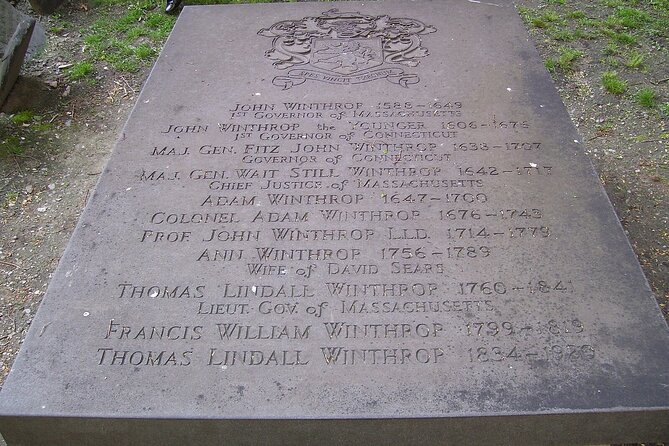
You’ll meet notable burials, including John Winthrop, Massachusetts’ first governor, who served 12 terms. That single detail helps you understand why early leadership mattered so much, and how repetition of office shaped policy and settlement.
You’ll also hear about Mary Chilton, believed to be the first woman to step off the Mayflower. That story often gets told in a few sentences elsewhere. Here, it becomes grounded in a physical place, which is where it starts to feel real.
And then there’s William Dawes, linked to the famous ride warning colonists that the British were here. Dawes is one of those names that can feel secondary until you hear his role explained clearly. This stop helps you see him as part of the network of people carrying warnings and organizing response.
What to watch for: the cemetery layout and the guide’s linking of names to the larger timeline. The tour works best when you treat this as both a burial site and a historical map.
Government Center: British Occupation, a Lost Church Site, and Bell’s Lab
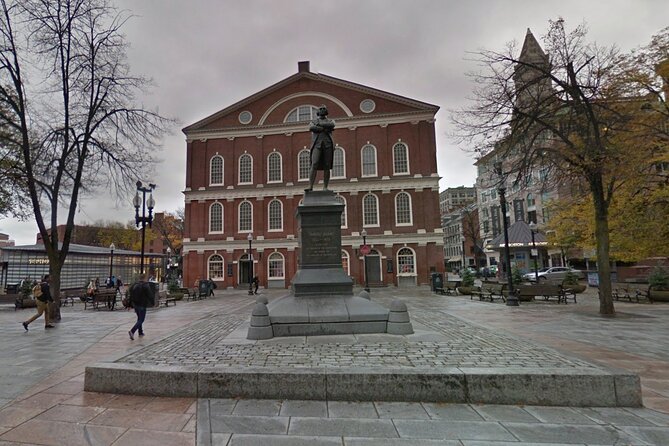
At Government Center, you’ll learn how the British encamped on this site during the American Revolution and occupied a church that sits where Boston City Hall is now. This is one of those moments where modern Boston feels strangely thin. The buildings change, but the political pressure on the ground does not.
The guide also points out another layer: the site of the laboratory of Alexander Graham Bell, the inventor of the telephone. That’s a fascinating contrast. You’re moving from war and occupation into innovation and invention, on the same general urban footprint.
This stop is valuable because it reminds you that Boston is not only a Revolutionary city. It’s a city that kept evolving, and the same kind of thinking that drove political action later drove technological action.
Possible consideration: the time here is short, about 5 minutes, so you’ll want to keep your attention tight. If you’re the kind of person who likes to take lots of photos and read every plaque, you might feel time-pressed, but the tour is designed to prevent over-stopping.
Boston Massacre Site: Standing Where Tension Turned to Violence
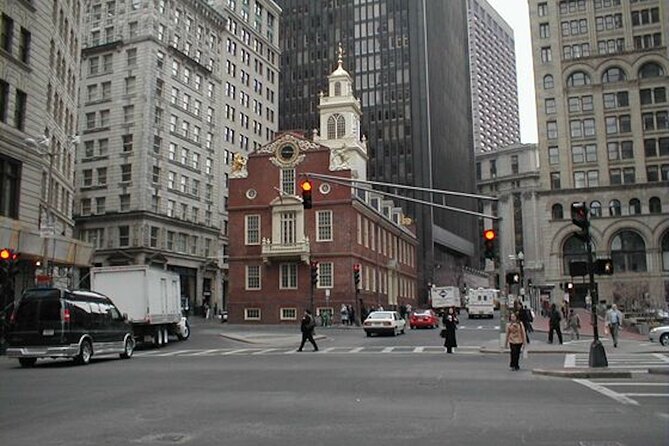
You then get to the Boston Massacre Site, one of the most important parts of this walk. It’s described as arguably the starting point of tensions between colonists and the monarchy, and you’ll hear how it unfolded.
The key details: five colonists were killed and six were injured when a handful of British soldiers fired into the crowd. On the ground, that’s not just an event. It’s a turning point you can feel in the shift from everyday friction to explosive political change.
The guide’s job here is to connect the physical moment to what came next. You’ll learn how this led to the American Revolution. The best way to experience this stop is to listen for cause and effect, not just what happened.
What to watch for: your own reaction. This site can feel tense even if nothing is happening now. It’s a reminder that history often starts with ordinary people in a dangerous moment.
Possible consideration: this stop can be emotionally heavier than the “look and learn” style of some tours. If you want only light stories, you might find this one more intense than expected. That said, it’s the core of the Revolutionary arc.
Faneuil Hall Marketplace: Meetings, Bunker Hill, and Evacuation Day
Faneuil Hall is where Boston history turns public. You’ll hear that Peter Faneuil offered the building as a public meeting place, and that colonists used it to discuss revolution and other topics.
This is a huge theme: ideas do not spread only through pamphlets. They spread through gatherings, and gathering places become political stages. The tour keeps that point clear as you connect Faneuil Hall to major events.
You’ll also hear about the Battle of Bunker Hill, described as one of the bloodiest battles of the war, and you’ll get links to Evacuation Day in 1776 and Boston’s role in the War of 1812.
Why this matters for you: by the time you reach Faneuil Hall, you’ve already seen memorials and sites of violence. Now you see the civic engine, the place where people pushed decisions into motion.
Possible consideration: since the tour ends at or near Faneuil Hall, it can be busy. Plan for crowds in the area if you’re also shopping or dining immediately after. The tour ends with you in a high-energy zone.
Boston Common: From Early Land Deals to Witches and Military Encampment
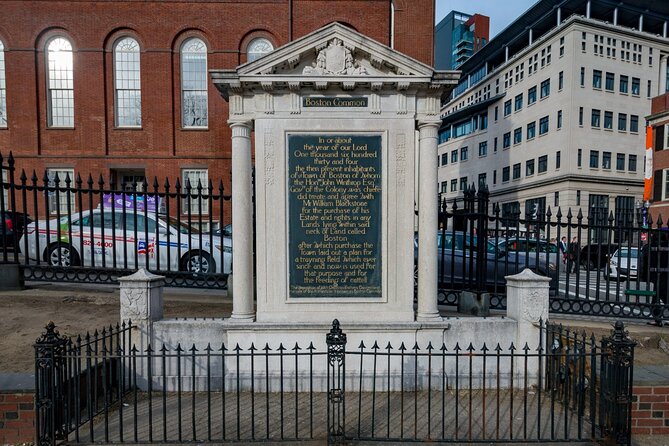
The walking tour starts at Boston Common, and the guide uses it as a foundation for understanding how early Boston functioned. You’ll learn about William Blackstone, described as the first European settler living here, who sold the land to John Winthrop in 1630.
That land story matters because it shows how power starts on paper and then becomes real on the ground. From there, the tour moves into darker territory with stories about witches who were hanged here and other criminals.
Then you learn about military presence: the British encamped here during the occupation of Boston. Boston Common becomes a multi-use space in your mind, not just a pretty park. It’s a place where everyday life and conflict overlapped.
What to watch for: treat the space like a stage. Even now, you can imagine different uses. That imagination is what makes the stories land.
Possible consideration: the Common is outdoors. If it’s cold, windy, or too sunny, you’ll feel it. Bring layers and water, and don’t assume you’ll be sitting.
Court Square and the Boston Gaol: Who Went to Jail in the 1600s?
At Court Square, you’ll stop to see where the Boston Gaol (jail) was located during the 1600s. This is where the tour shifts from rebellion and violence into law enforcement and punishment.
The tour description includes a long list of prisoners: Quakers, people labeled as witches, pirates, murderers, rebels, debtors, and even newspaper editors. That last one is striking, because it shows that public speech and public dissent could be treated as a crime.
You’ll also hear about famous prisoners, including Captain Kidd, and witches connected to the 1692 Salem Witchcraft Trials. This part helps you see how reputations and fear could shape legal outcomes, and how one region’s panic could echo elsewhere.
What to watch for: listen for the pattern the guide draws between social groups and authority. This stop is about more than individual names. It’s about systems.
Possible consideration: this is a heavy subject like the Massacre stop. It can feel bleak if you want purely celebratory history. But if you want the honest, complicated Boston, this stop is where it shows up.
The Best Fit: Who Should Book This Tour
This experience is best if you want a fast way to understand how Boston became the stage for early American conflict. It suits you if you:
- Are in Boston for a short visit and want a timeline you can carry into the rest of your day
- Like learning by walking past real sites, not only by reading plaques later
- Prefer a group tour with clear structure and a manageable pace, rather than free-form museum time
- Want a balanced mix of major names and specific places, including cemeteries and street-corner events
It might be less ideal if you:
- Want lots of indoor access, because the format includes key exterior viewing and mostly brief time blocks at stops
- Dislike darker topics like executions and wartime violence, since these appear in multiple places
Should You Book Boston 101 Best Historical Walking Tour?
I’d book it if you want your first Boston history pass to be practical, place-based, and efficient. For $30 and about 90 minutes, it gives you enough grounding to understand why Boston matters in the Revolutionary story, without requiring you to plan a half-day of separate admissions and appointments.
The tour also scores points for value: free entry at several key stops, a mobile ticket, and images that help you visualize what’s hard to see today. And the structure is tight, so you won’t drift.
If you’re the type who enjoys hearing the city’s story told in human terms, with the right amount of humor and clarity, this is a strong choice. You’ll finish with the feeling that Boston’s streets actually explain themselves.
FAQ
How long is the Boston 101 Best Historical Walking Tour?
The tour lasts about 1 hour 30 minutes.
How much does the tour cost?
It costs $30.00 per person.
Where does the tour start and end?
It starts at Tremont St opp Temple Pl, Boston, MA 02108 and ends at Faneuil Hall Marketplace, Boston, MA 02109.
What time does the tour begin?
The start time listed is 11:00 am.
Is the tour offered in English?
Yes, the tour is offered in English.
Is admission included for the stops?
Multiple stops are listed with admission ticket free. The tour includes images shown by the guide, but it does not list any paid admission fees for these stops.
What is included in the tour price?
The tour includes images shown by the guide. Tour guide tips are not included.
Can I cancel for a refund?
Yes. You can cancel for free up to 24 hours in advance for a full refund.
Written up lately around the harbor
- Boston’s Beacon Hill: Private Walking Tour
★ 5.0 · 1 review - Boston’s Chinatown: Small Group Walking Tour
★ 5.0 · 1 review - Self-Guided Scavenger Hunt: Boston Back Bay & Beyond
★ 4.0 · 1 review - Flynn Cruise Port Boston to Boston hotels – Arrival Private Transfer
★ 5.0 · 1 review - Boston to Woods Hole & Martha’s Vineyard Ferry Private Chauffeur Service
★ 4.0 · 1 review - Classic Martha’s Vineyard 1-Day Escape from Boston
★ 5.0 · 1 review - Private Vacation Photoshoot with Photographer in Boston
★ 5.0 · 1 review
Historical Tours, compared.
History and Hauntings of Salem Guided Walking Tour
Read our review →
Freedom Trail History Small Group Walking Tour
Read our review →
Tour of Historic Fenway Park, America’s Most Beloved Ballpark
Read our review →
Boston Food & History: Pizza, North End & Freedom Trail
Read our review →
Freedom Trail History Small Group Walking Tour
Read our review →
City Cruises Boston Historic Sightseeing Harbor Cruise
Read our review →
Boston’s North End Food Tour: Italian Flavors & Heritage Walk
Read our review →Browse the lists this tour appears in