
Reviewed · CRUISES & BOAT TOURS
Boston: City Cruises Whale Watching Cruise
Whales near Boston are hard to forget. This City Cruises trip puts you on the water with maximum viewing space and onboard naturalist-style talks so you can actually understand what you are seeing.
What I like most is the setup, lots of outdoor deck spots plus a climate-controlled cabin with big windows, so you are not stuck choosing comfort or views. The other big plus is the chance of multiple species, including humpbacks and fins, with Naturalists from the New England Aquarium guiding your eyes and your questions.
One caution: this is a boat ride off the coast, so expect some chop, and it is not suitable for motion sickness. If you are sensitive to waves, you will want to plan carefully and dress for wind and spray.
In This Review
- Key things to know before you go
- Boston whale watching from Long Wharf, with real offshore time
- The boat setup that helps you find whales fast
- What you might see off Boston: humpbacks, fins, minkes, and dolphins
- Humpback whales
- Fin whales
- Minke whales
- White-sided dolphins
- Following the itinerary: Castle Island, the islands, then Stellwagen Bank
- Leaving Boston Harbor and passing Castle Island
- Passing the Boston Harbor Islands
- The whale watching core: Gerry E. Studds / Stellwagen Bank
- Naturalists from the New England Aquarium: what the onboard talks add
- Comfort, snacks, and the day-to-day reality of sea conditions
- The ride comfort sweet spot
- What food costs you, and how to plan
- What to bring for the top deck
- The best photo and spotting habits when whales surface
- Who should book this Boston whale watching cruise?
- Should you book Boston Harbor City Cruises whale watching?
- FAQ
- Where is the meeting point for the Boston whale watching cruise?
- How long is the cruise?
- What whale and wildlife sightings should I look for?
- Is food and drink included?
- What should I bring for the trip?
- Is the cruise wheelchair accessible?
- Is this tour good for people with motion sickness?
Key things to know before you go
- Outdoor decks plus indoor windows lets you switch sides fast if whales surface where you are not looking
- 1.5 hours of whale watching at the right offshore area is the heart of the cruise
- Naturalists from the New England Aquarium help you spot and identify humpbacks, fin whales, and minke whales
- Bring binoculars and layers because the action can happen fast and the top deck gets windy
- Food and drinks are for purchase on board, so plan for snacks if you get hungry
Boston whale watching from Long Wharf, with real offshore time
The cruise starts at Boston Harbor City Cruises at One Long Wharf, right by the Long Wharf Marriott Hotel and the New England Aquarium. That location is convenient, and it also helps you time your morning or afternoon since you are not crossing the city to get to the dock.
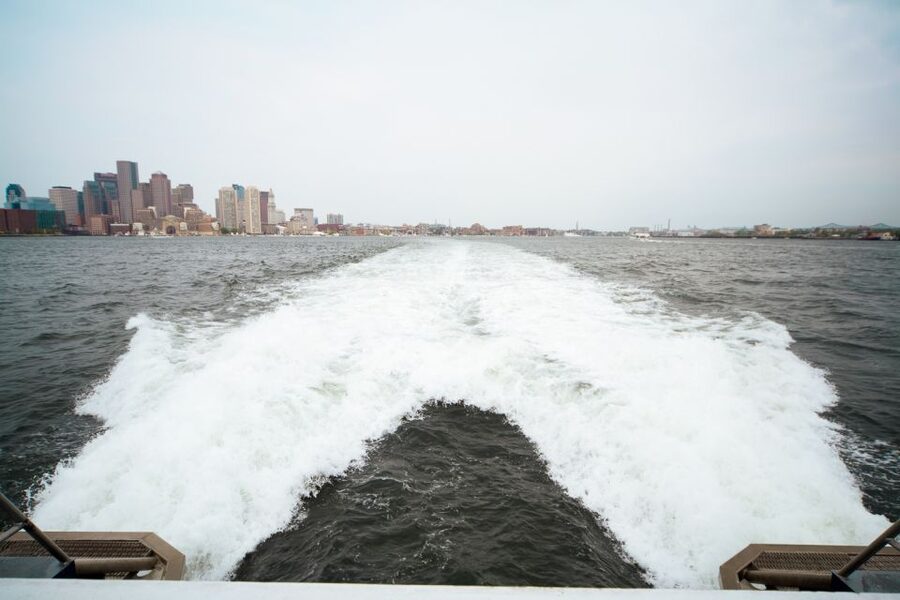
From there, you head out past Castle Island and the Boston Harbor Islands National and State Park. You are not going there to “visit” these places, you are using them as part of the departure route while the boat quickly gains distance from the city. If you like a trip that gets moving, this one does, with a high-speed boat designed to make the offshore portion feel efficient.
The itinerary also includes a key segment in the Gerry E. Studds / Stellwagen Bank National Marine Sanctuary, where you go whale watching for about 1.5 hours. That is the window you care about, and the rest of the time is mostly travel and positioning.
A helpful detail: the time to reach whales can change based on where they are. If sightings are farther out that day, your trip can run longer than the listed 3 hours, and the average sits around 3.5 to 4 hours.
More hulls leaving Long Wharf:
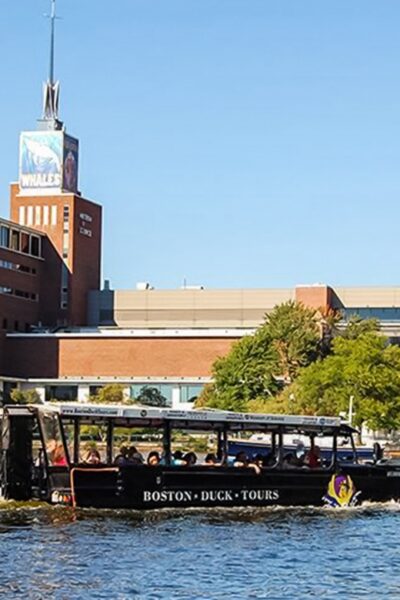
- Boston Duck Boat Sightseeing City Tour with Cruise Along Charles River★ 4.5 · 9,378 reviews
- City Cruises Boston Whale Watching Cruise by High-Speed Boat★ 4.5 · 3,115 reviews
- City Cruises Boston Historic Sightseeing Harbor Cruise★ 4.5 · 1,388 reviews
The boat setup that helps you find whales fast
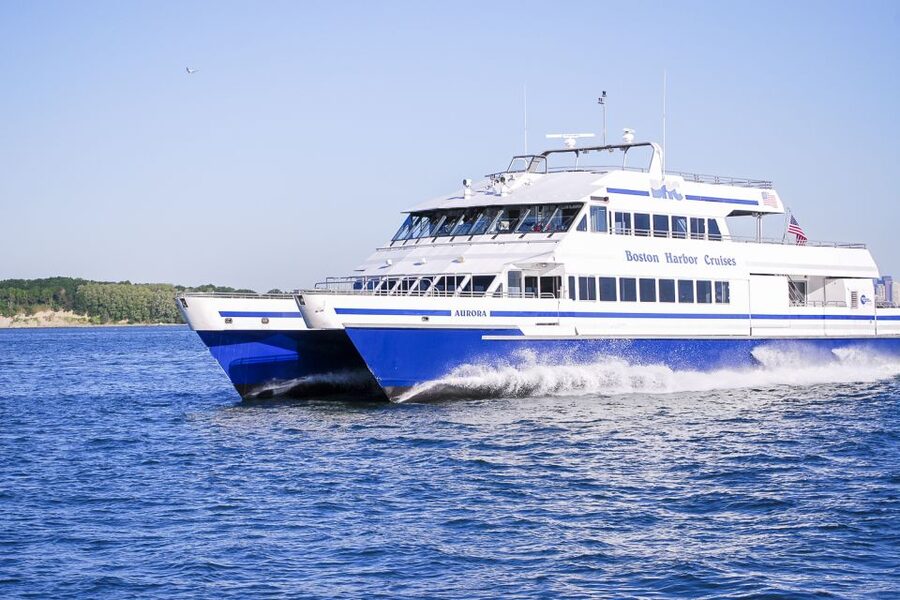
This is a high-speed, comfortable boat built for viewing. The big win is that you can use both the outside decks and the indoor cabin without feeling trapped in one place. When whales surface, you want to be ready to move your eyes and your body, not stuck in a crowded single viewing zone.
On board, you get:
- Outside viewing decks for fresh air and wide sightlines
- A climate-controlled cabin with cushioned seating, tables, and large windows
- State-of-the-art sound and video systems for onboard narration
- A galley where food and drinks are available for purchase
That indoor cabin matters more than you think. If it is windy, colder, or just uncomfortable on top, you can keep watching through the windows while still staying close to the deck entrances. Several guides and crew are also known for moving through the boat to share info and answer questions during the run out and return, which is a nice way to keep everyone pointed in the right direction.
One practical note from recent feedback: the speaker system can be hard to hear for some people, especially if you are far back or on a higher deck section. If you are particular about audio, pick a seat where you can see the guide and also hear the narration clearly.
What you might see off Boston: humpbacks, fins, minkes, and dolphins
This cruise is built around the idea that you are heading to whale habitat, not a guaranteed zoo-style show. The “what” you can hope for is clearly mapped out.
Humpback whales
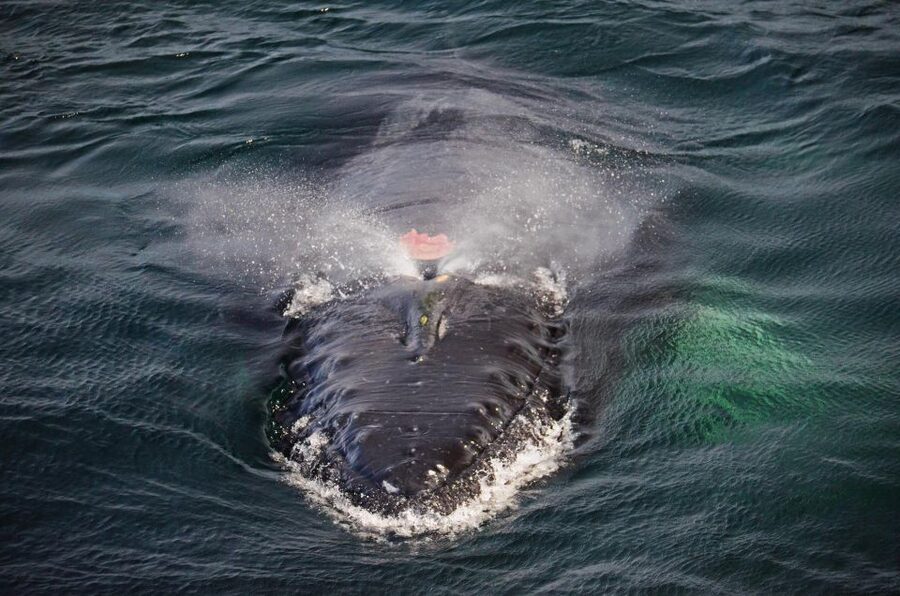
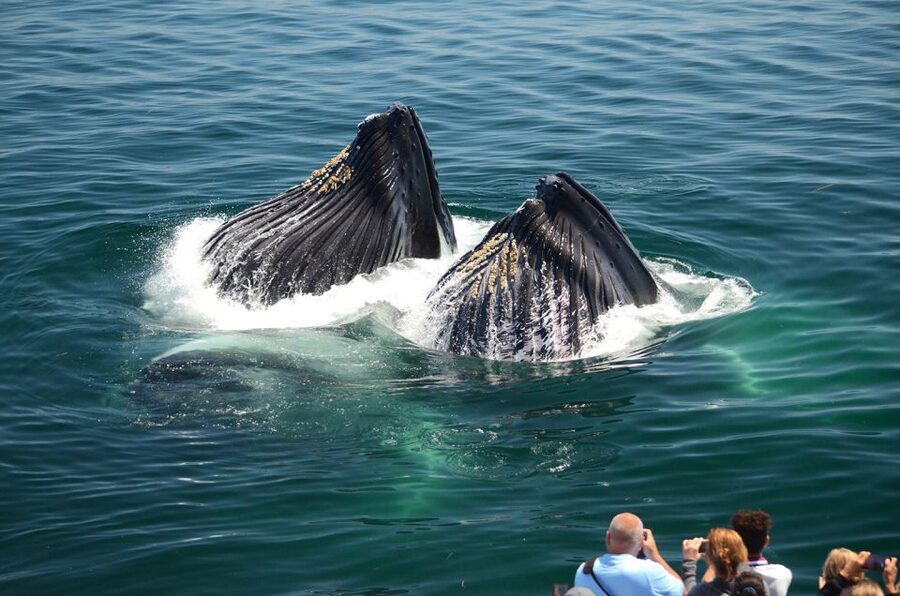
Humpbacks are known for an unmistakable arching back as they prepare for a dive, and the scientific name is Megaptera novaeangliae. You might also hear humpbacks described with names, since onboard talks often include individual identification when possible.
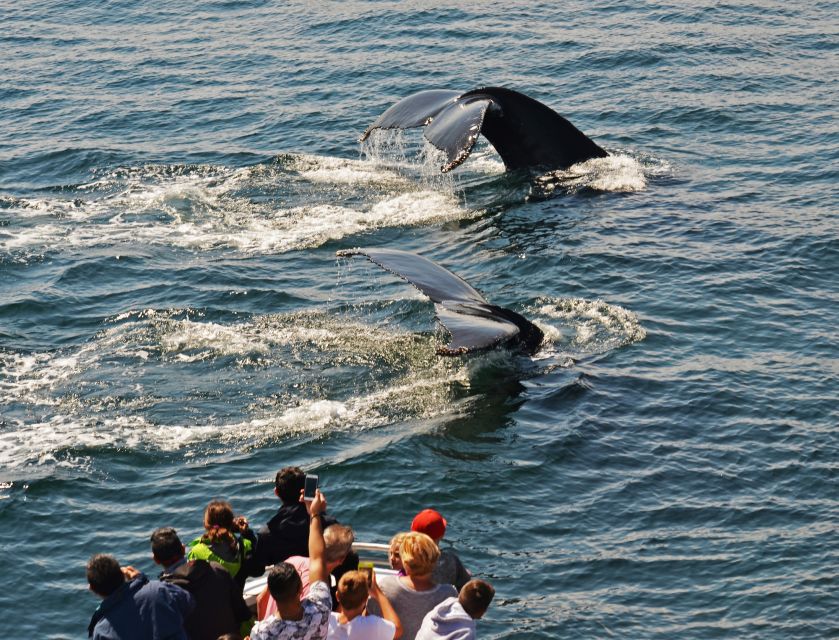
In recent reports tied to this cruise, sightings have included multiple humpbacks in one outing, and there are even mentions of spectacular behavior like breaches and tail displays. Even when whales are not right next to the boat, you can still get great viewing from repeated surface moments.
Fin whales
Fin whales are enormous. They can measure roughly 45 to 70 feet long and weigh around 40 tons when fully grown. The practical takeaway for you is that fin whales can be spotted by size and movement pattern, so onboard narration tends to help you look for the right shape and the right pace.
Another way the same afternoon could go around Boston:




Minke whales
Minke whales are smaller and sleek, often described as dolphin-like. They are also reported as the most abundant whale species worldwide, which means you have a shot at seeing them, though they still are wild and not guaranteed.
White-sided dolphins
This one is fun because dolphins behave more like they are playing. White-sided dolphins are found in the North Atlantic near the Boston region, and they can stick around as they feed. The big difference from whales: dolphins often focus on a single prey type such as squid, while whales can feed on larger concentrations of small fish.
The mix of whales plus dolphins is why this cruise feels like more than just “spot a whale and wait.” If the animals are active that day, the trip can turn into a longer series of sightings rather than one quick moment.
Following the itinerary: Castle Island, the islands, then Stellwagen Bank
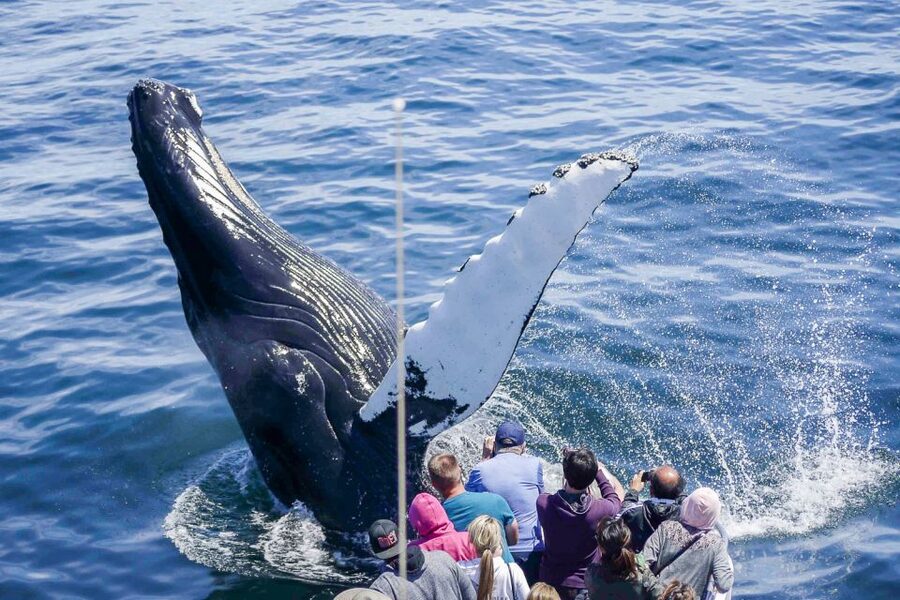
Let’s walk the day in the order you will experience it, and what each step means for your time.
Leaving Boston Harbor and passing Castle Island
Castle Island is right at the start of the story. You mainly experience it as part of the departure route. The benefit is simple: you get out of the urban harbor area quickly, and you are not spending precious time stuck near the dock.
Passing the Boston Harbor Islands
As the boat moves past the Boston Harbor Islands National and State Park, you will likely notice the scenery shift from city edges to open water. This is also a good time to settle into your viewing spot and get your camera ready, since the whale watching section is where you will want both hands free and eyes up.
The whale watching core: Gerry E. Studds / Stellwagen Bank
The whale watching happens at the Gerry E. Studds / Stellwagen Bank National Marine Sanctuary. That is the segment that is typically around 1.5 hours. Real talk: you will want to use that time actively. Move to the deck when you hear or see activity, and then return to indoor windows when it gets too cold or choppy.
You might not see whales immediately, because whales do not follow schedules. That is why onboard commentary is so useful. Naturalists from the New England Aquarium can help you interpret what you are seeing and what direction to focus in, instead of just hoping.
Naturalists from the New England Aquarium: what the onboard talks add
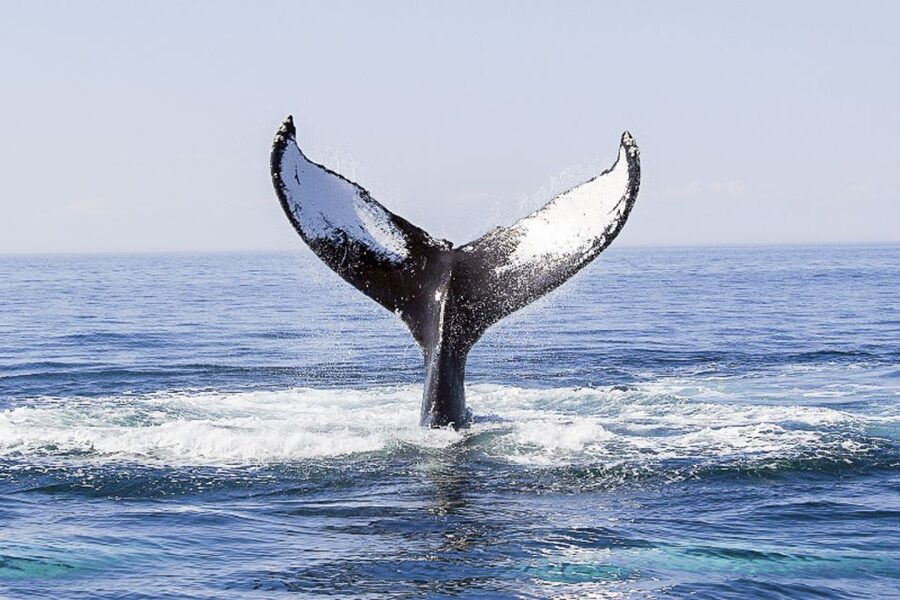
The cruise’s guidance is not generic narration. You have onboard Naturalists from the New England Aquarium, and that makes a difference in how useful the information feels.
From recent feedback tied to this sailing, guides and naturalists have been singled out by name, including Andrew for enthusiasm and strong tour direction, and Amanda for sharing hands-on details like showing a piece of an original humpback whale tooth. Even when you are not watching a whale surface at that exact second, the talk keeps you connected to what could be happening nearby.
Here is what this kind of guidance helps you do:
- Spot behaviors you might otherwise miss, like specific surf patterns and dive prep
- Understand why whales choose particular areas
- Learn the names, traits, and rough identification cues for humpbacks, fins, and minkes
- Ask questions without feeling like you missed the context
It also adds value if you are a first-timer. You still enjoy the thrill, but you also leave with a mental map of what you were seeing and why it mattered.
Comfort, snacks, and the day-to-day reality of sea conditions
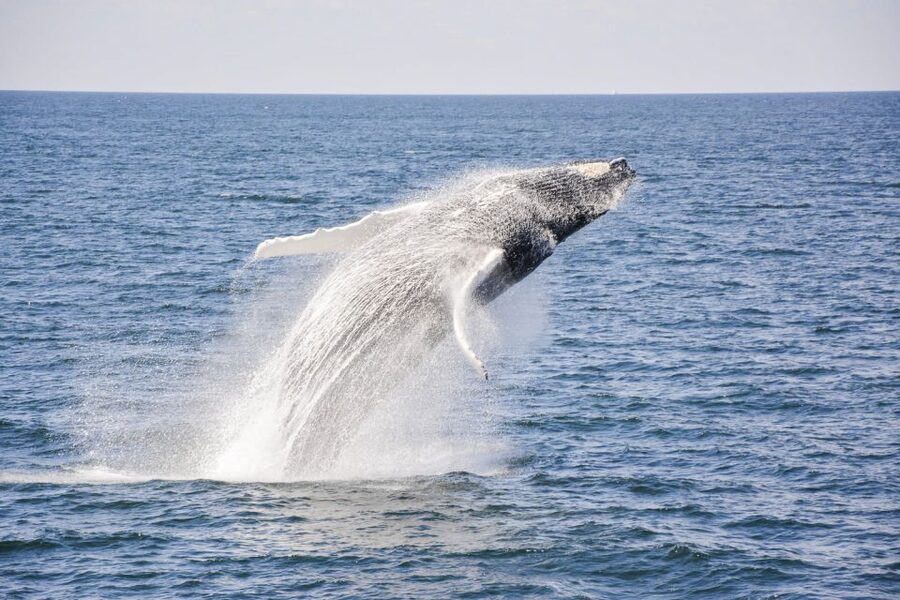
This is where you should think like a practical traveler, not just a whale enthusiast.
The ride comfort sweet spot
The boat is designed for comfort, with cushioned seating in the cabin and outdoor deck access. In many cases, people report that the boat feels stable enough to enjoy even with some wind or chop. Still, if you are motion-sensitive, you should treat this as a real consideration.
The tour is not suitable for people with motion sickness. That is not a small footnote. If you know you feel sick on boats, do not assume you will “tough it out” just because the vessel is high-speed or modern.
What food costs you, and how to plan
Food and drinks are available for purchase on board, with a galley offering snacks and beverages. The price of the cruise gives you the boat experience and the viewing time, but the onboard food is not included. If you tend to snack often, you will want to budget for it or eat before you board.
Recent feedback includes comments praising the snack and drink selection, which suggests there are options beyond just one sad bar snack. Still, you should expect to pay extra if you get hungry.
What to bring for the top deck
Bring what keeps you comfortable when you are standing outside:
- Comfortable shoes
- Sunglasses
- Sun hat
- Camera
- Sunscreen
- Jacket
- Weather-appropriate clothing
- Binoculars (highly useful for scanning)
Even if it feels warm on land, wind off the water can change everything fast. Recent feedback also notes that wind on the top deck can make people feel cold quickly, even when the day seems mild.
The best photo and spotting habits when whales surface
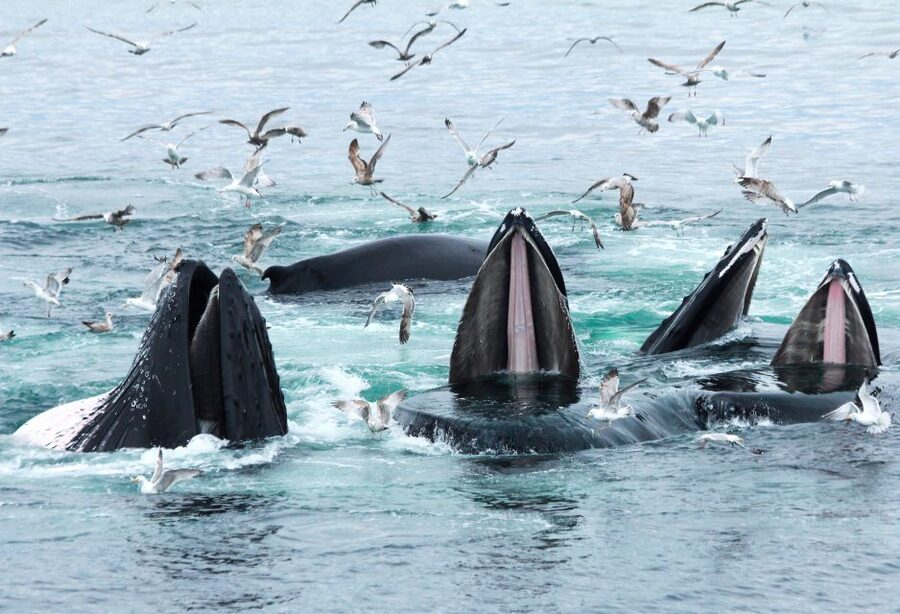
Whales can be close or far. Often, the most memorable moments happen when you are watching the water and not just the screen or the sky.
A few habits make a difference:
- Keep binoculars handy so you can scan, then zoom in fast when you hear whales mentioned
- Take photos during a surface moment, then switch back to watching for the next one
- If you have limited visibility from your seat, use the deck access to improve your angle rather than waiting for someone else to move
There is also a crowd factor. The boat can be busy, and you can get blocked by people who do not shift spots quickly. If you want the clearest viewing, choose a viewing position with a route you can step into when whales pop up. You do not need to fight anyone, you just need to stay flexible.
Who should book this Boston whale watching cruise?
This cruise is best for you if:
- You want a high-speed option that gets you offshore without a long commute
- You enjoy wildlife viewing with guided context, especially from Naturalists from the New England Aquarium
- You want a boat setup with both indoor windows and outdoor viewing decks
- You are excited about multiple species, not just one
It is also a solid pick for people who like structured narration. The sound and video system plus onboard guidance helps you keep your eyes trained on the right areas.
You should probably skip it if:
- You have motion sickness you cannot manage
- You need a quiet, low-stimulation ride, because onboard commentary and a lively crowd are part of the experience
Should you book Boston Harbor City Cruises whale watching?
If your goal is to see whales in the wild off the Boston coast, this is a strong, practical choice. The value comes from three things working together: good viewing capacity, expert-style onboard guidance from the New England Aquarium, and real offshore time at Stellwagen Bank.
Book it if you are comfortable with a boat ride and you can dress for wind and weather. If you are motion-sensitive, I would treat that warning as a dealbreaker rather than a suggestion.
If you are deciding based on price, $85 per person is easier to swallow when you think about what you get for the day: a multi-hour cruise, guided whale identification support, and a chance at a mix of whales and dolphins, not just one quick look. For many people, that combination is exactly what turns a Boston afternoon into a memory you carry for years.
FAQ
Where is the meeting point for the Boston whale watching cruise?
The tour departs from Boston Harbor City Cruises at One Long Wharf, located between the Long Wharf Marriott Hotel and the New England Aquarium. You will present your voucher for scanning to board.
How long is the cruise?
The duration is listed as 210 minutes. In practice, the average trip runs about 3.5 to 4 hours, and it can run longer if the whales are farther out.
What whale and wildlife sightings should I look for?
The cruise may include humpback whales, fin whales, minke whales, and white-sided dolphins. Other wildlife may also appear depending on conditions.
Is food and drink included?
Food and drinks are available for purchase on board, so they are not described as fully included in the ticket price.
What should I bring for the trip?
Bring comfortable shoes, sunglasses, a sun hat, a camera, sunscreen, and a jacket or weather-appropriate clothing. Binoculars can also help for spotting.
Is the cruise wheelchair accessible?
Yes, the activity is listed as wheelchair accessible.
Is this tour good for people with motion sickness?
No, it is listed as not suitable for people with motion sickness. If you get sick on boats, you should plan accordingly.
Written up lately around the harbor
- Boston’s Beacon Hill: Private Walking Tour
★ 5.0 · 1 review - Flynn Cruise Port Boston to Boston hotels – Arrival Private Transfer
★ 5.0 · 1 review - Boston’s Chinatown: Small Group Walking Tour
★ 5.0 · 1 review - Self-Guided Scavenger Hunt: Boston Back Bay & Beyond
★ 4.0 · 1 review - Boston to Woods Hole & Martha’s Vineyard Ferry Private Chauffeur Service
★ 4.0 · 1 review - Classic Martha’s Vineyard 1-Day Escape from Boston
★ 5.0 · 1 review - Private Vacation Photoshoot with Photographer in Boston
★ 5.0 · 1 review
Cruises & Boat Tours, compared.
Boston Duck Boat Sightseeing City Tour with Cruise Along Charles River
Read our review →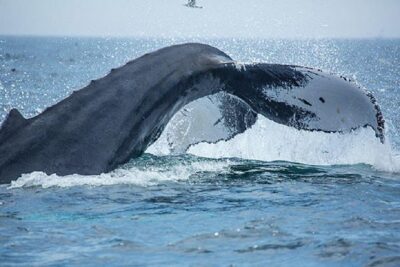
City Cruises Boston Whale Watching Cruise by High-Speed Boat
Read our review →
City Cruises Boston Historic Sightseeing Harbor Cruise
Read our review →
Browse the lists this tour appears in