
Reviewed · HISTORICAL TOURS
Boston History Tour: Scenic Walk Through Time & Landmarks
Boston gets clearer fast with the right guide. This 2-hour history walk links the city’s Revolutionary era to today’s streets, with a small-group feel that keeps the pace relaxed and questions welcome. You’ll cover key places you’ll keep seeing again later, so you leave with bearings and context, not just photos.
Two things I really like are the way the stops connect into a story, and the guide energy. Hearing Boston history through real details at places like Faneuil Hall, the Old State House, and Granary Burying Ground makes the whole city feel like one linked timeline. I also liked the practical bonus built into the tour, a surprise local treat plus plenty of insider tips on where to eat, explore, and take a breather.
One consideration: it is still a walking tour. You’ll cover about 4 km (2.5 miles), rain or shine, and a few moments are outdoors, so comfy shoes and a weather-ready layer are smart.
In This Review
- Key highlights at a glance
- Worth the $39.80 for a Boston overview that actually clicks
- Meeting at Rose Kennedy Greenway, right where Boston looks modern
- Faneuil Hall Marketplace, the meeting place that set the tone
- Old South Meeting House and the Boston Tea Party planning energy
- Old City Hall, French architecture, and the Bronze Donkey photo moment
- Old State House: where the Declaration was announced and the Boston Massacre lands
- Boston Common: memorials, fountains, and the longest-running city park
- Beacon Hill cobblestones and the Shaw Memorial stop
- Massachusetts State House dome stories and John Hancock context
- Granary Burying Ground: the cemetery that ties the names together
- Boston Public Garden finish: first public park and a nice landing spot
- What makes the guides so consistently strong
- Sustainability without the lecture
- Rain or shine: plan your outfit like a local
- Should you book this Boston History Walk?
- FAQ
- How long is the Boston History Tour?
- How much walking is involved?
- What language is the tour offered in?
- Is the tour small-group, and how many people are included?
- Is there a private tour option?
- What is the surprise local treat, and will alcohol be served?
- Does this tour run in bad weather?
- What is the cancellation window?
Key highlights at a glance
- Small group up to 16 keeps the tour interactive and easy to follow
- Free admission stops mean you can focus on the story instead of ticket hassles
- Surprise local treat at the right moment, sometimes with alcohol where ID may be required
- Revolution through architecture, from early public buildings to major civic landmarks
- Guides bring personality, with lots of humor and sharp storytelling
- Carbon-neutral operation run by a B Corp-certified company using travel as a force for good
Worth the $39.80 for a Boston overview that actually clicks
At $39.80 per person for about two hours and roughly 2.5 miles of walking, this tour sits in the sweet spot between a quick highlights loop and a full-day history grind. You’re paying for an expert English-speaking guide who can turn place names into meaning, plus insider routing that saves you guesswork on your first day.
To me, the best value is that you’re not just visiting famous stops. You’re learning what those sites were doing in their time, and what that created for the city later. That turns landmarks like the Old State House or Boston Common from “I’ve seen that on a map” into “I know why it matters.”
Also worth factoring in: the surprise local treat. It may include alcohol, and proper ID is required if alcohol is served, but either way it is a nice extra that makes the tour feel lived-in rather than purely sightseeing.
More of Boston crossed at walking pace:
- Boston: Freedom Trail History Small Group Walking Tour★ 5.0 · 6,450 reviews
- Harvard University Campus Guided Walking Tour★ 4.5 · 3,632 reviews
- Boston Freedom Trail Walking Tour with Costumed Guide★ 4.5 · 2,531 reviews
Meeting at Rose Kennedy Greenway, right where Boston looks modern
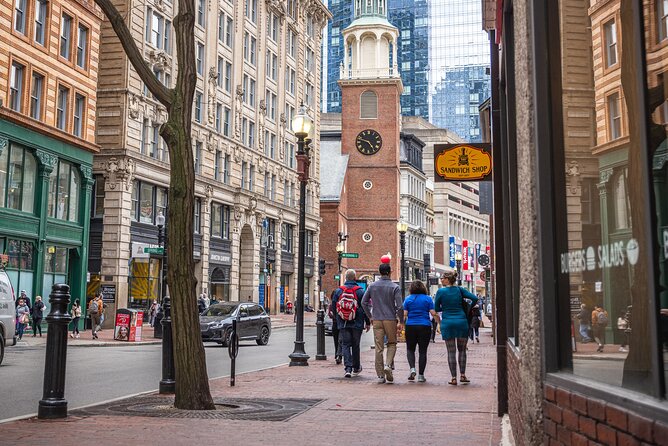
You start at the Greenway Carousel at 191 Atlantic Ave. It’s a good warm-up spot because the area immediately shows Boston’s mix of old and new, then the guide pulls you into the Revolutionary storyline on foot.
This is where you meet up, get organized, and fall into the group rhythm. With a maximum of 16 people, you can usually hear your guide without fighting for space, and it tends to feel more like a shared walk than a loud bus tour.
Faneuil Hall Marketplace, the meeting place that set the tone
Faneuil Hall is where the tour begins in earnest. This is the kind of site where you can sense the civic energy even if you’re not deep into American history. The guide connects it to the push for independence from Great Britain, and you’ll get a clear sense of how political conversation became political action.
From there, the route keeps you oriented toward big-city land marks without making you rush. Quincy Market often comes into the orbit around this area, which is useful if you want lunch or a snack plan after the tour. You also get a view of the Custom House Tower nearby, described as the first skyscraper built in Boston and originally tied to the storage of incoming goods.
A small drawback to know: this stretch can be busy because it is central, commercial, and popular. The good news is the guide keeps you moving at a pace that avoids unnecessary backtracking, so you still get real time with the story.
Old South Meeting House and the Boston Tea Party planning energy
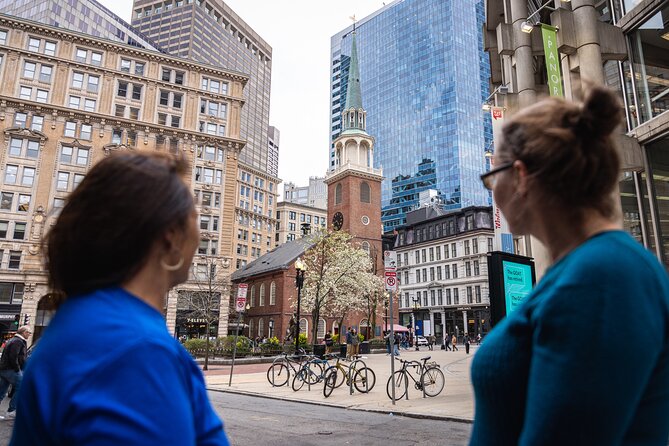
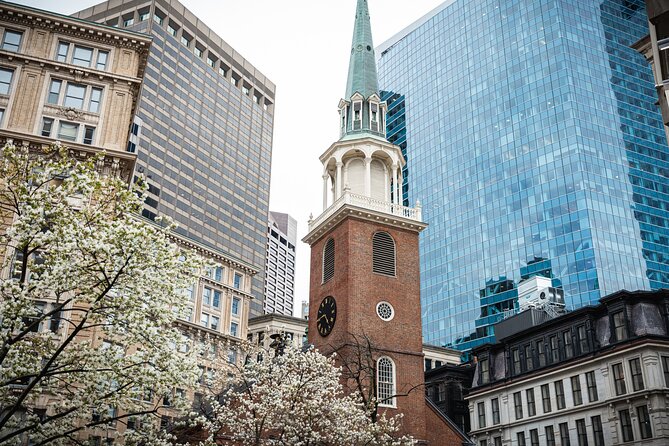
Old South Meeting House is a key stop if you want Boston’s rebellion to feel specific, not generic. You learn how Bostonians planned their 1773 act of rebellion, and the moment is tied back to the famous idea of no taxation without representation.
This stop works well because the setting is former church space, so the guide can explain how public gathering spaces shaped political thinking. You’ll also get a sense that the revolution was organized by ordinary people who cared deeply about rights and local decision-making.
Right after that, you pass the site of Boston’s first bookstore. The tour frames it as a publishing hub for major literary names like Thoreau, Hawthorne, and Longfellow, which is a clever way to widen the scope. Boston was not only politics and protests. It was also ideas on paper, circulating through print culture.
Old City Hall, French architecture, and the Bronze Donkey photo moment
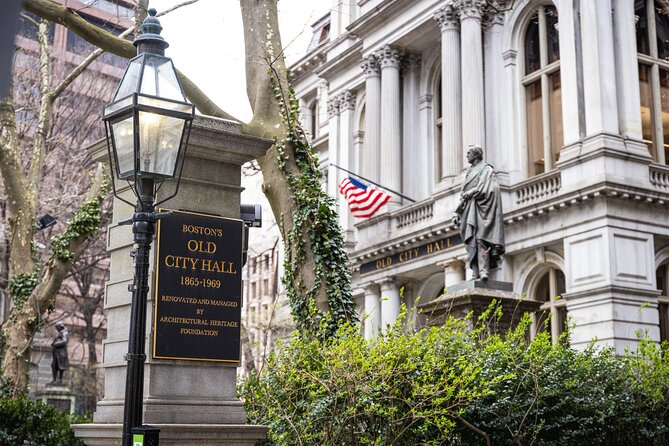
Old City Hall is the kind of stop I always appreciate because it shows civic life beyond the headline events. This hall housed the city council and America’s first public school, which gives you a practical view of what government looked like when it was learning how to serve.
The architecture is stunning, and you’ll have time to admire it and snap a photo with the Bronze Donkey. That little moment sounds silly on paper, but it is actually useful. It breaks up the heavier Revolutionary beats and makes the tour feel human.
From here, you walk through Downtown Crossing and visit King’s Chapel. If you’re lucky, you might hear the organist on the oldest church organ in the US. Even if you do not catch the music, the guide’s explanation helps you understand why places like this became anchors for community identity.
Other walks through revolutionary Boston:
Old State House: where the Declaration was announced and the Boston Massacre lands
Old State House is one of the most powerful stops on the walk. You learn that the Declaration of Independence was announced there in 1776, and the guide also covers the Boston Massacre with the same clear pacing.
This is the moment where the tour stops feeling like “a list of historic buildings” and starts feeling like cause and effect. You see how celebration and conflict lived close together, and you understand that revolutionary change did not arrive with clean boundaries.
You’ll also get your bearings for Boston Common right after this. It is a smart flow. The tour places you from major events into daily space, so you can picture how people moved through the city in real life, not only in textbook chapters.
Boston Common: memorials, fountains, and the longest-running city park
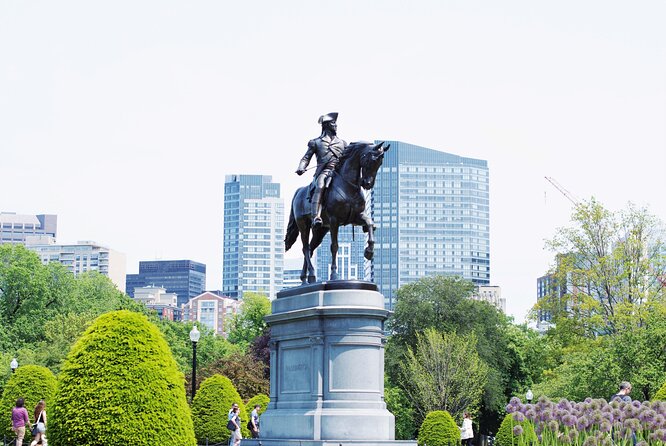
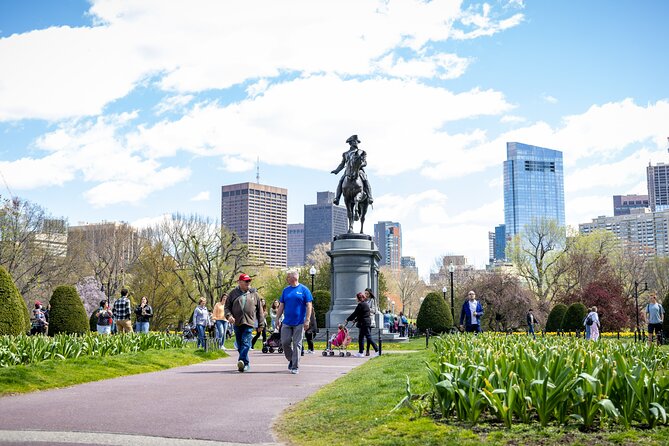
Boston Common is the oldest city park in the US, dating back to 1634. As you walk through, you’ll notice memorials, fountains, and recreation areas that locals have used for centuries, and the guide points out how it functioned during the Revolution and afterward.
This is where you get a quick reset. After crowded downtown streets, Boston Common opens up the space and makes the whole route easier to enjoy. It also gives your legs a break without losing the historical thread.
If you’re a first-time visitor, this stop is especially useful. It gives you an anchor point for the rest of your day. You can decide on the next stroll, meal, or photo without needing to constantly check maps.
Beacon Hill cobblestones and the Shaw Memorial stop
As you move into the next area, the tour shares how the neighborhood once declined due to sailors and British soldiers, then how it became the iconic streetscape people picture today. You’ll walk cobbled streets while your guide translates those urban changes into something you can visualize.
One emotionally powerful highlight is the memorial honoring one of the first African American regiments in the Civil War and their colonel, Robert Gould Shaw. This stop adds depth, because it shifts the focus from the Revolution to later moments when freedom and citizenship were fought for again in different ways.
The pacing here matters. This part of the tour is not only about facts. It is also about letting a heavy story land while you’re still walking with the group and not rushing to the next photo.
Massachusetts State House dome stories and John Hancock context
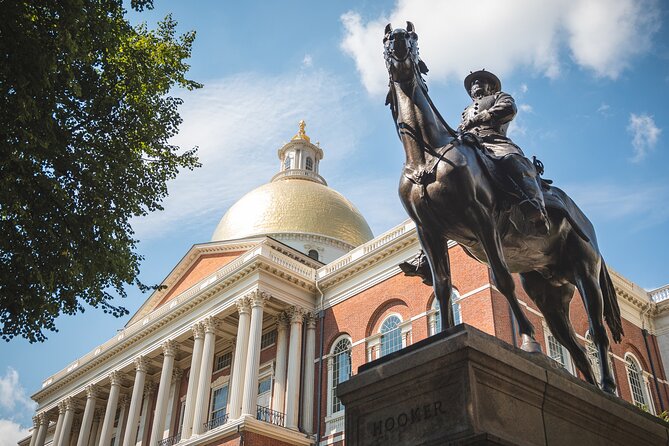
Next comes the Massachusetts State House, with the glittering dome that makes it visible from far away. The guide explains John Hancock’s connection as the original landowner, plus how Paul Revere presided over the 1795 cornerstone ceremony.
This is a great stop if you like the “how did this get built, and who drove it” angle. Instead of just admiring the building, you get the civic background that makes the architecture feel connected to power, planning, and public life.
You’ll also come away with a clearer sense of how Boston’s early political world evolved into formal state government. It’s not just Revolutionary nostalgia. It is a story of institutions growing and continuing.
Granary Burying Ground: the cemetery that ties the names together
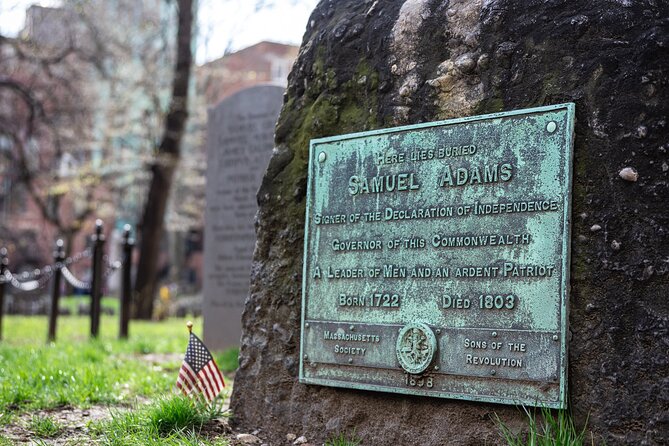
Granary Burying Ground dates back to 1660 and originally belonged to Boston Common. Walking past graves like John Hancock, Paul Revere, and Sam Adams is a fast way to put faces and names to the history you heard earlier.
What I like here is the “recognition effect.” Once you see the people named in earlier stops, the tour’s timeline tightens. The city feels less like separate attractions and more like one continuing place where events left long records.
A practical note: cemeteries are quiet spaces. Keep your voice low and let the group focus. This is one of those moments where the guide’s pacing gives you time to actually absorb what you’re looking at.
Boston Public Garden finish: first public park and a nice landing spot
The tour ends at Boston Public Garden (or nearby), starting from 4 Charles St. This lively garden is the first public park in America, and the guide shares how it was used during the Revolution and beyond.
You’ll finish with a setting that makes it easy to keep enjoying the day. It is a smart ending point because you can wander further, grab a snack, or plan your next stop without feeling like you’re stuck back in busy transit.
If your schedule allows, this is where I would take 20 to 30 minutes to just slow down. The tour gives you context, and the Garden is a good place to let that context settle while you watch people actually enjoying Boston life.
What makes the guides so consistently strong
The biggest reason this tour lands so high for me is the guide quality. In the past, I’ve seen guides named Bob, Nabil, Alivia, Lexie (and also Tim, Conner Bourgoin, Allison, Molly Mitchell, and Clio), and the common thread is delivery: humor, clear structure, and answers that do not feel like rehearsed scripts.
Even when the route is set, guides still adapt. The best ones keep the group together, watch the pace in hot or busy conditions, and make it easy to ask questions. If you’re traveling solo, this also makes it less awkward. You get conversation without forced icebreakers.
Tip for you: ask one follow-up question at the middle stops. For example, you can ask how something like Faneuil Hall connected civic speech to action, or how Boston Common’s role changed over time. If your guide is as good as the ones on this route, you’ll get a response that adds real value.
Sustainability without the lecture
This is a carbon-neutral tour run by a B Corp-certified company using travel as a force for good. You can treat that as a background detail, not a speech. What matters to you is that it signals the company is thinking about environmental impact while still delivering a quality walking experience.
It also fits the tour style. A guided walk is inherently efficient. You get more meaningful time in the city with less wasted travel between stops.
Rain or shine: plan your outfit like a local
Experiences happen rain, shine, or snow. Boston weather can change quickly, so bring layers. You’ll be outside for stretches, including around central areas that can feel crowded in peak times.
Good shoes are not optional here. You cover about 4 km, and while the tour is suitable for all ages and fitness levels, you still need foot comfort to enjoy the stories.
If you’re traveling with kids, the tour is child-friendly. Children under 6 can join for free, and kids aged 6 to 11 join at the adult rate, with details provided during booking.
Should you book this Boston History Walk?
I think you should book this tour if it is your first time in Boston and you want a confident overview without committing to an all-day plan. It is also a strong choice if you like stories that connect politics, architecture, and daily life, because the route keeps weaving those threads together.
I would skip or reconsider if you dislike walking in crowded downtown areas, or if you want less time in retail-heavy zones. The tour is designed for context, so some areas feel like you are passing through to reach the meaning behind the landmark.
If you want a first-day “aha” in Boston, this one is a smart buy. You get a tight route, strong guide storytelling, and a finish in a spot that makes it easy to keep exploring on your own.
FAQ
How long is the Boston History Tour?
It runs for about 2 hours.
How much walking is involved?
The tour covers about 4 km (2.5 miles).
What language is the tour offered in?
The tour is offered in English.
Is the tour small-group, and how many people are included?
It has a maximum of 16 travelers.
Is there a private tour option?
Yes, you can upgrade to a private tour for a more personalized experience.
What is the surprise local treat, and will alcohol be served?
A surprise local treat is included, and alcohol might be served. If alcohol is served, proper ID will be required.
Does this tour run in bad weather?
Yes, it runs rain, shine, or snow, so you should dress for the conditions.
What is the cancellation window?
You can cancel for free up to 24 hours in advance for a full refund.
Written up lately around the harbor
- Boston’s Beacon Hill: Private Walking Tour
★ 5.0 · 1 review - Boston’s Chinatown: Small Group Walking Tour
★ 5.0 · 1 review - Self-Guided Scavenger Hunt: Boston Back Bay & Beyond
★ 4.0 · 1 review - Flynn Cruise Port Boston to Boston hotels – Arrival Private Transfer
★ 5.0 · 1 review - Classic Martha’s Vineyard 1-Day Escape from Boston
★ 5.0 · 1 review - Boston to Woods Hole & Martha’s Vineyard Ferry Private Chauffeur Service
★ 4.0 · 1 review - Private Vacation Photoshoot with Photographer in Boston
★ 5.0 · 1 review
Historical Tours, compared.
History and Hauntings of Salem Guided Walking Tour
Read our review →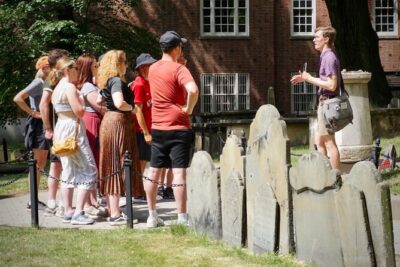
Freedom Trail History Small Group Walking Tour
Read our review →
Tour of Historic Fenway Park, America’s Most Beloved Ballpark
Read our review →
Boston Food & History: Pizza, North End & Freedom Trail
Read our review →
Freedom Trail History Small Group Walking Tour
Read our review →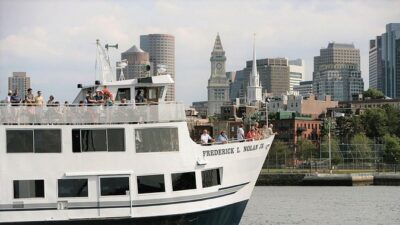
City Cruises Boston Historic Sightseeing Harbor Cruise
Read our review →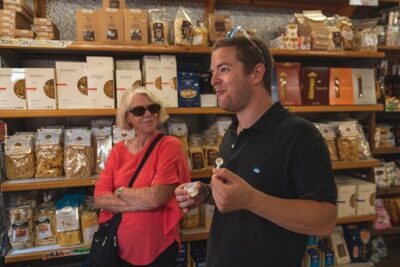
Boston’s North End Food Tour: Italian Flavors & Heritage Walk
Read our review →Browse the lists this tour appears in