
Reviewed · HISTORICAL TOURS
Boston Untold History Walking Tour
Boston’s best stories are not on the postcard.
This 2.5-hour walking tour swaps the usual highlights for untold Boston connections and practical local context from a life-long local guide. I especially like the focus on deep, specific characters instead of generic facts, and the way the route stitches major landmarks into one clear story. One thing to plan for: some stops may involve entry fees that are not included, so bring a little extra money just in case.
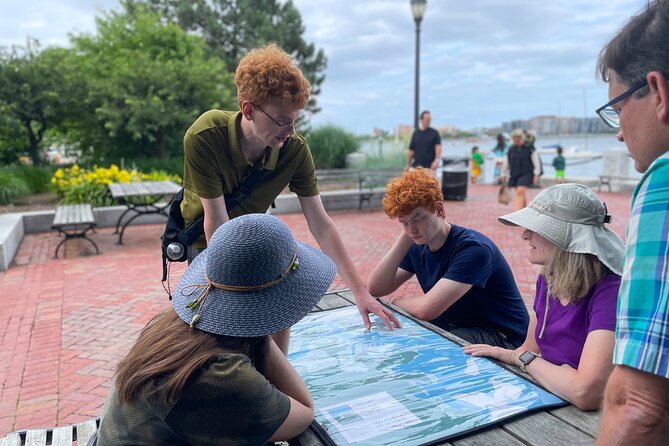
You start downtown at 75 Boylston St and end on Commercial St, so you get a real change of scenery instead of looping in place. The pace works for a moderate fitness level, with lots of short walks and frequent stops so you can actually hear the stories, not just pass by the sights.
In This Review
- Key things I’d circle before you go
- Starting at 75 Boylston, then walking into Boston’s side doors
- Central Burying Ground: where Boston’s timeline starts to feel real
- Boston Common and the buried subway story you won’t get elsewhere
- Massachusetts State House: Billy Bulger, Whitey Bulger, and the power story
- Old City Hall and the Charles Ponzi scam that named a concept
- Boston City Hall: hated by locals, loved by architects
- Faneuil Hall Marketplace: from famous gathering place to a 1826 food hall
- Rose Fitzgerald Kennedy Greenway: the Big Dig, explained while you walk it
- Boston Harborwalk: artificial land, real shoreline, and 1/6 of Boston
- North End and the Paul Revere statue: legends with a reality check
- Great Molasses Flood: a disaster lesson with lasting fallout
- Timing, pacing, and who this walking tour fits best
- Price and value: where your money goes on this route
- Should you book Boston Untold History?
- FAQ
- How long is the Boston Untold History Walking Tour?
- Is the tour in English?
- Is food included?
- Where does the tour start and end?
- Does the tour have group size limits?
- What kind of participant fitness level is needed?
- What is the cancellation policy if weather is bad?
Key things I’d circle before you go
- Small group feel (max 15), so you’re not just another body in a crowd.
- More Boston Common than most tours, including the story tied to America’s first subway under it.
- Character-driven stops with stories about Billy Bulger, Whitey Bulger, Charles Ponzi, and more.
- Big Dig impact in walking form, through the Rose Fitzgerald Kennedy Greenway.
- Waterfront engineering facts, including why 1/6 of Boston’s land is artificial.
- Legend stories corrected, with a focus on the true Paul Revere ride and the Great Molasses Flood.
Starting at 75 Boylston, then walking into Boston’s side doors
The tour begins at 75 Boylston St, right in the downtown mix, and uses a mobile ticket for smooth entry. Since it’s an English-language experience with a small group cap, you’ll usually get a guide who can manage questions without turning the walk into a traffic jam.
From the start, the vibe is simple: you’re here for story, not photo ops. The route is built so the meaning of each place shows up as you move, not as you race between stops. And when it ends near 521 Commercial St, you finish close to the harbor area and the kind of wandering that naturally follows.
More of Boston crossed at walking pace:
- Boston: Freedom Trail History Small Group Walking Tour★ 5.0 · 6,450 reviews
- Harvard University Campus Guided Walking Tour★ 4.5 · 3,632 reviews
- Boston Freedom Trail Walking Tour with Costumed Guide★ 4.5 · 2,531 reviews
Central Burying Ground: where Boston’s timeline starts to feel real
Your first stop is the Central Burying Ground, a historic graveyard with graves from the earliest parts of Boston’s story. Even if you’re not a cemetery person, it works as a strong primer, because it anchors everything that follows in people who lived through the city’s earliest days.
This is also a useful reset point. The talk is short here, but it sets the tone for how this guide reads Boston, like a place where the past keeps leaking into the present.
Practical note: graveyards can be uneven, so wear shoes with real grip. It’s not a long stop, but it’s still feet-on-stone territory.
Boston Common and the buried subway story you won’t get elsewhere
Boston Common is one of those places everyone visits. The trick on this tour is that you don’t just admire the lawn, you hear a story tied to what’s under it.
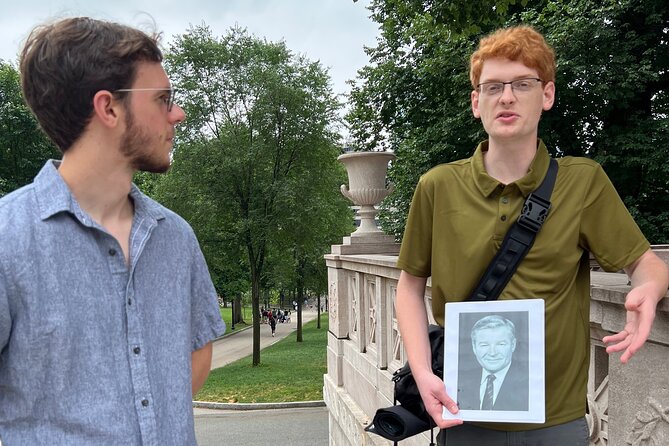
You’ll hear the claim that America’s 1st subway is buried under Boston Common, including how it was built and how it shaped Boston’s culture. It’s a clever way to change your mindset. Instead of seeing Boston Common as a park, you start seeing it as a top layer over big infrastructure choices.
Then the tour pivots to Dr. King. You’ll see the MLK statue Boston put up on the Common to honor his legacy, with the added context that MLK spent many years in Boston and earned his PHD here. It turns the usual monument moment into a reminder that Boston’s story is not only about wars and politicians, but also education and civil rights.
Massachusetts State House: Billy Bulger, Whitey Bulger, and the power story
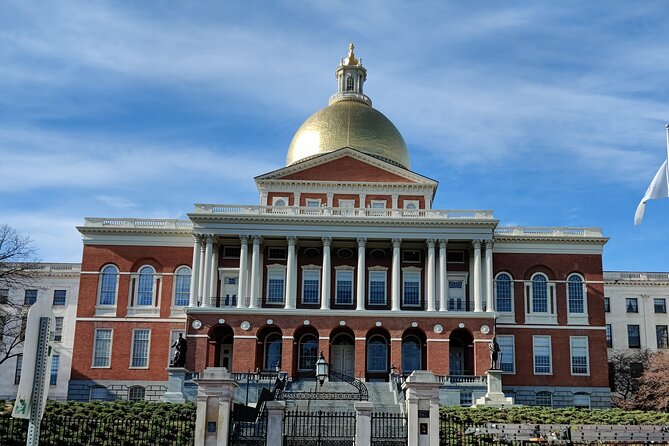
At the Massachusetts State House, the guide focuses on state-level power through the complicated relationship involving State Senate President Billy Bulger and the infamous Irish mobster Whitey Bulger. This is one of those stops where you learn how politics, loyalty, and criminal influence can tangle up in public institutions.
The time at this stop is longer than the Common stops, and it’s one of the places where you’ll feel the tour’s strength: it doesn’t treat big names like trivia. It connects the names to what people in Boston had to deal with at the time.
Consideration: the State House stop lists admission ticket not included, so double-check what costs might apply on the day. Even without stepping inside for long, the story matters, but budgeting helps.
Old City Hall and the Charles Ponzi scam that named a concept
Just next door, you hit Old City Hall, where the tour connects the building to Charles Ponzi, the con-man whose scheme was so legendary the term Ponzi scheme took its name from him.
This stop works for two reasons. First, it’s a crime story with a clear subject, so you can actually follow what happened. Second, it shows how Boston’s built environment has housed not only institutions, but also schemes that became global vocabulary.
The listed admission for this stop is not included, so if your plan includes going inside, plan for that. If you decide not to, you’ll still get the narrative value from what your guide explains outside.
Other walks through revolutionary Boston:
Boston City Hall: hated by locals, loved by architects
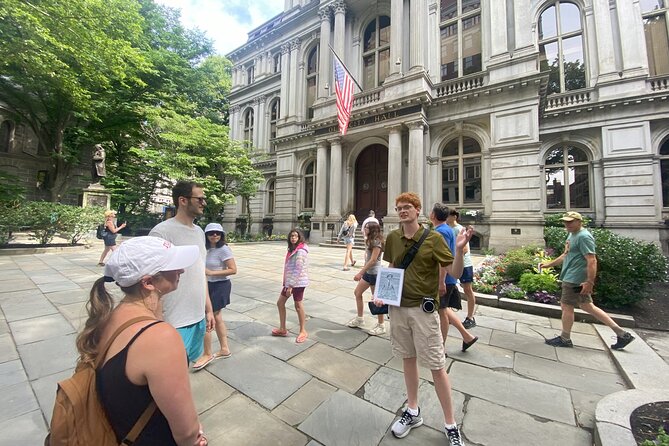
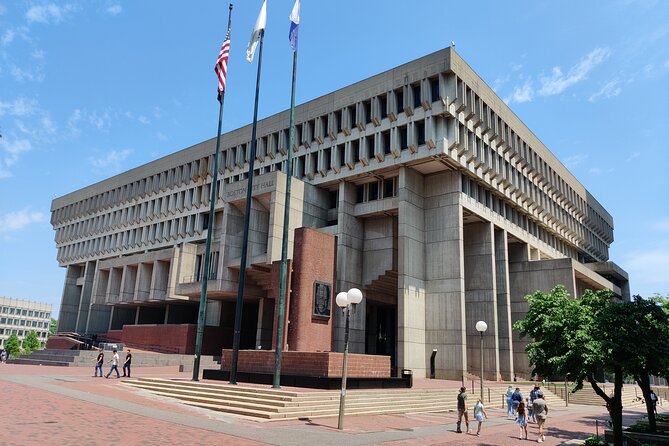
At Boston City Hall, the tour tackles an angle that’s easy to miss if you’ve never asked locals for opinions: the building is simultaneously hated by citizens and beloved by architects. That’s a great setup because it forces you to notice design choices, not just history plaques.
You’ll get the guide’s explanation for why that split exists, which is a satisfying change of pace. This isn’t just a past-meets-present lecture. It’s also about how people judge their cities while they’re living in them.
As with a few interior-prone stops, the tour lists admission ticket not included for this stop. So factor that into your expectations, especially if you’re someone who hates surprise costs.
Faneuil Hall Marketplace: from famous gathering place to a 1826 food hall
Next comes Faneuil Hall Marketplace, where the guide walks you through how the place’s role has changed over the years. You’re also told about the historic marketplace being built in 1826, and how it now functions as a food hall and commercial center.
This stop is one of the more practical ones, because Faneuil Hall today is still a working space. The tour’s value here is that you see the layers: the public gathering energy, then the modern use, then how that shift reflects broader Boston change.
If you’re the type who always wondered how a historic civic site became a food-and-shop magnet, this is the answer. If you’re not, it still works because it reframes why the building feels busy in the first place.
Admission is listed as not included for this stop, so if you plan to go deeper into areas tied to events or paid entries, keep that in mind.
Rose Fitzgerald Kennedy Greenway: the Big Dig, explained while you walk it
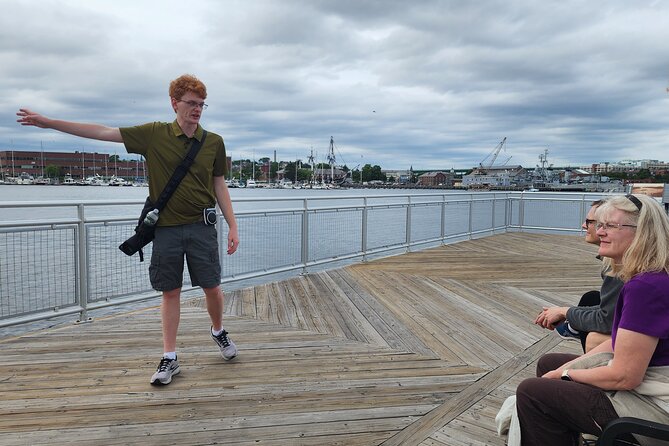
The tour moves to the Rose Fitzgerald Kennedy Greenway, where you learn about how an old elevated highway ripped apart the city, and how Boston stitched it back together with the Big Dig. Walking this stretch is an effective way to understand urban planning, because the scale of the space makes the problem and the fix easier to picture.
The guide keeps it focused on consequences, not slogans. You learn what the highway divided, and why the later redesign mattered to how people move through the city now.
This is one of the most visually “explainer” stops. Even if you’ve heard of the Big Dig before, the way this tour frames it makes it feel less like a headline and more like a neighborhood-level story.
Boston Harborwalk: artificial land, real shoreline, and 1/6 of Boston
At the Boston Harborwalk, you’ll hear the story of how Boston expanded its land area and why 1/6th of Boston’s land is artificial. That fact can sound abstract until you’re right near where the city meets the water, and your brain starts mapping how the coastline would have looked before all that building.
This stop is also a reminder that Boston’s identity isn’t only about old buildings. It’s about engineering decisions that reshaped where people live, work, and gather.
Admission is listed as free for this stop, which makes it a nice payoff without extra ticket friction.
North End and the Paul Revere statue: legends with a reality check
As the tour heads toward the North End area, you get context on the neighborhood as a historic Italian community and one of Boston’s best food zones. You don’t need a lecture to feel that reputation, but the guide’s framing helps you understand why the food culture matters beyond taste.
Then the walk brings you to the Paul Revere Statue, where you hear the true story of Paul Revere’s ride and why his name became so famous. This is another standout because it pushes beyond the simple schoolbook version. The details help you see how storytelling turns into brand power, and how Boston became part of that legend machine.
The tour lists free admission for this stop. That means you get the story value without the hassle of extra entry rules.
Great Molasses Flood: a disaster lesson with lasting fallout
The final big historical hit is the Great Molasses Flood Plaque, where you hear the full story of how the molasses flood happened and the fallout it caused for Boston. This stop is fun in the best way, because it’s memorable, but it’s also serious about consequences.
It also shows what this tour is good at: taking events that sound almost too strange to be true, then treating them like real turning points. You don’t just learn what happened, you learn why it mattered afterward.
This is another free stop, and it’s a strong closer because the story lingers. You leave thinking about how a city handles surprises and what gets changed after damage.
Timing, pacing, and who this walking tour fits best
The experience lasts about 2 hours 30 minutes, with short stops that add up. That structure matters because it keeps your attention. You’re not stuck in one long lecture. You’re moving, then stopping briefly, then moving again.
The group stays small, with a maximum of 15 travelers, which usually makes it easier to ask questions and hear the guide clearly. It’s also offered in English and relies on a mobile ticket. Plan your day around that and arrive on time at the start, 75 Boylston St.
You’ll want moderate physical fitness, mostly because it’s a walking-focused route through downtown and waterfront areas. It’s not described as extreme, but you should still expect a fair amount of walking.
If you care about Boston beyond the usual Freedom Trail loop, this tour makes sense. The stories here aim at other parts of the city and the people connected to them, including politics, crime, infrastructure, and local turning points.
Price and value: where your money goes on this route
The tour is described with several free admission stops and several places where admission ticket is not included. Practically, that means you should expect low or no extra costs for some stops, but possible entry fees at others like the State House and Old City Hall.
So the value question becomes simple: are you going to want to go inside? If you’re happy with the exterior story and the guide’s context, you’ll likely find this a very cost-smart way to cover a lot of topics in one afternoon. If you plan to add interiors at the non-included stops, budget extra so you don’t feel squeezed.
Also, there’s included guidance by a life-long local, and small group size usually adds real value. You’re buying interpretation, not just movement.
Should you book Boston Untold History?
I’d book it if you want Boston that feels more like a narrated walk through causes and consequences, not a list of monuments. You’ll likely enjoy the deep cuts angle, with specific character stories like Billy and Whitey Bulger, Charles Ponzi, and Paul Revere, plus civic and engineering themes like the Big Dig and the Harborwalk land expansion.
I might skip it if you need a purely outdoor-only experience with no chance of paid entries, because a few stops list admission not included. And if you love the most famous tourist route, this one deliberately steers you elsewhere, so it’s best for people who want variety.
FAQ
How long is the Boston Untold History Walking Tour?
It’s approximately 2 hours 30 minutes.
Is the tour in English?
Yes, it’s offered in English.
Is food included?
Food and drink are not included. You can get recommendations after your tour.
Where does the tour start and end?
It starts at 75 Boylston St, Boston, MA 02116, USA, and ends at 521 Commercial St, Boston, MA 02109, USA.
Does the tour have group size limits?
Yes. It has a maximum of 15 travelers.
What kind of participant fitness level is needed?
The tour is suited for travelers with a moderate physical fitness level.
What is the cancellation policy if weather is bad?
You can cancel for a full refund up to 24 hours in advance. The tour requires good weather, and if it’s canceled due to poor weather, you’ll be offered a different date or a full refund.
Written up lately around the harbor
- Boston’s Beacon Hill: Private Walking Tour
★ 5.0 · 1 review - Boston’s Chinatown: Small Group Walking Tour
★ 5.0 · 1 review - Self-Guided Scavenger Hunt: Boston Back Bay & Beyond
★ 4.0 · 1 review - Flynn Cruise Port Boston to Boston hotels – Arrival Private Transfer
★ 5.0 · 1 review - Boston to Woods Hole & Martha’s Vineyard Ferry Private Chauffeur Service
★ 4.0 · 1 review - Classic Martha’s Vineyard 1-Day Escape from Boston
★ 5.0 · 1 review - Private Vacation Photoshoot with Photographer in Boston
★ 5.0 · 1 review
Historical Tours, compared.
History and Hauntings of Salem Guided Walking Tour
Read our review →
Freedom Trail History Small Group Walking Tour
Read our review →
Tour of Historic Fenway Park, America’s Most Beloved Ballpark
Read our review →
Boston Food & History: Pizza, North End & Freedom Trail
Read our review →
Freedom Trail History Small Group Walking Tour
Read our review →
City Cruises Boston Historic Sightseeing Harbor Cruise
Read our review →
Boston’s North End Food Tour: Italian Flavors & Heritage Walk
Read our review →Browse the lists this tour appears in