
Reviewed · HISTORICAL TOURS
Boston: Votes for Women History Tour of Back Bay
Women’s rights history starts on your street. This small-group walking tour in Boston’s Back Bay follows key suffrage figures and critics as you move between landmark exteriors, with an expert guide named Maura sharing the stories behind the buildings. I like that you get a tight route with lots of recognizable stops, from the Boston Public Garden to the Boston Public Library, plus a finish at the Boston Women’s Memorial. I also like the small group setup, max 15, so questions do not get lost in the crowd. The one thing to plan for is steady standing, since this is a walking tour and it is not recommended if you struggle to stand for long periods.
If you have done the Freedom Trail before, this tour gives you a different lens on the same city. Instead of focusing on the usual big names only, you see how local organizers, opponents, and institutions shaped the fight for women’s voting rights. And because so many stops are outdoors and free to view, you can spend your time listening instead of checking tickets.
One practical consideration: most museum entry is not included, so expect the value to be in the guided walking and storytelling more than in indoor galleries.
In This Review
- Key things to know before you go
- Why Boston’s Back Bay route works for suffrage history
- Price and timing: what $35 buys you in the real world
- Your stop-by-stop route: landmarks that turn into people and power
- Make Way for Ducklings, then you shift to civic memory
- Boston Public Garden: a public institution where ideas could spread
- Washington’s equestrian statue: power on display
- 6 Marlborough St: Pauline A. Shaw and the local engine of change
- A historic church site connected to shifting ideas
- Homes that show the debate inside one city
- The Ames Mansion centerpiece: money, politics, and opposition
- The College Club of Boston: the power of women’s institutions
- Historic Museum of Natural History building, then MIT ties
- Copley Square and Boston Public Library: civic power in stone
- Boston Marathon finish line and a street of public life
- Spiritualist Temple: women leading public meetings
- Boston Women’s Memorial: the final image
- How Maura’s guiding style changes what you notice
- Who should book this tour, and who might skip it
- Should you book the Boston Votes for Women History Tour of Back Bay?
- FAQ
- How long is the Boston Votes for Women History Tour of Back Bay?
- What does the tour cost?
- How large are the groups?
- Where does the tour start and end?
- Is museum admission included?
- Is the tour offered in English?
- Is it a good idea if I have trouble standing for long periods?
- What should I do if weather is bad?
Key things to know before you go
- Small-group limit of 15 keeps the pace conversational and helps you get answers as you go
- Outdoor-and-exterior stops mean you can keep moving without paying for admissions inside museums
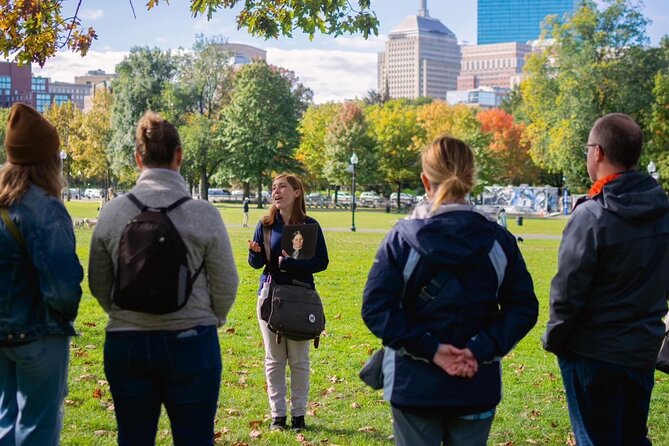
- Maura’s storytelling connects individual people to the buildings you already walk past
- A strong mix of pro-suffrage and anti-suffrage voices helps you understand the full debate, not just one side
- Back Bay landmarks are part of the plot including Boston Public Garden, Copley Square, and Boston Public Library
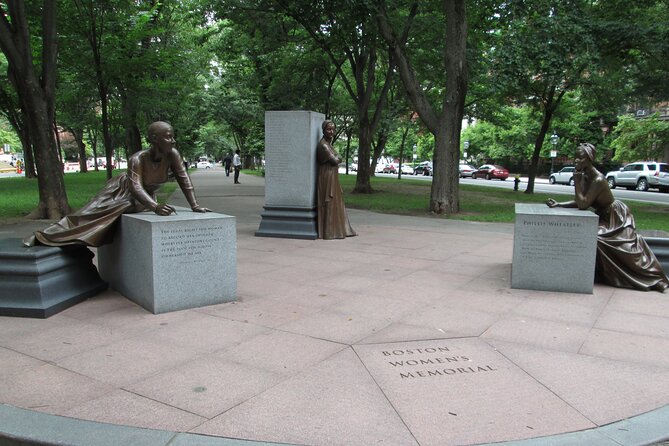
- You finish at the Boston Women’s Memorial where major figures like Abigail Adams and Lucy Stone are right in front of you
Why Boston’s Back Bay route works for suffrage history
This is a smart way to learn because the neighborhood does not feel like a museum. The tour moves through streets, institutions, and civic spaces that still shape how Boston functions today. In about 2 hours and 30 minutes, you get a concentrated story of women’s rights that stays grounded in places you can actually locate on a map.
Back Bay is also easy to navigate because the landmarks are close enough to walk between, but distinct enough that each stop feels like a chapter. You start near Make Way for Ducklings, then work your way into bigger public spaces like the Public Garden, Copley Square, and the Boston Public Library. Along the way, you pause at specific addresses connected to suffrage and anti-suffrage leaders, including financier Pauline A. Shaw and anti-suffragist Mary Shreve Ames.
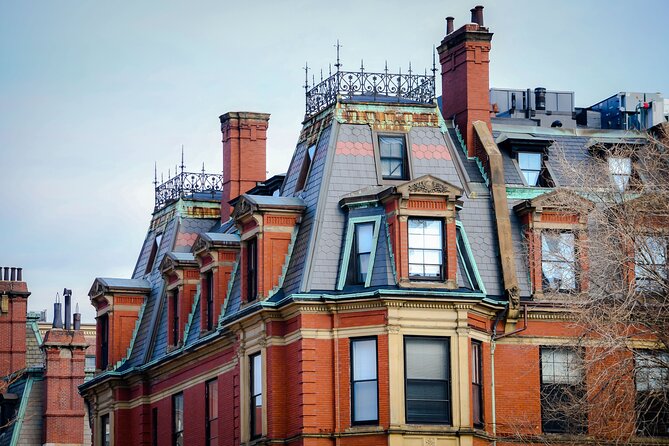
And yes, you will see plenty of old stone and brick. That is the point. The tour uses architecture as evidence of who had influence, where power gathered, and how public life was organized.
Other walks through revolutionary Boston:
- Boston: Freedom Trail History Small Group Walking Tour★ 5.0 · 6,450 reviews
- Tour of Historic Fenway Park, America’s Most Beloved Ballpark★ 4.5 · 3,013 reviews
- Boston Food & History: Pizza, North End & Freedom Trail★ 5.0 · 1,772 reviews
Price and timing: what $35 buys you in the real world
At $35 per person for about 2 hours 30 minutes, this is a good value if you like guided context. You are paying for interpretation, not for museum entry. Most stops are either free to view or focused on buildings and public spaces where you can look around on your own for a few minutes before moving on.
The tour also includes a mobile ticket and is offered in English. That matters because it keeps your planning simple once you are in Boston, and it keeps the storytelling focused on the same language from stop to stop.
One other value factor: the group size is capped at 15. That usually translates to a guide who can actually hear questions. If you are the kind of traveler who likes to ask why a person mattered, or how a local group fought for votes, you will likely appreciate the format.
Your stop-by-stop route: landmarks that turn into people and power
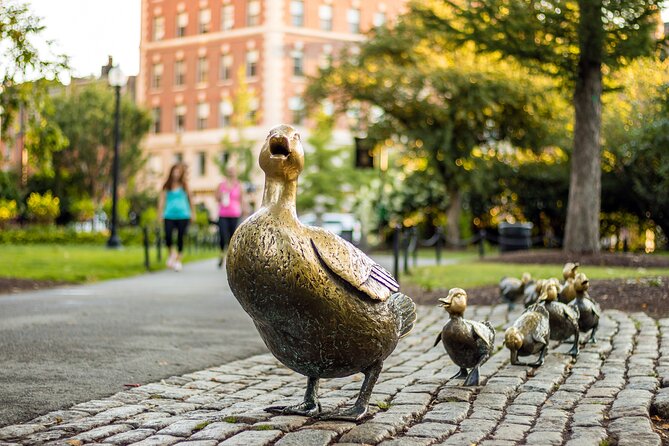
The tour starts at Make Way for Ducklings at 4 Charles St, right at the Nancy Schön sculpture. You also end at the Boston Women’s Memorial at 256 Commonwealth Ave, by the Commonwealth Avenue Mall, about 0.8 miles from the start. The walking portion is the backbone here, so wear comfortable shoes and expect a steady pace.
Make Way for Ducklings, then you shift to civic memory
You begin at a sculpture inspired by Robert McCloskey’s classic picture book. It is a cheerful starting point that also quietly signals something important: Boston has a habit of turning stories into public art. The tour uses that idea to transition you from what feels familiar and child-friendly into a more serious, real civic story.
Think of this first stop as a warm-up for how the tour works. You are not just reading plaques, you are learning how a city preserves memory.
Boston Public Garden: a public institution where ideas could spread
Next up is the Boston Public Garden, established in 1837 as the first public botanical garden in the United States. It is a free stop and only about 10 minutes, which is perfect for getting your bearings while also getting a sense of how “public” spaces in Boston have long mattered.
Even if you are just walking through quickly, you can connect this setting to the broader theme of access. Suffrage advocates were pushing for political inclusion. Public gardens, libraries, and civic squares were part of the world where public life happened.
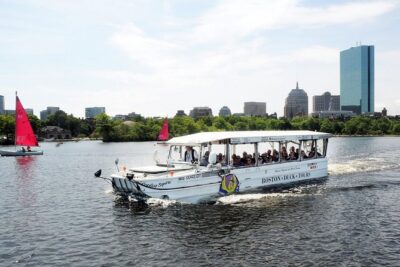
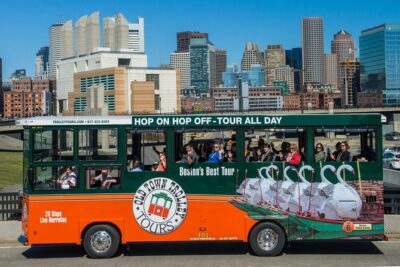
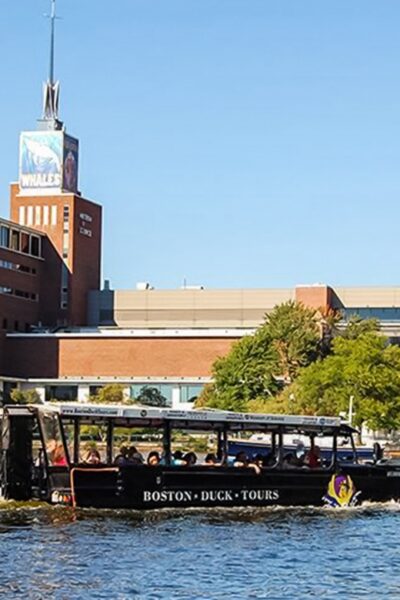
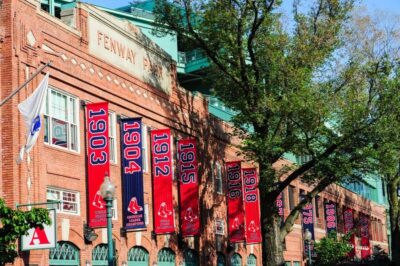
Another way the same afternoon could go around Boston:

Washington’s equestrian statue: power on display
You will pause for the equestrian statue of George Washington by Thomas Ball, commissioned in 1859. It is a reminder that public space often highlights male leadership. In a tour like this, that contrast becomes part of the lesson. You look at who gets honored in stone and you start asking who was still excluded from voting.
This is also one of those spots where the guide’s framing really matters. A statue can be just a statue, or it can become a clue about who held authority.
6 Marlborough St: Pauline A. Shaw and the local engine of change
At 6 Marlborough St, you stop at the home of Pauline A. Shaw, described here as a financier of Boston’s women’s suffrage movement. It also connects to her role as founder of the Boston Equal Suffrage Association for Good Government.
This is where the tour gets personal in a very practical way. People often imagine suffrage as marches and speeches. This stop adds a different kind of work to your mental picture: organizing, funding, and building associations that could actually influence public policy.
A historic church site connected to shifting ideas
You then move to a church tied to Boston’s early founding, established in 1630 and later described as a center of the Transcendentalist movement. Without getting stuck in architecture nerd territory, you can see how Boston has hosted different waves of reform thinking, spiritual questioning, and social debate over the centuries.
In a women’s rights tour, that kind of environment matters. Reform movements do not usually sprout in a vacuum.
Homes that show the debate inside one city
Several subsequent stops focus on homes tied to both sides of the suffrage argument, including:
- Elizabeth Putnam, described as an anti-suffragist and the first woman to preside over a state electoral college
- Julia Ward Howe
- Blanche Ames, a pro-suffrage cartoonist and early advocate for birth control
Each pause is short, around a few minutes, but the cumulative effect is strong. You start to realize suffrage was not just a single storyline. It was a heated public debate with people holding different moral, political, and practical views.
Blanche Ames is a great example of why this approach works. Cartoonists helped shape opinion, and linking pro-suffrage work to birth control advocacy shows how political rights intersected with personal and social policy.
The Ames Mansion centerpiece: money, politics, and opposition
You also stop at the Ames Mansion, presented as the centerpiece of the Ames family fortune and tied to politics through both anti-suffragist Mary Shreve Ames and pro-suffragist Blanche Ames.
This is one of those moments where you might look at the building and think, wait, how can the same family be on opposite sides? That tension is the point. It shows that women did not share a single script. Even within prominent households, ideas about voting rights split.
The College Club of Boston: the power of women’s institutions
At The College Club of Boston, you learn it was the first women’s college club in the United States. The stop is brief at about 10 minutes, but it highlights something important: suffrage and education are connected in the real world. Clubs and institutions created leadership pipelines and spaces where women could organize beyond the home.
It is an easy stop to remember because it is directly about women building structures for themselves.
Historic Museum of Natural History building, then MIT ties
Next is RH Boston | The Gallery at the Historic Museum of Natural History, which served as the Museum of Natural History from 1864 to 1951. You also hear about it being the home of an MIT lab location where Katherine McCormick protested against popular fashion as part of the suffrage movement.
That might sound like an unexpected pivot, but it makes sense. When someone uses public attention, culture, and everyday life as a stage, it can become activism. Even if you only have a few minutes here, you leave with a stronger sense that the suffrage movement used many tools, not only rallies.
Copley Square and Boston Public Library: civic power in stone
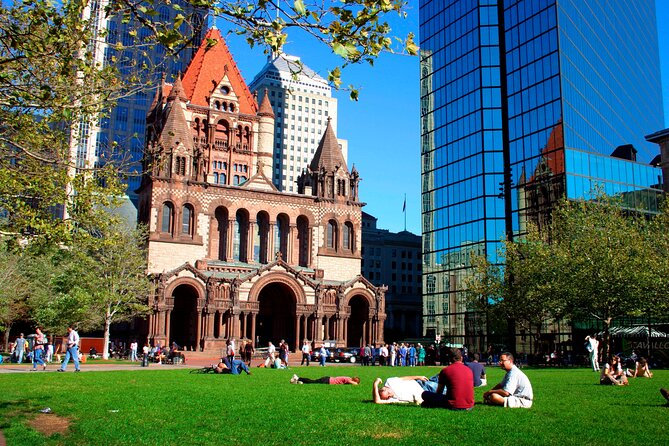
At Copley Square, you see an iconic public square built to be the cultural center of Boston. It is another free outdoor pause of about 10 minutes. From there, you move to the Boston Public Library, founded in 1848 and now described as the third-largest public library in the United States.
The tour also notes that the library area connects to early pro-suffrage organizations including the Massachusetts Woman Suffrage Association and The Women’s Journal, and it points to what used to be known as Chauncy Hall. Then you hear about a demolished building site, the Kensington Building (demolished in 1967), which housed the offices of the Massachusetts Association Opposed to Further Extension of Suffrage to Women.
This section is where the tour really earns its name. You are seeing both the advocates and their opponents linked to the same civic ecosystem. It is not one side shouting in a vacuum. It is debate in real rooms, with real mailing-and-office operations.
Boston Marathon finish line and a street of public life
You also pass the Boston Marathon finish line and a popular stretch of Commonwealth Avenue known for shopping, dining, and luxury brands. Even if the tour time is short here, it helps you place the story into today’s Boston. The route is essentially telling you, this is still a city where public attention matters.
Spiritualist Temple: women leading public meetings
One notable stop describes a former Spiritualist Temple, a place where women were allowed to lead public meetings. That detail is a big deal for understanding how some women gained experience with speaking in public before political rights fully expanded.
If you are trying to connect the dots between social movements, this is one of the clearer connections on the route.
Boston Women’s Memorial: the final image
The finish is at Boston Women’s Memorial, depicting Abigail Adams, Phillis Wheatley, and Lucy Stone. It is a free stop around 10 minutes. Ending here works well because it turns the walk into a takeaway you can carry forward visually.
You might not remember every address, but you will likely remember the memorial figures, and that helps you remember what the tour was really about.
How Maura’s guiding style changes what you notice
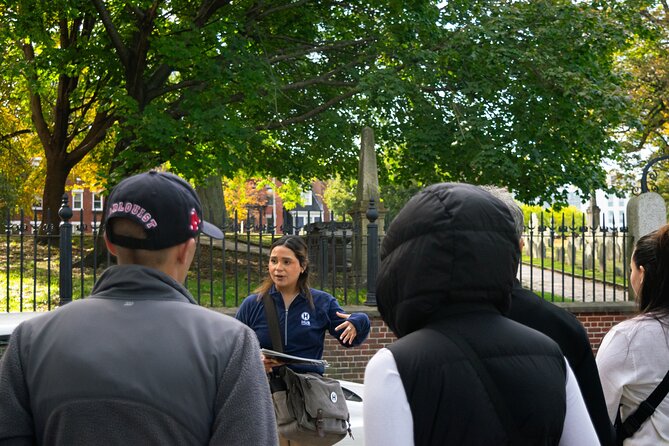
This tour credits its best moments to how the guide frames each stop. Maura is described as skilled at telling stories of Boston suffragists in a way that feels inspiring, not like memorizing names from a school textbook.
In practice, that means you are not just hearing dates. You are hearing why certain people had leverage at the time, why some women opposed suffrage, and how organizations used locations like meeting halls, libraries, and civic spaces to push arguments into public life.
That also matches the small-group format. With max 15 people, you are more likely to get the quick question you have been holding back. If you are curious, this is the kind of tour where your curiosity is welcomed rather than rushed.
Who should book this tour, and who might skip it
This tour is a strong fit if you:
- enjoy walking tours with a clear theme
- like learning how political movements work at the neighborhood level
- want to see suffrage history in places you will recognize later, like Copley Square and the Boston Public Library
- prefer a guide who can answer questions as you go
It may be less comfortable if you:
- have trouble standing for extended periods
- struggle with walking between multiple stops without long breaks
- expect indoor museum time, since admission inside museums is not included
If you are visiting Boston for the first time and want something beyond the usual major trails, this also pairs well with other history walks. It gives you a different storyline that is still very Boston, still very American.
Should you book the Boston Votes for Women History Tour of Back Bay?
If you care about women’s rights history and you like guided walking, I think this is an easy yes. At $35 for about 2.5 hours, you are paying for context in a city where the buildings already do the rest of the work. The small-group cap and the guide named Maura are a big part of the appeal because the story stays interactive, not lecture-only.
Book it if you want a focused route through meaningful stops, including both suffrage advocates and opponents. Skip it if you want mostly indoor viewing or you cannot handle steady standing and walking between stops. Otherwise, bring comfortable shoes, bring questions, and prepare to look at Back Bay differently when you are done.
FAQ
How long is the Boston Votes for Women History Tour of Back Bay?
The tour runs for approximately 2 hours 30 minutes.
What does the tour cost?
The price is $35.00 per person.
How large are the groups?
This tour has a maximum of 15 travelers, which keeps it small-group.
Where does the tour start and end?
It starts at Make Way for Ducklings, 4 Charles St, Boston, MA 02116 and ends at the Boston Women’s Memorial, 256 Commonwealth Ave, Boston, MA 02116. The finish is about 0.8 miles from the start.
Is museum admission included?
No. Admission inside museums is not included, though many stops are outside or free to view.
Is the tour offered in English?
Yes, it is offered in English.
Is it a good idea if I have trouble standing for long periods?
The tour recommends moderate physical fitness and says it is not recommended if you have trouble standing for extended periods.
What should I do if weather is bad?
The experience requires good weather. If it is canceled due to poor weather, you will be offered a different date or a full refund.
Written up lately around the harbor
- Boston’s Beacon Hill: Private Walking Tour
★ 5.0 · 1 review - Boston’s Chinatown: Small Group Walking Tour
★ 5.0 · 1 review - Self-Guided Scavenger Hunt: Boston Back Bay & Beyond
★ 4.0 · 1 review - Flynn Cruise Port Boston to Boston hotels – Arrival Private Transfer
★ 5.0 · 1 review - Classic Martha’s Vineyard 1-Day Escape from Boston
★ 5.0 · 1 review - Boston to Woods Hole & Martha’s Vineyard Ferry Private Chauffeur Service
★ 4.0 · 1 review - Private Vacation Photoshoot with Photographer in Boston
★ 5.0 · 1 review
Historical Tours, compared.
History and Hauntings of Salem Guided Walking Tour
Read our review →
Freedom Trail History Small Group Walking Tour
Read our review →
Tour of Historic Fenway Park, America’s Most Beloved Ballpark
Read our review →
Boston Food & History: Pizza, North End & Freedom Trail
Read our review →
Freedom Trail History Small Group Walking Tour
Read our review →
City Cruises Boston Historic Sightseeing Harbor Cruise
Read our review →
Boston’s North End Food Tour: Italian Flavors & Heritage Walk
Read our review →Browse the lists this tour appears in