
Reviewed · WALKING TOURS
Building Blocks of Boston : Downtown Walking Tour
Boston turns into a story on foot. This downtown walk strings together big turning points, from Boston Common’s founding-era clues to South Station’s transportation shifts, using UltraHD visuals to make street corners feel readable.
I like the way the UltraHD Scroll pairs restored photos, movies, and sounds with what you see in front of you. You also get a Digital Reference Guide For Keeps, so the trip does not vanish the second you step indoors again.
One thing to plan for: the tour needs good weather, since it is an outdoor walking route.
In This Review
- Key highlights worth knowing
- Building Blocks of Boston downtown: how this 2-hour route really feels
- Meet the guide style, plus the UltraHD Scroll that makes the street corners click
- Boston Common: the 1630 origin story that starts with two early settlers
- Boston Soldiers and Sailors Monument: Civil War symbols and a Back Bay sightline
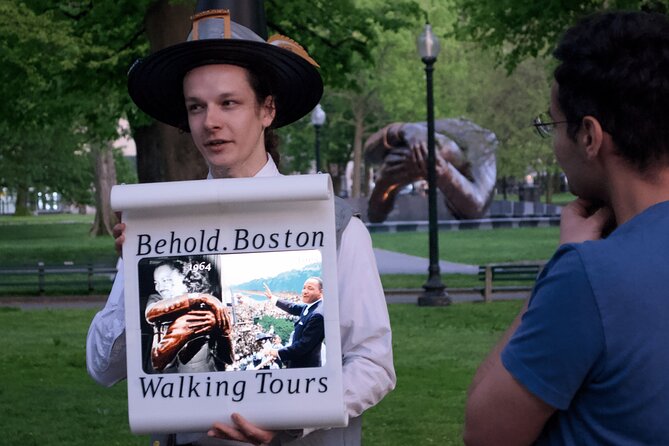
- The Embrace: MLK Jr’s Boston connection you can grasp in minutes
- Park Street Church and the early transit shockwave
- Downtown Crossing and the Burnt District: three centuries in one stretch
- Winthrop Square: fountains, the Great Hall, and a built-in rest moment
- South Station: transportation in layers, from rails and tunnels to waterfront boats
- Post Office Square: cow paths, pricey parking, and a playful “morse” moment
- Old State House: British symbols, replicas, and the idea of a 300-year time capsule
- Price and value: is $29.40 worth it for this downtown story?
- Who this tour suits best (and who might want a different style)
- My call: should you book Building Blocks of Boston?
- FAQ
- How long is the Building Blocks of Boston downtown walking tour?
- What does the tour cost?
- Where does the tour start and end?
- What is included in the price?
- Is the tour offered in English?
- How large are the groups?
- What should I know about weather and cancellation?
Key highlights worth knowing
- UltraHD Scroll media brings back restored photos, movies, and sounds right at each stop.
- Small groups cap out at 16, so you can actually hear answers and questions.
- A true photo-stop mindset helps you frame memorable shots at landmarks.
- MLK in Boston shows up at The Embrace, tied to his meeting with Coretta Scott while studying at Boston University.
- South Station details go beyond the building, with the Charlie story from subway cards.
- A scheduled break with accessible restrooms and AC gives your legs a reset.
Building Blocks of Boston downtown: how this 2-hour route really feels
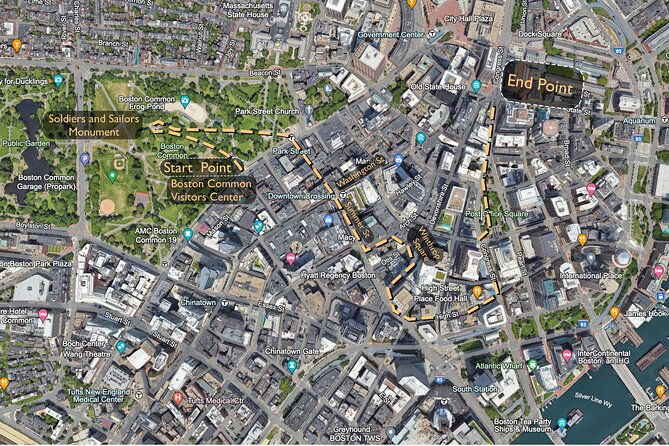
This is a compact 2 hours 5 minutes downtown loop that starts at 139 Tremont St and ends at 11 Congress St. Along the way, you pass the kind of landmarks that usually feel disconnected when you are sightseeing alone, but here they get stitched together into one clear story.
The pacing is built around short segments. Several stops are around 15 minutes, with a longer block at Downtown Crossing. You will keep moving, but you are not rushed. With a max group size of 16, the guide can slow down when someone needs extra context.
One practical tip: the route ends a different spot from where it starts. If you want to return to the start area after the tour, it is about a 15 minute walk.
More of Boston crossed at walking pace:
- Boston: Freedom Trail History Small Group Walking Tour★ 5.0 · 6,450 reviews
- Harvard University Campus Guided Walking Tour★ 4.5 · 3,632 reviews
- Boston Freedom Trail Walking Tour with Costumed Guide★ 4.5 · 2,531 reviews
Meet the guide style, plus the UltraHD Scroll that makes the street corners click
The tour is led by an expert guide, and the biggest difference maker is the UltraHD Scroll. Instead of just hearing a narration, you also see restored photographs, watch short movies, and hear sounds connected to what you are standing near.
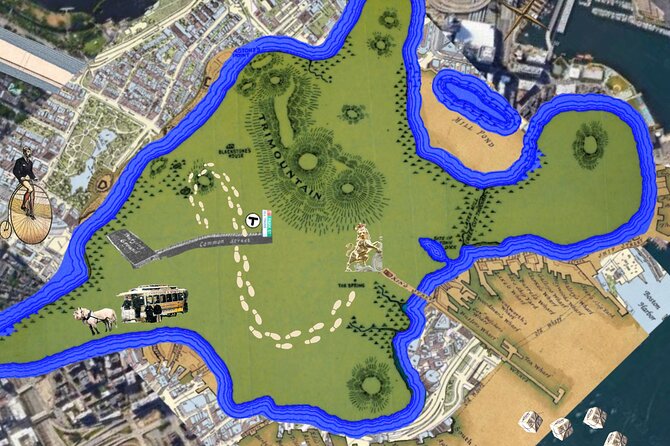
That matters because downtown Boston changes fast. Buildings get replaced. Facades get updated. Without visuals, the past can feel abstract. With the UltraHD format, you get a quick reality check: you see what it looked like, then you look up and recognize the present-day location.
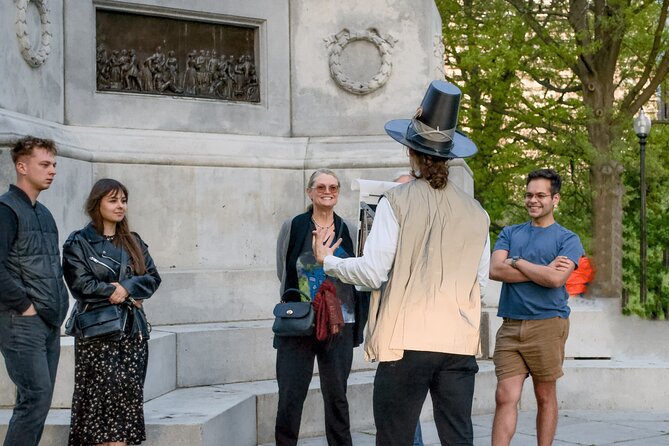
In the best moments, the guide helps you take better photos too. When I sat with this kind of presentation style, it was not just history facts, it was timing and angles, plus calm patience when people needed a second try. If you want lunch suggestions afterward, the guide also tends to share a personal go-to. (One guest noted a recommended pizza place and other stops worth adding.)
Boston Common: the 1630 origin story that starts with two early settlers
Boston Common is the kickoff, and the framing is sharp. You start at the site tied to the birth of Boston in 1630, then you look backward to earlier years that set the stage.
The guide’s story centers on two key characters. First is an Englishman who lived alone on the land since 1625. Then there is the bold sailor tied to seeding the city after a 10 week journey through stormy seas. It is a compact narrative, but it hits hard because it explains why this spot matters before the tour moves into later centuries.
You will have about 15 minutes here, and admission is free. Since Boston Common can be a big open area, your best move is to listen for what to notice. The guide will point out how the story connects to later stops, so do not treat this as just a photo moment.
Boston Soldiers and Sailors Monument: Civil War symbols and a Back Bay sightline
Next you head to the Boston Soldiers and Sailors Monument, built as a Civil War memorial. The tour focus is on symbols and what they mean to the people who established Boston.
The bonus here is practical and visual: from this location you get an excellent view into Back Bay. That view is not a random postcard moment. It becomes a clue for the next stop, where you will talk about how Back Bay shifted from being water to becoming a built-up neighborhood.
This stop is also 15 minutes and free to enter. If you like learning how monuments communicate, this is one of the stronger stops. Pay attention to the guide’s explanation of symbolism, then look back toward the city views, because the monument and the surrounding geography are part of the same lesson.
The Embrace: MLK Jr’s Boston connection you can grasp in minutes
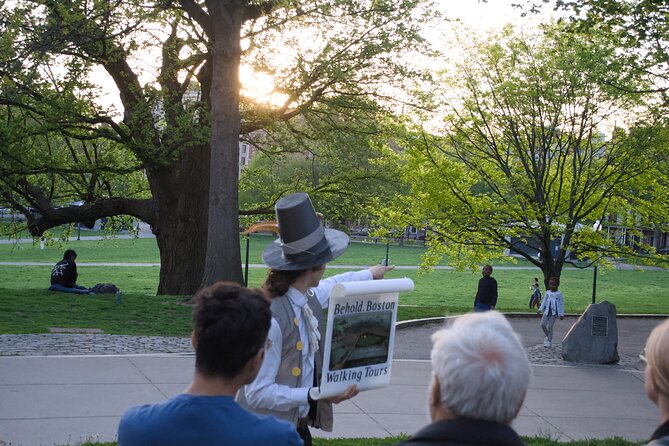
The tour then shifts to a shorter stop: The Embrace. You get about 5 minutes here, but the focus is specific and personal.
This sculpture commemorates MLK Jr., and the story is anchored in Boston connections. You hear how he met his wife, Coretta Scott, in Boston while studying at Boston University. That detail changes how the sculpture reads. Instead of feeling like a distant memorial, it becomes tied to a real moment in a real city.
If you are tight on time, this stop is efficient. It is brief, but it still gives you enough context to understand why this artwork belongs where it is.
Another way the same afternoon could go around Boston:


Park Street Church and the early transit shockwave
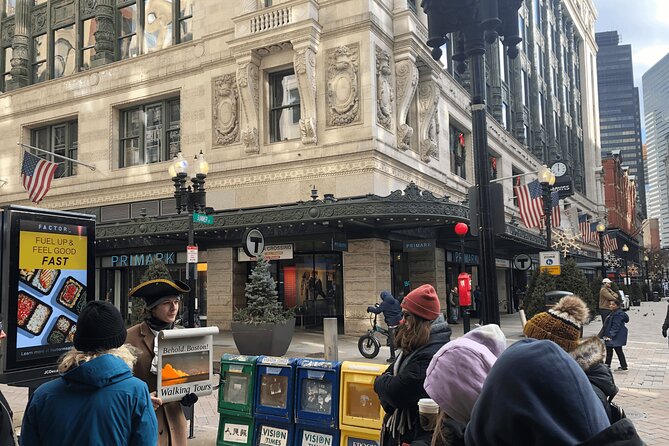
From there, the tour steers you toward Park St Church (Park Street Church). This is where the tour leans into surprising claims that you can still verify just by looking around.
You will learn that it was once the former tallest building in America. You will also hear that the church is the site of America’s first subway. And since you are in a busy downtown corridor, the tour connects that landmark to one of Boston’s busiest streets.
The practical value here is perspective. It is easy to walk past big landmarks without registering what made them special. This stop is structured to help you see that early technology and early skyline power lived right here, in the same place you are standing now.
Downtown Crossing and the Burnt District: three centuries in one stretch
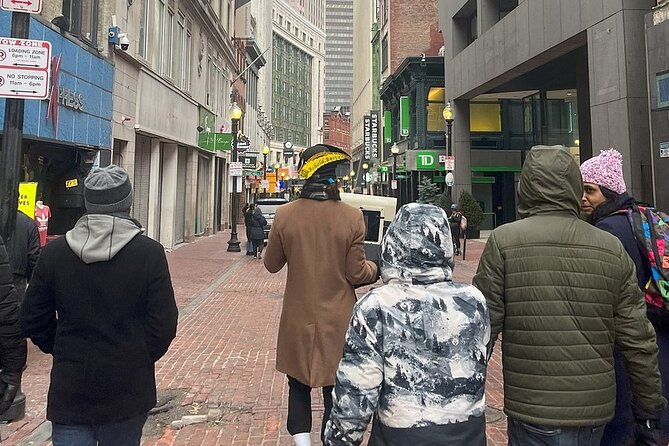
Downtown Crossing is the long stop on this route, around 25 minutes. The theme is transformation across three separate centuries.
You will hear about the Burnt District, the nickname for the area after a devastating fire. That detail matters because it explains why the street feel you experience today did not appear by accident. Downtown Crossing is a result of rebuilding and change, not just growth.
As you walk, listen to how the guide links the timeline. You are not only being told what happened. You are learning how to recognize the idea of centuries changing shape right within a few blocks. If you want a stop you can linger at, this is the one. But still keep moving, because the “story” only works if you keep the sequence.
Winthrop Square: fountains, the Great Hall, and a built-in rest moment

Next is Winthrop Square, which is both a break stop and a lesson stop. You get about 10 minutes.
The tour pauses for a reason. You can reset with a walk-break and use accessible restrooms and AC. That is a big deal on a Boston summer day, but it is also valuable any time you are doing a focused downtown loop.
You will also see the brand new Great Hall in the Winthrop Center. Then the guide transitions into education and writings, covering influences on Bostonians and the rest of the world. The point is not to overload you with names. It is to show how ideas spread, then connect that to why certain neighborhoods and institutions matter.
If you are prone to getting tired mid-tour, this is where you will feel grateful the schedule includes a real pause.
South Station: transportation in layers, from rails and tunnels to waterfront boats
South Station is one of the most interesting stops because it is built around movement. You get about 15 minutes here, and the theme is the transformation of transportation in Boston.
Instead of talking only about today’s commuter trains, the tour connects multiple modes. You will hear about railways, highways, tunnels, and boats that passed by the waterfront in this area.
Then the story zooms in on how stations connect. You will learn what happened to the connection between Boston’s North and South Station. And there is a fun, very specific detail: you will hear about Charlie from the subway cards.
That Charlie detail is the kind of quirky anchor that helps the lesson stick. When you get back out on the street, you will likely notice signage and routes with different eyes, because the tour is teaching you to think like a planner, not just a pedestrian.
Post Office Square: cow paths, pricey parking, and a playful “morse” moment
Post Office Square adds a lighter tone without turning shallow. You will spend about 15 minutes here.
The guide asks practical, slightly goofy questions: are Boston’s streets former cow paths? Why is parking so expensive here? Then you get a playful interaction, horse around or morse around depending on the crowd preferences.
This stop is useful if you like your history grounded in everyday urban life. When you have just learned about stations and monuments, it can feel heavy. Post Office Square gives you a reset, then ties the reset back to how cities evolve in ways you can see in street layouts and pricing pressures.
Old State House: British symbols, replicas, and the idea of a 300-year time capsule
The final major stop is Old State House, about 15 minutes. This is where the tour focuses on a long timeline, 300 years of change.
The emphasis is on it being a bright time capsule for Boston’s story. You will learn about the removal and replica of British symbols that sat atop the oldest public building in Massachusetts. The guide also explains how the building’s look evolved across that 300-year span.
This stop works best if you treat it as more than a photo frame. Look at the top and the face of the building and listen to the sequence the guide lays out. When you connect the changes to the political and cultural shifts the tour mentions, the building stops feeling like old stone and starts feeling like a record.
Price and value: is $29.40 worth it for this downtown story?
At $29.40 per person, this tour is priced like a budget history walk, but it includes more than most in the same range.
Here’s what you are actually buying:
- An expert guide, with clear explanations and a calm, patient presentation style.
- UltraHD media that adds restored visuals, movies, and sounds.
- A digital reference guide for keeps, so you can refresh what you learned later.
- A scheduled 10 minute break with accessible restrooms and AC.
- Mobile ticket convenience, plus the tour is offered in English.
- Multiple free-admission stops, so you are not paying entry fees as you go.
The time window also helps. With a 2 hours 5 minutes duration, you can fit it into a first-day plan without committing to an all-day schedule. And with a group size up to 16, it does not feel like you are shouting over a crowd.
The main condition is not cost. It is weather. If the day is truly poor, the tour can be offered another date or you can get a full refund. Plan around that and you are set.
Who this tour suits best (and who might want a different style)
This walking tour fits you best if you want:
- A structured downtown route that does not require you to map every stop.
- A story-first approach, where monuments, streets, and buildings connect into one timeline.
- Visual support through UltraHD media, plus a take-home guide.
It is also a good fit if you want an easier way to learn rather than reading for hours. The stops are short and frequent enough to keep you engaged, even if you do not consider yourself a hardcore history person.
You might want a different experience if you prefer to wander freely without prompts. This tour is designed around stops and timing, so it will feel less “choose your own path.”
My call: should you book Building Blocks of Boston?
Yes, you should book it if you want a smart, time-efficient way to understand downtown Boston without getting lost in details. The combination of an expert guide, UltraHD restored visuals, and a real break makes it feel well planned, not just informational.
If you are the kind of traveler who likes landmarks but hates vague explanations, this tour gives you clearer anchors: founders and early settlers at Boston Common, a Civil War monument with symbol lessons, MLK’s Boston connection at The Embrace, and transportation stories at South Station. The guide even helps with practical things like photo framing, plus lunch ideas after.
Just be honest with your schedule and weather. If the forecast looks questionable, wait or switch dates. When the weather holds, this is an easy win.
FAQ
How long is the Building Blocks of Boston downtown walking tour?
The tour runs about 2 hours 5 minutes.
What does the tour cost?
The price is $29.40 per person.
Where does the tour start and end?
It starts at 139 Tremont St, Boston, MA 02111, USA and ends at 11 Congress St, Boston, MA 02109, USA.
What is included in the price?
The tour includes an expert guide, an UltraHD Scroll with restored photographs, movies, and sounds, a 10 minute break with accessible restrooms and AC, and a digital reference guide for keeps.
Is the tour offered in English?
Yes, it is offered in English.
How large are the groups?
The tour has a maximum of 16 travelers.
What should I know about weather and cancellation?
The experience requires good weather. Free cancellation is available up to 24 hours in advance for a full refund.
Written up lately around the harbor
- Boston’s Beacon Hill: Private Walking Tour
★ 5.0 · 1 review - Boston’s Chinatown: Small Group Walking Tour
★ 5.0 · 1 review - Self-Guided Scavenger Hunt: Boston Back Bay & Beyond
★ 4.0 · 1 review - Flynn Cruise Port Boston to Boston hotels – Arrival Private Transfer
★ 5.0 · 1 review - Boston to Woods Hole & Martha’s Vineyard Ferry Private Chauffeur Service
★ 4.0 · 1 review - Classic Martha’s Vineyard 1-Day Escape from Boston
★ 5.0 · 1 review - Private Vacation Photoshoot with Photographer in Boston
★ 5.0 · 1 review
Walking Tours, compared.
History and Hauntings of Salem Guided Walking Tour
Read our review →
Freedom Trail History Small Group Walking Tour
Read our review →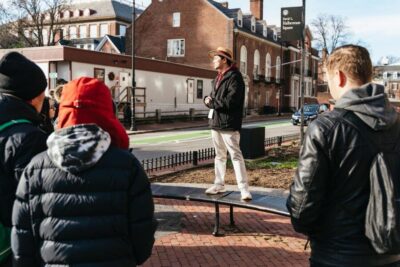
Harvard University Student-Guided Walking Tour
Read our review →
Harvard University Campus Guided Walking Tour
Read our review →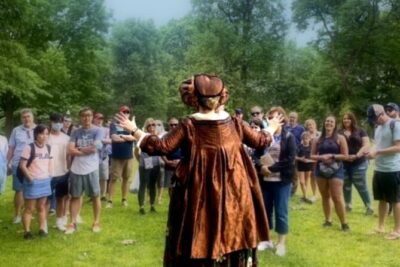
Boston Freedom Trail Walking Tour with Costumed Guide
Read our review →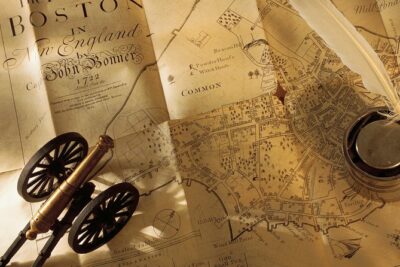
The Full Revolutionary Story Epic Small Group Boston Walking Tour
Read our review →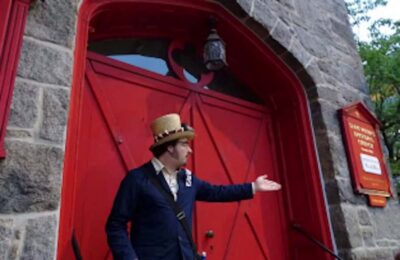

Browse the lists this tour appears in