
Reviewed · HISTORICAL TOURS
One Hour Walking Tour: Hidden History and Innovation
Boston hides inventions in plain sight. This one-hour walk through the Innovation Trail area pulls together big ideas you usually only meet in books, centered around Park Street T station, Boston Common, and City Hall Plaza. I love how much ground it covers without feeling like a sprint, and I love that it stays practical with a mobile ticket and a small group size.
My other favorite part is the way the stories lock onto real locations instead of staying generic. In one standout experience, guide Raine Bernhard shared material she researched herself, and the result felt sharp and specific. The main drawback to consider is that it runs only 1 hour to 1 hour 15, so if you want museum-style detail or long stops inside buildings, this format may feel too fast.
In This Review
- Key things to know before you go
- A One-Hour Boston Walking Tour Built Around Ideas, Not Just Dates
- Price and value: why $30 can work for a short tour
- Where the tour starts: Boston Irish Famine Memorial
- The Innovation Trail area: Park Street, Boston Common, and City Hall Plaza
- Stop moments: the “inventor” story that makes experimentation feel human
- Early film and the startup that showed their first film nearby
- Women’s suffrage and arrests: a protest story with consequences
- America’s first public park and the surprising football connection
- A Boston school dropout story that adds grit to the genius
- America’s early millionaires, cocktails, and ice cream
- Pace and group size: why small groups help on a story tour
- Who this tour is best for
- The one thing I would watch for: the tour is short, so pick your priorities
- Should you book Hidden History and Innovation?
- FAQ
- How long is the One Hour Walking Tour?
- What does it cost?
- Where does the tour start and end?
- Is the tour offered in English?
- Do I get a mobile ticket?
- How big is the group?
- Is it canceled for bad weather?
Key things to know before you go
- Small group size up to 15 travelers, so you are not lost in the crowd
- Mobile ticket for easy check-in
- Focus area: Park Street T station, Boston Common, and City Hall Plaza
- Innovation themes that mix invention, media, and business with civic life
- Women’s suffrage stories tied to protest and arrest
- A surprise link to football, connected to America’s first public park
A One-Hour Boston Walking Tour Built Around Ideas, Not Just Dates
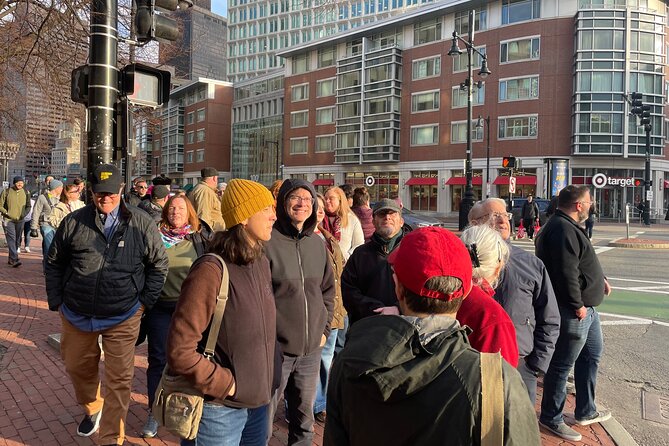
This is the kind of Boston tour I like. Not because Boston is short on history, but because history gets boring when it turns into a list. Hidden History and Innovation takes the opposite approach: it points at everyday spots near downtown and uses them as story anchors for invention, film, protest, and even sports.
The tone is also refreshingly efficient. In 1 hour to 1 hour 15 minutes, you will move through a concentrated slice of the city and hear connected themes. That matters, because downtown Boston can soak up time fast. If you are only here for a day, or if you want one activity that does not eat your whole afternoon, this format is a smart fit.
And yes, it is a walking tour, so you will want comfortable shoes. Still, the route is designed for a manageable downtown pace, and it ends back at the meeting point, which keeps your mental load low.
More of Boston crossed at walking pace:
- Boston: Freedom Trail History Small Group Walking Tour★ 5.0 · 6,450 reviews
- Harvard University Campus Guided Walking Tour★ 4.5 · 3,632 reviews
- Boston Freedom Trail Walking Tour with Costumed Guide★ 4.5 · 2,531 reviews
Price and value: why $30 can work for a short tour
At $30 per person for about an hour to an hour 15, you are paying primarily for guidance and storytelling, not for expensive attractions. The tour’s core focus is built around outdoor interpretation, and the provided details indicate the main segment is ticket free. That is good value in a city where admission fees and timed entries can add up quickly.
Also, small groups matter at this price. With a maximum of 15 travelers, you get a better chance of hearing the guide clearly and staying engaged. On a tour like this, you want the explanations to land, not just drift past as background noise.
If your travel style is “show me how things connect,” you’ll likely feel the cost is fair. If your style is “I want to sit in one place and go deep,” you might prefer a longer format.
Where the tour starts: Boston Irish Famine Memorial
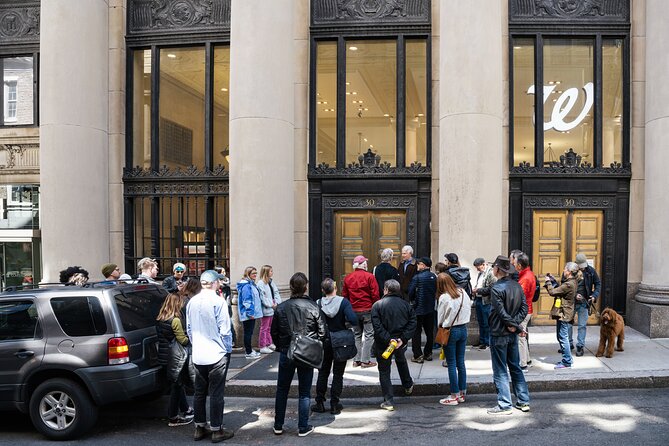
You meet at the Boston Irish Famine Memorial (Boston, MA 02108, USA). That gives you an easy geographic reference point, and it also places the tour right in the downtown orbit where you can easily return to other plans afterward.
Practical tip: arrive a few minutes early so you can settle in before you start walking. It is a short tour, so every minute you waste at the start is real time you lose on the stories.
The tour ends back at the meeting point. That is not always true for walking tours, so it is a real convenience here. It helps you plan lunch, transit, or another neighborhood stop without guessing.
The Innovation Trail area: Park Street, Boston Common, and City Hall Plaza
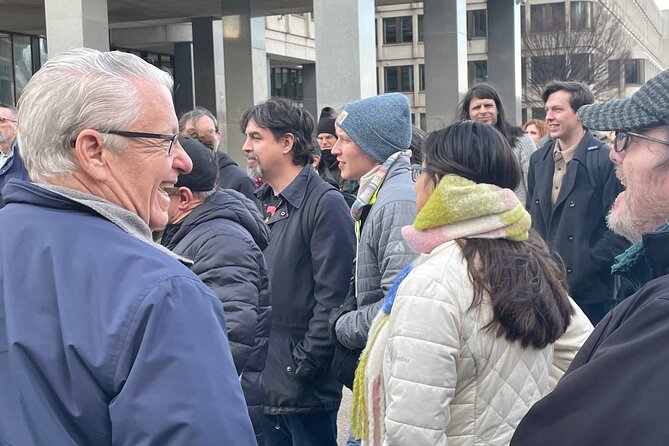
The tour’s core area is the Boston side of The Innovation Trail, in and around Park Street T station, Boston Common, and City Hall Plaza. Those locations are a big deal because they sit in a zone where Boston’s civic life, transit flow, and public spaces overlap.
That overlap is what makes the stories feel believable. You are not hearing abstract claims about “progress” in a vacuum. You are hearing how innovation, media, protest, and sports-making happened in a real city, in real public spaces.
Boston Common especially changes the way you read the city. It is easy to treat the Common like a pretty pause between errands. This tour nudges you to treat it like an early stage for public culture, civic change, and even sport.
Stop moments: the “inventor” story that makes experimentation feel human
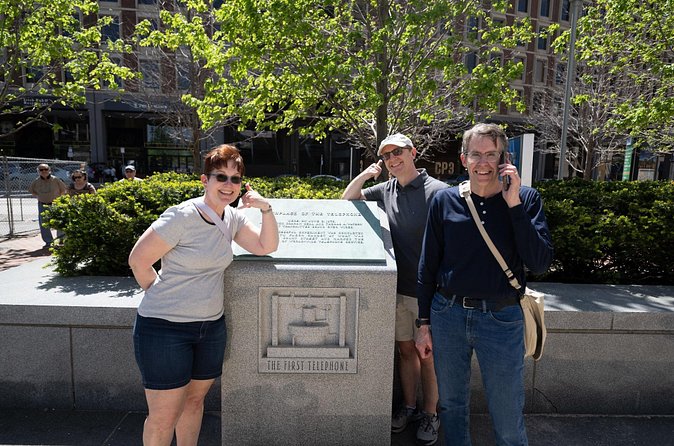
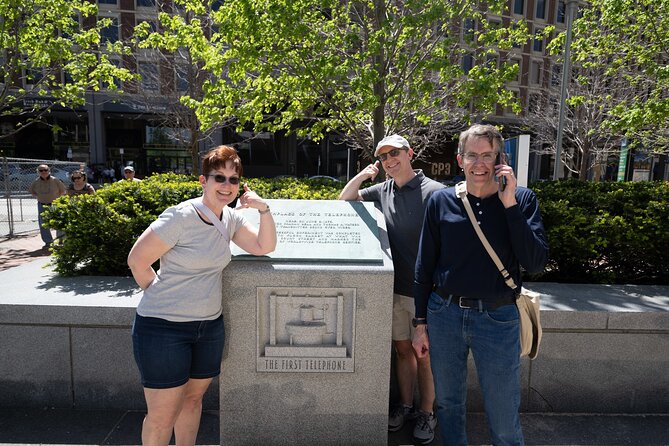
One early highlight is the story of a famous inventor who worked and experimented near here. The point of this stop is not just to name the inventor. It is to show what experimentation looked like when it was messy, local, and connected to actual work spaces and neighborhoods.
When a tour gives you this angle, it makes innovation feel less like magic and more like effort. You start to notice how progress happens: trial, tinkering, and the willingness to keep testing ideas even when outcomes are uncertain.
If you like stories about creativity under real constraints, you will probably find this part satisfying. It is the kind of moment that flips your brain from “I am sightseeing” to “I am understanding how change got made.”
Other walks through revolutionary Boston:
Early film and the startup that showed their first film nearby
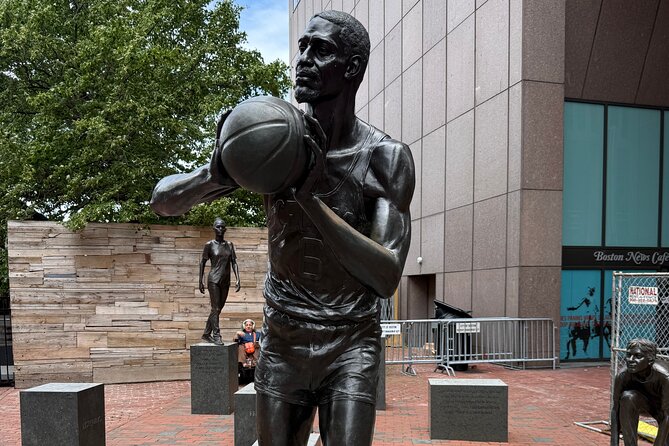
Another memorable story is the one about a pioneering startup that helped change media, including the fact that their first film was shown here. Even without getting inside a theater, you get the sense that the place mattered, because early film was experimental itself.
This is a good choice for a one-hour tour because it connects technology to culture fast. You go from invention to storytelling, from invention to how audiences learned to watch and react. It also pairs well with the inventor story, because both are really about people building the future with limited tools and big ambition.
The takeaway I like is this: innovation is not just about devices. It is about how ideas get shown to the public.
Women’s suffrage and arrests: a protest story with consequences
Then the tour turns to civic conflict: women’s suffrage and women who were arrested for protesting here. This is not a “feel good” chapter. It is the honest version, the one where activism had costs and where public spaces were contested.
I like that the tour includes this because it prevents “innovation” from becoming only a story about companies and inventors. Innovation also means people insisting on rights, challenging rules, and refusing to wait their turn.
If you prefer history that includes struggle, this section is likely one of the most powerful parts of the walk. It also works well because it anchors big national movements into specific local moments you can picture.
America’s first public park and the surprising football connection
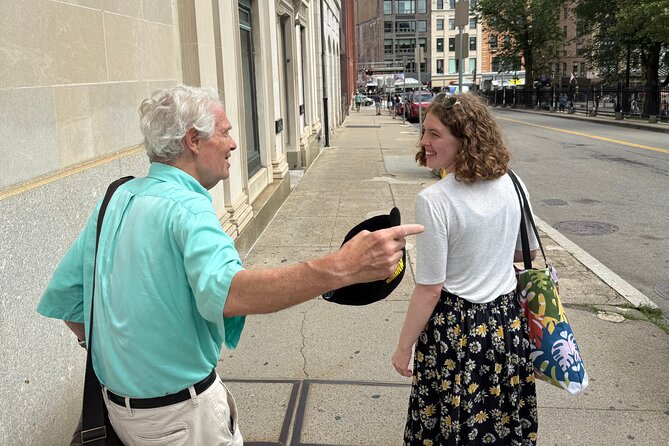
One of the more unexpected themes is what role America’s first public park played in the creation of football. Even if you think you know football history, this kind of local connection can surprise you in the best way.
Here’s why it matters: sports culture is not separate from civic space. Games, gatherings, and community routines often form where people can safely gather in public. By linking football to the park, the tour shows how public design can shape everyday life.
You also get a reminder that Boston Common is not just scenery. It has functioned as a stage for changing public routines over time.
If you are a sports fan, you might get a little extra satisfaction from this stop. If you are not, it still works as a story about how public spaces support new traditions.
A Boston school dropout story that adds grit to the genius
Next comes a story about one of Boston’s most famous school dropouts. That detail alone is enough to hook curiosity, but what I like is the angle it brings.
A dropout story can easily turn into a cliché. On this kind of tour, it works better when the focus stays on a real person’s path, including the fact that talent and outcomes do not always follow school schedules.
This part also balances the tour’s earlier themes. You get innovation, media, civic protest, public space, and then a personal story tied to education choices. It makes Boston feel less like a museum and more like a place that produced all kinds of outcomes.
America’s early millionaires, cocktails, and ice cream
The final theme wraps around one of America’s first millionaires and the practical cultural impact hinted at by the line about cocktails and ice cream. That combination is a clue that you are heading toward the intersection of wealth, leisure, and everyday pleasure.
Even when you do not get a full deep dive in a one-hour walk, this kind of story is useful. It gives you a more human sense of how money and industry shaped what people consumed, celebrated, and shared.
I also like the structure here because it ends on something lighter than protest or arrests. You do not leave the tour with heaviness stuck in your throat. You leave with a mix: big civic lessons and a wink at how culture gets built.
Pace and group size: why small groups help on a story tour
With a maximum of 15 travelers, you get the kind of group size where your guide can actually manage attention. That is important for a tour like this because it is not just “walk and point.” It is a sequence of explanations that you need to follow.
Duration is also a big factor. With 1 hour to 1 hour 15 minutes, you are in a sweet spot for short-term focus. You can fit it into a morning plan, a pre-lunch schedule, or an early afternoon reset without committing to a whole day.
Practical note: it requires good weather. So on days when Boston gets windy or drizzly, you may want to dress accordingly. If the tour is canceled due to poor weather, you should expect options like switching dates or getting a refund, based on the details provided.
Who this tour is best for
This is a strong match if you:
- want a Boston walking tour that connects multiple themes quickly
- like innovation stories tied to real places, not only museum exhibits
- enjoy mixing cultural topics, like film and sports, with civic topics like suffrage
- prefer a small group experience near major downtown landmarks
You might skip it if you:
- need longer stops or indoor time
- want a tour that names every historical figure in full detail at every point (the themes are clear, but the descriptions provided are broad)
- dislike walking for up to about 75 minutes
The one thing I would watch for: the tour is short, so pick your priorities
Because the tour is brief, it can’t do everything. Think of it as a “connected stories” sampler. If you go in expecting one ultra-detailed topic, you might feel like you skimmed.
If you go in expecting a guided walkthrough of how Boston’s public spaces intersect with invention, media, activism, and leisure, you will probably feel satisfied. This is the kind of tour that gives you names to Google later, places to revisit, and a mental map of downtown that makes future sightseeing easier.
Should you book Hidden History and Innovation?
I think this is a good booking choice if you want an efficient, story-driven walk in downtown Boston. The price is reasonable for what you get, the group size is small, and the Innovation Trail focus area is the right kind of compact for first-time or time-limited visitors.
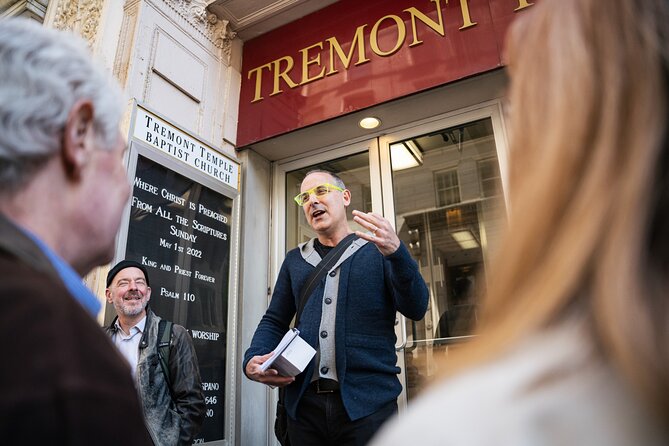
I would especially recommend it if you enjoy tours where the guide has done real research and can connect dots across topics. In the one review provided, the guide Raine Bernhard was praised for curating the tour herself and for the depth of her background work. That kind of attention tends to show up in how confidently the stories are told.
If your schedule can handle about an hour to an hour 15 and you’re okay with outdoor walking, book it. It’s a smart way to make Boston feel less like a list of landmarks and more like a set of ideas in motion.
FAQ
How long is the One Hour Walking Tour?
The tour runs for about 1 hour to 1 hour 15 minutes.
What does it cost?
It costs $30.00 per person.
Where does the tour start and end?
It starts at the Boston Irish Famine Memorial and ends back at the meeting point.
Is the tour offered in English?
Yes, the tour is offered in English.
Do I get a mobile ticket?
Yes, the tour includes a mobile ticket.
How big is the group?
The tour has a maximum of 15 travelers.
Is it canceled for bad weather?
It requires good weather. If it is canceled due to poor weather, you will be offered a different date or a full refund.
Written up lately around the harbor
- Boston’s Beacon Hill: Private Walking Tour
★ 5.0 · 1 review - Boston’s Chinatown: Small Group Walking Tour
★ 5.0 · 1 review - Self-Guided Scavenger Hunt: Boston Back Bay & Beyond
★ 4.0 · 1 review - Flynn Cruise Port Boston to Boston hotels – Arrival Private Transfer
★ 5.0 · 1 review - Classic Martha’s Vineyard 1-Day Escape from Boston
★ 5.0 · 1 review - Boston to Woods Hole & Martha’s Vineyard Ferry Private Chauffeur Service
★ 4.0 · 1 review - Private Vacation Photoshoot with Photographer in Boston
★ 5.0 · 1 review
Historical Tours, compared.
History and Hauntings of Salem Guided Walking Tour
Read our review →
Freedom Trail History Small Group Walking Tour
Read our review →
Tour of Historic Fenway Park, America’s Most Beloved Ballpark
Read our review →
Boston Food & History: Pizza, North End & Freedom Trail
Read our review →
Freedom Trail History Small Group Walking Tour
Read our review →
City Cruises Boston Historic Sightseeing Harbor Cruise
Read our review →
Boston’s North End Food Tour: Italian Flavors & Heritage Walk
Read our review →Browse the lists this tour appears in