
Reviewed · HISTORICAL TOURS
Relive 1776: See Boston’s History in Augmented Reality (AR)
History shows up on the street. Relive 1776 uses augmented reality to turn the Freedom Trail into a guided walk through 1765 to 1775, with key moments appearing where they happened.
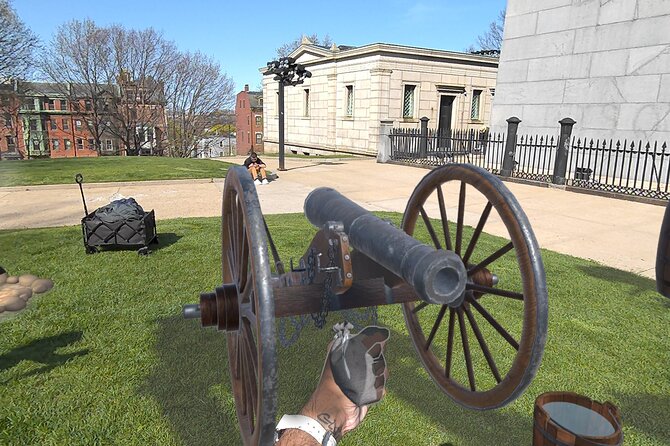
I especially like two things. First, you do not just watch history, you run it through short on-site AR scenes, including playful touches like trying colonial fashion and even operating a historically accurate field cannon. Second, the tour uses real devices you can handle your way, with Meta Quest AR headsets plus tablets for AR moments without wearing anything on your face.
One possible drawback: the historical storytelling is delivered in quick bursts, with each stop’s experience running only about 5 to 15 minutes (plus a short video). If you want a long, lecture-style history tour, you might feel it leans more on the AR show-and-do than nonstop explanation.
In This Review
- Key highlights to know before you go
- What Relive 1776 Is, and Why AR Works Here
- Boston Common to Bunker Hill: The Walking Game Plan
- Boston Common Stop: The Great Elm Tree Cast of Characters
- Granary Burying Ground and Benjamin Franklin: Names You Can Spot
- Old Corner Bookstore and Old State House: Protest in Plain Sight
- Faneuil Hall Marketplace and Paul Revere House: The Lead-Up Feeling Real
- Bunker Hill Finale: A Strong Ending Point
- Headsets vs Tablets: How to Avoid Frustration
- Value for $30: What You’re Actually Getting
- Who Should Book This Tour, and Who Might Not Love It
- Tips to Get More From Every Stop
- Should You Book Relive 1776?
- FAQ
- How long does the Relive 1776 tour take?
- What language is the tour guide?
- Is this tour VR or AR, and will I feel sick?
- What equipment is provided for the AR experiences?
- Where does the tour start and where does it end?
- Is the tour refundable if my plans change?
Key highlights to know before you go
- Five AR stops across the Freedom Trail, ending at Bunker Hill
- No VR sickness risk, since you stay aware of the real world (AR, not VR)
- English-speaking guide, with help using headsets and tablets
- Small group size (up to 8), so you are not lost in a crowd
- Fun, non-gory scenes that focus on history and roleplay
- Illegal Tea souvenir, a reusable tea bag with a discount card
What Relive 1776 Is, and Why AR Works Here
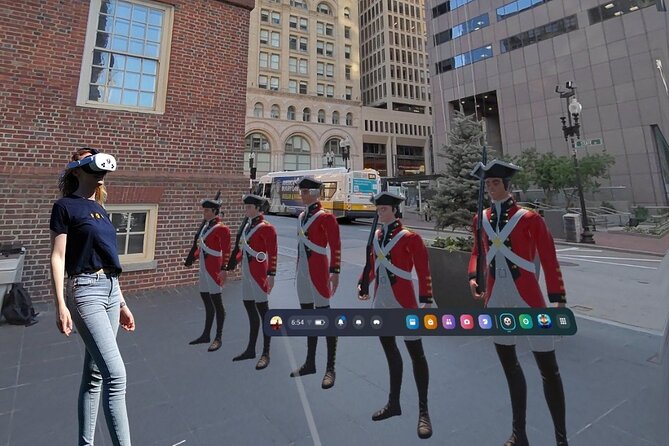
Relive 1776 is a 5-part augmented reality experience built for Boston’s Freedom Trail. You walk with a guide, and at each stop, AR brings scenes to your view while you stay in the real street, sidewalks, and buildings around you.
The clever part is that it is not VR. VR can shut you off from the world, which is where motion issues can start for some people. With AR, you are still seeing Boston the whole time, and the tour specifically calls out that you should avoid nausea and safety problems because you are not fully sealed into a virtual environment.
You get multiple ways to experience it too. The tour provides Meta Quest AR headsets, but it also offers tablets so you can do the AR moments without a headset. That matters because not everyone feels great wearing gear, even when a group keeps it practical and short.
Each stop’s experience is designed to be brief and snappy. Plan for about 5 to 15 minutes per experience, and each one includes a 1-minute video component. That format makes it easy to keep moving, but it also explains why the tour feels more like guided “moments” than a deep, hour-long lecture at every landmark.
Other walks through revolutionary Boston:
- Boston: Freedom Trail History Small Group Walking Tour★ 5.0 · 6,450 reviews
- Tour of Historic Fenway Park, America’s Most Beloved Ballpark★ 4.5 · 3,013 reviews
- Boston Food & History: Pizza, North End & Freedom Trail★ 5.0 · 1,772 reviews
Boston Common to Bunker Hill: The Walking Game Plan
The tour starts at the Boston Common Visitors Center, 139 Tremont St, Boston, MA 02111. It ends back near the meeting point, and the final AR segment is at Bunker Hill, where the walking tour finish lands.
The full experience is about 2 hours. That is a smart length for this area, because you get a real route across major Freedom Trail sites without turning your day into a marathon. Since the tour is offered in multiple time slots, you can usually pick a departure that matches your sightseeing plan.
Group size is kept small, with a maximum of 8 travelers. In practice, that usually means you can get help quickly, ask a question without shouting, and keep pace with the guide when the AR scenes start.
Also, check your expectations around pacing. You are moving between landmarks, then pausing briefly for each AR scene. If you like tours where something happens every few minutes, you will probably enjoy this structure. If you hate waiting, you might still find it tolerable since each pause is short.
One more practical note: transportation to the meeting point is not included. Boston Common is easy to reach via public transportation, and the experience is near public transit, but you still need to get yourself there.
Boston Common Stop: The Great Elm Tree Cast of Characters
Boston Common is where the story kicks off. You meet key figures from the early independence years under the Great Elm Tree area, including Paul Revere, John Hancock, and Samuel Adams.
This is one of the best starting points because Boston Common is familiar, central, and built for foot traffic. The guide leads you through how these characters connect to events from 1765 to 1775, setting up the tour’s theme of pushing back against tyranny.
AR here helps the location feel less like a generic park stop and more like a moment in motion. You are not just hearing names. You are standing where the story begins and getting historical action layered into the real scene around you.
The vibe is also family-friendly without being childish. You get education, but it stays in short “do this now” segments, so attention does not lag for long.
Granary Burying Ground and Benjamin Franklin: Names You Can Spot
From Boston Common, you move to Granary Burying Ground, then to the Statue of Benjamin Franklin. These stops work well because they turn history into something you can visually connect to the person, not just to dates on a page.
Franklin is especially helpful here because you already know the name, then AR gives the setting a sharper sense of time. The tour aims to show you what mattered and why, while keeping each part brief enough to stay energetic.
Granary Burying Ground can feel quiet and reflective on a normal walk. With AR, you get a more active, story-based layer on top of that stillness. It is a nice contrast, and it keeps the Freedom Trail from becoming one long march of monuments.
If you are the type who likes to stop and look at details, you will appreciate these locations. You are not rushed through them, but the AR window is still short, so you get a “moment” rather than a full immersion session.
Old Corner Bookstore and Old State House: Protest in Plain Sight
Next up are Old Corner Bookstore and the Old State House. These are the kinds of places where history usually comes as a speech, a plaque, and maybe a photo. This tour adds action and interaction so the space feels tied to events instead of just remembered.
AR and the guide combine to connect the dots. You learn about key historical moments tied to the lead-up to America’s founding, then the experience turns that lesson into something you do with your eyes and hands.
At the Old State House area, it can be easier to grasp the political mood, because state buildings naturally signal power and decision-making. The tour uses that idea to help you understand why conflict was not random, it was the result of pressure, policy, and people arguing with purpose.
One consideration here is that if you only want museum-style explanation, the “video and AR scene” format might feel too short. Still, the upside is you keep moving and you do not lose the day to marathon talking.
Another way the same afternoon could go around Boston:




Faneuil Hall Marketplace and Paul Revere House: The Lead-Up Feeling Real
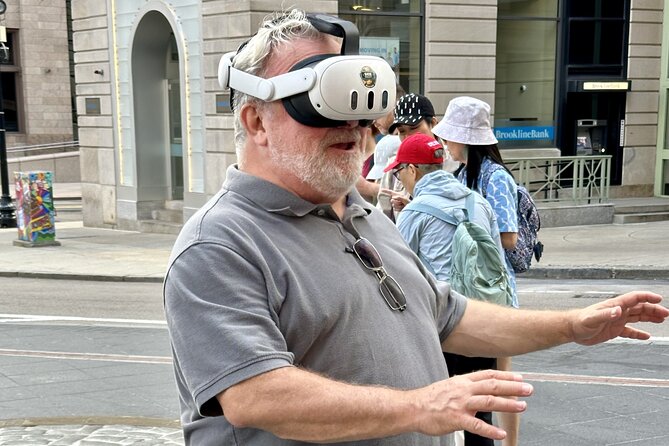
You then reach Faneuil Hall Marketplace, followed by the Paul Revere House. These stops are where the tour’s energy often spikes, because the Revolutionary-era story becomes less abstract and more personal.
You are guided through the pushback against tyranny and how planning shaped events. The tour includes AR moments that can feel playful and theatrical, including historical roleplay elements that are designed to be quick and not scary.
Paul Revere’s name shows up again in the lead-up to later events. Even if you already know the midnight ride story, seeing the Revolutionary characters in the same locations tends to make the timeline click faster.
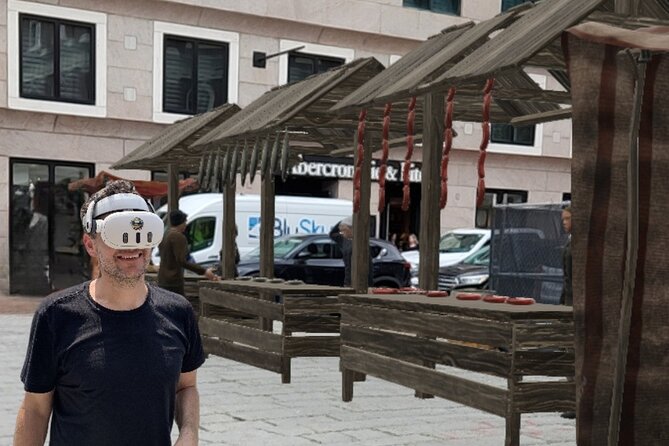
One of the AR moments described by participants is a quick cart and horse ride sensation that can feel like it passes through your view. If that sounds strange, it is supposed to be a fun kind of weird, and it also shows what this AR setup does well, it turns the sidewalk into a stage for a moment.
This is also a good place to ask your guide questions. Since you are close to the guide during each stop, you can get clarification on who did what and why, without needing to wait for a “final summary” later.
Bunker Hill Finale: A Strong Ending Point
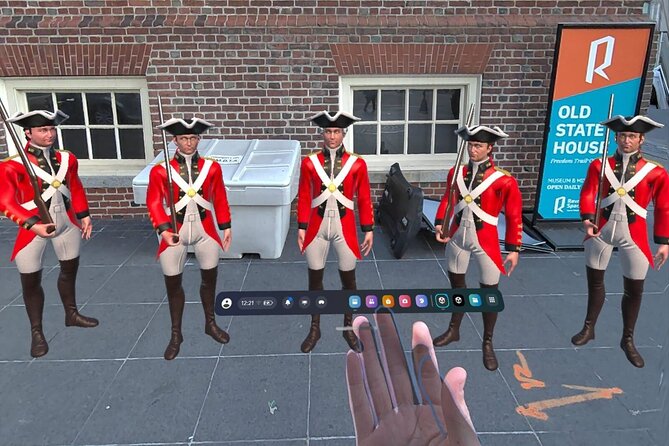
The walking tour ends at Bunker Hill, and that final segment is designed to land with impact. After walking the Freedom Trail sites and meeting the early Revolutionary cast under Boston’s famous landmarks, you finish at a location tied to major conflict.
The tour’s format works here because you are not just leaving with photos. You are leaving with a sense of how the story escalates, step by step, from planning to action.
This finale also fits the tour’s promise about going big without getting graphic. It specifically notes there is no gore. That makes it easier to enjoy as a family outing, and it keeps the focus on history, not shock value.
If you are trying to decide whether to do this last portion, I would say yes. Skipping later segments can mean you miss more of the narrative arc, especially the parts tied to major planning and execution of key Revolutionary events.
Headsets vs Tablets: How to Avoid Frustration

Relive 1776 gives you a choice: Meta Quest AR headsets or tablets. In most “tech tour” situations, the gear can be the biggest obstacle. Here, the tour is built for short usage windows, so you are not stuck troubleshooting for long stretches.
Keep your expectations realistic. Each AR experience is brief, and the guide is there to help you start it, understand what you are looking at, and move on. If you are unsure, ask early. A guide like Tommy has been praised for making AR easy to use, and that kind of help makes a big difference.
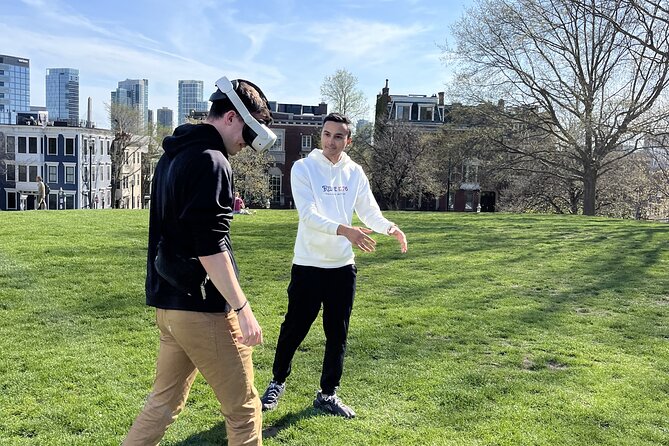
If you do use the headset, take a moment to get comfortable. Adjust it so it sits securely and does not press painfully against your face. Then stay still during the AR moment, because that helps the experience line up with the real street view.
If you use the tablet instead, treat it like a “window” into the moment. You still get AR guidance, just without the headset. This can be a great option if you are sensitive to wearable tech or you simply want fewer variables.
Either way, remember that the tour is designed around the idea that you are still walking in the real world. You should be able to see what is around you, which is a big comfort win for people who worry about moving with gear.
Value for $30: What You’re Actually Getting
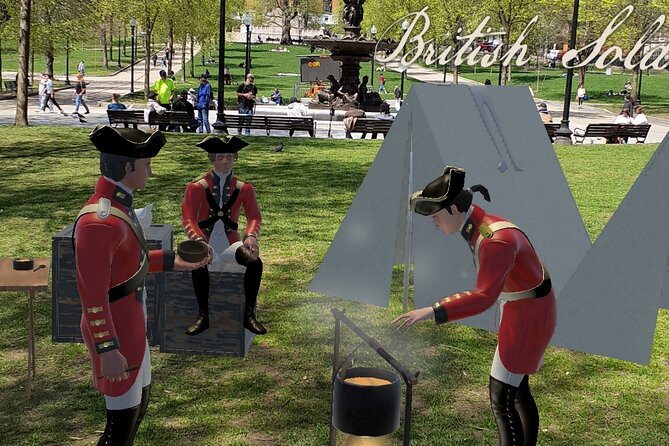
At $30 per person for about 2 hours, Relive 1776 sits in the mid-range for a “tech + guide” attraction. The value comes from combining three things you often pay for separately in Boston.
First, you get a real English-speaking guide, walking with you across famous sites. Second, you get AR hardware provided on-site, including headsets and tablets. Third, you get structured storytelling through multiple stops, with each segment having its own video component.
That package matters because the Freedom Trail can be free to walk, but it is also easy to do it without context. This tour tries to solve that problem by giving you a guided narrative that triggers at the right places.
The small-group size, up to 8 people, also adds value. You are less likely to feel like you are part of a huge herd, and you are more likely to get quick help if the AR moment starts and you are not sure what to do.
Finally, you get a souvenir called Illegal Tea, a reusable tea bag with a discount card. It is not the main reason to go, but it is a nice bonus that feels tied to the Revolutionary theme.
Who Should Book This Tour, and Who Might Not Love It
This is a strong fit if you want an active way to learn the Freedom Trail without sitting through long lectures. It is also a good match for families, especially if kids like hands-on moments and technology that turns the street into a scene.
A guide-led AR walk can also be a great option for adults who have done Boston’s landmarks before. You might think you already know the highlights, but AR scenes that line up with real locations can refresh how you understand the timeline.
If you hate tech, you will not love it. Even with tablets available, the experience is built around AR moments and a short video in each stop. If you prefer purely traditional narration, you might want to balance this with a more classic walking tour on another day.
One more consideration: you will get the most from the history when you fully participate in each segment. The structure depends on short experiences adding up to an overall story, so if you only catch a small portion of the AR moments or skip later sections, the impact can drop.
Tips to Get More From Every Stop
Here are a few practical moves that usually pay off with this kind of format.
- Wear something comfortable for walking. The tour lasts about 2 hours, and you will be on your feet.
- If you have never used AR headsets before, give yourself a minute to settle in. Then focus on the scene, not the device.
- Ask the guide a quick question during pauses, especially at the bigger political stops like the Old State House and Faneuil Hall.
- Plan to participate in the full storyline. Each segment is short, so skipping later parts can reduce the payoff.
- If you are traveling with kids, set expectations: quick scenes, short videos, then walking again.
Also, keep in mind that there is no gore. That is helpful for families and for anyone who wants Revolutionary history without graphic content.
Should You Book Relive 1776?
Yes, if you want a fun, guided Freedom Trail experience that uses AR to make Revolutionary-era moments feel connected to the street. The combination of a small group, an English-speaking guide, AR headsets or tablets, and short but varied scenes makes it easy to recommend.
I would think twice if you want a long, lecture-style history tour with deep storytelling at every stop. This is more about short interactive moments that build a timeline than about nonstop explanation.
If you can do the whole route and pay attention during each scene, you will likely come away with the Freedom Trail in your head in a more memorable way than a standard walk alone. And you get a souvenir to prove you did it, even if your brain insists it was just another day in Boston.
FAQ
How long does the Relive 1776 tour take?
The tour runs about 2 hours.
What language is the tour guide?
The tour guide speaks English only.
Is this tour VR or AR, and will I feel sick?
It is AR, not VR. The experience is designed so you can see the real world at all times and avoid VR nausea.
What equipment is provided for the AR experiences?
You get Meta Quest AR headsets, plus tablets for AR experiences without headsets.
Where does the tour start and where does it end?
It starts at the Boston Common Visitors Center, 139 Tremont St, Boston, MA 02111, and the activity ends back at the meeting point. The walking tour finishes at Bunker Hill.
Is the tour refundable if my plans change?
Yes. You can cancel for a full refund up to 24 hours in advance. If you cancel less than 24 hours before the start time, it is not refunded.
Written up lately around the harbor
- Boston’s Beacon Hill: Private Walking Tour
★ 5.0 · 1 review - Boston’s Chinatown: Small Group Walking Tour
★ 5.0 · 1 review - Self-Guided Scavenger Hunt: Boston Back Bay & Beyond
★ 4.0 · 1 review - Flynn Cruise Port Boston to Boston hotels – Arrival Private Transfer
★ 5.0 · 1 review - Boston to Woods Hole & Martha’s Vineyard Ferry Private Chauffeur Service
★ 4.0 · 1 review - Classic Martha’s Vineyard 1-Day Escape from Boston
★ 5.0 · 1 review - Private Vacation Photoshoot with Photographer in Boston
★ 5.0 · 1 review
Historical Tours, compared.

History and Hauntings of Salem Guided Walking Tour
Read our review →
Freedom Trail History Small Group Walking Tour
Read our review →
Tour of Historic Fenway Park, America’s Most Beloved Ballpark
Read our review →
Boston Food & History: Pizza, North End & Freedom Trail
Read our review →
Freedom Trail History Small Group Walking Tour
Read our review →
City Cruises Boston Historic Sightseeing Harbor Cruise
Read our review →
Boston’s North End Food Tour: Italian Flavors & Heritage Walk
Read our review →Browse the lists this tour appears in