

Reviewed · AUDIO TOURS
American Revolution Audio Tour Bundle: Boston to Philadelphia
Revolutionary America plays out walk by walk. This American Revolution Audio Tour Bundle connects major sites from Boston to Philadelphia with hands-free, location-triggered stories you can run on your own schedule. You are not stuck with a bus timetable, and the audio is built for moving at a steady, city-stroll pace.
I especially love the lifetime access idea. Download once, then use it anytime on any trip, as many times as you want, with offline maps so you are not hostage to spotty signal. I also like the structure of short stops that each highlight what matters, from Boston Common to Independence Hall to Valley Forge.
The main drawback is time and depth. Many stops are short (about 5 minutes of audio per stop) and admission tickets are not included, so you might want extra time at the places that are most important to you.
In This Review
- Key highlights I’d prioritize before you go
- How the Boston to Philadelphia audio tour bundle works
- Boston’s Freedom Trail stops: from Boston Common to Bunker Hill
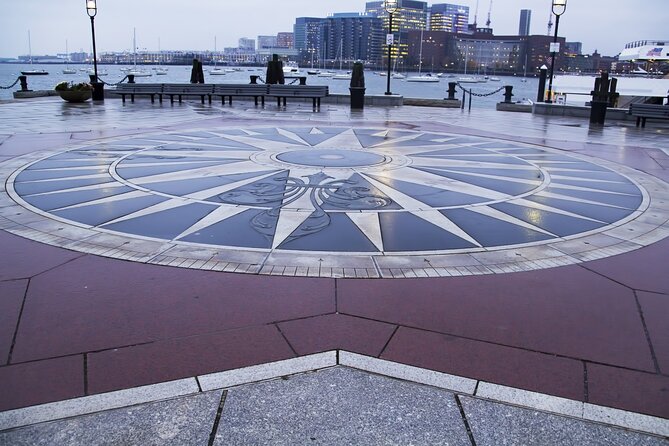
- Harborwalk tea, ships, and the port that made the Revolution happen
- Concord and Lexington: where Revolution meets literature
- Philadelphia on foot: Independence Hall, the Liberty Bell, and the Founders in context
- Valley Forge: winter camp sites and the monuments you can follow
- Price and value: why $29.99 per group can make sense
- Practical tips to avoid audio glitches and wasted time
- Should you book the American Revolution bundle from Boston to Philadelphia?
- FAQ
- Is the Boston to Philadelphia tour self-guided?
- Does it work offline?
- What language is offered?
- What does the price include?
- How long is the tour?
- What are the operating hours?
- What devices are recommended?
- Can I cancel and get a full refund?
Key highlights I’d prioritize before you go
- Lifetime access, no expiry: download and revisit whenever it fits your travel dates.
- Offline maps plus location-triggered audio: no cellular needed once you have the download.
- Per group pricing (up to 4): better value than paying per person on typical guided tours.
- Major stops across three big themes: Freedom Trail Boston, colonial Philadelphia, and Valley Forge winter camp sites.
- Short, easy-to-follow stop lengths: ideal if you want orientation fast and flexibility to linger.
- Some places need extra tickets: your audio guides you, but it does not replace museum entry.
How the Boston to Philadelphia audio tour bundle works
This is a self-guided audio experience through Action’s Tour Guide app. No one meets you at the start. You head to the first story’s point, start the app, and the audio begins automatically. As you continue along the route, it plays the next story based on where your phone thinks you are.
You control the pace. You can start, pause, and take breaks for photos or snacks without breaking the tour. That matters here, because this bundle spans big geographic areas, so you will almost certainly want to stop longer at the places you love.
Two practical tips make or break the experience:
- Download while you have strong Wi-Fi or cellular. The tour is designed to work offline after that.
- Use your phone in a way that fits the day. For driving segments, you can connect to your car stereo via Bluetooth, USB, or AUX. For walking sections, headphones can help the audio stay clear.
Device guidance is also straightforward. The tour recommends an iPhone with iOS 15 or later, Android 9 or later, or an iPad/tablet with GPS and cellular connectivity for navigation.
A few other harbor-city days to consider
- Self Guided Classic Freedom Trail Location Aware (GPS) Walking Audio Tour★ 4.5 · 258 reviews
- Boston Freedom Trail Self-Guided Tour with Audio Narration & Map★ 4.5 · 98 reviews
- Self-Guided Boston’s Beacon Hill Underground Railroad Audio Tour Walking Tour★ 4.5 · 29 reviews
Boston’s Freedom Trail stops: from Boston Common to Bunker Hill
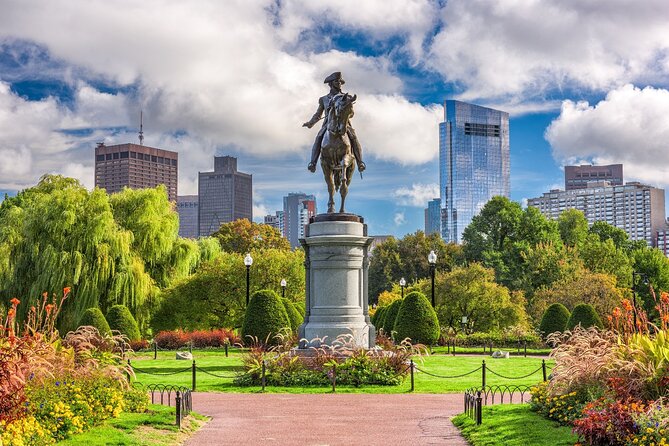
Boston Common is where you get your bearings, and the Boston Common Visitor Center sets the tone right at the heart of early colonial Boston. You start near the red-brick path, then the audio builds the historical “why now?” behind the Revolution.
Next is the Massachusetts State House with its eye-catching golden dome. You pause for key Revolutionary-era figures, plus a look at the Robert G Shaw and 54th Memorial opposite the State House. It’s a good reminder that American history does not run on a single timeline.
Park Street Church asks the key question that keeps the route from feeling like trivia. It frames the conflict as one domino in a much wider chain of events across continents and older wars.
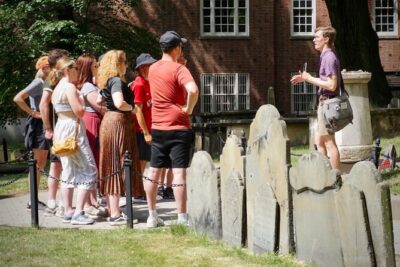
From there, Granary Burying Ground gives you the “people behind the names” moment. Established in 1660, it is a place where graves from centuries ago are still part of the story. The audio points out that it includes the grave of Mother Goose, along with Paul Revere, Robert Paine, James Otis, John Hancock, and Sam Adams. It also brings you to those killed in the Boston Massacre, which becomes important later.
Then the tour changes tempo with the Boston Irish Famine Memorial near the Latin School. This stop shifts from the “founding fight” to the later waves of immigrants after the Revolution and what hardships they faced.
A few steps away, Old South Meeting House focuses on the Boston Tea Party lead-up. The audio stays with the motivations and consequences tied to the tea action, not just the headline moment. It is one of the best ways to connect causes to outcomes without a classroom lecture.
Old Corner Book Store continues the Sons of Liberty thread, and helps connect the tea story to colonial everyday life, not just dramatic protests.
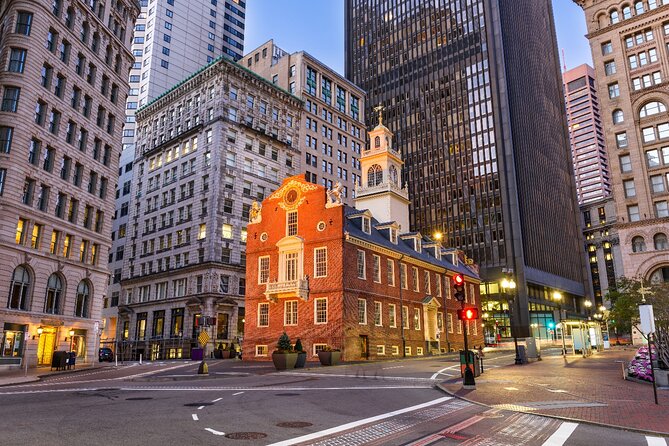
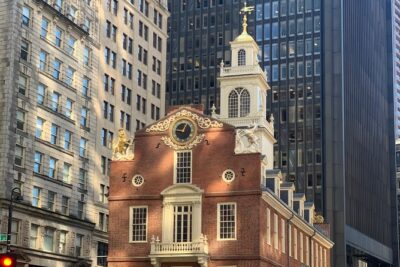
Old State House is a major “big building” moment in the middle of the route. You look for architectural features and learn why this place mattered over time, then the audio guides you around to the other side to catch more context.
At the Boston Massacre site, you get the argument over labels. Was it truly a massacre, or was it a rowdy riot as the British framed it? You stand at the actual spot and also hear about Crispus Attucks, highlighted as an honored American hero.
Faneuil Hall Marketplace is both history and practical life. You get the historical context first, then the audio hands you an easy payoff: Quincy Market and all the food options right there. If you are hungry, this is a great place to stop without feeling like you are breaking the flow.
Haymarket adds another layer with the historic Haymarket story, the Holocaust Memorial out in front, and views tied to the Custom House Tower nearby. It is a good pause that reminds you Philadelphia and Boston are not time capsules. Multiple histories live on the same streets.
Paul Revere House zeroes in on the “Midnight Ride” story. The audio focuses on both the famous moment and the myths around it, which helps you keep the facts straight when you later compare versions you might hear elsewhere.
Old North Church and Historic Site brings you to the lantern signal site, the famous one if by land, two if by sea message that guided colonial troops.
Copp’s Hill Burying Ground is a quieter, atmospheric stop. The audio notes it is older than Granary by a year, and it helps you keep seeing Revolution-era history through the lens of everyday people, including the families who lived and died here.
USS Constitution Museum shifts the emphasis from street politics to naval power. You stand near the historic USS Constitution and learn about her battle against the Guerriere, then get a more detailed look at naval conflict during the War for Independence.
Bunker Hill Monument closes the Boston Freedom Trail portion of the route. You finish with the battle commemoration and a clearer sense of how brutal that fight was, even if you only have short time on the ground.
Finally, South Station and the Federal Reserve Bank of Boston begin a different part of your day, one that links the colonial trade era to the later economic and architectural story of the city.
Harborwalk tea, ships, and the port that made the Revolution happen
South Station is a bit of a surprise start point, because you are looking at modern architecture with its eagle and clock. But that is the point: you are walking a city that kept evolving.
Across the street, the Federal Reserve Bank of Boston offers a modern architectural contrast and stories about why its name sounds bland but matters.
Atlantic Wharf then puts you back in the colonial trade world. The audio explains how booming international trade set the stage for the Boston Tea Party. It is a useful connection because it frames the tea action as part of a larger economic system, not just a protest.
Boston Tea Party Ships and Museum is the hands-on stop here. You look across the water at a ship packed with tea crates and hear the question behind the event: why taxes were so high and how a far-away international war affected the price of tea in Boston.
Rowes Wharf brings in the John Rowe angle, including the idea of tea smugglers and trouble with the law.
The Marina at Rowes Wharf includes a fun architecture moment. The audio points you to the 80-foot copper dome and the glass cupola, plus the trick of looking through the archway to see up to the cupola.
John Joseph Moakley United States Courthouse adds another “city layers” moment, connecting the Revolution era story frame with a more recent civic landmark across the water.
Harbor Towers is a quick lesson in Brutalist style, plus a city reality check about affordable housing and luxury living, all tied to how the harbor area has been cleaned up over time.
New England Aquarium is also part of the route. The audio notes it is partly built over the harbor, letting the aquarium connect with the water environment.
Long Wharf ends the Harborwalk arc and gives you the classic Boston payoff: views plus an ending that still feels tied to the earlier colonial story, even when the crowds are modern.
Concord and Lexington: where Revolution meets literature
After the harbor section, the route shifts away from the city core and toward the Revolutionary aftermath and the Battle Road story.
North Bridge Visitor Center is your stop in Concord, housed in a brick mansion built in 1911 by descendants of the Buttrick family. The audio highlights Major John Buttrick’s role in ordering his militia to fire on British soldiers. You also get a short video angle, plus a bookstore and exhibits.
Meriam’s Corner is quick but memorable. It might look simple, but the audio calls it a site of disaster for the British, which helps keep your attention on what happened rather than just what you see.
Paul Revere Capture Site turns the story personal again. You hear where Revere was captured and reflect on how the British ended up in a complicated position during their weapon confiscation mission.
Lexington Battle Green grounds the toll of the fighting with numbers: British dead and wounded, Americans dead and wounded. It also reframes victory as proof that colonists could win a war against Britain, not just survive a raid.
Ralph Waldo Emerson House offers a literary connection near Concord Museum’s orbit. It helps you see how Revolutionary-era ideas could keep shaping American thought long after.
Concord Museum encourages a longer, optional pause. The audio points you to the collection focused on local revolutionary and literary history and notes you can grab unique artifacts here.
Authors Ridge adds an easy stop if you like final-resting-place stories. Thoreau, Alcott family members, Emerson, Nathaniel and Sophie Hawthorne, and others appear here, and the audio gives you the names and why they fit the place.
Louisa May Alcott’s Orchard House stands out because it links a 19th-century classic to abolition, women’s suffrage, and social reform through the Alcott family. The audio also notes that Alcott wrote Little Women here in 1868.
The Wayside Home of Authors explains how the Alcott sisters lived in the home later called Hillside and how that experience fed into Little Women.
Thoreau Cabin Site places you near Walden Pond, a short jump from town. The audio calls out that Thoreau lived there for two years beginning in 1845 in a cabin he built, shaping Walden and self-reliance.
Samuel Hartwell House is another stop that keeps you anchored to specific people. It points to a remaining piece of a home tied to Samuel Hartwell, a sergeant in the Lincoln Minute Men, with the audio noting his wife Mary’s role in burying dead British soldiers.
Josiah Nelson House Site follows with the Battle Road Trail connection. It points you to the path linked with Battle Road and the Bay Road route the British took to Concord and back, passing multiple historic sites.
This Concord and Lexington stretch is where the audio bundle becomes more than a list of revolutionary landmarks. It turns the Revolution into a map of people, places, and ideas that kept influencing America.
Philadelphia on foot: Independence Hall, the Liberty Bell, and the Founders in context

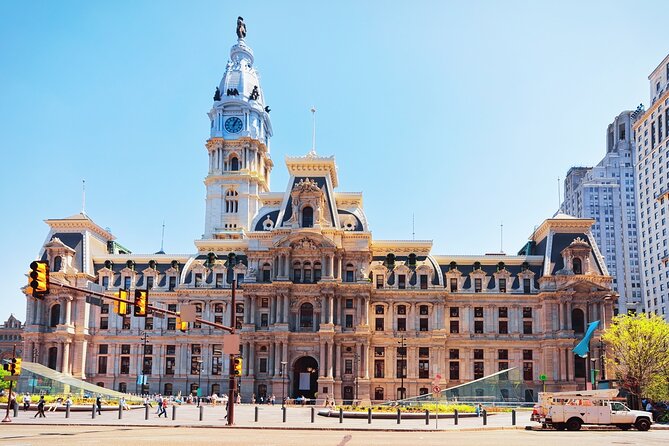
City Hall marks your entry into Historic Philly and resets the story frame to the 1700s. The audio points out deep roots of figures like Washington and Franklin in Philadelphia and connects the Tea Tax catalyst to the events that led to revolt.
Washington Square is next and focuses on the First Continental Congress. The audio frames this meeting by describing the consequences before you reach the iconic Independence Hall.
Independence Hall is the centerpiece. You learn it as the place where the First Continental Congress unified the colonies, where military planning happened, and where the Second Continental Congress took votes across colonies. The audio also highlights the Declaration of Independence and America taking shape here, plus additional figures like John Hancock, Patrick Henry, and John Adams. You also check out the Washington statue out front and hear his backstory.
Liberty Bell follows with two themes: why it is iconic and why it is susceptible to cracks. The audio extends the meaning into later freedom struggles, including freedom from slavery, equal voting rights, and liberty.
Benjamin Franklin Museum brings Franklin’s personality into focus, with the audio describing his breadth of interests and knowledge. You also get Franklin’s connection to the Benedict Arnold story and what Arnold planned.
The President’s House stop takes you to the very first White House, describing Washington and John Adams’s homes in the same space and how life for presidents looked in the colonial era.
700 Market St is where the Graff House connection comes in. The audio notes Thomas Jefferson wrote the Declaration of Independence here and that Benjamin Franklin helped edit it, and it ties you to Jefferson’s contributions to independence.
The African American Museum in Philadelphia stop matters because it keeps the story honest. Independence and freedom applied differently than the slogans promised, and the audio route points you toward that larger context, including African-American contributions like Crispus Attucks.
Franklin Square becomes a decompression stop, with ideas and experiments and time to breathe.
The Bolt of Lightning Memorial to Benjamin Franklin is a quick science appreciation moment tied to Franklin’s electricity discovery.
National Constitution Center is next, connecting how the colonies formalized the union into a nation and how citizens’ fundamental rights were shaped into the basis for American society.
United States Mint is a practical economics stop. You hear how coins supported early American economy, plus notes on gold, silver, and the later mix of copper, nickel, and paper currency.
50 N Independence Mall E is where Franklin’s grave and UPenn enter the story. The audio connects UPenn with Franklin’s ideals for the nation’s future and ties that legacy to Philadelphia today.
Betsy Ross House shifts to the birth of the American flag. The audio highlights her meeting tied to Sunday service at Christ Church with George Washington.
Elfreth’s Alley offers a time-slice of downtown life, noting it as the first downtown and keeping its colonial feel through generations of change.
Christ Church adds both worship and Revolutionary identity. The audio points out that George Washington and Betsy Ross and other revolutionaries worshipped there, plus it encourages you to admire the architecture.
The Museum of the American Revolution ends the main Philly walk arc. It is a logical place to add extra time if you feel you want more than audio can provide.
Another way the same afternoon could go around Boston:



Valley Forge: winter camp sites and the monuments you can follow

Visitor Center at Valley Forge brings you back to December 1777. The audio explains the challenge Washington faced, arriving for a long, cold winter while understanding the army might not survive until spring. You get a foundation for what you will see next.
Muhlenberg Brigade highlights Devil Pete Muhlenberg, with the audio describing his shift from religious role to picking up a rifle.
Memorial Park Lane includes the Maine Memorial, and it reinforces how tenuous connections between the colonies were even while they fought together.
National Memorial Arch becomes the “big photo” monument in the Valley Forge section, honoring the entire Continental Army who wintered there, including those who survived and those who did not.
General Wayne Statue recognizes another fighter, and the audio connects the nickname Mad Anthony to his reputation.
Knox’s Quarters ties the story to Henry Knox as an artilleryman and general, with the audio noting his role during the long winter months.
Delaware Memorial keeps you moving forward in the narrative arc as the situation at Valley Forge began to unravel.
Washington’s Headquarters then focuses on the unassuming stone house from which Washington led the army through difficult days at Valley Forge. The route even lists Washington’s Headquarters twice, which often means you will be guided through different nearby locations within the area.
New Jersey Brigade Memorial honors troops and the idea of dependable, well-trained soldiers in the ragtag army.
Artillery Park connects again to Knox’s cannons and their strategic positioning.
Varnum’s Quarters adds a key inclusion story, tied to General James Mitchell Varnum. The audio calls him out for bringing the first Black soldiers into the Continental Army.
Patriots of African Descent Monument gives the matching memorial context, describing a window into a slice of history that is often overlooked.
Philander Chase Knox Estate is optional, and the audio notes that Philander Chase Knox served under Presidents McKinley and Roosevelt and once lived there.
Valley Forge Train Station is another detour option for those who like details beyond battlefields, including info about trains and General Washington.
Washington Memorial Chapel is a fan-favorite kind of stop if you like symbolic replicas. The audio notes it has a replica of Philadelphia’s Liberty Bell.
Henrico County is listed as part of Washington Memorial Cemetery, with the audio referencing important figures laid to rest there, including Philander Knox.
Maurice Stephens House is another specific quarters site tied to winter of 1777.
Port Kennedy Railroad Station is the final listed stop and feels like the “what happened after” ending. The audio frames it as an abandoned station shuttered since the 1980s.
Price and value: why $29.99 per group can make sense
This bundle costs $29.99 per group, good for up to 4 people. That per-group approach is usually where value kicks in, especially for families, small friend groups, or couples who want their own pacing. Instead of paying person-by-person, you can treat it like a shared guide, with separate listening through your group setup.
You are paying for storytelling and wayfinding support, not for admissions. The tour repeatedly notes admission tickets are not included at stops, and that is the key thing to budget for. If you plan to go into multiple museums, add those ticket costs yourself, and treat the audio as your orientation plus your “why it mattered” layer.
Duration is listed as 3 days on average. With that in mind, you should plan around the idea that you may not want to do every single stop in one sitting. The audio’s short stop length helps, but it also means you are not getting deep museum hours at every location.
Practical tips to avoid audio glitches and wasted time
Here’s how to get the smoothest experience with the least friction.
- Pick your starting point carefully. You start at the first story’s point and audio begins automatically. If you start later in the day or later along the route, the app still needs the correct launch point and direction.
- Use strong signal at download time. The tour needs you to download the tour while you have strong Wi-Fi or cellular. After that, it works offline.
- Keep your phone charged. The tour uses GPS-style triggering. A charging option helps on long walk days or driving days.
- Don’t expect every site to be a full visit. Each stop is designed as a quick hit. If you want to read exhibits, watch videos, or spend time inside, plan an extra block.
- Follow the tour route and speed limit. The audio cues assume you are staying on the path.
- If audio misfires, contact support. There is support if you face audio issues, but prevention is better than troubleshooting once you are outside.
Should you book the American Revolution bundle from Boston to Philadelphia?
If you like structure, flexibility, and fast context, I think this is a strong pick. You get a lot of major landmarks across Boston, Concord, Philadelphia, and Valley Forge with offline, hands-free audio, and the per-group price makes it easier to justify for two to four people.
I would not book it if your main goal is “only museums, long timed entries, and maximum time in exhibitions.” The audio stops are short and admission tickets are not included, so you would likely want to pair it with extra on-site visits to the places you care about most.
My best-fit advice: book it if you want a self-guided, first-timer-friendly way to connect the dots between the street-level stories in Boston, the political drama in Philadelphia, and the winter survival story at Valley Forge. Then use the free time at your favorite stops to go deeper on your own terms.
FAQ
Is the Boston to Philadelphia tour self-guided?
Yes. No one meets you at the start. You open the Action’s Tour Guide app at the first story point, and audio plays automatically based on your location as you follow the route.
Does it work offline?
Yes. The tour includes offline maps. You need to download the tour while you have strong Wi-Fi or cellular, and it should work offline after that.
What language is offered?
The audio tour is offered in English.
What does the price include?
It includes the audio tour and the app experience. Attraction passes, entry tickets, or reservations are not included.
How long is the tour?
Duration is listed as approximately 3 days.
What are the operating hours?
Opening hours are Monday through Sunday, 6:00 AM to 5:00 PM.
What devices are recommended?
The tour recommends an iPhone running iOS 15 or later, Android device version 9 or later, or an iPad/tablet with GPS and cellular connectivity for navigation.
Can I cancel and get a full refund?
You can cancel for a full refund if you cancel at least 24 hours before the experience start time.
Written up lately around the harbor
- Boston’s Beacon Hill: Private Walking Tour
★ 5.0 · 1 review - Boston’s Chinatown: Small Group Walking Tour
★ 5.0 · 1 review - Self-Guided Scavenger Hunt: Boston Back Bay & Beyond
★ 4.0 · 1 review - Flynn Cruise Port Boston to Boston hotels – Arrival Private Transfer
★ 5.0 · 1 review - Boston to Woods Hole & Martha’s Vineyard Ferry Private Chauffeur Service
★ 4.0 · 1 review - Classic Martha’s Vineyard 1-Day Escape from Boston
★ 5.0 · 1 review - Private Vacation Photoshoot with Photographer in Boston
★ 5.0 · 1 review
Audio Tours, compared.
Self Guided Classic Freedom Trail Location Aware (GPS) Walking Audio Tour
Read our review →
Boston Freedom Trail Self-Guided Tour with Audio Narration & Map
Read our review →
Self-Guided Boston’s Beacon Hill Underground Railroad Audio Tour Walking Tour
Read our review →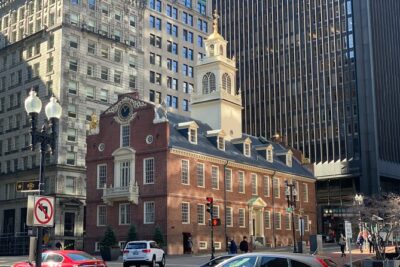
Self Guided “Historic Boston Downtown Freedom Trail” Audio/GPS Walking Tour
Read our review →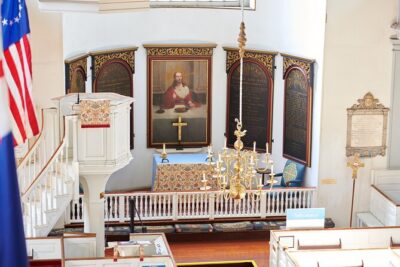
Boston’s Old North Church Admission with Self-Guided Audio Tour
Read our review →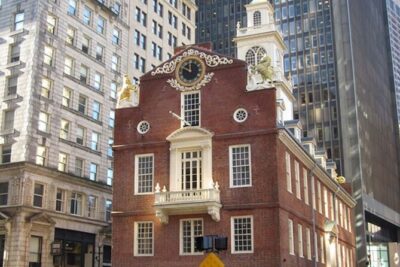
Boston’s Freedom Trail: A Self-Guided Audio Tour
Read our review →
Boston Harborwalk & Tea Party Self-Guided Walking Audio Tour
Read our review →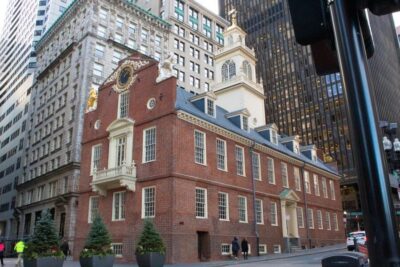
City History and Highlights Audio App Walking Tour
Read our review →Browse the lists this tour appears in