
Reviewed · BEACON HILL TOURS
Self-Guided Boston’s Beacon Hill Underground Railroad Audio Tour Walking Tour
Boston’s Beacon Hill has secret routes.
This self-guided, phone-based audio tour turns that neighborhood into a story you can follow at your pace, with narration connected to Beacon Hill Underground Railroad landmarks. I especially like that you can start and stop whenever you want, so you are not stuck with someone else’s timing. I also like the variety of moments you hit along the way, from safe-house households to education and places of worship. One thing to consider is that navigation depends on your phone, and the walking directions can take a little focus if you are not used to GPS-style tours.
You will walk the route from the Charles Street Meeting House to the African American Meeting House, guided by location-aware narration and site notes. You will hear about African-American history in Boston through real people tied to the Underground Railroad network, and you get optional added context like a Go Deeper style feature. The only real drawback is that a few people found transitions in the audio route harder to manage, so go slow at turns and let the app do the work.
In This Review
- Key highlights worth your time
- Why Beacon Hill Underground Railroad stories work in audio
- Price and value: $9.75 for a focused route
- How the self-guided GPS tour actually plays on your phone
- Start at 70 Charles St, finish at 46 Joy St
- The route: Underground Railroad households, schools, and community anchors
- Stop 1: John J Smith House and the station network
- Stop 2: 83 Phillips Street, John Sweat and firsts in history
- Stop 3: Lewis Hayden’s home and the act of saving runaways
- Stop 4: Leonard Grime, a conductor on the railroad
- Stop 5: Old Temperance Boarding House and shelter logistics
- Stop 6: The old Phillips School, first integrated school and a first teacher
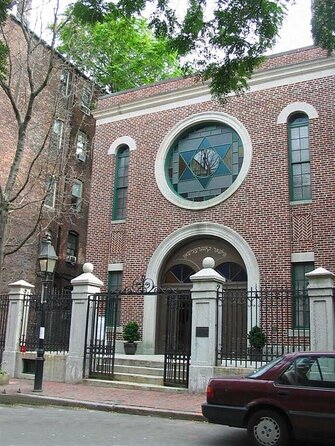
- Stop 7: Vilna Shul and how the Jewish community supported the network
- Stop 8: John Coburn and a gaming house that served as a station
- Stop 9: Charles Sumner’s Birthplace, abolitionist context
- Final stop: 46 Joy St at the African American Meeting House
- Practical tips so the walk stays easy
- Who this tour fits best
- Should you book this Beacon Hill audio tour?
- FAQ
- How long is the self-guided Beacon Hill Underground Railroad audio walking tour?
- Where does the tour start and where does it end?
- What does the tour cost?
- Is the tour self-guided or guided by a live person?
- What language is the narration available in?
- Can I pause, control the pace, or leave and come back later?
- Are service animals allowed?
- Is it suitable for most people, and is it near public transportation?
- Is there a refund if I cancel?
Key highlights worth your time
- GPS-connected narration that cues you as you reach each stop, instead of making you guess
- Start at 70 Charles St and end at 46 Joy St, with the African American Meeting House as the finale
- Underground Railroad stories tied to specific households, including Lewis Hayden and John J Smith
- Education and community stops, like the Phillips School and Vilna Shul synagogue
- Go Deeper and pause controls for people who want extra context or to slow down
- Low price for a guided experience at $9.75 per person with about 45 to 55 minutes of walking
Why Beacon Hill Underground Railroad stories work in audio
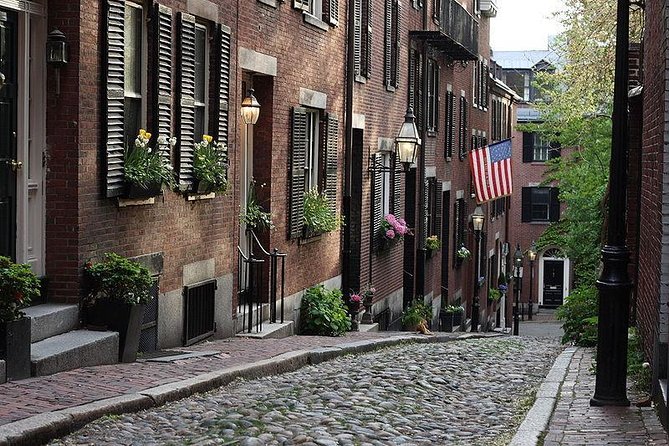
Beacon Hill is compact, pretty, and easy to walk, which makes it a great setting for a self-guided audio story. The tour’s format is simple: you use your phone to play narration that lines up with where you are standing. That matters because Underground Railroad history is often taught in broad strokes. Here, you are nudged toward the specific corners, buildings, and institutions where people lived and acted.
I like how the route mixes types of help. You are not only hearing about escape routes. You are also hearing about the people who protected runaways, the networks around them, and the institutions that shaped community life, including schools and places of worship. It gives you a fuller picture of how “safe” was created, piece by piece.
The big practical note: plan for walking. The tour is about 45 to 55 minutes, and the neighborhood has hills. Comfortable shoes and a little patience with directions go a long way.
Other walks through Beacon Hill:
- Downtown Freedom Trail, Beacon Hill & Back Bay Walking Tour★ 4.5 · 473 reviews
- 2-Hour Beacon Hill True Crime Expert Guided Tour★ 5.0 · 182 reviews
- Beacon Hill Boston History + Photo Walking Tour (SMALL Group)★ 5.0 · 163 reviews
Price and value: $9.75 for a focused route
At $9.75 per person, this is one of those city experiences that feels like it should cost more. You get a guided-feeling walk without booking a live group, which can be a win in Boston, where schedules can be tight.
What you are paying for is not just narration. You are paying for:
- a pre-set route tied to Underground Railroad landmarks in Beacon Hill
- the ability to control your timing, including stopping and resuming
- site context connected to the names you will recognize, like Harriet Tubman, Charles Sumner, and others tied to Boston’s network
A guided group tour can be expensive, and free walking tours can be long and crowded. This hits a middle ground: short enough to fit into a half-day plan, detailed enough to feel like more than a quick walk-by.
If you are the type who likes to read a sign and then move on, this will suit you. If you want hands-on interpretation and lots of back-and-forth questions, you might prefer a live tour. But for most people, the price-to-time ratio is very strong.
How the self-guided GPS tour actually plays on your phone
This tour is built for mobile ticket entry and a phone audio experience in English. In practice, that means you should:
- have headphones ready
- keep your phone charged
- follow the on-screen prompts and the next-stop guidance in the app
One practical tip from the experience itself: if you get off track, use the app’s cueing system to rejoin the route. People have reported getting lost on street corners, and the fix is usually straightforward if you stick with the app’s direction cues.
You can also pause and go back, and there is a Go Deeper option for additional context. That is useful when you want extra detail without holding up a group. It also helps if you stop to take photos or read the street-level information.
Start at 70 Charles St, finish at 46 Joy St
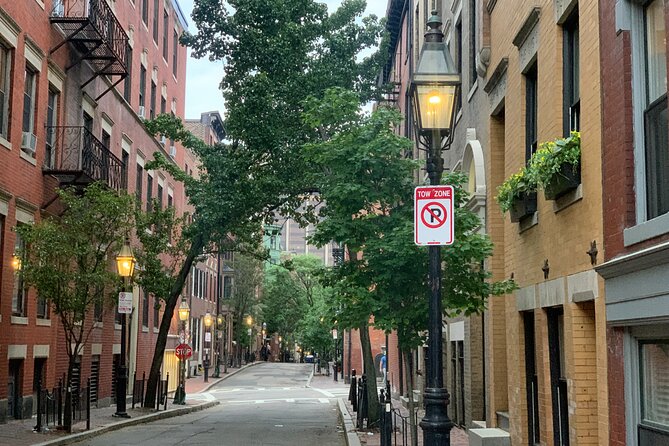
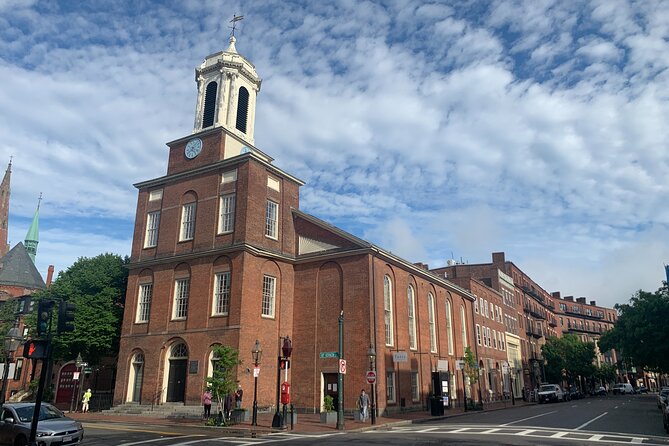
Your journey begins at the Charles Street Meeting House, 70 Charles St. That sets the tone for Beacon Hill’s layered history. Then you work your way through the neighborhood toward the tour’s conclusion at 46 Joy St, the African American Meeting House, described as the oldest extant black church building in America.
The ending location matters. Ending at a place that is still part of African American community history gives the story weight. You are not just “touring sites,” you are landing at a living reminder of resilience and organizing.
The tour is offered in English and is private for your group, even though it is self-guided. So you are not sharing the route with strangers as you go.
The route: Underground Railroad households, schools, and community anchors
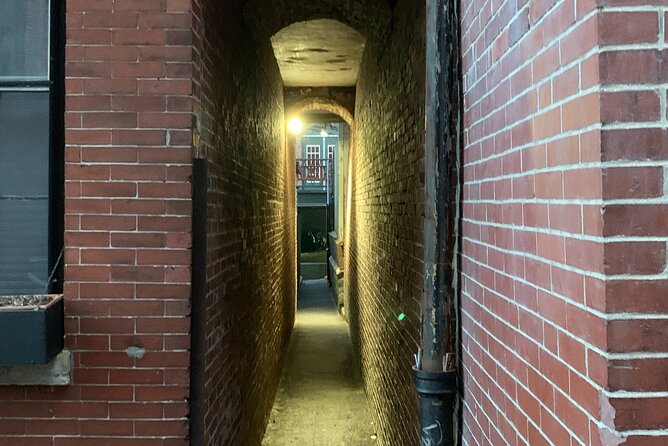
Below is what you can expect as you move stop to stop. The route is designed to feel like a chain of connections, where each location adds a new angle on how help operated in Boston.
More of Boston crossed at walking pace:

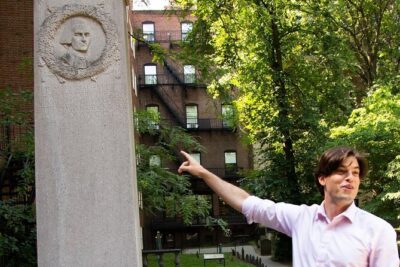
Stop 1: John J Smith House and the station network
The first major stop focuses on John J Smith and how his home fit into the Underground Railroad system. You will learn not only that people hid runaways, but how the Underground Railroad functioned as an organized network with roles and responsibilities.
This is a good opener because it gets you thinking in systems, not myths. You start to notice that “help” had structure, and that certain homes became trusted points in a larger chain.
Practical tip: as soon as the narration starts at the first stop, get your bearings and confirm you are on the correct side of the street. That makes the rest of the walk smoother.
Stop 2: 83 Phillips Street, John Sweat and firsts in history
Next you head to 83 Phillips Street, tied to John Sweat Rock, and the story emphasizes his many firsts. This stop helps you understand how Underground Railroad history intersects with individual achievement and long-term impact.
It also helps your brain stay engaged. You are not only hearing about escapes. You are hearing about people whose lives carried forward in public and historical ways.
Stop 3: Lewis Hayden’s home and the act of saving runaways
Then you reach the home of Lewis Hayden, and the narration centers on how he saved runaways through his actions in Beacon Hill.
This stop is emotionally direct, because it highlights courage in plain terms. It makes the Underground Railroad feel less like distant legend and more like choices people made right where they lived.
If you like audio tours that keep moving, this one works because it stays tightly tied to the location and the person’s role.
Stop 4: Leonard Grime, a conductor on the railroad
After Hayden, the tour moves to Leonard Grime, described as a conductor on the Underground Railroad. You get a clearer sense of how roles worked: helpers, conductors, and the people who kept the network running.
Even if you already know the phrase Underground Railroad, this part helps you think of it like a route with jobs, not a single story about one famous figure.
Stop 5: Old Temperance Boarding House and shelter logistics
The Old Temperance Boarding House is one of the stops that shifts the setting from private homes to a broader idea of where shelter and support could show up.
“Boarding house” can sound vague until the narration gives it context. Here, it connects the idea of housing and hospitality with the urgent need for safety and movement.
This is a good place to slow down, listen fully, and then look around the streets. Boarding houses can be harder to visualize later if you are walking too fast.
Stop 6: The old Phillips School, first integrated school and a first teacher
The tour then passes by the old Phillips School, described as the first integrated school in Boston and also associated with the first African American teacher to teach at an integrated school.
This is one of the strongest sections for understanding long-term change. The Underground Railroad story is often framed as immediate escape. This stop brings you into the aftermath, into education, and into the push for equality that extends beyond any single journey.
If you care about how communities rebuilt after arrival, you will likely appreciate this stop.
Stop 7: Vilna Shul and how the Jewish community supported the network
Next you pass by Vilna Shul, described as the oldest immigrant synagogue in Boston. The narration includes how the Jewish community helped on the Underground Railroad.
This matters because it broadens the story. You see that support did not come from one group alone. It came through shared moral commitments and local networks.
If you like history that shows how different communities helped each other, this will be a standout portion of the walk.
Stop 8: John Coburn and a gaming house that served as a station
Then you hear about John Coburn and the house connected with his gaming house, with Coburn described as a station master.
This part is a reminder that escape networks often used whatever social spaces were already part of daily life. That can feel surprising at first, but it makes sense when you think about discretion and trust.
It is also a good example of how the Underground Railroad story in Boston can be more specific than you might expect, with names and places tied directly to operations.
Stop 9: Charles Sumner’s Birthplace, abolitionist context
The route includes Charles Sumner’s Birthplace, bringing in abolitionist context. If you want the story to connect to politics and public pressure, this stop helps.
It also helps you connect Underground Railroad activity to the wider abolitionist movement that influenced laws, public opinion, and the stakes of slavery.
Final stop: 46 Joy St at the African American Meeting House
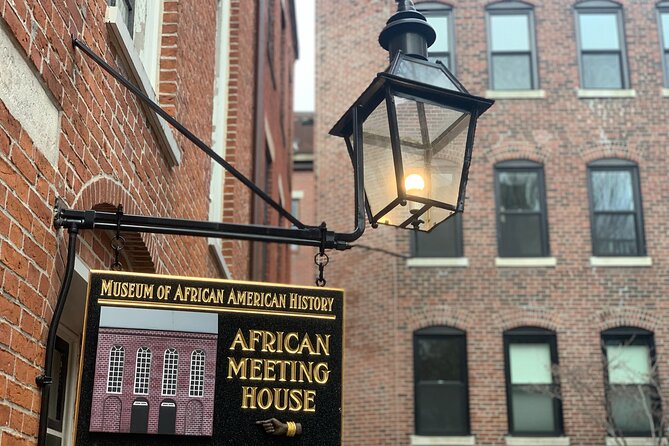
You end at the African American Meeting House at 46 Joy St. This is your closing note, tying the Underground Railroad story to a lasting institution in African American history.
For me, this kind of ending is what makes an audio walking tour feel worth it. You finish not just with facts, but with a place that carries meaning beyond the narration.
Practical tips so the walk stays easy
A few details will make this experience smoother:
- Bring comfortable shoes. The route is short, but Beacon Hill hills add up.
- Keep your phone charged and your volume at a level you can hear while walking.
- Use the app controls like pause and go back if you want time to read street-level markers.
- If you ever feel unsure where you are, follow the app’s next-stop guidance to get re-centered.
Also, consider timing your visit. If you are booking close to your date, aim to reserve earlier since this is often booked about 12 days in advance on average.
Who this tour fits best
This is a great match if you:
- want an easy, self-paced walk instead of a fixed group schedule
- like hearing stories tied to real buildings and street-level locations
- want short Underground Railroad history without committing to an all-day tour
It may be less ideal if you:
- need very simple, step-by-step directions all the time
- dislike relying on phone audio and GPS cues
- want a live guide to answer questions on the spot
Still, the strong rating suggests most people find the structure works once they follow the on-screen route guidance.
Should you book this Beacon Hill audio tour?
Yes, if you want a short, thoughtful walk through Beacon Hill’s Underground Railroad connections and you like learning through narration tied to what you see outside your window. At $9.75, the value is hard to beat for a route that covers major names and key community landmarks, from John J Smith and Lewis Hayden to the Phillips School and Vilna Shul, ending at the African American Meeting House.
Book it if you are comfortable walking 45 to 55 minutes and using your phone to stay oriented. If you are worried about tech, charge up early, have headphones ready, and accept that you might need to pay a little attention at turns. For most people, that effort is worth it for the way the story connects person, place, and purpose.
FAQ
How long is the self-guided Beacon Hill Underground Railroad audio walking tour?
The tour lasts about 45 to 55 minutes.
Where does the tour start and where does it end?
It starts at Charles Street Meeting House, 70 Charles St, Boston, MA 02114 and ends at 46 Joy St, Boston, MA 02114.
What does the tour cost?
The price is $9.75 per person.
Is the tour self-guided or guided by a live person?
It is self-guided and you use your phone for the audio narration, with a private experience for your group.
What language is the narration available in?
The tour is offered in English.
Can I pause, control the pace, or leave and come back later?
You can begin and end the tour whenever you want, and the tour format includes controls such as pausing and going back.
Are service animals allowed?
Yes, service animals are allowed.
Is it suitable for most people, and is it near public transportation?
The information says most travelers can participate, and it is near public transportation.
Is there a refund if I cancel?
Yes. Free cancellation is available if you cancel at least 24 hours in advance for a full refund.
More Audio Tours in Boston
- Boston’s Freedom Trail: A Self-Guided Audio Tour
★ 4.0 · 18 reviews - Boston Harborwalk & Tea Party Self-Guided Walking Audio Tour
★ 5.0 · 17 reviews - Boston: City History and Highlights Audio App Walking Tour
★ 3.7 · 12 reviews - Boston Self-Guided Audio Tour Bundle: Freedom Trail & More
★ 4.5 · 5 reviews
More Self-Guided Tours in Boston
- Self Guided Classic Freedom Trail Location Aware (GPS) Walking Audio Tour
★ 4.5 · 258 reviews - Boston Freedom Trail Self-Guided Tour with Audio Narration & Map
★ 4.5 · 98 reviews - Self Guided “Historic Boston Downtown Freedom Trail” Audio/GPS Walking Tour
★ 4.0 · 22 reviews - Boston’s Old North Church Admission with Self-Guided Audio Tour
★ 4.5 · 19 reviews
Written up lately around the harbor
- Boston’s Beacon Hill: Private Walking Tour
★ 5.0 · 1 review - Boston’s Chinatown: Small Group Walking Tour
★ 5.0 · 1 review - Self-Guided Scavenger Hunt: Boston Back Bay & Beyond
★ 4.0 · 1 review - Flynn Cruise Port Boston to Boston hotels – Arrival Private Transfer
★ 5.0 · 1 review - Boston to Woods Hole & Martha’s Vineyard Ferry Private Chauffeur Service
★ 4.0 · 1 review - Classic Martha’s Vineyard 1-Day Escape from Boston
★ 5.0 · 1 review - Private Vacation Photoshoot with Photographer in Boston
★ 5.0 · 1 review
Beacon Hill Tours, compared.
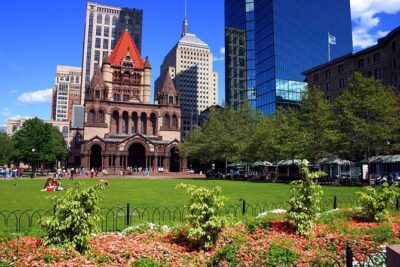
Downtown Freedom Trail, Beacon Hill & Back Bay Walking Tour
Read our review →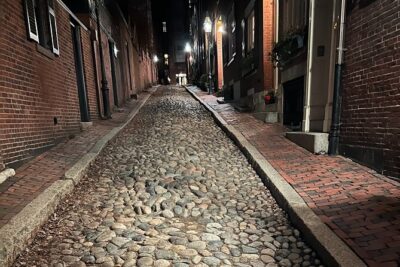
2-Hour Beacon Hill True Crime Expert Guided Tour
Read our review →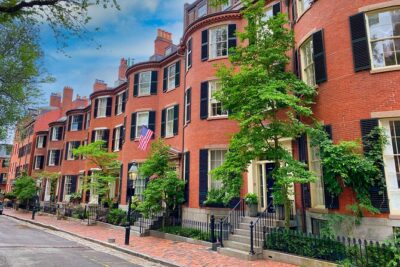
Beacon Hill Boston History + Photo Walking Tour (SMALL Group)
Read our review →
Underground Railroad History Tour of Beacon Hill
Read our review →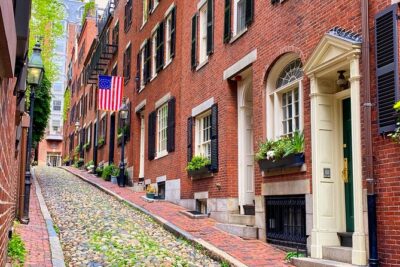
Beacon Hill + Back Bay History + Photo Walking Tour(SMALL Group)
Read our review →Underground Railroad History Tour of Beacon Hill
Read our review →
Browse the lists this tour appears in