
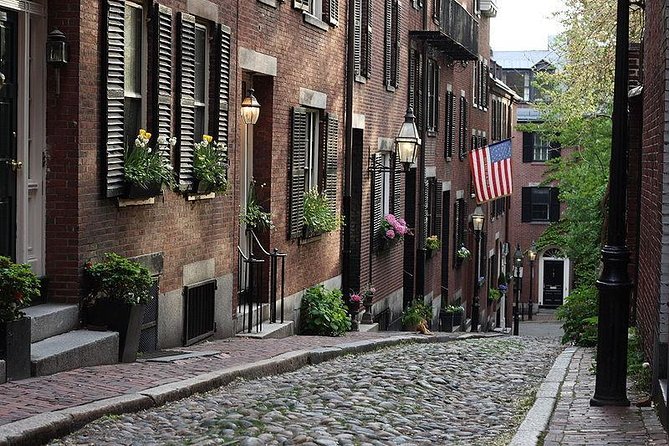
Reviewed · BEACON HILL TOURS
Boston: Underground Railroad History Tour of Beacon Hill
Beacon Hill hides stories you might miss. On this small-group Boston Common to Beacon Hill walk, I like how crowds stay thin while you follow the Black Heritage Trail link by link, stop by stop. I also like that the tour uses real neighborhood landmarks, including the African Meeting House, to connect the struggle over slavery to the road toward the Civil War.
One consideration: this is an all-outdoors walk with steep hills and non-ADA-compliant sidewalks, so it is not a good fit for low mobility or low fitness days.
For $35 and about 150 minutes, you get a focused circuit with a local historian guide who keeps the pace comfortable and makes time for questions, which is exactly what you want in a city where time and attention both feel scarce.
In This Review
- Key reasons this tour works
- What the Beacon Hill Underground Railroad Walk Teaches You About the Civil War
- Starting at Soldiers and Sailors Monument, then threading through Beacon Hill
- Street by street: the education, meeting houses, and Underground Railroad homes
- Mount Vernon Street and Acorn Street: classic Beacon Hill, pointed context
- Louisburg Square: where the story tightens
- Phillips School and Abiel Smith School: education and the fight for equality
- Charles Street Meeting House and Charles Street: worship, community, and pressure
- John J Smith House, John Coburn House, Lewis and Harriet Hayden House, George Middleton House: the Underground Railroad neighborhood lens
- Charles Sumner House, Smith Court Residences, Park Street Church, and Massachusetts State House area: politics shows up in the streets
- African Meeting House break and why the pause matters
- The final payoff: from Charles Street to Shaw and the 54th Memorial
- Price, pace, and practical value of a $35, 150 minute tour
- Who should book, and who should skip
- Should you book this Boston Underground Railroad history tour?
- FAQ
- Where do I meet the guide?
- How long is the tour?
- How much walking is involved?
- Is the tour indoors?
- Is admission to museums included?
- Is there a break during the tour?
- What should I bring?
- Can I bring luggage or large bags?
- Is video recording allowed?
- Is the tour wheelchair accessible?
- Can I cancel or pay later?
Key reasons this tour works

- Small-group format that helps you avoid congested sidewalks while you learn on your feet
- Black Heritage Trail landmarks laid out across Beacon Hill, so the story has a physical route
- African Meeting House, including a guided visit plus a scheduled break
- Underground Railroad neighborhood context, tied to the tensions leading up to the Civil War
- End at the 54th Massachusetts memorial, a strong payoff right back on Boston Common
What the Beacon Hill Underground Railroad Walk Teaches You About the Civil War
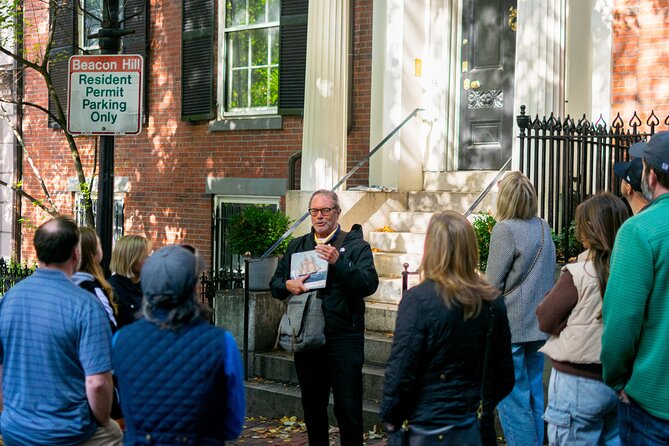
This tour is built around a simple idea: the road to the Civil War did not start in a far-off battlefield. It started in daily life, in argument, in law, and in the choices Bostonians made while slavery and freedom collided.
You begin by tracing a three-decade arc that the guide connects to the political and social pressure building in the North. As you walk Beacon Hill’s narrow lanes, you hear how black and white residents grappled with racial slavery looming over the young nation. The story is not just about escape routes. It is also about education, racial integration, and the momentum of anti-slavery politics that shaped what happened next.
What I like about this approach is that it makes the history feel concrete. You are not just hearing names and dates. You are seeing the neighborhood spaces where people lived, debated, worshiped, taught, and organized. That is how Boston becomes more than a postcard.
Other walks through Beacon Hill:
- Downtown Freedom Trail, Beacon Hill & Back Bay Walking Tour★ 4.5 · 473 reviews
- 2-Hour Beacon Hill True Crime Expert Guided Tour★ 5.0 · 182 reviews
- Beacon Hill Boston History + Photo Walking Tour (SMALL Group)★ 5.0 · 163 reviews
Starting at Soldiers and Sailors Monument, then threading through Beacon Hill
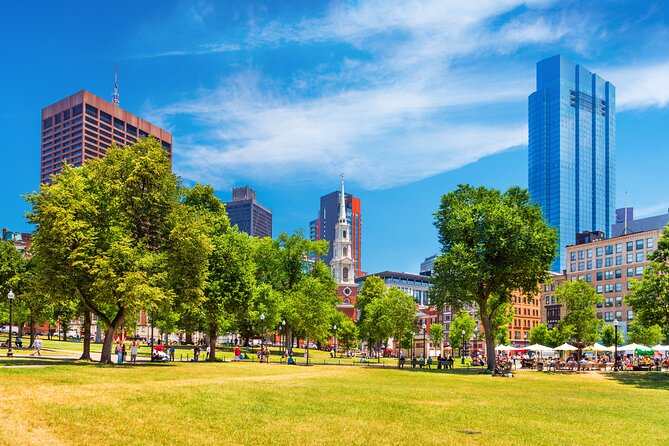
You meet at the Soldiers and Sailors Monument in the middle of Boston Common, right by the Boston Common Visitors Center at 139 Tremont Street. Look for the white granite column topped by a female figure holding a flag, with bronze statues around the base. It is an easy target, which matters because Boston Common can be a fast-moving place.
From there, the tour moves quickly from the open space of Boston Common into tighter streets. The early stops give you orientation, and they also set the theme: freedom and conflict were happening close to where you stand now. Even the brief guided moments, like at Boston Common and then around Mount Vernon Street and Acorn Street, help you understand how Beacon Hill’s geography shaped movement and community life.
One practical bonus of the small-group setup is that you can actually hear the guide. The route is designed so you are not stuck in a wall of people. And the pace is kept reasonable, so you are not sprinting between stops just to keep up.
Street by street: the education, meeting houses, and Underground Railroad homes
This is the core of the experience, and it is where the walking turns into learning. The tour keeps circling through historic Beacon Hill spaces that connect to the Black Heritage Trail and the Underground Railroad story the guide is building.
Here is how the neighborhood stops work as part of the narrative:
Mount Vernon Street and Acorn Street: classic Beacon Hill, pointed context
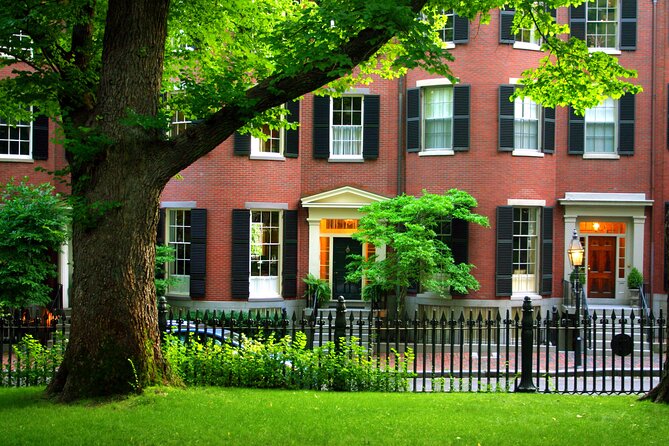
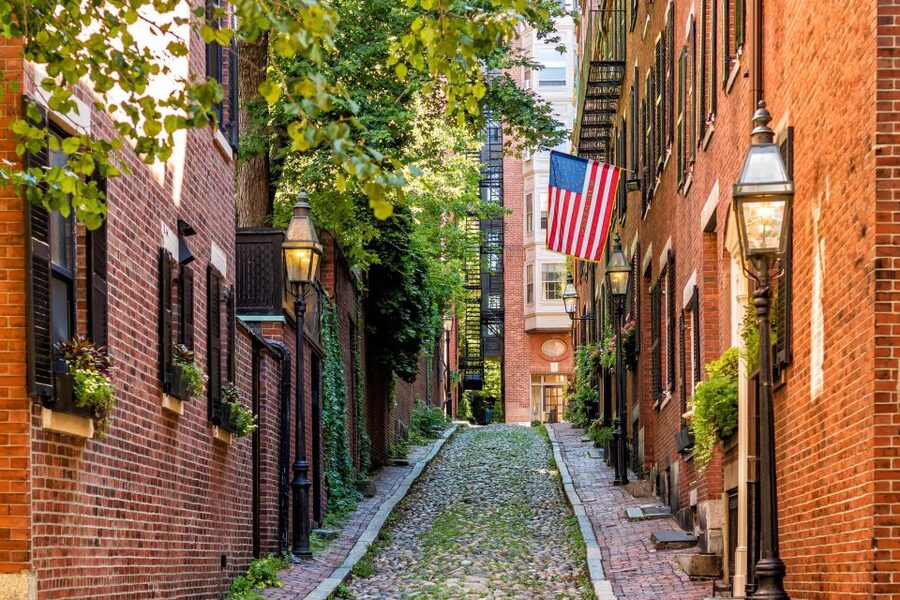
You start seeing the brick-and-stone look that makes Beacon Hill famous. But the guide is not treating it like a photo set. You get the contrast between wealth and vulnerability, and the way a neighborhood could contain both privilege and danger at the same time.
The value here is mental framing. Once you understand that contrast, the rest of the stops hit harder, because you are reading the streets like evidence.
Louisburg Square: where the story tightens
Louisburg Square is one of those spaces where you can feel the neighborhood scale. The guide uses moments like this to bring you from the broad theme to specific community realities.
Even when the guided time is short, you are still getting the connective tissue, like why the Black community’s fight for equality was not abstract. It was lived, argued, and organized block by block.
Other walks through revolutionary Boston:

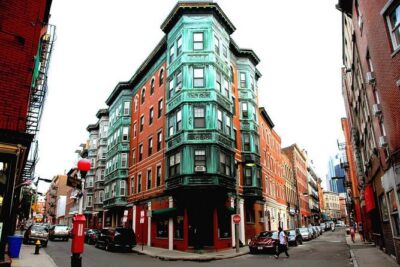

Phillips School and Abiel Smith School: education and the fight for equality
Two school stops are central to the tour’s emphasis on education. You will hear about the struggle for equality in education and the debates surrounding racial integration.
Why this matters: education shows how slavery and racism were defended, and how resistance took real form. Instead of viewing freedom as only a physical escape, the tour reminds you that freedom also meant access, opportunity, and equal treatment in the institutions that shaped lives.
Charles Street Meeting House and Charles Street: worship, community, and pressure
When you reach the Charles Street Meeting House area, the tour shifts into community life. Meeting houses were not only places to gather. They were where ideas traveled, where people found language for justice, and where public pressure formed.
Walking Charles Street with the guide’s commentary helps you see how religious and civic life could overlap. It also gives you another way to understand the anti-slavery political movement described in the tour story. Not every activism moment looks like a rally. Sometimes it looks like community structure and moral argument.
John J Smith House, John Coburn House, Lewis and Harriet Hayden House, George Middleton House: the Underground Railroad neighborhood lens
Several stops focus on historic homes tied to the Underground Railroad narrative. The guide points out how, in this neighborhood, the Underground Railroad was not just a mythic idea. It was connected to real addresses and real people trying to protect lives and build safer futures.
I especially like how the tour treats these house stops. You are not asked to memorize every detail. Instead, you learn the pattern: the neighborhood itself becomes part of the story, and the homes function as anchors for understanding risk, secrecy, and community ties.
You also pass by Otis House Museum and Old West Church, which the tour uses as extra reference points along the way. Admission is not included for museum interiors, so if you want to go inside any building you will need separate plans.
Charles Sumner House, Smith Court Residences, Park Street Church, and Massachusetts State House area: politics shows up in the streets
Later in the walk, the guide connects the local struggle to the larger lead-up to the Civil War. Charles Sumner House and Smith Court Residences help keep the story anchored in this same tight neighborhood scale, while the Park Street Church and Massachusetts State House area bring in the political stage.
Even when you only pass by the State House area, you are getting context. The point is that Boston’s debates did not stay in the neighborhoods. They fed the national conflict.
African Meeting House break and why the pause matters
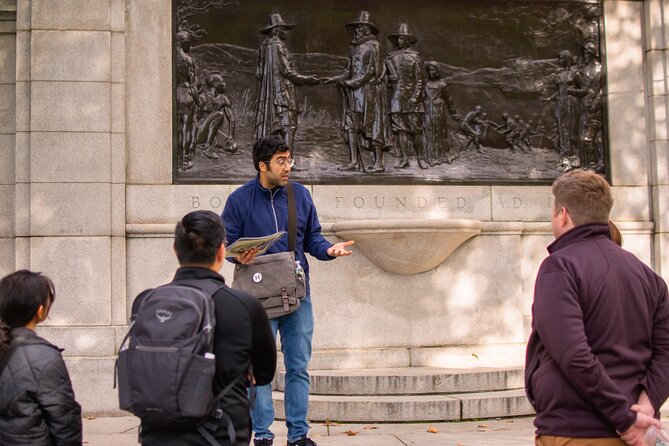
Midway through the loop, you reach the African Meeting House. This is a major stop, and it comes with both a guided visit and a scheduled break time.
That break is not a throwaway detail. After a steady walk, it gives you a chance to reset your attention. You can digest what you just learned about equality struggles and Underground Railroad connections, and then re-enter the story with clearer focus.
During the guided portion, the tour keeps its emphasis on the overlooked stories and the pressure building toward national fracture. It is a good moment to realize that Boston’s anti-slavery and civil rights efforts were not tidy or effortless. They were contested, argued, and deeply human.
The final payoff: from Charles Street to Shaw and the 54th Memorial
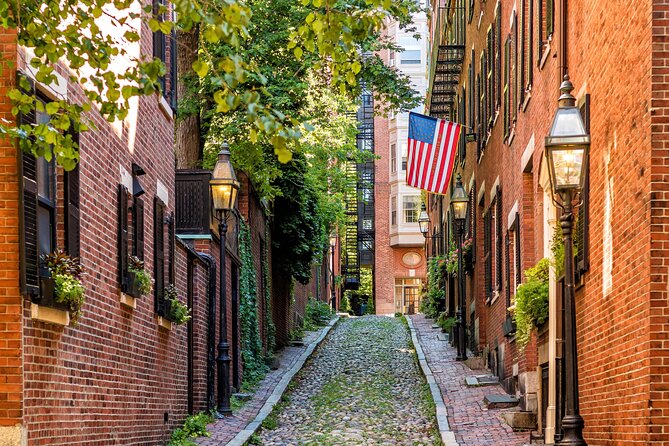
As the tour continues, you keep moving through more Beacon Hill landmarks and historic courts before returning toward Boston Common. Stops like Smith Court Residences and the Abiel Smith School lead you steadily to the heart of the story, including homes and institutions connected to the Black Heritage Trail.
Then, near the end, you get the scenic views and the final stretch back toward the monument zone. The tour concludes at the Robert Gould Shaw and the 54th Massachusetts Regiment Memorial on Boston Common, just up Beacon Street from the starting point.
This ending matters because it reframes what you think you came to see. Yes, you are learning Underground Railroad history and Boston’s debates over slavery and integration. But you are also ending at a Civil War memorial, which underlines the tour’s big through-line: Boston helped shape what the nation became.
And if you enjoy Q and A, this is usually the point where you can ask your last questions. The guide is open to answering, and the best guides on this route are praised for keeping explanations clear and responsive.
Price, pace, and practical value of a $35, 150 minute tour
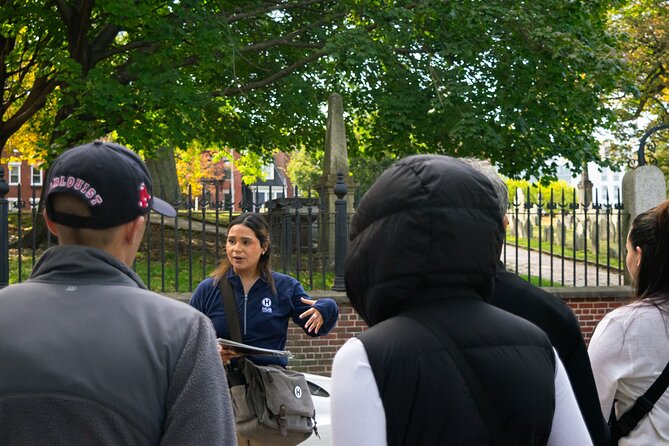
At $35 per person for 150 minutes, this is a solid value for a few reasons.
First, you are not paying for bus transport or museum admission. You are paying for an expert guide and a guided walking route that includes landmark time at multiple historic points like the African Meeting House and the Shaw memorial.
Second, the duration is long enough to build a story arc, not just a quick highlight reel. You get time for multiple stops, including a break, while still finishing in a half-day window.
Third, the small-group approach helps you feel less rushed. Beacon Hill is cramped. A larger group can turn learning into noise and stress. Here, the format is built to keep you moving with fewer bottlenecks on the sidewalks.
The tradeoff is what you already know from the tour style: you are outside, you are walking about 2.0 miles (3.2 km), and the hills and uneven sidewalks can be a challenge. If you plan for that, the price feels fair. If you show up without comfy shoes, your feet will do the complaining, not the history.
Who should book, and who should skip
Book this if you want a meaningful Beacon Hill walking tour that connects the Underground Railroad story to the Civil War’s lead-up. It is especially good if you like histories tied to place, not just timelines.
It also fits well if you want interactive learning. Guides like Will and Dana have been specifically praised for answering lots of questions and sharing stories with energy. Some guides, like Joe, have used visual aids, and some have even acted out short moments to bring scenes to life. You do not need to be a history buff to enjoy it, but you do need to be ready to listen.
Skip it if any of these apply:
- You have mobility impairments or you use a wheelchair
- You have low fitness for uneven sidewalks and steep hills
- You are traveling with kids under 6
- You dislike all-outdoors tours, since it operates rain or shine
Should you book this Boston Underground Railroad history tour?
I think it is worth booking if you want a focused, small-group Beacon Hill experience that treats the Underground Railroad and the Civil War lead-up as one connected story. The African Meeting House stop and the ending at the Shaw memorial give the walk real structure, so you leave with a clear sense of how Boston’s debates shaped the nation.
If you are comfortable walking roughly 2 miles on steep, older sidewalks, grab your spot. If not, consider swapping to a more accessible option, because this one is built for feet, not wheelchairs.
FAQ
Where do I meet the guide?
Meet at the Soldiers and Sailors Monument in the center of Boston Common, steps from the Boston Common Visitors Center at 139 Tremont Street (02108). Look for a white granite column topped by a female figure holding a flag, with four bronze statues around the base.
How long is the tour?
The tour runs for about 150 minutes, and it will not be more than 3.0 hours.
How much walking is involved?
The walking tour covers approximately 2.0 miles (3.2 km).
Is the tour indoors?
No. The tour is entirely outdoors and operates rain or shine.
Is admission to museums included?
No. Admission inside museums is not included.
Is there a break during the tour?
Yes. There is a break at the African Meeting House, with a guided visit included during that time.
What should I bring?
Bring comfortable shoes and weather-appropriate clothing.
Can I bring luggage or large bags?
Luggage or large bags are not allowed.
Is video recording allowed?
No. Video recording is not allowed.
Is the tour wheelchair accessible?
No. The tour is not accessible, with steep hills and non-ADA-compliant sidewalks, and it is not suitable for wheelchair users.
Can I cancel or pay later?
You can reserve now and pay later, and there is free cancellation up to 24 hours in advance for a full refund.
Written up lately around the harbor
- Boston’s Beacon Hill: Private Walking Tour
★ 5.0 · 1 review - Boston’s Chinatown: Small Group Walking Tour
★ 5.0 · 1 review - Self-Guided Scavenger Hunt: Boston Back Bay & Beyond
★ 4.0 · 1 review - Flynn Cruise Port Boston to Boston hotels – Arrival Private Transfer
★ 5.0 · 1 review - Boston to Woods Hole & Martha’s Vineyard Ferry Private Chauffeur Service
★ 4.0 · 1 review - Classic Martha’s Vineyard 1-Day Escape from Boston
★ 5.0 · 1 review - Private Vacation Photoshoot with Photographer in Boston
★ 5.0 · 1 review
Beacon Hill Tours, compared.
Downtown Freedom Trail, Beacon Hill & Back Bay Walking Tour
Read our review →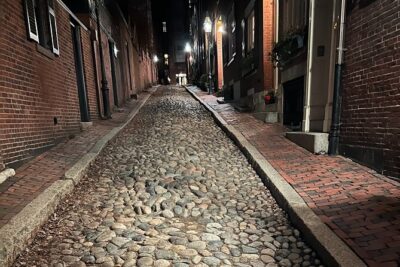
2-Hour Beacon Hill True Crime Expert Guided Tour
Read our review →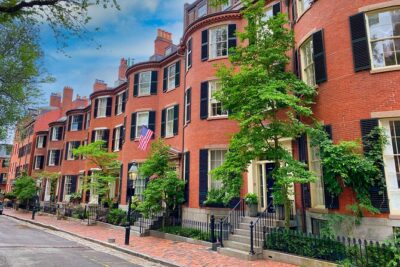
Beacon Hill Boston History + Photo Walking Tour (SMALL Group)
Read our review →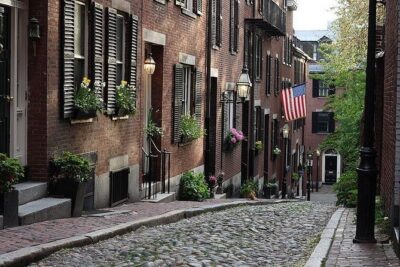
Underground Railroad History Tour of Beacon Hill
Read our review →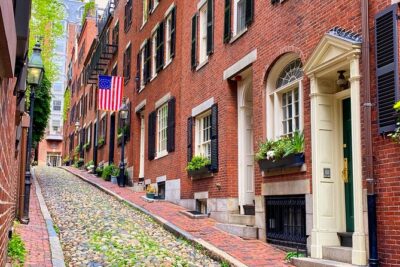
Beacon Hill + Back Bay History + Photo Walking Tour(SMALL Group)
Read our review →
Self-Guided Boston’s Beacon Hill Underground Railroad Audio Tour Walking Tour
Read our review →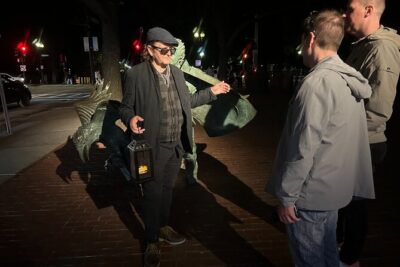
Browse the lists this tour appears in