
Reviewed · FREEDOM TRAIL TOURS
Boston’s Freedom Trail: A Revolutionary Walking Tour
Revolution, paced for walking shoes, starts on Boston Common. I love the way the tour spotlights the Golden Dome at the MA State House and then lands you at the final resting places of John Hancock, Paul Revere, and Samuel Adams, with clear context you can actually picture. The main catch is simple, it is a steady 2.5-hour walk, so comfortable shoes matter.
I also like the guide style. When Kenneth and Rob take the mic, you get confident, chat-friendly storytelling that connects big events like the Boston Tea Party and the Boston Massacre to what you are seeing right there on the route.
One more practical note: you get a live guide and walking route, but you do not get attraction entry tickets. For places where you might expect inside access, you will mainly be viewing from outside and learning the story of the spot.
In This Review
- Key things I’d plan for on this Freedom Trail walk
- Starting at The Embrace on Boston Common
- The 2.5-hour route that hits all 16 official sites
- Boston Common and the statehouse glow, the Revolution theme set-up
- Park Street Church and the Granary Burying Ground, faith and faction
- King’s Chapel, the Franklin stop, and the point of everyday influence
- Old Corner Bookstore and Old South Meeting House, resistance gets organized
- Old State House and the Boston Massacre Site, when tensions turn sharp
- Faneuil Hall and Paul Revere House, public voice meets private mission
- Old North Church and the lantern steeple, the moment you can almost see
- Copp’s Hill Burying Ground and the USS Constitution, where the war lingers
- Bunker Hill Monument and the last stretch you’ll think about
- Guides like Kenneth, Rob, Charlie R, and Alissa turn it from facts into meaning
- Price at $31, and why the value works even without entry tickets
- What to bring, what’s allowed, and small choices that make it easier
- Who this Freedom Trail tour fits best
- Should you book this Freedom Trail tour?
- FAQ
- Where does the tour start?
- Where does the tour end?
- How long is the guided tour?
- How much does it cost?
- What is included in the price?
- Are entry tickets included for attractions?
- Is the tour wheelchair accessible?
- What language is the tour offered in?
- Are video recordings allowed?
- What should I bring?
Key things I’d plan for on this Freedom Trail walk
- All 16 official Freedom Trail sites, packed into a single 2.5-hour route
- Boston Common start at The Embrace, right by the Visitor’s Center at 139 Tremont Street
- Revolution stories with humor, including quick dad jokes along the way
- Major landmarks plus memorial-grade stops, like the Boston Massacre Site and the lanterns at Old North
- You finish back where you started, so you can regroup fast for lunch or transit
Starting at The Embrace on Boston Common

Your tour begins at The Embrace statue on Boston Common, right next to the Visitor’s Center at 139 Tremont Street. Your guide is not in costume, instead they carry a flag with the company name Boston History Company so you can spot them easily.
This start matters more than you’d think. Boston Common is the natural “begin here” anchor for the Freedom Trail, and starting at the most visible point keeps the first few minutes from feeling chaotic. You also get oriented fast, which helps if you plan to keep exploring on your own after the walk.
More ways along the Freedom Trail:
- Boston: Freedom Trail History Small Group Walking Tour★ 5.0 · 6,450 reviews
- Boston Freedom Trail Walking Tour with Costumed Guide★ 4.5 · 2,531 reviews
- Boston Food & History: Pizza, North End & Freedom Trail★ 5.0 · 1,772 reviews
The 2.5-hour route that hits all 16 official sites
This is a walking tour with a live guide, designed to cover all 16 official Freedom Trail sites in one go. The duration is listed as 2.5 hours, and the schedule has starting times you’ll want to check before you book.
So what does that mean for you in real life? It means you should treat this like a focused tour, not a wandering day. You will move from site to site, listen, and connect dots quickly. If you prefer slow museum pacing, this one may feel a bit tight. If you want the Freedom Trail in a single, smart loop, it is built for that.
Also, no entry tickets are included. You will still see iconic exteriors and key moments at the actual locations, but you should not plan on buying multiple attraction tickets during the walk.
Boston Common and the statehouse glow, the Revolution theme set-up
From Boston Common, the tour uses the city itself as your classroom. You do not just learn names, you learn why Boston was a launchpad for the Revolution and why the city later became active in areas like abolition, American education, and immigration.
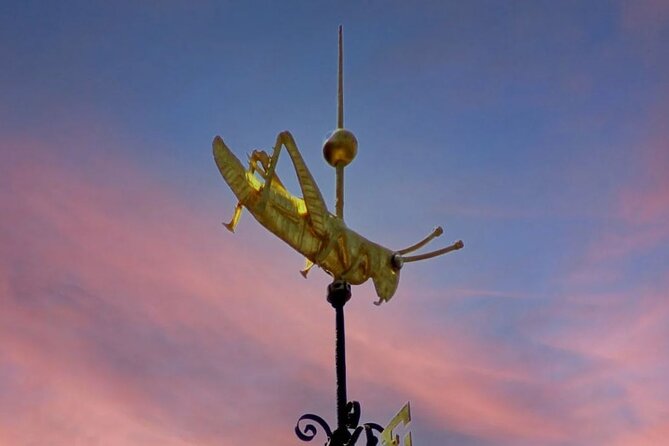
Then you come to the MA State House and its famous Golden Dome, a visual marker that helps you remember where political power was staged. This stop also gives the tour a “present tense” feeling, because it connects the messy, human work of organizing resistance to the formal world of government.
If you are the type who likes history tied to physical places, this is where the tour really starts to click. The best part is how the guide frames it so you understand what you are looking at, not just what happened.
Park Street Church and the Granary Burying Ground, faith and faction
A big strength of this tour is that it does not treat the Freedom Trail like a checklist. Stops like Park Street Church show up because the Revolution was not just battles, it was public talk, moral argument, and community life.
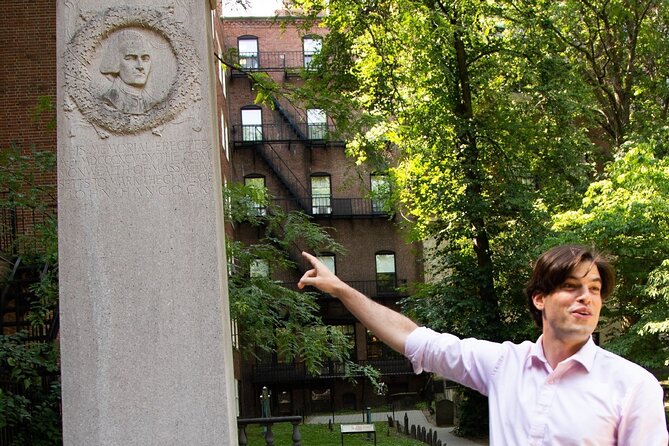
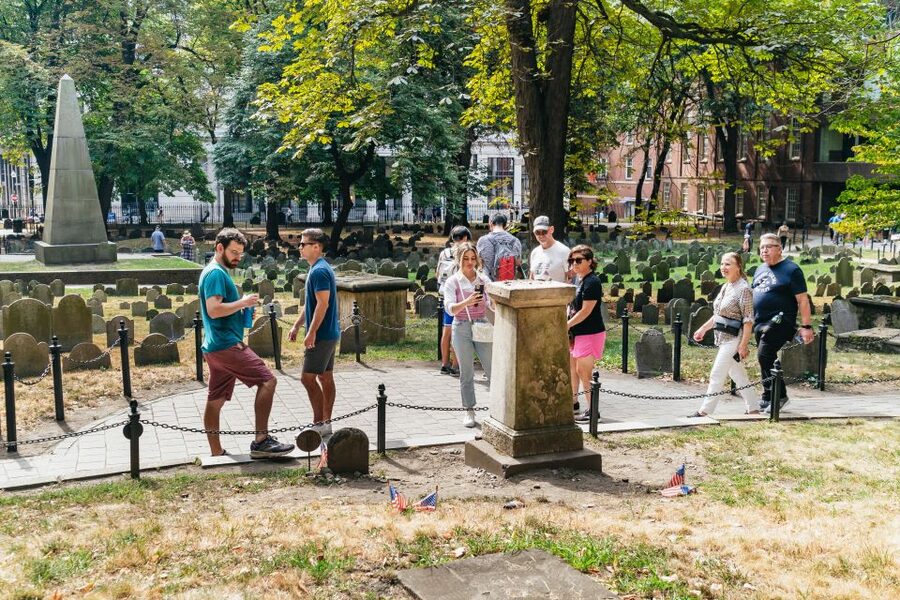
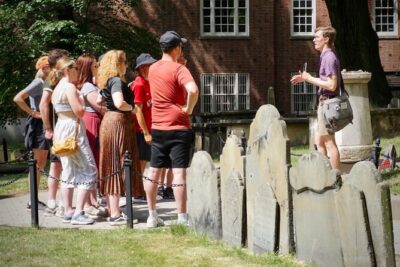
Next, you head into the Granary Burying Ground. This is where the story shifts from political shouting to legacy and remembrance. You specifically get the final resting places of John Hancock, Paul Revere, and Samuel Adams highlighted, which turns the cemetery into a history lesson with gravity. You can literally see how reputations lasted, long after the fighting ended.
One practical tip here: cemeteries and churches can be visually busy. Wear shoes you can stand in comfortably, because your best learning happens when you can pause and look without wincing.
King’s Chapel, the Franklin stop, and the point of everyday influence
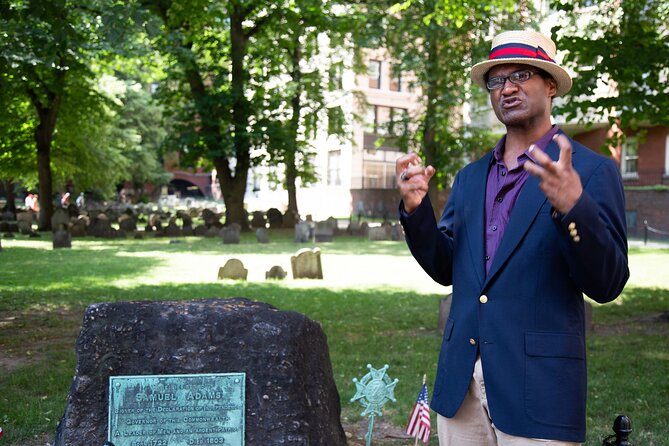
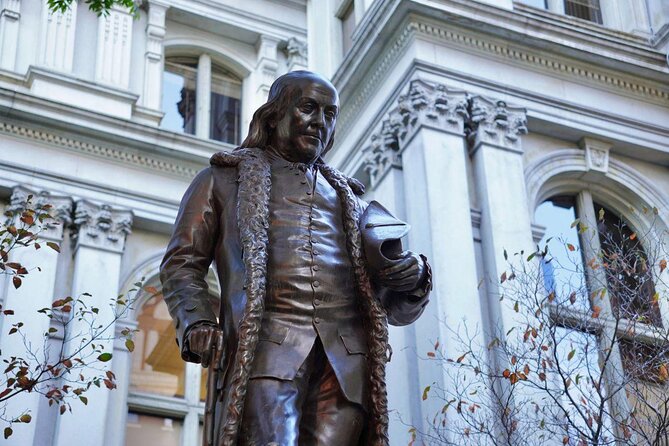
After the church and burial stops, the tour continues toward King’s Chapel and then the Benjamin Franklin statue. Franklin’s name gets a lot of airtime in American history, but on this tour the point is clearer. You are not just learning a famous figure, you are seeing how ideas and networks mattered in a city where persuasion and planning were power.
King’s Chapel adds another layer too. It anchors the story in real Boston institutions, which helps you separate myth from setting. Even if you only remember one thing from this section, you’ll likely remember that Boston’s Revolution was built from everyday community pillars, not just dramatic events.
More of Boston crossed at walking pace:


Old Corner Bookstore and Old South Meeting House, resistance gets organized
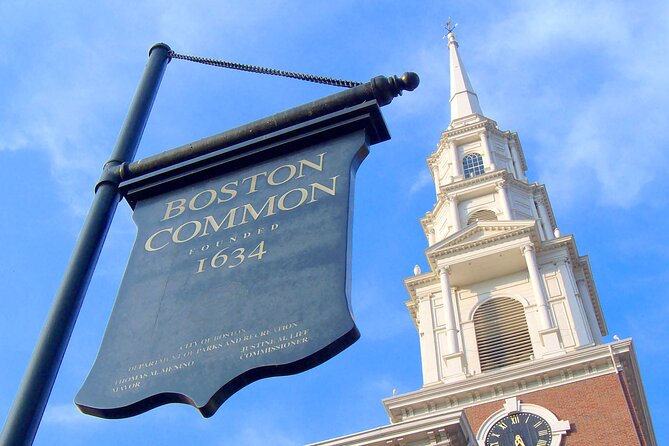
The tour passes by the Old Corner Bookstore. That kind of stop is important because it reminds you that revolutionary energy traveled through print and public debate, not just through rumor.
Then you reach the Old South Meeting House, a key gathering place tied to major events like the Boston Tea Party. This part works well if you enjoy cause and effect. You get the background you need to understand why meetings mattered, why crowds mattered, and why the choices made in rooms became consequences on the streets.
One thing I’d watch for: this is not the moment to multitask. If you’re half listening while checking your phone, you’ll miss the connections the guide is making between the building and the event.
Old State House and the Boston Massacre Site, when tensions turn sharp
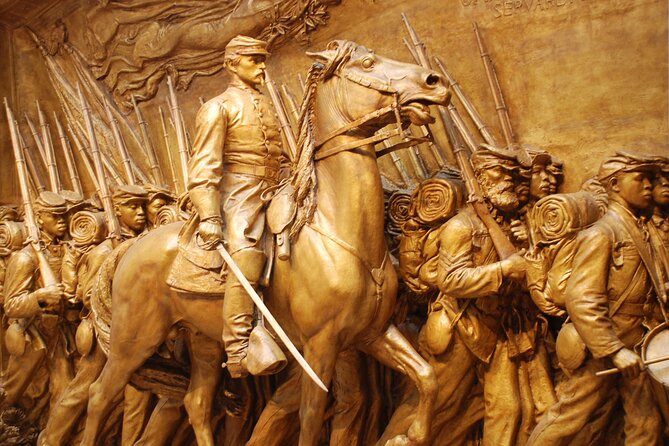
The Old State House stop is where the tour leans into the political center of Boston. From there, you go to the Boston Massacre Site, and the story turns darker and more immediate.
This is one of the tour highlights for a reason. You get the where, not just the what, so the Boston Massacre becomes a location you can picture, instead of a textbook entry. The guide also brings in perspectives beyond the standard, including stories of women, African Americans, and immigrant patriots and pioneers, so the event feels more human and less distant.
If you like history that has emotional stakes, this section is likely to be the one you remember most clearly.
Faneuil Hall and Paul Revere House, public voice meets private mission

Next up is Faneuil Hall, which is all about public energy. It is the kind of place where speeches and persuasion were the fuel for action, and the guide connects it back to the Revolution’s momentum.
After that you visit the Paul Revere House. This is where you usually expect a simple story about a ride, but the tour uses it to explain why midnight missions mattered. Revere becomes more than a legend, he becomes a piece of communication infrastructure in a tense moment.
I like that the guide keeps the narrative moving without losing detail. You go from a place of public gathering to a place of personal responsibility, and the story feels more complete.
Old North Church and the lantern steeple, the moment you can almost see
The tour reaches Old North Church, and this is where the famous lantern signal comes in. The guide points you toward the steeple where the lanterns were hung, so you get a real visual cue for the plan that helped signal the movement of British forces.
This section also benefits from the guide’s humor and pacing. One of the reviews notes guides include cheap dad jokes, and when that happens, it keeps the tour from turning into an all-serious march through tragedy. You still get the facts, but the mood stays workable.
Also, don’t rush this stop. It is easy to take a quick look, snap a photo, and move on. Slow down for 60 seconds and let the guide’s explanation frame what you are seeing.
Copp’s Hill Burying Ground and the USS Constitution, where the war lingers
After Old North, you head toward Copp’s Hill Burying Ground. Cemetery stops can feel repetitive on walking tours, but here it fits. You learn how Boston held onto memory, and how identity survived in stone and names.
Then the walk brings you to the USS Constitution. That shift matters because the Revolution is not only land-based drama. The tour uses the ship stop to connect the Revolution to the wider war reality, where control of sea lanes and maritime power made a difference.
One practical angle: this is a busy area and can get windy depending on the day. Bring water and plan to keep moving, since the tour does not pause for long sits.
Bunker Hill Monument and the last stretch you’ll think about
The tour finishes with Bunker Hill Monument. This is the kind of stop that gives the walk a strong ending point, because it ties the earlier parts of the story to a larger turning point in the conflict.
One review mentioned their tour saw everything except Bunker Hill, so if Bunker Hill is your top priority, it’s worth checking the day’s routing details when you confirm your departure time. Still, on the standard path, Bunker Hill is part of the set.
If you want to keep the day efficient, this tour’s design helps. You come in focused, you cover the key sites, and then you can decide what you want to revisit later on your own.
Guides like Kenneth, Rob, Charlie R, and Alissa turn it from facts into meaning
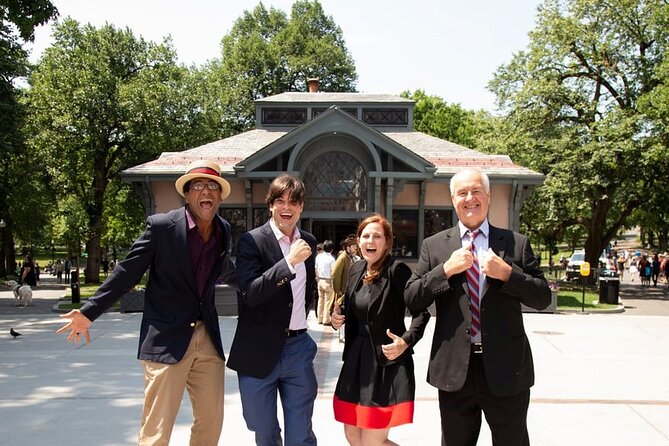
The tour lives or dies with the guide, and the strongest praise is about exactly that. Guides like Kenneth, Rob Crean, Charlie R, Matthew, and Alissa are repeatedly singled out for being engaging, funny, and ready to answer questions.
Here’s what that looks like on the ground:
- The guide turns places into stories you can retell later.
- You get humor that keeps the energy up, including dad-joke style moments.
- You’re encouraged to ask questions, and guides respond in a way that keeps the group moving.
- Some guides handle large groups smoothly, without the talk turning into a lecture.
There is also a real-world note for language comfort. One review says a guide can speak fast in English and you need a good level to follow smoothly. I’d treat that as a heads-up. If English is your second language, pick a time when you can sit comfortably and listen closely.
Price at $31, and why the value works even without entry tickets
The price is $31 per person, and you get a live guide for about 2.5 hours. You also see all 16 official sites in one continuous walk.
What makes it good value is the packaging. If you tried to do this on your own, you’d spend more time figuring out where to go and what to look for, especially for stops that are easy to walk past. Here, you get the meaning tied directly to the location.
The trade-off is clear: entry tickets to attractions are not included. That doesn’t make the tour worse, it just changes your expectations. You should plan on sightseeing from the outside and absorbing stories in real time.
What to bring, what’s allowed, and small choices that make it easier
Come prepared for a real walking experience:
- Comfortable shoes
- Water
- Comfortable clothes
A couple of rules to know: video recording is not allowed. Also, the guide has no costume, which can reduce visual confusion when you’re trying to find your group.
If you are thinking about accessibility, you should read the listings carefully. The activity is marked wheelchair accessible, but it is also noted as not suitable for people with mobility impairments. Because the route is still a walking tour, you should check with the operator before booking if you have mobility needs.
Who this Freedom Trail tour fits best
This is a great fit if you:
- Have a short time window, like a layover or a half-day
- Want the Freedom Trail covered in a single outing
- Like guided context over reading plaques on your own
- Prefer a mix of famous names and less commonly told stories, including women, African Americans, and immigrant patriots and pioneers
It is not the best fit if:
- You cannot handle sustained walking for around 2.5 hours
- You need inside access with tickets, because entry tickets are not included
- You rely on video recording to capture content, since recording is not allowed
Should you book this Freedom Trail tour?
I’d book it if you want a clear path through Boston history with a guide who actually keeps the group engaged. At $31 for a 2.5-hour walk that hits all 16 official Freedom Trail sites, the value is strong, especially because the tour helps you connect the dots between big events and the actual places where they happened.
If you are a very slow walker or have mobility limits, pause and confirm fit first. And if you are sensitive to fast spoken English, choose a time slot and be ready to focus.
Overall, this is one of the easier ways to get oriented, learn what matters, and still have energy left to explore the rest of Boston afterward.
FAQ
Where does the tour start?
You meet your guide at The Embrace statue on Boston Common, right next to the Visitor’s Center, at 139 Tremont Street.
Where does the tour end?
The activity ends back at the meeting point.
How long is the guided tour?
The tour duration is 2.5 hours.
How much does it cost?
The price is $31 per person.
What is included in the price?
You get a live guide and the walking tour.
Are entry tickets included for attractions?
No. Entry tickets to attractions are not included.
Is the tour wheelchair accessible?
The activity is listed as wheelchair accessible, but it is also noted as not suitable for people with mobility impairments. You should double-check fit based on your needs.
What language is the tour offered in?
The tour guide speaks English.
Are video recordings allowed?
No. Video recording is not allowed.
What should I bring?
Bring comfortable shoes, water, and comfortable clothes.
Written up lately around the harbor
- Boston’s Beacon Hill: Private Walking Tour
★ 5.0 · 1 review - Boston’s Chinatown: Small Group Walking Tour
★ 5.0 · 1 review - Self-Guided Scavenger Hunt: Boston Back Bay & Beyond
★ 4.0 · 1 review - Flynn Cruise Port Boston to Boston hotels – Arrival Private Transfer
★ 5.0 · 1 review - Boston to Woods Hole & Martha’s Vineyard Ferry Private Chauffeur Service
★ 4.0 · 1 review - Classic Martha’s Vineyard 1-Day Escape from Boston
★ 5.0 · 1 review - Private Vacation Photoshoot with Photographer in Boston
★ 5.0 · 1 review
Freedom Trail Tours, compared.
Freedom Trail History Small Group Walking Tour
Read our review →
Boston Freedom Trail Walking Tour with Costumed Guide
Read our review →
Boston Food & History: Pizza, North End & Freedom Trail
Read our review →Freedom Trail History Small Group Walking Tour
Read our review →
Boston’s Freedom Trail: A Revolutionary Walking Tour
Read our review →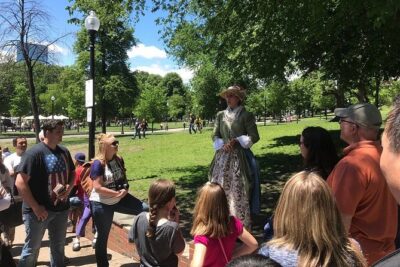

Boston Freedom Trail History Pub Crawl Small-Group Tour
Read our review →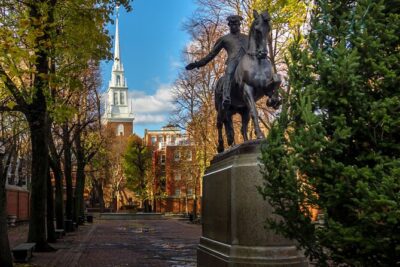
Entire Freedom Trail Walking Tour: Includes Bunker Hill and USS Constitution
Read our review →Browse the lists this tour appears in