
Reviewed · FREEDOM TRAIL TOURS
Boston’s Freedom Trail: A Revolutionary Walking Tour
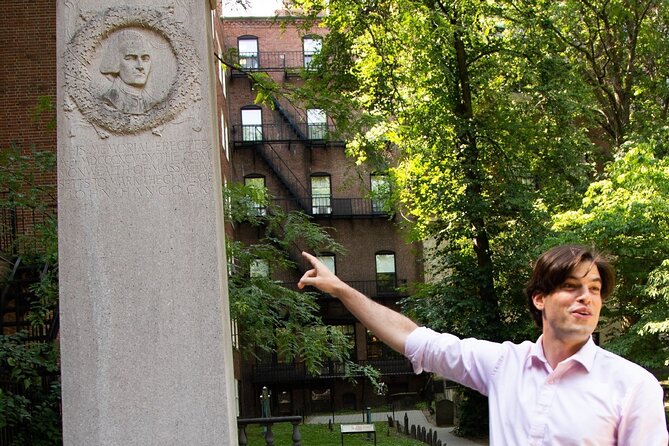
Boston turns revolutionary on a guided walk. In about 2.5 hours, this Freedom Trail tour hits 16 official sites and ties them together into one clear story of rebellion and social change, with stops that move beyond battles into abolition and everyday civic action. I also like how the tour keeps a wider Boston thread running through it, from early reform movements to later fights for women’s rights, education, and immigration. One caution: the route covers a lot ground, so it can feel fast if you like lingering, especially around cemetery stops.
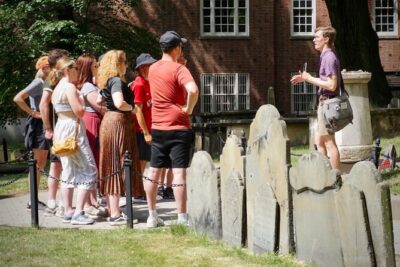
Guides lead the walk in groups capped at 25, which helps the pace stay moving without feeling chaotic. You’ll also get a mobile ticket, so you can focus on the streets and not paperwork. For comfort, bring good walking shoes and plan for a moderate fitness level, because this is a true walking tour from Boston Common out toward Charlestown views.
In This Review
- Key things that make this Freedom Trail walk worth your time
- A Freedom Trail tour that actually fits a day
- The walk begins at the Embrace, then jumps into Boston power
- The anti-slavery thread shows up in the churches, not just the textbooks
- Graves you can find fast: Hancock, Revere, and Samuel Adams
- Meeting houses and the Boston Tea Party that started in public
- Bloody Massacre marks: how the tour makes the moment stick
- Faneuil Hall and the Revere House bring revolution down to street level
- Old North lantern signal and Copp’s Hill battlefield edges
- How the pace, sound, and weather affect your experience
- What you are really paying for with a $31 ticket
- Who this tour fits best, and who might want a different option
- Should you book the Boston Freedom Trail Revolutionary Walking Tour?
- FAQ
- How long is the walking tour of Boston’s Freedom Trail?
- What sites does the tour cover?
- How much does the Freedom Trail walking tour cost?
- Where do I meet the guide, and where does it end?
- Is the tour offered in English?
- Do I get a ticket on my phone?
- Is the group size limited?
- Are service animals allowed?
- What if the weather is bad?
- Can I cancel for a full refund?
Key things that make this Freedom Trail walk worth your time
- All 16 official Freedom Trail sites covered in one outing, from Boston Common down to Copp’s Hill
- A guide-led narrative that connects Redcoats, smugglers, riots, and midnight riders into one storyline
- Strong story delivery and humor that keeps the facts from turning into names-and-dates
- Old North and the lantern signal explained in a practical, you-can-see-it way (not just memorized)
- Route ends with big views, including a sightline toward USS Constitution and Bunker Hill Monument
A Freedom Trail tour that actually fits a day
Boston’s Freedom Trail is easy to start, and harder to do well on your own. This version is built for the way most people travel, you want the highlights, you want the context, and you do not want to spend your afternoon flipping between maps and guidebooks.
At 2 hours 30 minutes (approx.), you get a guided path through the city’s most important Revolutionary-era sites, plus key social-history stops that explain why Boston became such a pressure cooker. The best part is that it is not just a list of locations. Your guide turns the walk into a timeline you can follow as you move street to street.
The value question is simple: for $31 per person, you are paying for someone to make sense of a complicated city story in a short window. If you are a first-time visitor, or you have limited time but want more than a surface skim, this pacing is one of the strongest reasons to book.
More ways along the Freedom Trail:
- Boston: Freedom Trail History Small Group Walking Tour★ 5.0 · 6,450 reviews
- Boston Freedom Trail Walking Tour with Costumed Guide★ 4.5 · 2,531 reviews
- Boston Food & History: Pizza, North End & Freedom Trail★ 5.0 · 1,772 reviews
The walk begins at the Embrace, then jumps into Boston power

Your tour starts at the Embrace at 139 Tremont Street, right next to the Boston Common Visitor Information Center. The Embrace is a grounding point for modern Boston, honoring Martin Luther King Jr. and Coretta Scott King, and it sets a tone of civic change before you jump into colonial conflict.
From there, the tour moves to the Massachusetts State House. You will see the golden dome and hear how the newer State House traces back to Samuel Adams laying the cornerstone in 1795. Even if you have seen plenty of domes in your travels, it helps to understand how Massachusetts politics fed into the broader revolutionary mindset.
If you like your history connected to real places and real people, this opening is smart. It is not only about war, it is also about how leadership, government, and public debate shaped the city.
The anti-slavery thread shows up in the churches, not just the textbooks
One of the best practical choices here is how the tour uses religious buildings to explain political action. You will visit a red brick church built in 1809, where abolitionists gathered. This stop matters because it shows that the Revolution was not only about taxes and muskets. It also highlights early American activism, including anti-slavery speeches delivered inside.
You then move through other historic religious spaces, including a stone church built in 1754, described as the first Anglican Church in Boston. The tour also points out what is happening around these structures, including burying grounds and crypts beneath. It is a reminder that Boston’s early communities built multiple layers at once, worship upstairs and memory below.
If you care about how moral and political movements overlap, this section is one of the tour’s strongest. It also explains why Boston had so many argumentative public spaces, from churches to meeting houses.
Graves you can find fast: Hancock, Revere, and Samuel Adams
The tour includes burying grounds dating to 1660, including a stop where you will learn the final resting places and stories of major patriots like John Hancock, Paul Revere, and Samuel Adams.
This is one of those moments where a guide really changes the experience. On your own, a graveyard can feel like you are reading plaques. With a guide, you get names and then you get why those people mattered, what kind of risk they took, and how their lives threaded into the events you are walking toward.
Practical tip: cemetery stops are typically the place where people who prefer slower pacing can feel rushed. The tour tries to keep things moving, and a short cemetery pause can be just that, short. If you use a walking stick or need extra time, you may want to choose a date when crowds are calmer and you can take your time between stops.
Meeting houses and the Boston Tea Party that started in public
The Boston Tea Party is famous, but the tour helps you place it inside a wider civic context. A key stop is a Puritan meeting house built in 1729, where you will learn how the Tea Party began. The big takeaway is that this is not portrayed as a random night of chaos. It is shown as something that grew from public debate and group action.
From there, you walk toward the Old State House, built in 1713 and adorned with symbols of Great Britain, including a Lion and Unicorn. The guide explains that the Old State House was once central to British government in Massachusetts, making it a natural stage for confrontation. You will hear about fiery speeches and heated clashes that happened there, which helps explain why Boston so often looked like a city arguing with itself and the empire at the same time.
This section is especially good if you want your Revolution story to feel political, not only military.
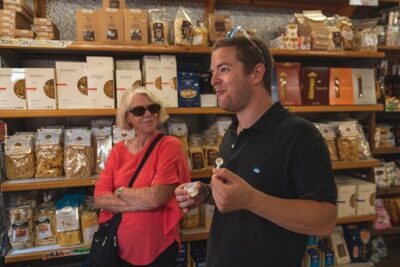
More of Boston crossed at walking pace:


Bloody Massacre marks: how the tour makes the moment stick
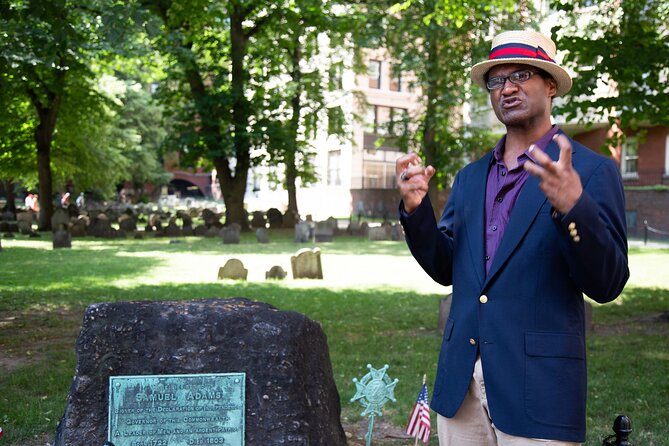
One stop you cannot ignore is the marker for the infamous Bloody Massacre of 1770. A circle of stones marks the official site, and your guide provides a moment-by-moment account of the night when redcoat musket fire left five colonists dead.
On your own, this sort of marker can turn into a quick photo. Here, you get the sequence of events and the tension behind it. The result is that your brain holds onto the location because it understands what happened there.
If you like “this is where it happened” history, this is the kind of stop that will keep your attention even if you have a short attention span for lectures.
Faneuil Hall and the Revere House bring revolution down to street level
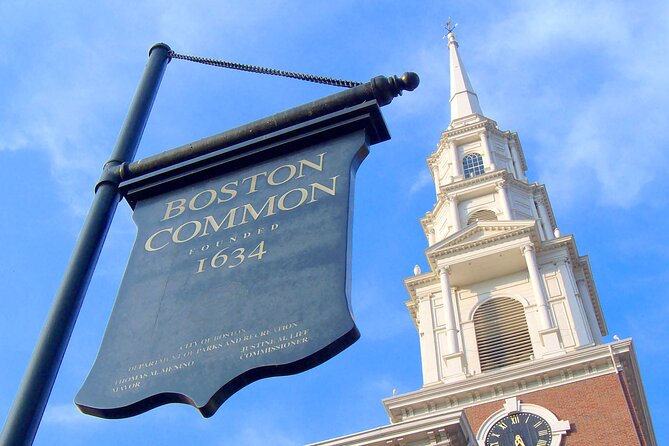
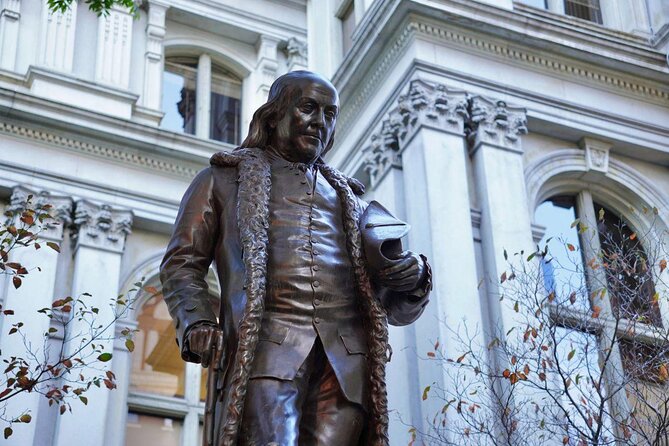
The route includes Faneuil Hall, described as the Cradle of Liberty. Your guide explains how the meeting hall, originally constructed in 1743 as a common marketplace, became a major stage for incendiary speeches.
Then you visit the Paul Revere House, a wooden structure dating to 1680, described as the oldest building in Boston and once home to the Revere family. Even if Paul Revere is already familiar to you, this stop is useful because it turns the famous midnight ride into a family home and a daily life.
If you like biographies that explain motivation and risk, this pairing, Faneuil Hall plus the Revere House, gives you a fuller picture. One place shows public persuasion. The other shows the private person pulled into public events.
Old North lantern signal and Copp’s Hill battlefield edges

Two of the most iconic stops on the Freedom Trail are handled in a way that makes them feel immediate.
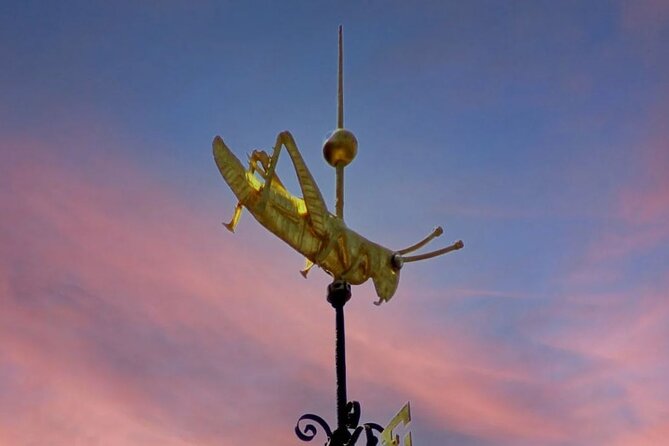
First is the Old North Church, a 1723 church tied to the lantern signal. On April 18, 1775, two lanterns shone from the steeple, and your guide explains the signal’s importance on the eve of the Revolution, including how Paul Revere arranged it.
Then the walk moves toward Bunker Hill areas. You will see a 1660 burying ground tied to the Bunker Hill battlefield, described as the site of British cannon emplacements during the battle. Finally, you view a 221-foot obelisk from Copp’s Hill Terrace. The monument marks where colonial militia defended hastily made earthworks and repelled two redcoat charges before retreating.
The ending view is a big part of the payoff. From Copp’s Hill Terrace, you can look toward Charlestown sights, including USS Constitution, known as Old Ironsides, and Bunker Hill Monument.
How the pace, sound, and weather affect your experience
This tour is priced and built around covering a lot in a short window. That means you should expect brisk walking between stops, plus short explanations at each location. The format works best when you accept that you are learning in layers, quick context now, deeper details later if you want them.
Sound is another practical factor. Some guides are described as speaking clearly and holding attention for nearly three hours, which is a great sign for your comfort and your ability to hear. Still, if you end up off to the side or behind other people, it can get harder to catch everything. If you can, position yourself where the guide is facing your side of the group.
Weather also matters. The experience requires good weather. When conditions are rain-friendly enough for the tour to run, a strong guide can still keep things moving, even with large groups on the Freedom Trail and changing conditions near key sites.
What you are really paying for with a $31 ticket
$31 might feel like a lot until you price it like a time-saving tool. Here is what the money is buying you, based on how the outing is structured:
- A guide who connects the dots so you do not waste time figuring out why each location matters
- All 16 official sites in one path, so you do not need a full day of planning or multiple tickets
- A tightly timed 2.5 hour overview that works well for early trip orientation
- A small group size of up to 25, which usually makes questions easier to get answered
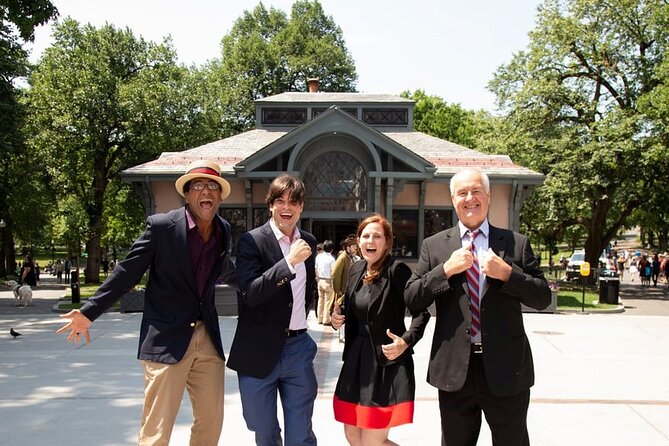
If you enjoy history but hate feeling lost, the guide is the product. And in this tour, the guide is also repeatedly praised for storytelling style, humor, and keeping people engaged, including families with teenagers.
Who this tour fits best, and who might want a different option
This is a great choice if you are:
- visiting Boston for the first time and want the Freedom Trail without friction
- a history buff who wants the Revolutionary story connected to abolition and civic activism
- traveling as a couple or family and you want a shared experience that feels like a narrative
It may be less ideal if you:
- need a slower, more sit-down pace, because cemetery time and walking time can feel tight
- struggle to hear in busy outdoor settings, because the guide has to cover a lot of ground and the group may be spread out
- want extremely detailed breakdowns of one single event, like only the Tea Party night itself, because the tour has to cover more than one major chapter
The route is doable for people with moderate physical fitness. Comfortable walking shoes are not optional, and you should plan for a long stretch of time on your feet.
Should you book the Boston Freedom Trail Revolutionary Walking Tour?
If you want an efficient, story-driven way to see the Freedom Trail, I would book it. The biggest reasons are simple: you get 16 official sites in one outing, and you get a guide who can make the political and human stakes feel real, not just memorized.
I would be a cautious yes if you know you need extra time in quiet places like cemeteries or you can have trouble hearing in crowds. In that case, pick the right day, wear shoes you can walk in all afternoon, and plan to stand close enough to listen.
FAQ
How long is the walking tour of Boston’s Freedom Trail?
The tour runs about 2 hours 30 minutes.
What sites does the tour cover?
The tour covers all 16 official sites of Boston’s Freedom Trail.
How much does the Freedom Trail walking tour cost?
It costs $31.00 per person.
Where do I meet the guide, and where does it end?
You meet at the Embrace, 139 Tremont St, Boston, MA 02108. The tour ends at Copp’s Hill Terrace, 520 Commercial St, Boston, MA 02109 (with a view toward Bunker Hill and USS Constitution).
Is the tour offered in English?
Yes, the tour is offered in English.
Do I get a ticket on my phone?
Yes, you receive a mobile ticket.
Is the group size limited?
Yes, the maximum group size is 25 travelers.
Are service animals allowed?
Yes, service animals are allowed.
What if the weather is bad?
The experience requires good weather. If it is canceled due to poor weather, you will be offered a different date or a full refund.
Can I cancel for a full refund?
Yes, you can cancel up to 24 hours in advance for a full refund. Canceling less than 24 hours before the start time is not refundable.
Written up lately around the harbor
- Boston’s Beacon Hill: Private Walking Tour
★ 5.0 · 1 review - Boston’s Chinatown: Small Group Walking Tour
★ 5.0 · 1 review - Self-Guided Scavenger Hunt: Boston Back Bay & Beyond
★ 4.0 · 1 review - Flynn Cruise Port Boston to Boston hotels – Arrival Private Transfer
★ 5.0 · 1 review - Classic Martha’s Vineyard 1-Day Escape from Boston
★ 5.0 · 1 review - Boston to Woods Hole & Martha’s Vineyard Ferry Private Chauffeur Service
★ 4.0 · 1 review - Private Vacation Photoshoot with Photographer in Boston
★ 5.0 · 1 review
Freedom Trail Tours, compared.
Freedom Trail History Small Group Walking Tour
Read our review →
Boston Freedom Trail Walking Tour with Costumed Guide
Read our review →
Boston Food & History: Pizza, North End & Freedom Trail
Read our review →
Boston’s Freedom Trail: A Revolutionary Walking Tour
Read our review →Freedom Trail History Small Group Walking Tour
Read our review →

Boston Freedom Trail History Pub Crawl Small-Group Tour
Read our review →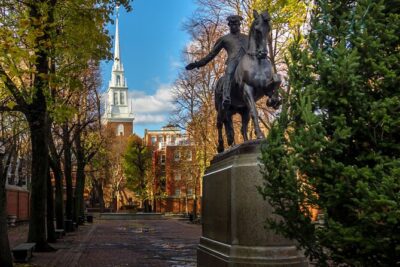
Entire Freedom Trail Walking Tour: Includes Bunker Hill and USS Constitution
Read our review →Browse the lists this tour appears in