
Reviewed · FREEDOM TRAIL TOURS
Freedom Trail Walking Tour 250
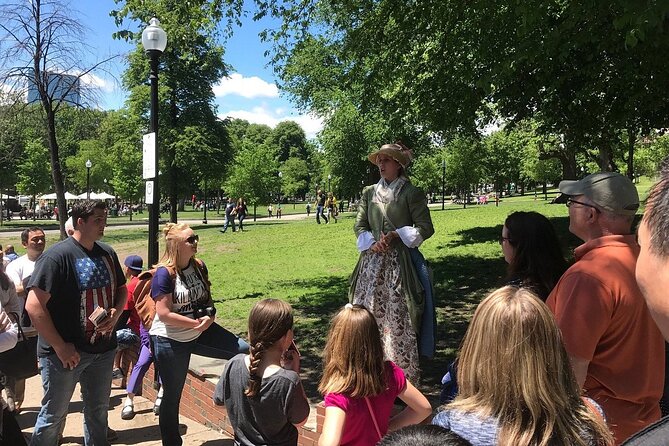
Boston history hits fast on foot. This Freedom Trail walking tour uses a costumed, in-character guide to connect the famous landmarks into one clear story of colonial New England and the American Revolution. You cover about 1.2 miles, hit a chain of key sites, and come away with names, dates, and the why behind them.
Two things I like a lot: first, the guide approach, storytelling with character, keeps the walk lively while still pointing you to the exact places that matter. Second, the structure is efficient, you get major stops without committing to a marathon day, and many of the stops are free to enter. One thing to consider, the humor and depth can depend on the guide, and some visitors report issues with crowding or time spent in the Granary Burying Ground, so if you want strict, straight-laced history, read the room once you’re there.
In This Review
- Key highlights at a glance
- A costumed shortcut through Boston’s colonial core
- How long, how much, and what $26 buys you
- Who this Freedom Trail walk is best for
- Walking the route: what you’ll see stop by stop
- Current Massachusetts State House
- Park Street Church
- Granary Burying Ground
- King’s Chapel
- Boston’s oldest English burial ground
- Boston Latin School
- Statue of Benjamin Franklin
- Old Corner Bookstore
- Old South Meeting House
- The oldest standing government building in Boston
- Boston Massacre Site
- Faneuil Hall Marketplace
- Paul Revere House (1680)
- The in-character guide: why it works, and when it can miss
- Crowds, sidewalks, and cold weather reality
- How the stops add up to a better Boston picture
- Is it worth $26 compared with self-guided Freedom Trail time?
- Quick tips to get the most out of your Freedom Trail walk
- Should you book this Freedom Trail Walking Tour 250?
Key highlights at a glance
- Costumed, in-character guide who ties each stop to the larger Revolution story
- About 1.2 miles walked in roughly 1 hour 45 minutes, manageable for most people
- Mix of big names and big sites, including Benjamin Franklin and the Tea Party locations
- Many free stops, so your money goes to the guide, not admissions
- Great for first-timers who want Boston’s colonial layout explained fast
- Guides handle questions, and several guides are praised for staying easy to hear even when busy
A costumed shortcut through Boston’s colonial core

This tour is built for people who want to understand Boston without turning the day into homework. You start near the Massachusetts State House and then move through famous early-English and Revolutionary-era landmarks. Instead of treating each stop like a separate fact card, the guide connects them into a cause-and-effect story, where political tensions turn into protests, and protests turn into revolution.
A big bonus is the balance of famous and specific. You’ll see well-known names like Benjamin Franklin, plus places that explain how Boston worked, like a historic meeting house and one of the earliest public school sites in America. The tour’s short distance means you can keep your energy and actually enjoy the streetscape instead of white-knuckling it through miles of walking.
More ways along the Freedom Trail:
- Boston: Freedom Trail History Small Group Walking Tour★ 5.0 · 6,450 reviews
- Boston Freedom Trail Walking Tour with Costumed Guide★ 4.5 · 2,531 reviews
- Boston Food & History: Pizza, North End & Freedom Trail★ 5.0 · 1,772 reviews
How long, how much, and what $26 buys you
The price is $26 per person for about 1 hour 45 minutes and around 1.2 miles of walking. That’s good value if you think of it this way: you’re paying for a professional guide who tells the story out loud while you move from stop to stop. Most of the sights on the route are listed as free admissions, so you are not stacking extra ticket costs on top.
Where the value really shows is in the setup. You can choose from a few start times, so you’re less likely to get stuck doing the tour at the one inconvenient time window. You also get a mobile ticket, which is practical, especially when you’re juggling other plans across the city.
Who this Freedom Trail walk is best for
This is an easy fit for several travel styles:
- First-timers to Boston who want the “what happened and why it mattered” version of the city.
- Families and teens who often do better with a story-driven format, especially when the guide can hold attention.
- Older travelers who want a meaningful walking experience without an all-day hike.
It’s also a strong choice if you plan to do museums later. Many people use this as a primer, then pick a museum or exhibit that goes deeper on the theme that clicked during the walk.
Walking the route: what you’ll see stop by stop

The tour covers a tightly packed set of sites, with frequent short stops and short explanations. Expect mostly walking, then quick storytelling at each location.
Current Massachusetts State House
You begin at the Massachusetts State House. Even if you only get a few minutes here, it helps frame the modern political identity of Massachusetts. Think of this as your starting line, a reminder that this state’s political story didn’t start with the Revolution, it evolved into it.
More of Boston crossed at walking pace:

Park Street Church
Next is Park Street Church, where the hymn My Country Tis of Thee was first performed. This stop is short but smart, because it connects the idea of nationhood to something people actually sang and shared. Music and public gatherings were not side details back then, they were part of building shared identity.
Granary Burying Ground
Then comes Granary Burying Ground with about 20 minutes. This is often the emotional center of the walk, because you’re hearing stories tied to major Founding Fathers at their final resting place. It’s also the stop that can test patience if you prefer constant movement, since it’s longer than most. If you’re traveling with kids or you dislike sitting still, wear comfortable shoes and plan to take quick breaks if you need them.
King’s Chapel
After that, you’ll reach King’s Chapel, described as America’s first Anglican church. This is a chance to see how religion and culture shaped early political life in Boston. Even in a short stop, it adds texture to the story, because the Revolution was not only about taxes and armies. It was also about who belonged, who led, and what institutions people trusted.
Boston’s oldest English burial ground
You also pass Boston’s oldest English burial ground. It’s another short stop that reinforces how early English settlement shaped the city’s physical layout and identity. These small pauses help you understand why Boston’s historic sites are layered, not all from one moment in time.
Boston Latin School
Next is Boston Latin School, described as America’s first public school. I like this stop because it reminds you how ideas spread. If politics was the argument, education was the channel. Even brief explanations here give you a better sense of how leaders were formed.
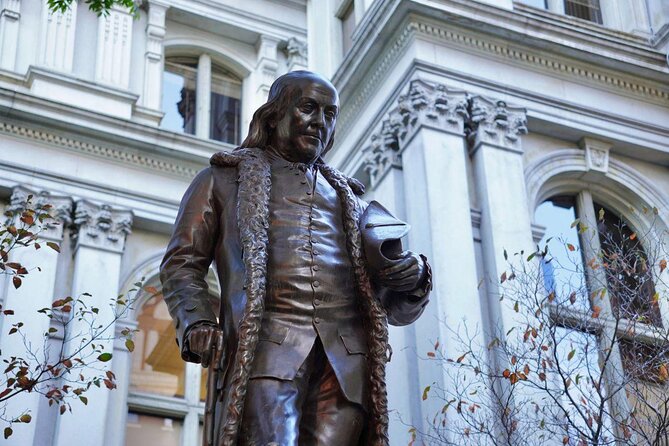
Statue of Benjamin Franklin
Then you’ll see a statue of Benjamin Franklin. This stop is quick, but it’s a useful anchor. Franklin’s name shows up across American history, and hearing his connection to Boston Latin School helps make the reference feel less random.
Old Corner Bookstore
You’ll also stop at the Old Corner Bookstore, described as America’s oldest commercial building. The point here is that history wasn’t just happening in churches and meeting houses. It was also happening in print and commerce, where ideas could be published, circulated, and turned into public conversations. The guide connects this to the publishing story of the Midnight Ride of Paul Revere.
Old South Meeting House
At Old South Meeting House, you get about 10 minutes and an important Revolutionary-era story, because it’s tied to where the Boston Tea Party happened. This is one of the big “picture this moment” stops. Note that admission is listed as not included, so if the building itself is part of what you want to see, be prepared for that.
The oldest standing government building in Boston
You’ll also visit the oldest standing government building in Boston. This matters because it shows you the physical continuity of governance. You’re not just hearing about the Revolution, you’re standing near the kind of civic space that helped organize public life.
Boston Massacre Site
Next is the Boston Massacre Site with about 10 minutes. This stop tends to land because it connects protest and conflict, and the story turns into a battle cry used during the Revolution. Expect a clear explanation of why it mattered politically, not just what happened.
The route also includes the tale of Sam Adams, which helps tie the anger of the era to the people who pushed the movement forward.
Faneuil Hall Marketplace
You finish at Faneuil Hall Marketplace, often called Boston’s most iconic historical attraction. This is a good place to end because it’s tied to public debate and community gathering. The stop is short, but it provides a satisfying sense of where political energy showed up in daily life.
Paul Revere House (1680)
Near the end, you’ll also learn that the Paul Revere House dates to 1680 and is the oldest residential building in Boston. This is the kind of fact that makes your later self-guided exploring easier. You start to notice which buildings are genuinely early, and which ones just look historic.
The in-character guide: why it works, and when it can miss
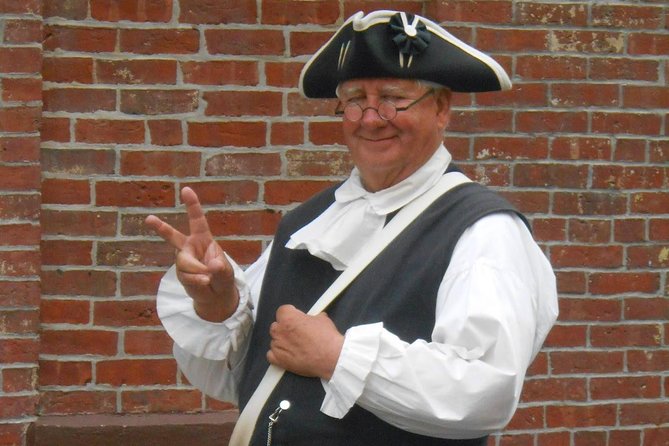
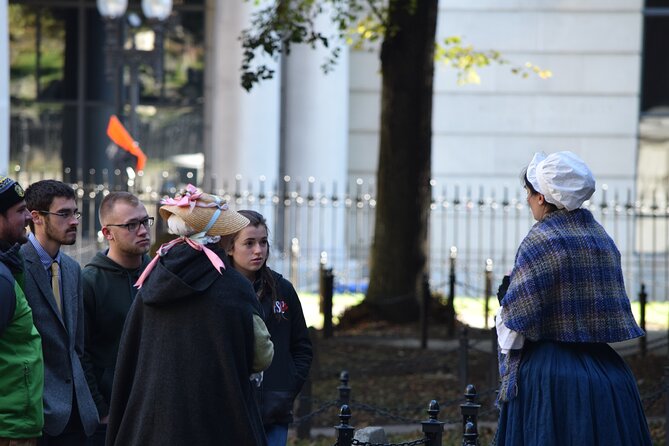
The core selling point is the in-character guide. Many guides across time have been praised for being dressed for the role and for keeping stories flowing so they feel connected, not chopped into separate lectures. Several names showed up in strong feedback, including Ben, Elizabeth, Elaina (often mentioned with a character or stage name), Catherine, and Mark. The common thread in the praise is delivery: guides stayed friendly, held attention, and made the information easy to follow even with other groups around.
That said, there are a couple caution signs you should take seriously. One recurring criticism is that humor can sometimes feel too heavy or disrespectful to historical figures, or that the history can come across as superficial. Another concern is crowding when the group is large, where you may struggle to maneuver on narrow sidewalks and some stops feel more cramped. These aren’t guaranteed issues, but they’re good reminders to set expectations: this is theater-flavored storytelling, not a quiet museum lecture.
Crowds, sidewalks, and cold weather reality
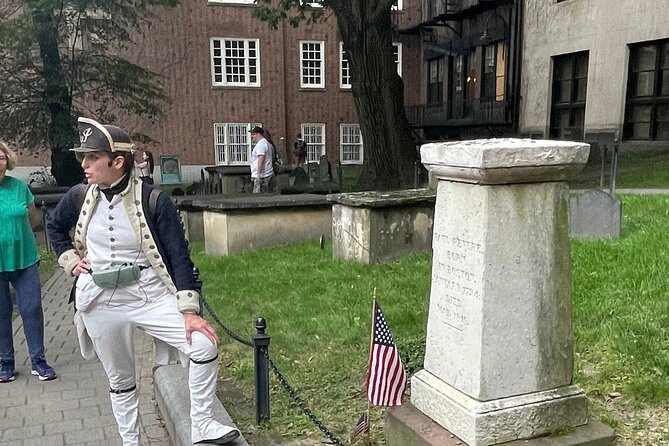
This is an outdoor walking tour, so weather matters. The tour operates in all weather conditions, and you should dress appropriately. I’d plan for layers, because Boston can swing from breezy to cold fast, even in months where you expect mild air.
Crowds are also part of the deal. Several people noted that it gets busy at nearly every stop with other groups. Your guide may still be easy to hear, but the street-level reality is that you’ll be in the middle of it. Practical move: arrive a few minutes early so you’re not joining the group from the back, and keep your expectations flexible about how long you’ll be stopped in any one place.
The walk is described as not too hard by at least one guide-specific note, and overall it’s manageable for most people. Still, bring comfortable shoes. Even if it’s only about 1.2 miles, you’re on old sidewalks and stopping frequently.
How the stops add up to a better Boston picture
One reason this tour feels worth doing is that the sites reinforce each other.
- The hymn and meeting houses give you cultural context for how ordinary people experienced politics.
- The burial ground and massacre site show how personal stakes and public tragedy fueled the Revolution narrative.
- The school and Franklin statue point you toward how ideas were taught, copied, and spread.
- The bookstore and tea-related location remind you that communication and protest were intertwined.
If you’re the type who wants to understand the city’s structure, this is the format that helps. You leave knowing where things are, not just what happened.
Is it worth $26 compared with self-guided Freedom Trail time?
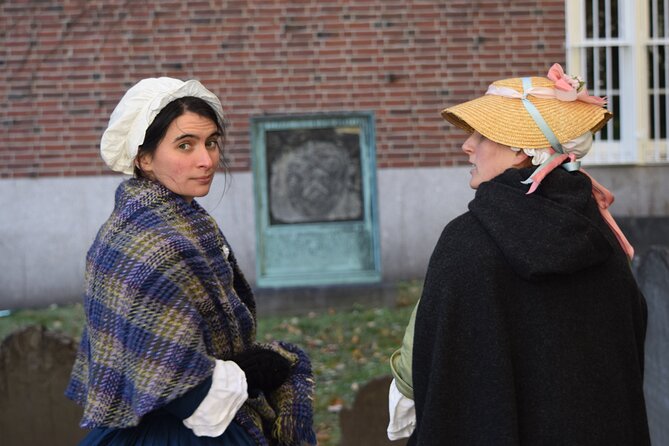
If you are debating between a guided walk and doing the route on your own, here’s the practical tradeoff.
Self-guided works if you already know the story and you like reading at your own pace. You’ll save the guide cost and control the stops.
This guided tour wins if you want fast orientation plus a coherent narrative while you walk. For $26, you’re buying clear explanations at multiple key points, plus a guide who handles questions on the spot. And because many stops are listed as free, you’re mostly paying for the story, not for entrances.
The only time I’d hesitate is if you know you strongly prefer straight textbook history and you dislike humor in historical storytelling. In that case, you might feel annoyed by joking delivery or by longer time in certain spots like Granary Burying Ground. The walking tour format still includes that pacing, so be honest about your style.
Quick tips to get the most out of your Freedom Trail walk
- Wear comfortable walking shoes. You stop and start, and the route is on foot.
- If you care about hearing every word, aim to get close to where the guide speaks at crowded stops.
- Dress in layers. The tour runs in all weather conditions, so start prepared.
- If you want to go inside a site like Old South Meeting House, be ready that admission is not included.
Should you book this Freedom Trail Walking Tour 250?
Book it if you want a fast, guided introduction to colonial Boston with big names, clear storytelling, and a manageable walk length. It’s especially good if you’re traveling with teens, grandparents, or anyone who learns best when history is told out loud, with personality.
Skip or choose carefully if you need very strict, humor-free historical narration. Also consider that crowded stops can affect the experience if you’re sensitive to tight maneuvering or if you hate longer pauses in a cemetery setting.
If your goal is to get your bearings fast and understand how the Freedom Trail sites connect into one Revolution-era story, this is a strong value at $26, and the best guides on the route make it genuinely fun without losing the plot.
Written up lately around the harbor
- Boston’s Beacon Hill: Private Walking Tour
★ 5.0 · 1 review - Boston’s Chinatown: Small Group Walking Tour
★ 5.0 · 1 review - Self-Guided Scavenger Hunt: Boston Back Bay & Beyond
★ 4.0 · 1 review - Flynn Cruise Port Boston to Boston hotels – Arrival Private Transfer
★ 5.0 · 1 review - Boston to Woods Hole & Martha’s Vineyard Ferry Private Chauffeur Service
★ 4.0 · 1 review - Classic Martha’s Vineyard 1-Day Escape from Boston
★ 5.0 · 1 review - Private Vacation Photoshoot with Photographer in Boston
★ 5.0 · 1 review
Freedom Trail Tours, compared.
Freedom Trail History Small Group Walking Tour
Read our review →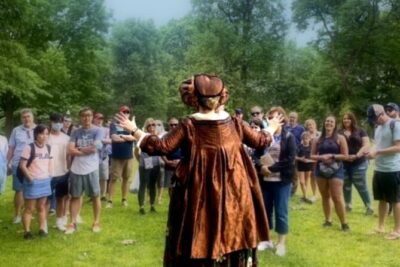
Boston Freedom Trail Walking Tour with Costumed Guide
Read our review →
Boston Food & History: Pizza, North End & Freedom Trail
Read our review →
Boston’s Freedom Trail: A Revolutionary Walking Tour
Read our review →Freedom Trail History Small Group Walking Tour
Read our review →Boston’s Freedom Trail: A Revolutionary Walking Tour
Read our review →
Boston Freedom Trail History Pub Crawl Small-Group Tour
Read our review →
Entire Freedom Trail Walking Tour: Includes Bunker Hill and USS Constitution
Read our review →Browse the lists this tour appears in