
Reviewed · AUDIO TOURS
Boston Self Guided Audio Experience
Boston history arrives as audio you control. This self-guided Boston setup strings together 17 major sights with an easy SoundCloud playlist style guide, so you can pace yourself instead of marching with a group.
I like two things right away. First, the format is flexible: you pick your start and finish, follow a suggested order or not, and you can pause and restart as you go. Second, the stops feel meaningful because the audio ties each building to people and choices, from Irish immigrants and civil rights to abolition and the Holocaust.
One real drawback to plan around is tech. You need your own headphones and internet access, and the tour is not GPS-guided, so you will be finding the stops yourself.
In This Review
- Key highlights worth your time
- A self-guided Boston audio tour you can actually control
- Cost and timing: is $6 good value?
- SoundCloud playlist plus Google My Maps: how you use it
- Cathedral of the Holy Cross to The Mother Church: faith, architecture, and immigrant pressure
- Cathedral of the Holy Cross (Stop 1)
- The First Church of Christ, Scientist, The Mother Church (Stop 2)
- Boston Public Library and Old South Church: public access and revolution in the same breath
- Boston Public Library (Stop 3)
- Old South Church in Boston (Stop 4)
- Copley Square and Church of the Covenant: urban planning debates and Progressive Era reform
- Copley Square (Stop 5)
- Church of the Covenant (Stop 6)
- Boston Public Garden and Beacon Hill: engineered landscapes and brick-street reforms
- Boston Public Garden (Stop 7)
- Beacon Hill (Stop 8)
- Boston Common and Park Street Church: democracy ground, sermons, and moral pressure
- Boston Common (Stop 9)
- Park Street Church (Stop 10)
- Irish Famine Memorial and New England Holocaust Memorial: remembering real people
- Boston Irish Famine Memorial (Stop 11)
- New England Holocaust Memorial (Stop 13)
- Faneuil Hall, Boston Public Market, and Paul Revere Statue: from liberty speeches to local food
- Faneuil Hall Marketplace (Stop 12)
- Boston Public Market (Stop 14)
- Paul Revere Statue (Stop 15)
- Zakim Bridge to Bunker Hill Monument: engineering memory and a costly turning point
- Leonard P. Zakim Bunker Hill Bridge (Stop 16)
- Bunker Hill Monument (Stop 17)
- Who should book this, and who might skip it
- Should you book this Boston self-guided audio experience?
Key highlights worth your time
- 17 listening stops across Boston’s core, with about 20 minutes of audio at each
- Private audio playlist for all stops in one place, plus an interactive itinerary map with headphone icons
- Free admission listed for every stop, so your money mostly goes to the audio experience
- Flexible routing you can split across multiple days, with links valid for up to 6 days
- Story-first chapters that focus on immigration, reform, civil rights, and the real details behind legends
- Support that helps with access and even language needs when something is needed for a companion
A self-guided Boston audio tour you can actually control
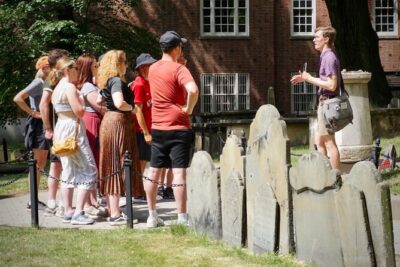
This is a Boston self-guided audio experience built for people who do not want to commit to a fixed group schedule. Instead of a guide walking you around, you get a mobile-friendly listening plan: a single playlist that contains audio for all 17 attractions, plus a map that lets you jump to each stop’s chapter.
The biggest practical win is that you set the rhythm. If you want to linger at one place for photos or quiet time, you can. If you need to cut short because the weather turns, you can stop, come back later, and restart where you left off. The tour is designed so you can also split it across multiple days, which is ideal when Boston sightseeing stacks up fast.
Another strength is how the audio is framed. The chapters focus on how Boston shaped people, and how people shaped Boston. That means you are not just looking at architecture, you are hearing why it mattered, including controversies and conflicts that shaped the city.
A few other harbor-city days to consider
- Self Guided Classic Freedom Trail Location Aware (GPS) Walking Audio Tour★ 4.5 · 258 reviews
- Boston Freedom Trail Self-Guided Tour with Audio Narration & Map★ 4.5 · 98 reviews
- Self-Guided Boston’s Beacon Hill Underground Railroad Audio Tour Walking Tour★ 4.5 · 29 reviews
Cost and timing: is $6 good value?
The price is $6.00 per person. That is low enough that you can treat it like a budget-friendly way to upgrade a normal day of walking.
Why it feels like good value: you are not paying a separate fee for entry at each listed stop. Each location is marked as admission ticket free, so the cost is mainly the narration, the itinerary map, and the organized audio access. If you were doing these sights anyway, the audio is what makes the experience feel guided.
Timing-wise, the tour says 3 to 9 hours (approx.). With 17 stops at about 20 minutes each, the full loop is roughly a half-day to six-ish hours if you listen straight through. If you move fast, do fewer stops, or save some for later, it fits the shorter end. If you listen carefully, take breaks, and spend time inside a building, it fits the longer end.
My practical take: if you are spending only one day in central Boston, do a themed subset. For example, you can focus on Irish and immigrant stories, or focus on revolution sites plus the memorials. The format lets you shape the tour to your pace without losing the structure.
SoundCloud playlist plus Google My Maps: how you use it
You do not get a rented audio device. You use your own phone, your own headphones, and you connect through the links you receive after booking.
Here is how it works in plain terms:
- You receive private links through the booking platform messaging system.
- One link gives you the full audio playlist, hosted on SoundCloud.
- Another link gives you an interactive Google My Maps page. You should open it in a web browser, not the Google Maps app.
- On the map, headphone icons mark the attractions. Selecting a stop brings up a link to its audio.
Two small habits will make this smoother. First, charge your phone fully before you start. Second, decide whether you want to follow the suggested order or jump around using the map. Either method works, but jumping is faster when you already know which stop you want next.
Also note this is not GPS-guided. The map helps you locate the stops, but the experience assumes you will be walking and navigating yourself. If you dislike finding places on foot, this might feel like a chore. If you like wandering, it fits perfectly.
Cathedral of the Holy Cross to The Mother Church: faith, architecture, and immigrant pressure

These first two stops are a strong opener because they set up a pattern the whole tour keeps using: buildings as evidence of struggle, identity, and community building.
Cathedral of the Holy Cross (Stop 1)
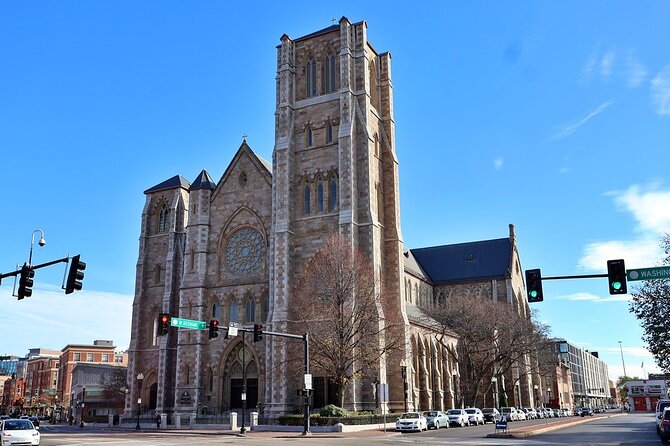
This chapter centers on New England’s largest Catholic cathedral and how Irish immigrants built it despite prejudice. You get the inside story on how the cathedral became a symbol of resilience for Boston’s Irish community, and you also hear what the audio guide calls architectural secrets hidden in plain sight, from intricate stonework that took decades to complete to stained glass windows that tell stories of faith and perseverance.
Practical note: the audio is timed for about 20 minutes, so you can plan to look around, listen, and then step back for photos without feeling rushed.
One more reason this stop works well early: it gives you context for why Boston’s churches are not just religious spaces. In this tour’s telling, they are also social centers where real history played out.
Another way the same afternoon could go around Boston:




The First Church of Christ, Scientist, The Mother Church (Stop 2)
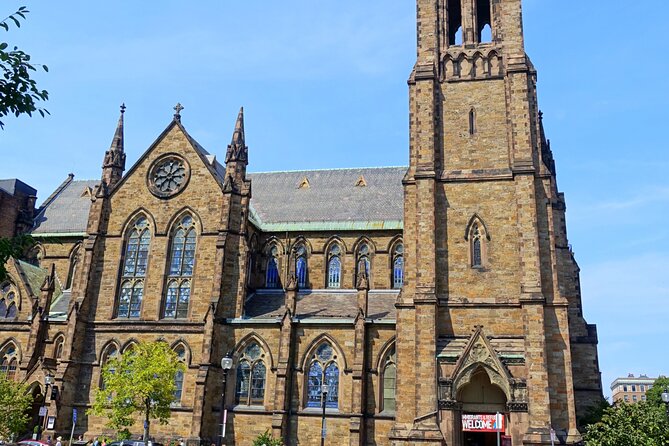
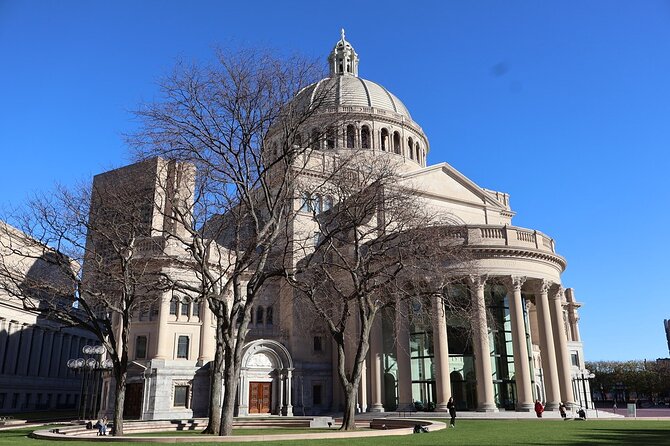
This stop shifts to Christian Science and the worldwide headquarters built around Mary Baker Eddy’s ideas about healing and spirituality. The audio highlights classical and Byzantine elements that many people overlook, and it talks about the pipe organ plus the controversies surrounding this religious movement.
What I like here is the balance. You get both the architecture and the debate, so you are not only learning beliefs, you are learning why people argued.
Practical note: if you have strong opinions about alternative medicine, you might want to approach this chapter like history class, not a persuasion pitch. The narration frames the influence and the controversies, and that keeps it useful even if you disagree.
Boston Public Library and Old South Church: public access and revolution in the same breath

Now you move from religious headquarters to two places that shaped how people shared power and information.
Boston Public Library (Stop 3)
The Boston Public Library is often described as beautiful, but the audio goes after its purpose. You learn why it is called the Palace of the People and how it helped broaden public access to knowledge while breaking down barriers between social classes.
The chapter also points out artistic treasures you might miss on your own, including John Singer Sargent’s controversial murals and Daniel Chester French’s sculptural masterpieces. There is also discussion of relationships between architects and artists that shaped the Renaissance Revival feel of the building. If you are an art person, this stop will likely stretch beyond the 20-minute audio window.
Practical drawback to consider: if the library is busy, you may need to keep your voice and phone use low, since you are in an active public space.
Old South Church in Boston (Stop 4)
This is your revolution ignition point. The narration connects the church to the fires of American independence and meetings that helped spark the Boston Tea Party. But it also goes further, including a role in abolishing slavery and connections to the Underground Railroad that most people do not learn about.
The architecture is Italian Gothic, and the audio leans into how the congregation tried to hold onto radical ideals through centuries of change. You also hear about secret tunnels, hidden artifacts, and named individuals linked to challenging authority.
My advice: if you are pairing Old South with nearby revolution stops, listen to this chapter right after you arrive, not after you wander off. It helps you notice the details the narration calls out while the story is fresh.
Copley Square and Church of the Covenant: urban planning debates and Progressive Era reform

These two stops blend city planning with social action. If you love when a walk becomes a lesson, this section delivers.
Copley Square (Stop 5)
This is Boston’s cultural heart in the audio guide’s framing. You hear how the square’s layout came from planning decisions and fierce debates, and you get the sense that public space is political space.
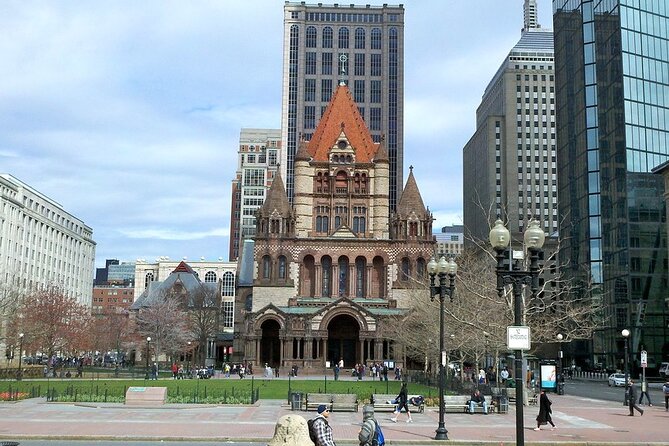
The chapter connects the square to historic moments such as victory celebrations and protests that changed the nation. It also calls your attention to hidden symbolism around the surrounding architecture and stories linking Trinity Church, the library, and nearby buildings.
Practical note: because you are outdoors in a public square, wind and street noise can affect what you hear. Bring headphones that fit well so you are not constantly turning up volume.
Church of the Covenant (Stop 6)
This is described as a more understated architectural gem in the audio narrative, and it earns that label by focusing on Progressive Era reformers. The narration ties Gothic Revival beauty to social justice, including women’s suffrage movements and connections to abolitionists whose names appear in history.
You also get a close look at Tiffany stained glass windows and what they mean, plus how the congregation supported immigrants and fought poverty. If you like stories about practical organizing, this chapter is one of the most satisfying because it shows how faith spaces became planning rooms for campaigns.
Boston Public Garden and Beacon Hill: engineered landscapes and brick-street reforms
You are swapping buildings for scenery here, but the theme stays political and human. You will hear that gardens and neighborhoods were shaped by design choices, not just taste.
Boston Public Garden (Stop 7)
The audio calls out America’s first public botanical garden and treats it like a case study in engineering. You learn about swan boats, the symbolism behind the lagoon layout, and the political battles involved in preserving the space from development.
There are seasonal transformations and literary connections too, so you can make this stop fit your trip window. If you are visiting in a warmer season, you might enjoy focusing on plant detail. If it is cooler, the literary and design parts may land better.
Practical tip: build in extra time for photos. This is a place where you want a slow walk after you listened hard.
Beacon Hill (Stop 8)
Beacon Hill’s chapter talks about Federal-style architecture and how the neighborhood became a hotbed of revolutionary thinking and social reform. The audio points to underground networks tied to the Underground Railroad era, and it names famous residents such as Louisa May Alcott along with abolitionists connected to literature and politics.
You also hear about gas lamp preservation and hidden gardens, and how people fought to preserve Boston’s historic character against development pressures.
My take: this is one of the best stops when you want to understand how elite-looking streets can still connect to resistance and moral choices.
Boston Common and Park Street Church: democracy ground, sermons, and moral pressure
These two stops are emotionally heavier and historically intense. They are also a big payoff for anyone who wants Boston’s story, not just its skyline.
Boston Common (Stop 9)
The narration makes Boston Common feel like a time machine, starting from when the land was a cattle pasture and moving to revolutionary meeting ground. You hear about public executions and witch trials, plus how the Common played a role in wars and how tunnels beneath the feet connect to stories you might not expect.
If you enjoy symbols, there is coverage of monument symbolism, and you also get mention of ecology restoration efforts. The chapter closes with famous speeches and gatherings that shaped American history right from this ground.
Practical note: since these are tough topics, pause if you need to. This audio tour gives you the freedom to step away for air.
Park Street Church (Stop 10)
This stop is framed around the Brimstone Corner nickname and how evangelical leadership helped launch social movements. The audio focuses on abolition, famous speeches delivered from the pulpit, and links to missionary movements that spread across the globe.
It also ties the church to education reform and highlights individuals who used this platform to challenge slavery and champion human rights in the 19th century.
If you are trying to balance your mental load, this is a good time to listen in chunks. A 20-minute chapter can feel long if you are walking a lot already, so you might press pause halfway through if you need a reset.
Irish Famine Memorial and New England Holocaust Memorial: remembering real people
Now the tour moves into commemoration. Two memorial stops in particular do a lot of emotional work, and the audio is meant for slow attention.
Boston Irish Famine Memorial (Stop 11)
This chapter focuses on Irish immigrants who fled the devastation of famine to build new lives in Boston. You hear personal stories about desperate refugees who transformed from unwelcome outcasts into integral parts of American society through determination and resilience.
The audio guide also explains symbolism and choices used in the memorial, and it connects Irish contributions to Boston’s development while naming discrimination they faced and how they preserved culture while pursuing American dreams.
Practical advice: this is a stop where headphones can feel intimate rather than detached. If you prefer, you can lower the volume and listen when you stand still.
New England Holocaust Memorial (Stop 13)
The tone changes here from specific immigrant hardship to Holocaust survival and rebuilding. The audio shares stories of Holocaust survivors who rebuilt their lives in Boston and contributed to the city’s cultural fabric.
You learn about symbolism etched into glass towers and the memorial’s creation through community collaboration and remembrance. The chapter also connects Boston’s immigrant communities to a universal message of tolerance and human dignity, and it mentions ongoing efforts to combat hatred through education and understanding.
This is one of the most powerful chapters on the tour. If you want a calmer day, you might schedule this stop later after you get your bearings.
Faneuil Hall, Boston Public Market, and Paul Revere Statue: from liberty speeches to local food
These stops give you Boston as it looks on postcards, but the audio keeps pulling the story back to commerce, craft, and decisions.
Faneuil Hall Marketplace (Stop 12)
The narration calls Faneuil Hall the Cradle of Liberty and connects it to democratic ideals through fiery speeches and revolutionary meetings. You learn how commercial history funded political resistance, which is a neat reminder that revolutions often run on everyday money.
The chapter also describes architectural evolution across centuries, restoration efforts that preserved the space, and secret meetings held on upper floors.
If you like understanding how businesses and politics braid together, this stop will click.
Boston Public Market (Stop 14)
This one is a different kind of education. The audio connects the modern marketplace to centuries of Boston trading traditions and local agricultural heritage. You learn about regional specialties, sustainable farming practices from local vendors, and how seasonal rhythms shape New England cuisine.
It also frames the market as a support system for small businesses and as part of a bigger community partnership story.
Practical value: if you time this stop well, you get food without losing your tour structure. You can treat it as your lunch break and press play while you wait.
Paul Revere Statue (Stop 15)
The chapter separates historical fact from popular legend about Paul Revere. You learn about his work as a craftsman and his real story as a master silversmith and bell caster.
The audio mentions his network of fellow patriots, his family life, and how details of his famous ride differed from Longfellow’s poem. There is also a look at the statue’s artistic significance and why Revere became a symbol of courage and ingenuity.
This is a smart stop if you have ever heard the famous ride story in school and wanted it corrected with actual context.
Zakim Bridge to Bunker Hill Monument: engineering memory and a costly turning point
The final section mixes engineering with battle history. It is a strong closing combo because it shows how Boston honors the past in very different ways.
Leonard P. Zakim Bunker Hill Bridge (Stop 16)
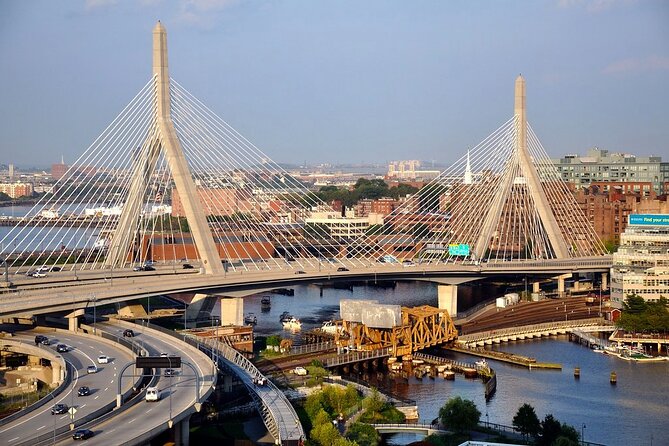
The audio treats this cable-stayed bridge as an engineering case study with design challenges and construction techniques. You hear about community collaboration shaping the final design, and the chapter connects the bridge name to Boston’s diverse communities.
It also covers urban renewal, environmental considerations, and how modern infrastructure can still carry historical memory while doing the job of moving people.
Practical note: this can be a good stop to finish your listening list if you want a calmer, scenic moment before ending the day.
Bunker Hill Monument (Stop 17)
This stop focuses on the Revolutionary War’s first major battle and why the tactical mistakes nearly cost independence. The audio also explains why what felt like defeat became a psychological victory that fueled colonial resistance.
You learn about individual heroism and working-class heroes who fought there, plus colonial military strategy details that are often forgotten. You end with how the neighborhood changed and how the battlefield became a shrine to American determination and sacrifice.
If your feet are tired, you can still appreciate this chapter from the base area. The 20-minute audio is designed to let you hear the story even if you do not linger for long.
Who should book this, and who might skip it
I think this Boston self-guided audio tour is a great fit if you:
- Want flexibility over a fixed walking schedule
- Like hearing the story behind places, not just reading plaques
- Prefer a budget-friendly way to “upgrade” a self-paced Boston day
- Are comfortable using your phone for audio and maps
You might skip it if you:
- Hate navigating without GPS support
- Do not want to rely on headphones and internet access
- Prefer a live guide to answer questions on the spot
If you are on the fence, a smart strategy is to treat it like a choose-your-own route. Pick 6 to 10 stops that match your interests, then stop. You will still get the value without exhausting yourself.
Should you book this Boston self-guided audio experience?
Yes, if you want a low-cost way to add depth to central Boston, and you do not mind using your own phone and headphones. The main reason to book is the structure: 17 stops, a SoundCloud playlist you can control, and a map that makes jumping between chapters straightforward. The second reason is value: admission is listed as free at each stop, so your money pays for the storytelling rather than a stack of entry fees.
Book it when you want control and context, and consider doing fewer stops if you want a lighter day, especially since several chapters cover difficult topics like slavery and the Holocaust.
Written up lately around the harbor
- Boston’s Beacon Hill: Private Walking Tour
★ 5.0 · 1 review - Boston’s Chinatown: Small Group Walking Tour
★ 5.0 · 1 review - Self-Guided Scavenger Hunt: Boston Back Bay & Beyond
★ 4.0 · 1 review - Flynn Cruise Port Boston to Boston hotels – Arrival Private Transfer
★ 5.0 · 1 review - Boston to Woods Hole & Martha’s Vineyard Ferry Private Chauffeur Service
★ 4.0 · 1 review - Classic Martha’s Vineyard 1-Day Escape from Boston
★ 5.0 · 1 review - Private Vacation Photoshoot with Photographer in Boston
★ 5.0 · 1 review
Audio Tours, compared.
Self Guided Classic Freedom Trail Location Aware (GPS) Walking Audio Tour
Read our review →
Boston Freedom Trail Self-Guided Tour with Audio Narration & Map
Read our review →
Self-Guided Boston’s Beacon Hill Underground Railroad Audio Tour Walking Tour
Read our review →
Self Guided “Historic Boston Downtown Freedom Trail” Audio/GPS Walking Tour
Read our review →
Boston’s Old North Church Admission with Self-Guided Audio Tour
Read our review →
Boston’s Freedom Trail: A Self-Guided Audio Tour
Read our review →
Boston Harborwalk & Tea Party Self-Guided Walking Audio Tour
Read our review →
City History and Highlights Audio App Walking Tour
Read our review →Browse the lists this tour appears in