
Reviewed · SALEM WITCH TRIALS TOURS
Boston Witchcraft Tour
Boston has a darker thread. This guided walk connects colonial fear to real street corners, from the Massachusetts State House to burial grounds tied to the witchcraft panic. You’ll hear how Boston accusations unfolded before Salem exploded, and how religious figures like Cotton Mather and Increase Mather helped shape what people believed and what they accused.
I especially like the street-level storytelling. The tour doesn’t just name names, it places them where you can still picture the actions: where people were imprisoned, where certain events happened, and where victims and linked figures rest. I also enjoy the guide’s tone, which keeps the mood human. Even the group’s laughs land in the right place, since the details matter. You’ll come away with a clearer picture of why this hysteria took hold.
One thing to consider: it’s roughly a two-mile walk. If your legs get tired easily, or you need frequent breaks, plan ahead and pace yourself.
In This Review
- Key Points You’ll Actually Use
- Why This Boston Witchcraft Tour Works So Well
- Price and Value: What $30 Buys You in Boston
- Walking Route Overview: A Two-Mile Story Through Key Stops
- Stop 1, Massachusetts State House: Where the Meeting Becomes Part of the Story
- Statue of Mary Dyer: Belief and Cost in Plain Sight
- Anne Hutchinson Statue: The Antonimian Controversy Thread
- Boston Common: A Historic Spot With a New Meaning
- Park Street: An Accused Witch Story From 1688
- Granary Burying Ground: Who’s Buried, and Why It Matters
- King’s Chapel Burying Ground: Another Cemetery, Another Angle
- Pemberton Square: Reverend John Cotton, Roger Williams, and the Road Toward Accusations
- Court Street Jail Site: Where Fear Became Imprisonment
- Union Street and the Green Dragon Tavern: Stoughton, Power, and Reputation
- Paul Revere House: Where Increase Mather Had a Home and Where Fire Played a Role
- What the Tour Leaves You Thinking About
- Who Should Book This Tour (and Who Might Want to Pick a Different One)
- Should You Book It?
- FAQ
- How much does the Boston Witchcraft Tour cost?
- How long is the tour?
- Where do I meet, and where does the tour end?
- What is included in the ticket price?
- Are there admission tickets included for all stops?
- How much walking is involved?
Key Points You’ll Actually Use
- A focused 1 hour 30 minute route through downtown Boston witchcraft touchpoints.
- Small group size helps you ask questions and track names without feeling rushed.
- Stop at the old jail site on Court Street, where imprisonment connected to witchcraft is part of the story.
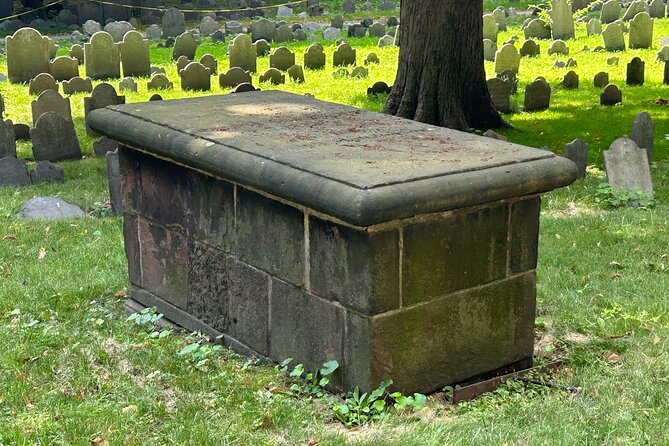
- Granary Burying Ground and King’s Chapel Burying Ground are built into the route for context on who’s buried and why it mattered.
- Two major paid stops (Massachusetts State House and the Paul Revere House) are marked, so you can plan your spending.
Why This Boston Witchcraft Tour Works So Well
If you like history, but you also like your feet moving and your mind focused, this tour hits a sweet spot. You spend your time in places where the stories feel concrete. You’re not just reading about fear and rumor. You’re walking through the city blocks where those ideas traveled, stuck, and spread.
The tour’s heart is the arc of accusations. It starts with the first Boston witch execution in 1648, then moves through the following decades. You learn how four women were executed for being witches over the next 40 years, before Salem’s mass hysteria erupted four years later with 25 deaths. That timeline does something important: it prevents Salem from feeling like a random freak event. Instead, you see it as the continuation of something already happening in Massachusetts.
Two names anchor the story in a way that helps you remember it. You get the Goody Glover thread, including that she was the last accused witch to be executed in Massachusetts right before Salem took over. And you hear how Reverends Increase and Cotton Mather played pivotal roles in the accusations. If you’ve heard those names in other contexts, this tour shows you why they came up again and again during witchcraft scares.
And yes, there’s a light moment. One recent group laughed at a meeting point reference to General Hooker and then straight into the Howens, because the details can be confusing if you don’t hear them clearly. That’s a good sign. It means the guide knows how to make dense subject matter stick.
More on the witch trials and where they happened:
- Boston: Salem by Boat – Witch Trials & Walking Tour★ 4.3 · 263 reviews
- Day Trip from Boston To Salem Witch Exhibits★ 4.5 · 63 reviews
- Salem Witch Tour from Boston by Train with Museum Tickets★ 4.0 · 42 reviews
Price and Value: What $30 Buys You in Boston
At $30 per person for about 1 hour 30 minutes, you’re paying for something more than a lecture. You’re paying for a guided route with historical pacing. You also get a small group limit of 35, which matters in a walk like this. In tight urban spacing, group size affects whether you can hear. Here, it helps.
You also get a mix of free and paid sites. Some stops are free to view, and two notable ones have admissions not included: the Massachusetts State House and the Paul Revere House. That transparency helps you budget. If you’re the type who likes to see every interior, you’ll probably want to add those tickets. If you’d rather keep spending controlled, you can still enjoy the outdoor story beats at many stops.
Another value point: the tour uses a mobile ticket. That’s practical in a city where paper can get lost and lines can be annoying. And because confirmation happens at booking, you’re not left guessing whether you’re on the right schedule.
Bottom line: if you want a guided, time-bound route through major Boston locations tied to witchcraft accusations, $30 is a fair price for the amount of walking, storytelling, and site coverage you get.
Walking Route Overview: A Two-Mile Story Through Key Stops
This is a downtown route that ends in the North End. You start at 24 Beacon St, then work your way toward North Square. The tour includes about ten to fifteen minute moments at several stops, plus short intro and story beats at others. You should expect frequent pauses for explanation, with enough movement to keep things lively.
Here’s how the tour’s stops shape the narrative, and what to watch for at each one.
Stop 1, Massachusetts State House: Where the Meeting Becomes Part of the Story
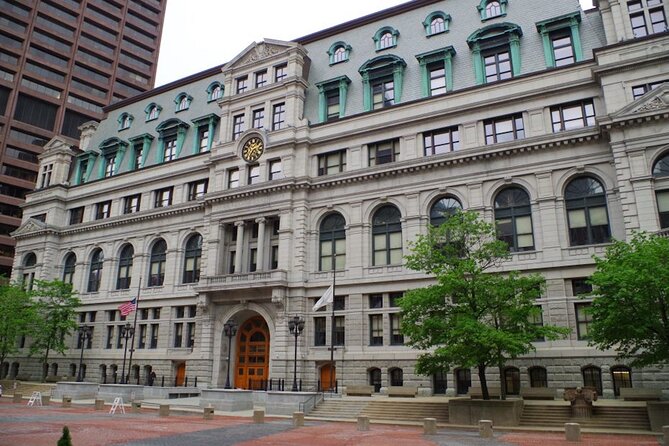
You meet at 24 Beacon St, and the grand Massachusetts State House is right in your frame. It’s not a random meeting spot. It helps set the tone. This building is part of Boston’s civic identity, and the guide uses that contrast to point you back to a time when religious certainty and civic authority were closely linked.
If you’re the type who likes context, take a moment before the intro ends to look up at the building. It’s an easy way to anchor yourself for what comes next. This stop also has an admission ticket not included, so plan your expectations. Even without going inside, you still get the story.
One amusing detail you might hear mentioned: a reference to General Hooker at the General Hooker entrance. It’s a reminder that names in Boston history often overlap, and the guide keeps you straight by connecting the correct references to the correct people.
Statue of Mary Dyer: Belief and Cost in Plain Sight
Next you head to the Statue of Mary Dyer. This is where the tour shifts from accusations as rumor to executions as outcome. Mary Dyer is executed for speaking for what she believed, and that line matters because it connects witchcraft fear to dissent and punishment.
If you’re wondering why witchcraft hysteria became so powerful, this stop gives you one answer. When people believed that wrong ideas or wrong behavior could endanger the community, they often treated punishment as protection. Mary Dyer’s story helps you feel that pressure.
The stop is short, but it acts like a reset button. You go back to the emotional logic of the time, not just the dates.
Another way the same afternoon could go around Boston:




Anne Hutchinson Statue: The Antonimian Controversy Thread
You then stop at the Anne Hutchinson statue, and the guide connects her role to the Antinomian Controversy. This matters because it shows how witchcraft fears often rode alongside theological conflicts.
Witch trials were not only about accused neighbors. They were also about belief systems, authority, and who got to define what was acceptable. When you learn that the argument landscape was already tense, it becomes easier to understand how accusations could catch fire.
This stop is brief, but it gives you a lens. After this, the rest of the tour feels less like a list of random tragedies and more like a pattern.
Boston Common: A Historic Spot With a New Meaning
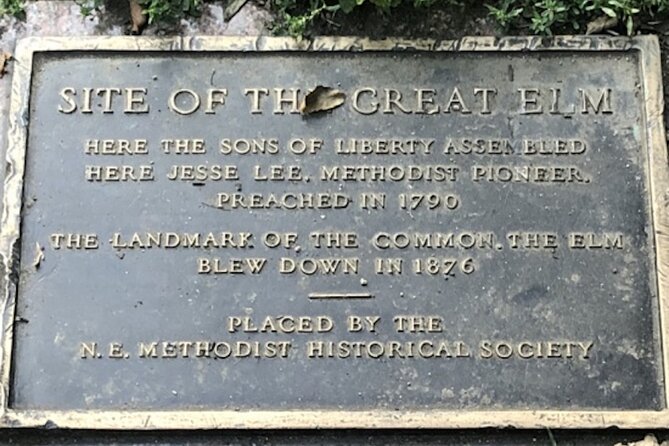
On Boston Common you make a short stop at a historic spot and learn what happened there. Common ground is the right setting for stories like these. In a time of outbreaks, harvest stress, and fear, public spaces could become places where people shared rumors, watched neighbors, and talked themselves into certainty.
Even if you’re familiar with Boston Common’s general charm, the tour uses it to reframe what public space meant in the 1600s. You’ll probably catch yourself looking at the open area differently after the explanation.
This stop is free and short, so use it as a mental checkpoint. Let the guide’s explanation recalibrate the city around you.
Park Street: An Accused Witch Story From 1688
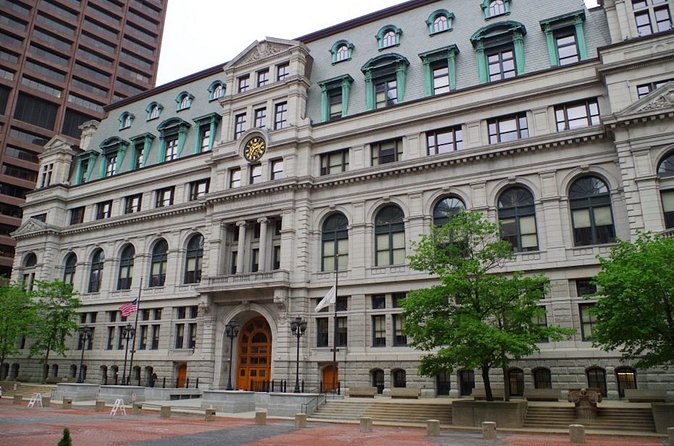
Park Street is next, and the guide discusses an accused witch who lived there in 1688. This stop works because it turns the idea of witchcraft fear into something street-level. It’s not an abstract concept in a faraway village. It’s someone who lived in a place you can still walk through today.
When you’re listening, try to hold two thoughts at once. First, remember these weren’t only stories told about people. The accusations had consequences. Second, notice how the tour keeps circling back to locations. That repetition trains your brain to connect belief and place, not belief and legend.
This stop is free. It’s also a good moment to take a quick breath if the earlier stops ran a bit heavy.
Granary Burying Ground: Who’s Buried, and Why It Matters
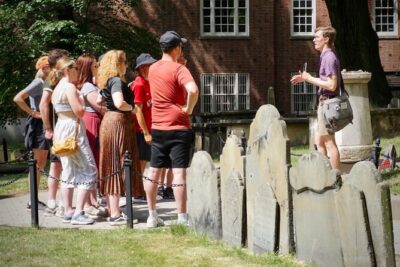
At Granary Burying Ground you learn about people buried there who have connections to the witchcraft trials, plus what they did. Even when you don’t get specific names you can memorize, the cemetery format gives the story a different weight.
Cemeteries act like a time machine. The guide uses this to remind you that decisions made in a panic still leave a footprint long after the panic ends. If you like history that connects ideas to real lives, this stop will likely stick with you.
It’s free, and the guide uses the stop to help you think about legacy: how communities remember, how families get linked to events, and how records keep the story from disappearing.
King’s Chapel Burying Ground: Another Cemetery, Another Angle
You then head to King’s Chapel Burying Ground for another set of linked burials. The structure is similar, but the effect is different. You start to understand how witchcraft narratives intersected with broader community histories. Different church communities kept records, buried their people, and shaped what you can learn today.
If you’ve ever wondered why some details survive and others vanish, a cemetery stop can clarify that. The physical fact of burial creates a trail for historians and guides.
This stop is also free, and it adds depth without adding cost.
Pemberton Square: Reverend John Cotton, Roger Williams, and the Road Toward Accusations
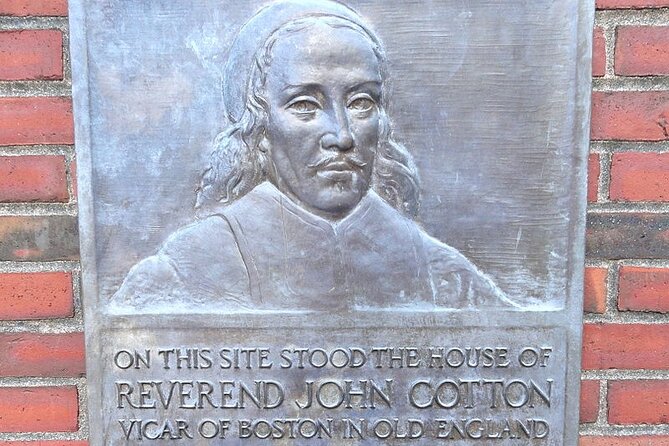
Pemberton Square adds a bigger political and religious picture. The guide discusses Reverend John Cotton from the 1630s and his role in the Antinomian Controversy, then brings in Roger Williams, and explains how this thread eventually connects to witchcraft.
This is where you may appreciate having the earlier Antinomian context. By now, you can see that witchcraft accusations grew out of older arguments about faith and authority. The guide’s job here is to show how those disagreements could turn into a community narrative that made accusations plausible.
This stop is free and short, so listen closely and jot down names in your phone if you’re the type to research later.
Court Street Jail Site: Where Fear Became Imprisonment
On Court Street you go to the site of the old jail where people were imprisoned for witchcraft and died. This is the stop that changes the tour from “interesting story” into “hard reality.”
Hearing about execution dates is one thing. Knowing there was a jail, and that people died there while accusations moved forward, is another. It gives you the full arc: accusation, confinement, and fatal outcome.
This stop is free and around ten minutes, which is enough time for the guide to give it weight without rushing. If you only care about witch trials as a Salem prequel, this still matters because it’s the Boston side of the mechanism, not the distant legend.
Union Street and the Green Dragon Tavern: Stoughton, Power, and Reputation
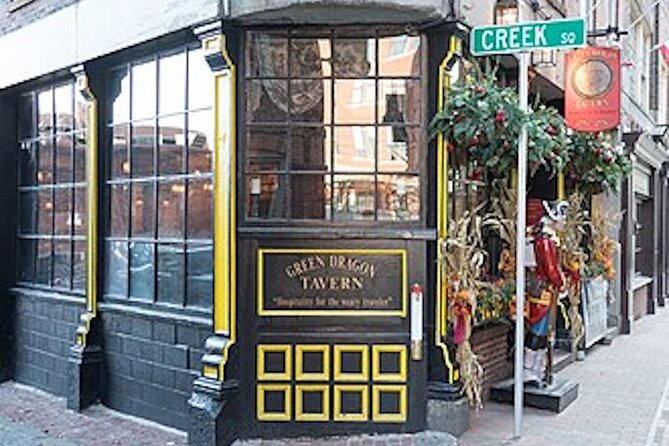
Next you’re at Union Street, where the guide discusses the original Green Dragon Tavern and the new Green Dragon Tavern. Here the story connects to Chief Justice William Stoughton, who owned the original.
This stop can feel more like social history than witchcraft history, but that’s exactly what makes it useful. Accusations did not float in a vacuum. They lived in networks of power, courts, and public gathering spaces where reputations were traded.
If you pay attention here, you’ll likely understand one key theme: legal authority plus religious certainty plus community pressure is how belief becomes punishment.
This stop is free and around ten minutes.
Paul Revere House: Where Increase Mather Had a Home and Where Fire Played a Role
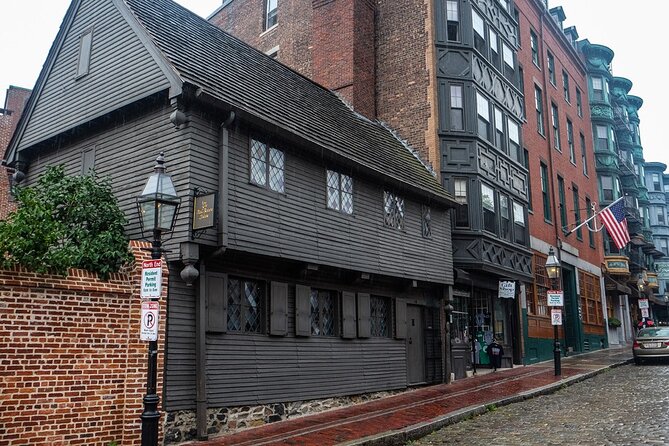
Finally, you visit the Paul Revere House. The guide explains that Increase Mather had a home there, that it burned by fire, and that Mather and his son lived there and preached at a church nearby. This stop is about the overlap between influential religious leadership and notable Boston residences.
This is one of the paid stops since the admission ticket is not included. If the house interior appeals to you, you’ll likely want to plan for that extra cost. Even without that, the guide’s explanation makes the address feel relevant to the witchcraft story rather than just to Paul Revere’s fame.
Expect this stop to be a bit longer, about fifteen minutes, because the guide has more to tie together.
What the Tour Leaves You Thinking About
When you finish, I think the strongest takeaway is how accusations were made believable. The tour frames colonial belief as a system: people could sign a pact with the devil and harm neighbors through witchcraft. That idea made accusations feel like moral defense instead of moral panic.
But the tour also shows you how the story wasn’t only about devil worship. It was entangled with religious controversy, authority, and community fractures. The Antinomian Controversy thread gives you that context early. Then the tour brings it back at the names and roles of key religious figures, and at the legal power connected to William Stoughton.
If you’re a reader who likes learning history through people, you’ll probably latch onto the Goody Glover story. Knowing she was the last accused witch executed in Massachusetts right before Salem’s four years-later eruption helps you understand why Salem didn’t appear out of nowhere.
And if you prefer a more human approach, Mary Dyer’s execution and the jail stop on Court Street deliver the emotional weight. Even if you don’t remember every detail, you’ll remember how the tour made the consequences feel real.
Who Should Book This Tour (and Who Might Want to Pick a Different One)
Book this if you want:
- A time-efficient, guided walk through Boston sites tied to witchcraft accusations.
- Clear narrative structure around Goody Glover, Salem spillover, and the role of Increase and Cotton Mather.
- Small group energy, with time for questions and explanations at each stop.
It might be less ideal if you:
- Struggle with walking about two miles in a city center.
- Want a fully indoor museum experience with minimal outdoor walking.
- Are not interested in early Massachusetts witch executions and prefer only Salem-focused stories.
Should You Book It?
I’d book it if you like your history grounded in addresses you can stand next to. The best part is how the route builds meaning: you start with execution history, then layer in religious conflict, then land on jail and burial contexts. That structure makes the witchcraft panic easier to understand without turning it into sensational drama.
The cost is also reasonable for what you get, especially with a small group cap and a route that includes both free stops and clearly marked paid admissions. Plan for extra tickets only if you want interiors at the Massachusetts State House and the Paul Revere House.
If you’re in Boston and you want one guided walk that’s smart, specific, and genuinely memorable, this is a solid choice.
FAQ
How much does the Boston Witchcraft Tour cost?
It costs $30.00 per person.
How long is the tour?
The tour runs about 1 hour 30 minutes.
Where do I meet, and where does the tour end?
You meet at 24 Beacon St, Boston, MA 02108, and the tour ends in the North End at North Square, Boston, MA 02113.
What is included in the ticket price?
The tour includes a tour guide. A mobile ticket is used.
Are there admission tickets included for all stops?
No. Admission tickets are not included for the Massachusetts State House and the Paul Revere House. Other stops listed are free.
How much walking is involved?
The tour is about two miles. It may be difficult for people who have issues walking long distances, and it’s best for those with moderate physical fitness.
Written up lately around the harbor
- Boston’s Beacon Hill: Private Walking Tour
★ 5.0 · 1 review - Boston’s Chinatown: Small Group Walking Tour
★ 5.0 · 1 review - Self-Guided Scavenger Hunt: Boston Back Bay & Beyond
★ 4.0 · 1 review - Flynn Cruise Port Boston to Boston hotels – Arrival Private Transfer
★ 5.0 · 1 review - Boston to Woods Hole & Martha’s Vineyard Ferry Private Chauffeur Service
★ 4.0 · 1 review - Classic Martha’s Vineyard 1-Day Escape from Boston
★ 5.0 · 1 review - Private Vacation Photoshoot with Photographer in Boston
★ 5.0 · 1 review
Salem Witch Trials Tours, compared.
Wicked Awesome Tours: Witch Trial History and Salem Haunts!
Read our review →
Best Salem Witch Trials Historical Walking Tour
Read our review →
Browse the lists this tour appears in