

Reviewed · WALKING TOURS
PRIVATE Authentic Revolutionary Boston Walking Tour
Boston revolution, explained at street level. This private Authentic Revolutionary Boston Walking Tour walks the line between past and present, with a guide who can shape the story around what you care about.
I love that the guide can tailor the Revolution narrative to your interests, and I also like the external-only approach for several major sites, so you stay on track while choosing whether to go inside. One thing to plan for: multiple stops require separate museum or church tickets if you want to enter.
In This Review
- Key reasons this tour is worth your time
- The value of a truly private Revolutionary Boston walk
- Meeting Boston Common and getting your bearings fast
- Boston Common to Granary Burying Ground: politics plus the people history forgets
- Kings Chapel: the Revolution’s international connections
- Old South Meeting House and the Boston Tea Party, explained with more room
- Old State House: the Boston Massacre legacy in the heart of town
- Faneuil Hall Marketplace: speeches, markets, and power in one tight block
- Old North Church: lanterns, freedom, and the hard part of the story
- Price and logistics: where the $75 really goes
- What I appreciate most about the guide style
- Bathrooms, comfort, and where the day goes next
- Who should book this Revolutionary Boston private tour
- Should you book this private Revolutionary Boston walking tour?
- FAQ
- How much does the Private Authentic Revolutionary Boston Walking Tour cost?
- How long is the tour?
- Where does the tour start and end?
- Is this tour private?
- What tickets are included, and what needs separate admission?
- Do I get a mobile ticket?
- Are service animals allowed?
- What if the weather is poor?
Key reasons this tour is worth your time

- Private group, tailored pace: I like that the guide can focus on what you want, and adjust as you walk.
- Recent research, not just recycled facts: The story is built to feel relevant to a modern audience and real civic questions.
- Smart route with free exterior stops: You get major sites along a tight loop, with some visits included outside.
- Separate tickets only where it matters: If you want interiors at Kings Chapel, Old South Meeting House, Old State House, or Old North Church, you buy those separately.
- Guides who handle practical needs: You get help finding the cleanest bathrooms in the city.
- A guide who brings personality: One guide named Adam has been praised for historical costume style and humor that make the walk feel easy.
The value of a truly private Revolutionary Boston walk
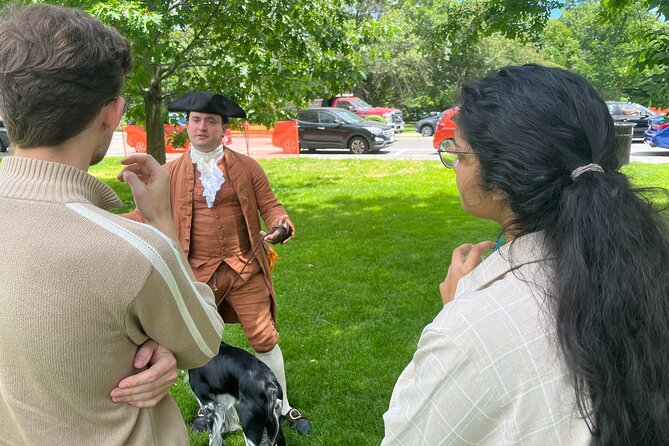
Boston’s Freedom Trail is famous for a reason. Still, a set script can feel like history-as-a-worksheet. This tour is different because it stays flexible and centered on your questions, not a rigid checklist.
At $75 per person for a 1.5 to 2 hour walk, the price makes sense when you compare it to paying for multiple admissions and spending time piecing together context yourself. You are paying for interpretation and decisions, not just a route on a map.
The private format matters. You move at a natural pace, you can ask follow-ups, and the guide can shift the emphasis when something sparks your curiosity. The goal is not only to name dates, but to make sense of what the Revolution meant for real people, including how that story connects to civic life today.
More of Boston crossed at walking pace:
- Boston: Freedom Trail History Small Group Walking Tour★ 5.0 · 6,450 reviews
- Harvard University Campus Guided Walking Tour★ 4.5 · 3,632 reviews
- Boston Freedom Trail Walking Tour with Costumed Guide★ 4.5 · 2,531 reviews
Meeting Boston Common and getting your bearings fast
The tour starts at the Boston Common Visitors Center at 139 Tremont St. From there, you head into one of America’s oldest public parks, a place that still feels like it belongs to the city, not just the past.
Boston Common is one of those spots where background helps immediately. Even if you have visited before, the guide can point you toward what matters politically and culturally, then connect it to why revolutionaries chose public space in the first place. It also works as a comfortable starting stretch because you can settle in right away.
A practical bonus: Boston Common is also close to transit and easy to reach. That is helpful when your day includes museums, a harbor walk, and dinner reservations later.
Boston Common to Granary Burying Ground: politics plus the people history forgets

The next stop takes you to Granary Burying Ground, one of Boston’s oldest cemeteries. It is not just stones and dates. The way the guide frames the site focuses on the lesser known details, and how the graves can hint at the radical demographics of who was present and who mattered.
This is where the tour’s “past meets present” approach becomes clear. A cemetery can turn into a lesson in who gets remembered and why. The guide uses that lens to push beyond a simple hero story and toward a more human understanding of the Revolutionary era.
One drawback to consider here is the pacing. Cemetery stops are short by design, since the tour also covers several other major exterior sites. If you want a long, quiet interior experience at Granary, this tour is not trying to replace that. It is meant to give you direction and context so any time you spend later feels smarter.
Kings Chapel: the Revolution’s international connections

Next up is King’s Chapel. Outside, the focus is on something many visitors miss: how the Revolution in Boston did not exist in a bubble. The guide uses the chapel to show the international scope of the story, and why Boston’s ideas and power struggles traveled through wider networks.
You will pause outside and listen, but entry is not included. If you want inside access, you need a separate private ticket associated with the museum. That is the tour’s pattern: exterior explanations are included, while interiors are your choice.
This stop is ideal if you like connections, trade, and religion’s role in politics. It is also a good checkpoint to decide how deep your day should go. If you know you are done with extra admissions, you can stay exterior and keep moving.
Old South Meeting House and the Boston Tea Party, explained with more room

Then you reach Old South Meeting House, famous as a launching point for the Boston Tea Party. But the value here is the framing. The guide sets the building into a broader significance, so the story is not just “a protest happened.” It becomes a look at how ideas gathered, how pressure built, and why public meeting spaces mattered.
As with Kings Chapel, you pause outside first. Entrance into the Meeting House requires a separate private ticket. The upside is time control. You avoid standing in line during a tight tour window, unless you truly want the interior.
A useful way to think about this: the tour gives you the why, not just the what. You will walk away knowing what you are looking for if you later return for the indoor exhibits.
A few other harbor-city days to consider




Old State House: the Boston Massacre legacy in the heart of town

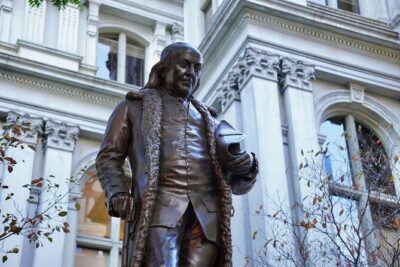
At the Old State House, you get the Revolution’s darker turn, the Boston Massacre, and its legacy. The site is presented through the idea of a “leading museum,” located near the adjacent intersection, but again the tour visit is an exterior pause.
This works well because it forces you to learn the context before you go chasing details on your own. The guide helps you connect the event to the broader conflict, including how the Revolution’s messaging shaped public thinking.
Here is the consideration that matters most: because entry is not included, you might leave wanting more specific exhibit time. That is normal. The tour can leave you hungry for the indoor story, which is actually a good sign if you plan a return visit later.
Faneuil Hall Marketplace: speeches, markets, and power in one tight block

Faneuil Hall Marketplace is next, and it is a stop that rewards anyone who likes places that did double duty. It is described as a Revolutionary meeting space, a marketplace, and a British armory.
Even from the outside, that mix helps you understand how everyday commerce and political action were linked. Revolution did not happen only in speeches. It happened where people gathered to trade news, buy supplies, and move through the city.
This stop is also free to experience, at least for the exterior parts of your visit, which is a big reason the route stays good value. You do not have to add more tickets just to stand in front of a site that shaped the era.
Old North Church: lanterns, freedom, and the hard part of the story

The tour finishes at Old North Church & Historic Site area, where the famous lantern signal enters the conversation. You pause outside for the main explanation, and then the guide brings up one of the hardest lessons of the period, the paradox of freedom and bondage.
That focus is not an afterthought. It is part of how the tour aims to build critical thinking and active citizenship, whether you are traveling with kids or you are an adult who thought you already knew the story. The guide uses the site’s symbolism and turns it into a question you can carry with you after the walk ends.
If you want to step inside the church itself, you need a separate private ticket. That lets you decide how much time and cost you want to spend in the indoor museum space.
Price and logistics: where the $75 really goes
Let’s talk about the price in practical terms.
For $75 per person, you get a private guide, a structured walk that hits major Boston Revolutionary touchpoints, and interpretation that aims to be inclusive and relevant. You also avoid the common pain of trying to coordinate multiple sights yourself, which often costs time and mental energy.
The average booking window is about 32 days in advance, which tells you the guide time is in demand. If you are traveling in peak season or you have limited days, booking earlier is smart.
The tour runs about 1 hour 30 minutes to 2 hours, which fits well between a morning museum and an evening meal. It also helps if you are trying to balance “must-see” history with time for neighborhoods, the waterfront, and local food.
The biggest logistics factor is tickets. Several major interiors are not included, so you should decide ahead of time which ones you care enough about to pay for. The tour keeps the exterior components covered, so you can still get a lot even if you do not add additional admissions.
What I appreciate most about the guide style
This tour’s success depends on the guide. The information here is described as brand new research on iconic figures and places, and the story is designed to be diverse and inclusive for modern audiences.
One named guide, Adam, has been praised for dressing in historical military style and using humor that makes the walk feel light without making it shallow. That matters because Revolutionary history can get heavy fast. If the guide keeps it grounded and clear, you remember more and you feel less like you are studying.
You also get a guide who can personalize. The format is built for you to bring interests and needs, then have the walk follow those threads. If you care more about civic life than battle tactics, or more about social impact than political speeches, this is where the private element pays off.
Bathrooms, comfort, and where the day goes next
One included perk is small but real: the guide knows where the cleanest bathrooms are in the city. On a walk like this, that matters more than you think, especially if you are layering on other stops afterward.
As for comfort, the route is walking-based with multiple short exterior pauses. Good weather is part of the deal. If skies look iffy, bring a light layer, water, and something rain-ready.
The tour ends near Haymarket, at 100 Hanover St, with the end point customizable depending on your interests and logistics. That is useful if you have a restaurant booked on a specific corner or you want to transition quickly toward public transit.
Who should book this Revolutionary Boston private tour
I think this tour is a strong match if you want:
- a guide-led version of Boston’s Revolutionary story that is tailored, not one-size-fits-all
- context that connects to civic questions in the 21st century
- a tight route that still leaves room to choose which interiors you want
It is also a good fit for people who enjoy “meaning” over memorization. The stops are famous, but the framing aims to give you questions to think about, like how freedom gets argued, who gets remembered, and how political action forms in ordinary places.
Should you book this private Revolutionary Boston walking tour?
Book it if you want major Revolutionary landmarks with real explanation, and you like the idea of a private guide who can adjust to what you care about. The value is strongest when you plan to keep most stops exterior and add interiors only where you feel it will pay off.
Skip or rethink if you already plan to spend a full day inside museums and churches and you hate walking between points. Because several sites require separate admissions for entry, you might end up paying extra anyway, and you may prefer a museum-centered itinerary instead.
If you want history that feels made for your questions, not just your calendar, this is the kind of Boston tour that tends to leave people talking on the walk home.
FAQ
How much does the Private Authentic Revolutionary Boston Walking Tour cost?
It costs $75.00 per person.
How long is the tour?
The tour lasts about 1 hour 30 minutes to 2 hours.
Where does the tour start and end?
The tour starts at Boston Common Visitors Center, 139 Tremont St, Boston, MA 02111. It ends at Haymarket, 100 Hanover St, Boston, MA 02108, and the end point can be customized with private bookings.
Is this tour private?
Yes. This is a private tour/activity, and only your group participates.
What tickets are included, and what needs separate admission?
You get exterior visits at several stops. Separate admission tickets are required for Kings Chapel, Old South Meeting House, Old State House, and Old North Church & Historic Site if you want to enter those private museum or church spaces.
Do I get a mobile ticket?
Yes. The tour uses a mobile ticket.
Are service animals allowed?
Yes. Service animals are allowed.
What if the weather is poor?
The experience requires good weather. If it is canceled due to poor weather, you are offered a different date or a full refund.
Written up lately around the harbor
- Boston’s Beacon Hill: Private Walking Tour
★ 5.0 · 1 review - Boston’s Chinatown: Small Group Walking Tour
★ 5.0 · 1 review - Self-Guided Scavenger Hunt: Boston Back Bay & Beyond
★ 4.0 · 1 review - Flynn Cruise Port Boston to Boston hotels – Arrival Private Transfer
★ 5.0 · 1 review - Boston to Woods Hole & Martha’s Vineyard Ferry Private Chauffeur Service
★ 4.0 · 1 review - Classic Martha’s Vineyard 1-Day Escape from Boston
★ 5.0 · 1 review - Private Vacation Photoshoot with Photographer in Boston
★ 5.0 · 1 review
Walking Tours, compared.

History and Hauntings of Salem Guided Walking Tour
Read our review →
Freedom Trail History Small Group Walking Tour
Read our review →
Harvard University Student-Guided Walking Tour
Read our review →
Harvard University Campus Guided Walking Tour
Read our review →
Boston Freedom Trail Walking Tour with Costumed Guide
Read our review →
The Full Revolutionary Story Epic Small Group Boston Walking Tour
Read our review →

Browse the lists this tour appears in