
Reviewed · FREEDOM TRAIL TOURS
Boston: Freedom Trail Guided Walking Tour in French
Boston tells its revolution story on foot. This French-guided Freedom Trail walk turns downtown Boston into a living timeline, with a small group of up to 15 that keeps the pace human. Starting at Boston Common and ending in the North End, you see the key sites and hear stories that connect Mayflower-era beginnings to the American Revolution.
I especially like how the guide, Maria, makes the history feel close and clear in French, even when the route gets busy. One possible drawback: it is a walking tour with lots of photo stops and outdoor viewing, so if you want museum time, you’ll need to plan that separately.
In This Review
- Key things I liked most
- Entering Boston Common: the start point that makes the whole day easier
- Meeting and hearing Maria clearly, even in crowds
- Boston Common, Massachusetts State House photos, and why the geography matters
- Old South Meeting House, Old State House, and the Revolution story in plain language
- Faneuil Hall and the places where crowds turned into decisions
- Granary Cemetery, King’s Chapel, and the human side of the founders
- Copp’s Hill Cemetery, Old North Church, and the endgame toward North End views
- The full Freedom Trail blend: 16 sites plus sculptures and memorials
- Timing, stamina, and practical tips for a 150-minute walk
- Price value: $45 for a guided Freedom Trail you can actually follow
- Who this tour suits best, and who might want a different plan
- Should you book this French guided Freedom Trail walk?
- FAQ
- What language is the tour in?
- How long is the walking tour?
- How much does the tour cost?
- Where do I meet the guide?
- Where does the tour end?
- Is the tour wheelchair accessible?
- How many people are in the group?
- Does the tour include museum visits?
- Can I reserve and pay later, and is there free cancellation?
Key things I liked most
- French language experience with a pro local guide, led by Maria for original, street-level storytelling
- Clear listening with an earphone, so you can actually catch every detail while walking
- Freedom Trail sites plus major Boston landmarks, including Granary Cemetery, Old State House, and Old North Church
- Small-group feel (max 15), which makes questions and pacing easier
- North End ending right near Copp’s Hill Terrace, so you can roll into Italian food plans right after
Entering Boston Common: the start point that makes the whole day easier
Most Freedom Trail ideas start on paper, then fall apart when you are standing on a sidewalk trying to figure out where to go next. This tour solves that problem by beginning at Boston Common Visitors Center, right at the Freedom Trail starting area. Your guide meets you in the alley to the left of the Visitor Center entrance, holding a sign that says Gilded Age Tour. It is one of those details that sounds small, then saves you actual time and stress.
The first stretch is also a smart warm-up. You begin with a look at Boston Common itself, then the tour moves from big public space to specific revolutionary locations. That early flow helps you understand why Boston’s downtown layout matters, not just that the sites exist.
You are also walking for 150 minutes, so you want that first segment to feel like you are getting your bearings fast. Here, it does. Even if you arrive with only vague knowledge, the guide gives you a mental map that keeps you oriented.
More ways along the Freedom Trail:
- Boston: Freedom Trail History Small Group Walking Tour★ 5.0 · 6,450 reviews
- Boston Freedom Trail Walking Tour with Costumed Guide★ 4.5 · 2,531 reviews
- Boston Food & History: Pizza, North End & Freedom Trail★ 5.0 · 1,772 reviews
Meeting and hearing Maria clearly, even in crowds
One of the most practical perks is audio. In my experience, outdoor tours fail when you end up straining to hear. Here, you are given an earphone so you can listen to your guide clearly as you move. That matters on busy streets, near photo-stop clusters, and anywhere you might be half behind someone else.
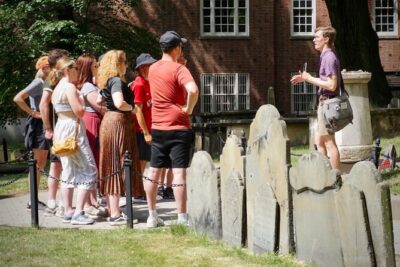
Maria is also easy to follow in French, and that is a big deal if you want history explained without turning it into a scavenger hunt. The reviews highlight her friendly, adaptable style too, including when she adjusted her approach for very young children. If your group includes kids, that flexibility can make the difference between a stressful outing and a successful one.
Logistically, the meeting spot is straightforward, and the tour ends in the North End. That means you can keep your day moving instead of backtracking across the city to reach a meal or a next stop.
Boston Common, Massachusetts State House photos, and why the geography matters
After the start at Boston Common, you begin building the story from the ground up. The Massachusetts State House gets a photo stop early on, which is useful because it sets a theme: Boston has always been a city that organizes power in visible places. Even before the revolutionary era gets intense, you’re being shown how government, streets, and landmark architecture connect.
You’ll then move toward sites tied to political speech and decision-making. That is the key shift on this walk. You are not just collecting dates, you are learning how Boston worked as a place where ideas argued loudly, then hardened into action.
Photo stops are short, but that is also part of the value. You can get the picture without losing the narrative momentum. If you prefer to linger, you’ll still have chances later, especially when you reach the North End and Copp’s Hill area.
Old South Meeting House, Old State House, and the Revolution story in plain language
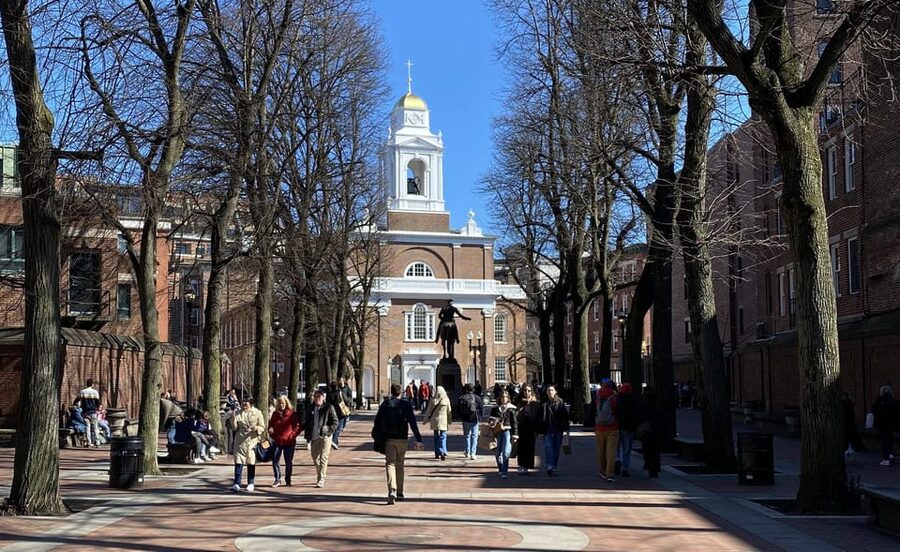
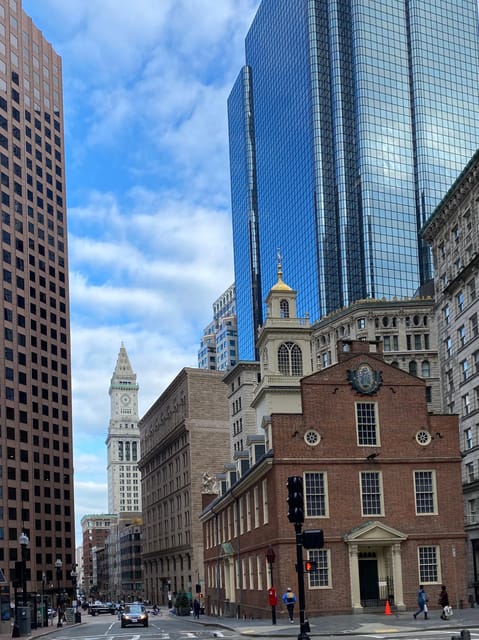
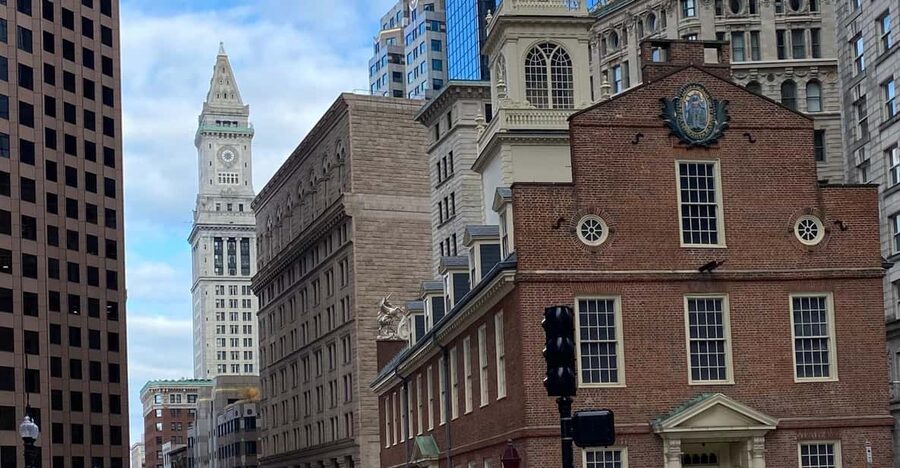
This is where the tour earns its keep. The Old South Meeting House photo stop puts you near one of the most dramatic arenas for the pre-Revolution period. Right after that, you visit the Old State House area, another cornerstone location for understanding how Boston’s political life unfolded.
What makes these stops click is that the guide connects what happened there to how Boston’s revolution energy spread. You hear about the city’s founding, the early pilgrims’ world, and how Boston shaped the American Revolution. The storytelling also touches construction and architecture, so you understand the sites as physical objects in a living city, not just icons on a map.
One smart element of this tour is how it balances big events with specific figures. You’ll encounter the statue of Benjamin Franklin and learn the kinds of roles people played that go beyond what you remember from school. You also get context on themes like abolition and American education, plus immigration and even contemporary daily life. It is not only a past-perfect history lesson. It’s a Boston that keeps evolving.
The drawback to keep in mind is pacing. This is 150 minutes total, and the stops are designed to cover a lot of ground, including many key sites. If you want a slow, museum-style experience where every location gets half an hour, you might feel the time pressure. If you want a strong overview and a clear next-step plan for your own exploring, this works well.
Faneuil Hall and the places where crowds turned into decisions
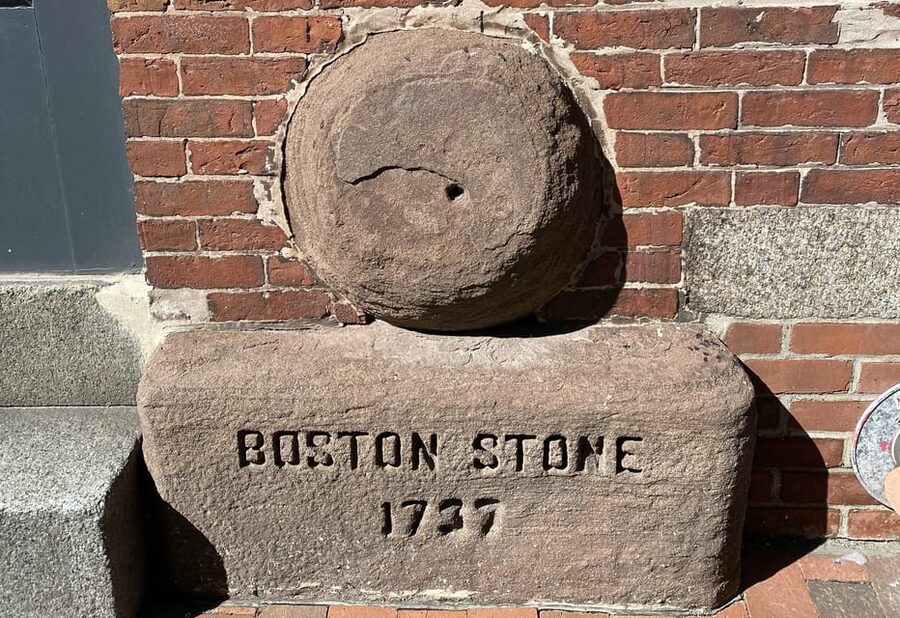
Faneuil Hall is a must on the Freedom Trail, and the tour treats it as more than a photo opportunity. It’s a reminder that Boston’s revolutionary energy did not come from a single meeting. It came from repeated, public pressure where arguments met crowds in real time.
From here, the tour continues toward major stop points tied to the Revolution, including sites connected to the Boston Massacre and the broader arc of resistance. You also pass through areas linked to local commerce and everyday life, like the Old Oyster House restaurant and the Haymarket area. That matters because it prevents Boston history from turning into a sealed display case.
In practical terms, these stops are great for first-timers. You see how the Freedom Trail threads through the city center where real people still shop, work, and eat. You get the vibe of Boston as an open-air museum, not a trapped experience.
More of Boston crossed at walking pace:

Granary Cemetery, King’s Chapel, and the human side of the founders
Some of the most memorable stops are the ones that feel quieter than the headline buildings. You’ll learn about Granary Cemetery and see the kind of historical weight that settles into a place over centuries. The Freedom Trail often gets marketed as dramatic speeches and marching stories. But Boston also has a darker, more reflective side, and this tour includes that.
You’ll also encounter King’s Chapel and the statue of Benjamin Franklin, along with sites tied to education and early American intellectual life, including the Latin School and the Old Corner Bookstore. Even if you don’t know those names yet, the guide’s explanations help you see them as part of the same ecosystem: learning, writing, and public debate.
This is also where the guide’s tone helps. The route includes themes like abolition, so you are not stuck with only celebratory revolutionary myths. You hear about complicated forces shaping the city and the country, including the tension between ideals and reality.
Copp’s Hill Cemetery, Old North Church, and the endgame toward North End views
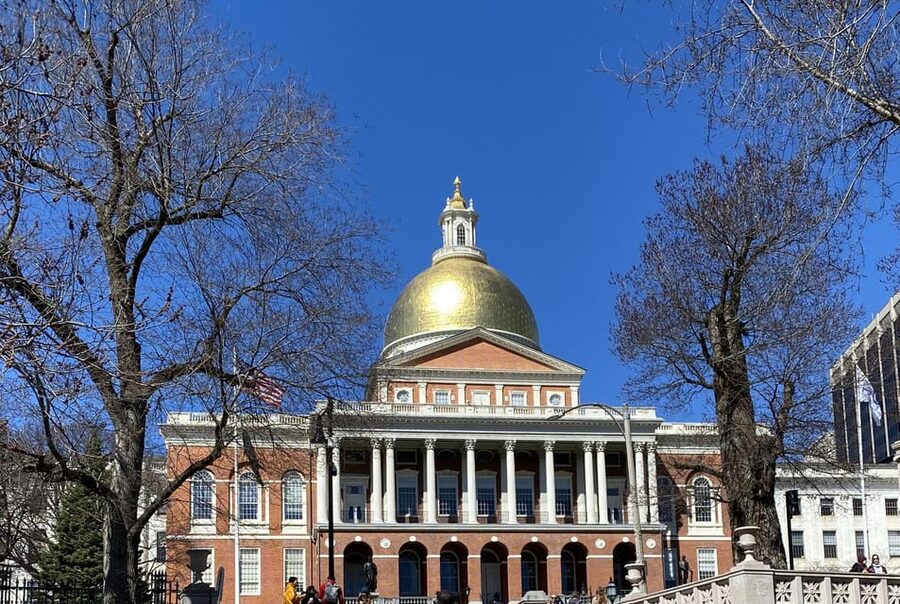
As the walk pushes into the North End, you start to feel the transition from formal landmarks to neighborhood texture. The tour ends at Copp’s Hill Terrace, a short walk from Old North Church and close to a cluster of Italian restaurants. That ending location is smart because it lets you convert history into a plan. You can keep strolling right into dinner without needing transportation.
Old North Church is one of the emotional peaks of the Freedom Trail, tied to famous communication stories during the Revolution era. Even with just a photo stop, being there at the right point in the route helps. Earlier stops build your background, and later stops give you the drama with context.
At Copp’s Hill, you also get the sense of how Boston’s hills and streets affect what you see and where you can stand. Copp’s Hill Cemetery and the terrace viewpoint area make it easier to take a breath, get photos, and appreciate that this is still a working city with changing views around you.
The full Freedom Trail blend: 16 sites plus sculptures and memorials
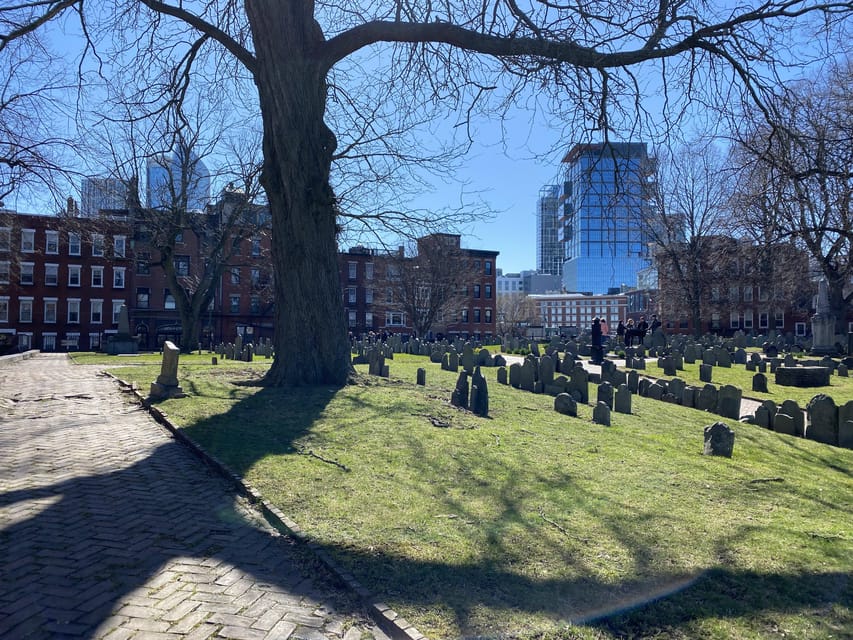
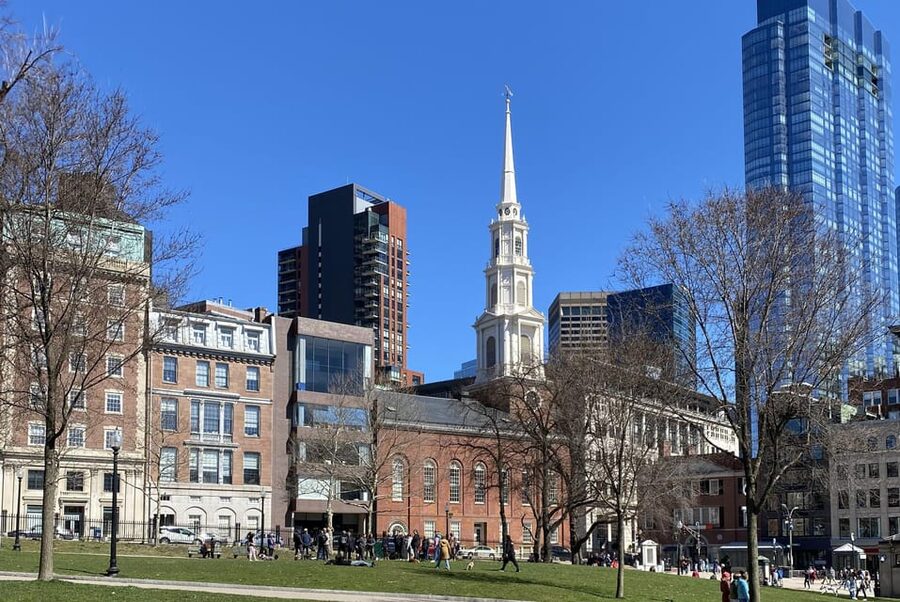
One of the headline promises is that you will cover the 16 emblematic Freedom Trail sites. The best way to think about that is not as a checklist, but as a linked story moving from founding to revolution to modern Boston. As you walk, you’ll see major anchors including Park Street Church, Granary Cemetery, Old Corner Bookstore, Old South Meeting House, Old State House, the Boston Massacre site, Faneuil Hall, and Paul Revere’s house and Equestrian Statue. You’ll also encounter USS Constitution and the Bunker Hill Monument as part of the broader Freedom Trail sweep.
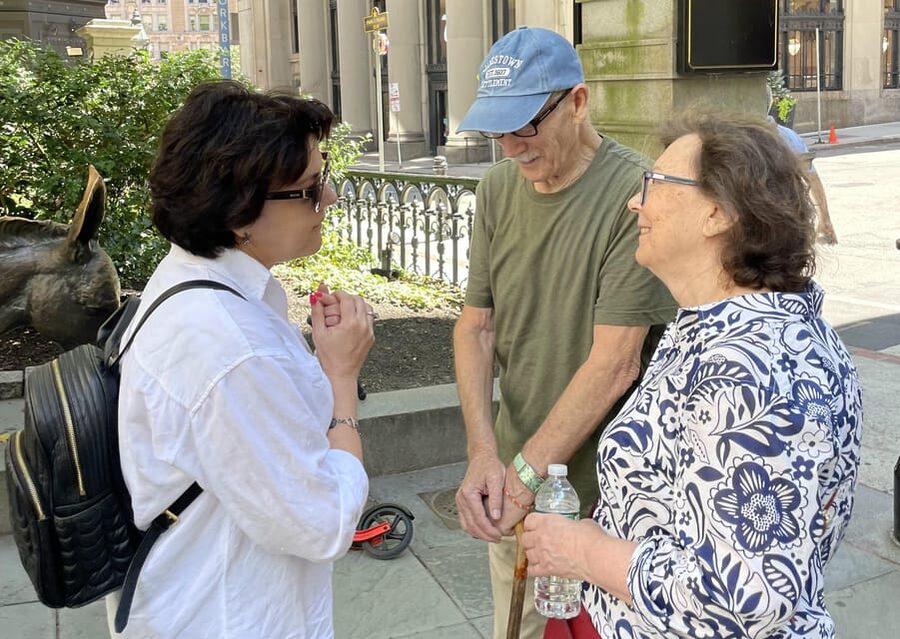
The tour also includes modern Boston elements that add emotional weight and show how memory evolves in the city. You may encounter the Holocaust Memorial, plus sculptures like The Embrace dedicated to Martin Luther King and A Donkey, acquired from Italy. Those stops matter because they remind you that history in Boston is not only old plaques. It is ongoing public remembrance.
You will also notice how the guide weaves in daily life. That includes references to neighborhoods and the way Boston has grown, with themes like immigration and education. If you are the type who likes to understand the city as it is today, those side threads make the walk feel more like a conversation than a lecture.
Timing, stamina, and practical tips for a 150-minute walk
With 150 minutes, you get enough time to cover a lot without feeling like you are trapped on a bus. The trade-off is stamina. This route is walking-heavy and includes many outdoor stops, so comfortable shoes matter.
I’d plan to dress for the weather you expect on the day you book. Even with breaks at photo stops, you are outside most of the time. Bring water if you know you get thirsty during long walks. If you get sensitive to sun or wind, a hat and a light layer can help.
Also, because you cover many stops, you’ll likely want to choose one or two locations for extra photos and a longer look. The guide keeps you moving, so if you try to stop for every angle, you can slow the group and lose the flow. A good tactic is to pick your photo priorities, then let the rest be about the story.
Group size helps here. With a maximum of 15 people, you tend to avoid the worst slowdowns that large groups create. You’ll still share space with other pedestrians, but the pacing feels more controlled.
Price value: $45 for a guided Freedom Trail you can actually follow
At $45 per person, this is not a bargain-tour price, but it also isn’t inflated for what you get. You are paying for three big value drivers:
First, you get a French-speaking professional local guide who delivers the story in a way that connects sites to themes like revolution, abolition, immigration, and education. That takes real work to explain well, especially on foot.
Second, you get small-group management plus an earphone system. That combination makes it easier to benefit from the guide, not just walk past landmarks.
Third, the tour covers a lot of major stops, including the 16 emblematic Freedom Trail sites and multiple additional Boston landmarks. If you tried to do this on your own, you would spend extra time figuring out what matters, where to stand for photos, and how all the sites connect.
If your goal is an efficient, first-time orientation of downtown Boston, this price feels fair. If you only care about one or two sites and hate guided pacing, you might decide to do a self-guided Freedom Trail route instead. But if you want the story handed to you in French with clear listening, you get good value for the money.
Who this tour suits best, and who might want a different plan
This tour is a strong fit if you are:
- Visiting Boston for the first time and want a structured path through the Freedom Trail
- Looking for a French language history experience without translation gaps
- Interested in learning how Boston’s political life connects to founding, revolution, and later themes like abolition and immigration
- Traveling with a group where kids might need patience and flexibility, since Maria is reported to adapt well
You might consider a different approach if:
- You want museum entry time and long indoor stops, because museum visits are not included
- You prefer a slow pace with lots of free time at each site, since you’re covering many locations in 150 minutes
Either way, you’ll finish in a great location. Ending near Old North Church and Copp’s Hill Terrace puts you in the North End, one of the best places in Boston for a post-tour meal.
Should you book this French guided Freedom Trail walk?
Book it if you want a guided Boston overview you can follow in French, with an easy meeting point at Boston Common and a finish in the North End. I’d especially recommend it if you like stories that connect people, events, and street-level details, and if hearing the guide clearly matters to you.
Skip it only if you expect museums included, or if you truly want a slow, lingering day at just a couple of sites. For everyone else, this is one of the cleanest ways to experience downtown Boston as a real open-air timeline.
FAQ
What language is the tour in?
The tour is conducted in French.
How long is the walking tour?
The duration is 150 minutes.
How much does the tour cost?
The price is $45 per person.
Where do I meet the guide?
Meet at the alley to the left of the entrance to the Boston Common Visitors Center (Freedom Trail Starting Point). The guide will be holding a sign that says Gilded Age Tour.
Where does the tour end?
The tour ends at Copp’s Hill Terrace, steps away from Old North Church in the North End neighborhood.
Is the tour wheelchair accessible?
Yes, the tour is wheelchair accessible.
How many people are in the group?
It is a small-group experience with a maximum of 15 people.
Does the tour include museum visits?
No, museum visits are not included.
Can I reserve and pay later, and is there free cancellation?
You can reserve now and pay later, and you can cancel up to 24 hours in advance for a full refund.
Written up lately around the harbor
- Boston’s Beacon Hill: Private Walking Tour
★ 5.0 · 1 review - Boston’s Chinatown: Small Group Walking Tour
★ 5.0 · 1 review - Self-Guided Scavenger Hunt: Boston Back Bay & Beyond
★ 4.0 · 1 review - Flynn Cruise Port Boston to Boston hotels – Arrival Private Transfer
★ 5.0 · 1 review - Boston to Woods Hole & Martha’s Vineyard Ferry Private Chauffeur Service
★ 4.0 · 1 review - Classic Martha’s Vineyard 1-Day Escape from Boston
★ 5.0 · 1 review - Private Vacation Photoshoot with Photographer in Boston
★ 5.0 · 1 review
Freedom Trail Tours, compared.
Freedom Trail History Small Group Walking Tour
Read our review →
Boston Freedom Trail Walking Tour with Costumed Guide
Read our review →
Boston Food & History: Pizza, North End & Freedom Trail
Read our review →
Boston’s Freedom Trail: A Revolutionary Walking Tour
Read our review →Freedom Trail History Small Group Walking Tour
Read our review →Boston’s Freedom Trail: A Revolutionary Walking Tour
Read our review →

Boston Freedom Trail History Pub Crawl Small-Group Tour
Read our review →Browse the lists this tour appears in