
Reviewed · FREEDOM TRAIL TOURS
Boston Walking Tour of The Freedom Trail, Small Group
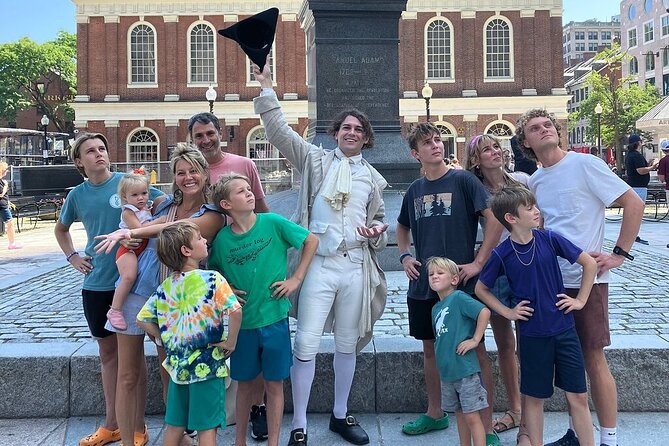
Boston history can feel like a textbook. This tour turns it into street-level storytelling, with stops that keep the pace easy and the details clear. I especially like the microphone system, and the guide also poses for photos while you’re on the move.
You’ll walk a focused loop from Boston Common to Faneuil Hall Marketplace, learning the why behind famous Revolutionary stops like the Old South Meeting House and the Boston Massacre site. One thing to consider: if you prefer very slow, low-energy narration, the guide’s style can feel fast and packed with facts, and one participant found the talk harder to follow at points.
In This Review
- Key things to know before you go
- Freedom Trail, but with a real guide in your ear
- Meetup at Boston Common, then straight onto the story
- Boston Common and the Massachusetts State House: start with power and place
- Park Street Church to Granary Burying Ground: why memory matters
- Benjamin Franklin statue and the Boston Latin school connection
- Old South Meeting House: where the Tea Party planning energy shows up
- Boston Massacre site and Old State House: the argument gets physical
- Faneuil Hall Marketplace: wrap up at the best practical finish
- Price and value: $32 for a tight, guided circuit
- Who should book this, and who should not
- Practical tips so your walk feels smooth
- Should you book the Boston Freedom Trail small-group walking tour?
- FAQ
- Where does the tour start?
- Where does the tour end?
- What time does the tour start?
- How long is the tour?
- What language is the tour offered in?
- Will I be able to hear the guide clearly?
- Do I get a mobile ticket?
- How many people are in the group?
- What is the cancellation policy if weather changes?
- Are service animals allowed?
Key things to know before you go
- Mic support so you can hear the guide even on a windy sidewalk
- Captain Pickles style storytelling that mixes humor with timeline clarity
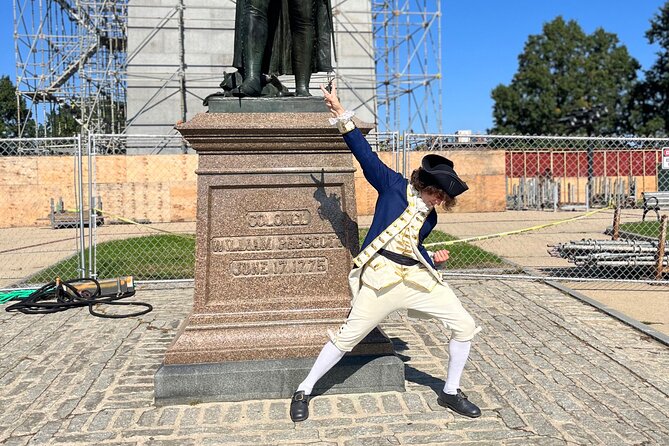
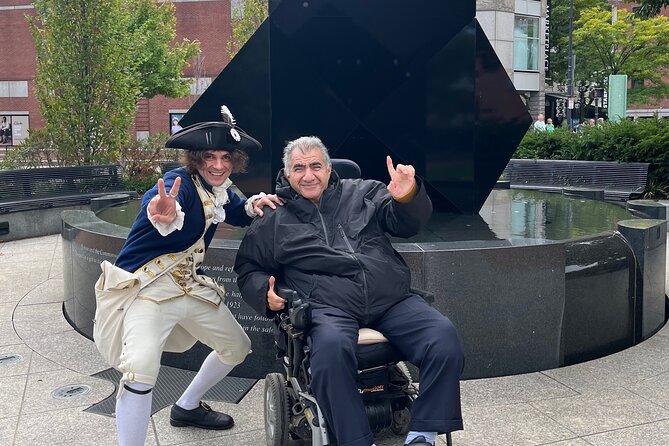
- Photo-friendly guide who will stop and pose as you explore
- Free admission stops listed along the route, so you are paying for the experience, not entry fees
- Finish with convenience at Faneuil Hall Marketplace, with bathrooms and food nearby
- Small-group cap of 40 gives you more of that group energy without feeling lost
Freedom Trail, but with a real guide in your ear
The Freedom Trail is one of those Boston things you can do on your own. Still, the value of this tour is the way it helps you read the city while you walk.
You get a tight route, held together by context. Instead of just seeing plaques, you connect landmarks to the people and decisions that mattered. That is the difference between standing in front of a building and understanding why it matters in the American story. And because the guide uses a microphone system, you are not playing catch-up when the street noise and winter gusts kick in.
This tour also has a friendly social vibe. You’ll be walking next to other history-lovers, and you can chat as you pause at each stop. It is not a stiff lecture. It is a group experience that still feels personal because the pace is designed for people to keep up.
One more practical win: the route is short enough to stay enjoyable even if you are not a marathon walker. Multiple comments mentioned an easy walk and a slow pace, which helps if you are traveling with kids or want a calmer sightseeing rhythm.
More ways along the Freedom Trail:
- Boston: Freedom Trail History Small Group Walking Tour★ 5.0 · 6,450 reviews
- Boston Freedom Trail Walking Tour with Costumed Guide★ 4.5 · 2,531 reviews
- Boston Food & History: Pizza, North End & Freedom Trail★ 5.0 · 1,772 reviews
Meetup at Boston Common, then straight onto the story
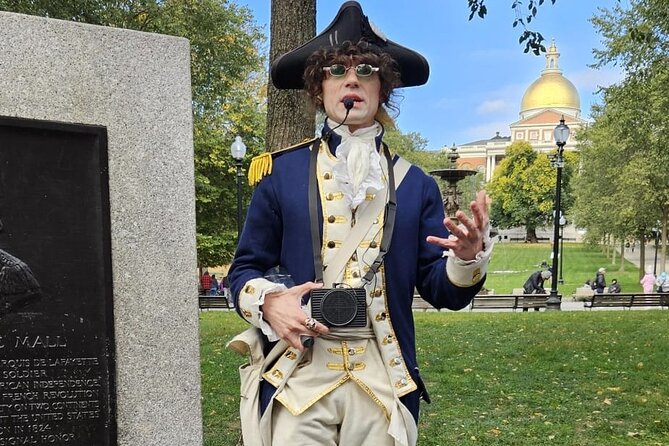
The tour starts at the Lafayette Mall Monument at Boston Common, right around Tremont St. You do not need to hunt around for remote locations. The meetup point is central and easy to spot, which matters when you are on vacation and not trying to win a scavenger hunt.
Start time is 11:30 am, and the tour runs for about 1 hour 15 minutes. Some people described it as roughly 1.5 hours, which matches the overall timing. That length is ideal if you want Revolutionary history without losing half your day.
You also get a mobile ticket, and confirmation comes at booking time. That is useful because it keeps you from juggling printouts while you’re out in the cold or rain.
If you are wondering whether this is a “big group” tour, the key detail is the max size: up to 40 travelers. For a walking tour, that is big enough to meet people, but not so massive that the group constantly splinters at each stop.
Boston Common and the Massachusetts State House: start with power and place
Your first stop is Boston Common, the oldest city park in the United States. Even if you’ve seen pictures, there’s something grounding about starting with a public space. It sets the tone. This was never just about monuments. It was about people living, gathering, and arguing in real places.
Then you head to the Massachusetts State House area, where the guide points out the seat of government for the Commonwealth of Massachusetts, and the historical connection to John Hancock’s home. This is where a guided approach pays off. You can look at a building and still miss the layers of political meaning. With a good guide, the site becomes a turning point, not a background detail.
Because it’s a walking tour, you only spend a few minutes at each stop, so it helps to come ready to absorb small chunks fast. If you like to take your time, plan to arrive with energy. Once you’re in motion, the tour is designed for flow.
Park Street Church to Granary Burying Ground: why memory matters
Next up is Park Street Church, founded in 1809 and described as both historic and active. This stop connects religion and civic life, which is important in early American history. It also gives you a break from pure politics and brings in community identity.
Then the tour moves to Granary Burying Ground, where you’ll stop near the final resting places of figures like James Otis, Paul Revere, and Samuel Adams, among others. This is one of the more emotional stops on the trail. You are looking at where people ended up, not just where they talked or marched. A guide helps you connect names to events, and that connection is what turns “famous names” into real storylines.
One extra layer is that the route includes a note about an early graveyard tied to the Freedom Trail, described as established in 1630 and as the oldest graveyard in the city. Even if you do not catch every detail on the first listen, the point is the same: this is a part of Boston that preserves memory very intentionally.
Practical note: cemetery stops can feel quieter and colder, especially in winter. Dress for the weather and give yourself a second to look around before you move on.
Benjamin Franklin statue and the Boston Latin school connection
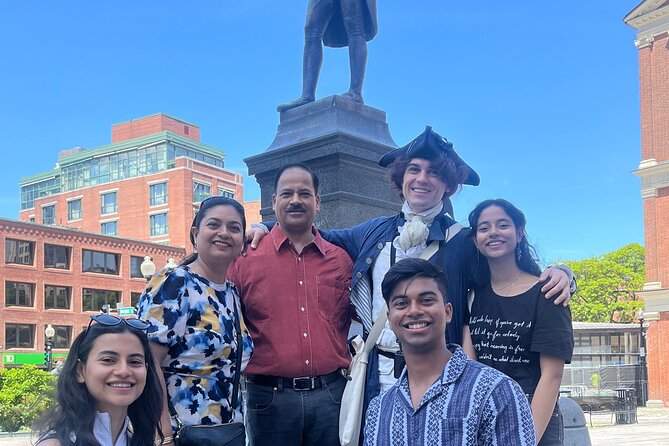
As you continue, you reach the Statue of Benjamin Franklin area. The tour also connects the surrounding site to Boston Latin School, described as currently where the Old City Hall is at.
This is the kind of stop that can feel a little random if you’re doing the trail alone. With a guide, you understand why the location matters. Franklin is a shortcut to a whole set of ideas about education, civic leadership, and practical thinking in the colonial period.
In the comments, the guide’s storytelling style stood out, including the lively energy and humor. People described Captain Pickles as entertaining, engaging, and the sort of person who makes you want to keep listening. That energy matters here, because this is a stop where the guide turns a statue-and-street-corner moment into a mini lesson.
More of Boston crossed at walking pace:


Old South Meeting House: where the Tea Party planning energy shows up
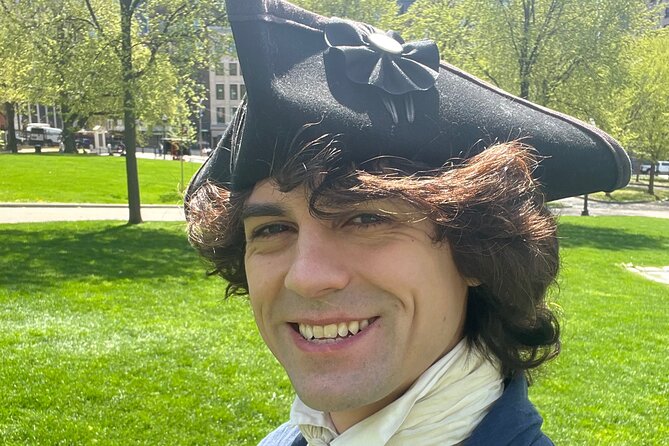
The next major highlight is the Old South Meeting House, built in 1729. Here the guide zeroes in on why this place is famous: it became an organizing point for the Boston Tea Party on December 16, 1773.
This is one of those trail stops where the building itself feels like evidence. A guided explanation helps you visualize the meeting, the tension, and the stakes. It is not just “this happened here.” It’s “this place mattered because of how people used it.”
Also, this is a stop where you can pause and just look at the scale and setting. Even with short timing, the guide’s context gives your brain something to latch onto. Without that, the Tea Party can become a blur of dates and outcomes.
If you are traveling with kids, this stop is often the sweet spot because it’s dramatic, easy to describe, and naturally story-shaped. Even in colder conditions, it’s the kind of moment that can keep people engaged long enough to forget they are shivering.
Boston Massacre site and Old State House: the argument gets physical

After that, you walk to the Boston Massacre Site, located outside of the Old State House. The tour then spends time at the Old State House, described as built in 1713.
This section is where the Freedom Trail shifts from protests and organizing to consequences and confrontation. The Boston Massacre stop helps you understand how the story of revolution was not only about grand plans, but about flashpoints that escalated.
Old State House is also a good reminder that history often lives in plain sight. This isn’t a remote museum. It is a real structure in a real city, and that can surprise people who expected everything to feel like preserved replicas.
If you’re the kind of traveler who likes timelines, this part helps. The guide’s job is to keep you oriented, and the microphone support helps a lot here, since you might be focusing on both the street layout and the story at the same time.
One consideration from feedback: a small number of participants found parts of the narration a bit disjointed or hard to follow. The tour is still structured, but you might get the most out of it if you stay close to the guide, listen for the storyline thread, and do not tune out when you think you already know the headline.
Faneuil Hall Marketplace: wrap up at the best practical finish
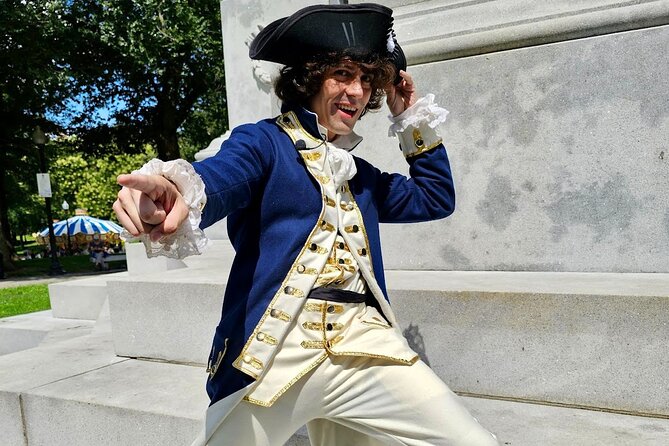
You end at Faneuil Hall Marketplace, specifically by the statue of Samuel Adams. This is a smart ending choice because it is not just scenic. It is useful.
The marketplace area includes bathrooms, local food, and a free museum nearby. So after a history-heavy walk, you can reset without scrambling across town for basics. It also makes it easier to extend your day. You can grab a snack, wander a bit, and keep the momentum going.
The overall rhythm feels like a complete arc: civic beginnings, graveyard memory, Revolutionary triggers, confrontation, and then a public marketplace where you can keep experiencing Boston at street level.
Price and value: $32 for a tight, guided circuit
At $32 per person, this is not a budget tour, but it also isn’t the kind of price that feels risky for short experiences. The best way to judge value is what you receive for that cost.
You get:
- A guided walk with a microphone system
- A focused route across key trail sites
- Multiple stops described as free admission in the tour structure
- A guide who is photo-friendly and keeps the group entertained
The duration is short enough that you don’t feel like you bought a half-day. And since it is booked about 10 days in advance on average, it suggests the tour is fairly in demand. That matters because you can plan without last-minute stress.
Also, the guide name shows up repeatedly in comments as a major part of the appeal. People highlighted Captain Pickles for being funny, energetic, and deeply invested in telling the story in a way that sticks. If you enjoy guides who bring events to life instead of reading off facts, you’re paying for that human element.
Who should book this, and who should not
This tour is a strong fit if you want:
- A guided Freedom Trail that focuses on story and context, not just photos
- An easy pace that works for mixed groups, including families
- A guide who engages, jokes, and helps you hear the explanation clearly
It can be less ideal if:
- You dislike tours with lots of spoken facts packed into a short time window
- You need very slow pacing with extra repetition. One participant did note that the pacing of the speech could be hard to keep up with when excited, while another found the talk a bit disjointed. Most people still loved the experience, but your preferences matter.
If you’re new to Boston and you want the trail to make sense fast, this is exactly the kind of tour that helps you get your bearings fast.
Practical tips so your walk feels smooth
A few small choices can make a big difference on this kind of route.
Wear comfortable shoes. The trail is mostly sidewalks and streets, and you will cover multiple stops in a single loop. Even with an easy pace, it adds up.
Check the weather. The experience requires good weather, and there are clear hints from comments that cold days happen. Dress in layers so you can step out, listen, and not fight the wind.
If you want the photos the guide offers, plan to stay close enough to be included. The guide will pose, but you’ll have to be part of the group rhythm.
Finally, think of this as a narrative tour. If you only skim the stops, you might miss the big connections the guide is making between people, places, and outcomes.
Should you book the Boston Freedom Trail small-group walking tour?
If you want Revolutionary-era Boston explained in a way that feels human, this is an easy yes. The combo of a microphone system, a story-driven guide like Captain Pickles, and a short 1 hour 15 minute format is a winning mix for most first-timers.
I’d book it if you:
- Plan to visit Boston on a trip where you want high value per hour
- Prefer walking tours that feel friendly and social
- Want the Freedom Trail to feel like a connected story, not a scavenger list
I would skip it if you:
- Struggle with fast narration or prefer deeper time at fewer sites
- Need a strictly quiet, slow museum pace rather than a lively group walk
If the weather looks decent and you’re okay with a busy city sidewalk, you’ll likely come away understanding more than you remember from school-era timelines.
FAQ
Where does the tour start?
The tour starts at the Lafayette Mall Monument at Boston Common, Tremont St, Boston, MA 02110, USA.
Where does the tour end?
The tour ends at Faneuil Hall Marketplace, near the Samuel Adams statue, in Boston, MA 02109.
What time does the tour start?
The start time is 11:30 am.
How long is the tour?
The duration is approximately 1 hour 15 minutes.
What language is the tour offered in?
The tour is offered in English.
Will I be able to hear the guide clearly?
Yes. The guide uses a microphone system to help you hear them throughout the walk.
Do I get a mobile ticket?
Yes, the tour uses a mobile ticket.
How many people are in the group?
The tour has a maximum of 40 travelers.
What is the cancellation policy if weather changes?
You can cancel for free up to 24 hours in advance for a full refund. If the experience is canceled due to poor weather, you’ll be offered a different date or a full refund.
Are service animals allowed?
Yes. Service animals are allowed on this tour.
Written up lately around the harbor
- Boston’s Beacon Hill: Private Walking Tour
★ 5.0 · 1 review - Boston’s Chinatown: Small Group Walking Tour
★ 5.0 · 1 review - Self-Guided Scavenger Hunt: Boston Back Bay & Beyond
★ 4.0 · 1 review - Flynn Cruise Port Boston to Boston hotels – Arrival Private Transfer
★ 5.0 · 1 review - Boston to Woods Hole & Martha’s Vineyard Ferry Private Chauffeur Service
★ 4.0 · 1 review - Classic Martha’s Vineyard 1-Day Escape from Boston
★ 5.0 · 1 review - Private Vacation Photoshoot with Photographer in Boston
★ 5.0 · 1 review
Freedom Trail Tours, compared.
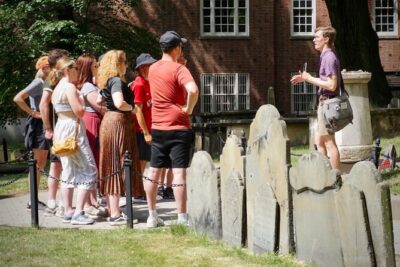
Freedom Trail History Small Group Walking Tour
Read our review →
Boston Freedom Trail Walking Tour with Costumed Guide
Read our review →
Boston Food & History: Pizza, North End & Freedom Trail
Read our review →
Boston’s Freedom Trail: A Revolutionary Walking Tour
Read our review →Freedom Trail History Small Group Walking Tour
Read our review →Boston’s Freedom Trail: A Revolutionary Walking Tour
Read our review →

Boston Freedom Trail History Pub Crawl Small-Group Tour
Read our review →Browse the lists this tour appears in