
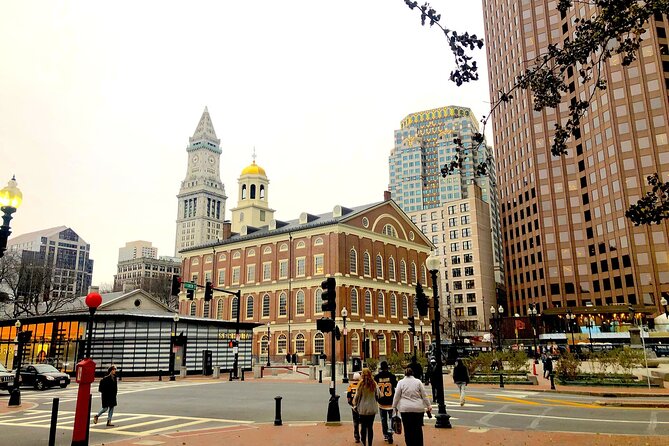
Reviewed · FREEDOM TRAIL TOURS
Boston’s revolutionary path: The Freedom trail tour
Boston’s revolution route is a great way to walk.
I like how this Freedom Trail tour turns major landmarks into a clear story, not a random grab-bag of stops. You’ll get Beacon Hill’s Federal-style charm and Boston Common’s old-school centerpiece all within a smart 150 minutes. One thing to consider is that it is not suitable for wheelchair users, since the route is a walking-focused experience.
With a small group capped at 10, you can ask questions without shouting. My guide, Steve, kept the facts flowing with history tidbits and jokes that actually helped the names and events stick. The one drawback? At this pace, you’ll want solid walking legs, since you’re on your feet through multiple historic districts.
In This Review
- Key things I’d note before you go
- Why the Freedom Trail hits differently with a local guide
- Beacon Hill: Federal-style rowhouses and gas-lit street vibes
- Boston Common: the oldest public park and a natural gathering point
- Massachusetts State House: what that gold dome communicates
- Park Street Church: abolitionist connections you can actually follow
- King’s Chapel Burying Ground: early religious and social clues
- Granary Burying Ground: where Paul Revere and others are laid to rest
- Old State House, Faneuil Hall, and the Cradle of Liberty story
- Quincy Market finish: a convenient place to keep exploring
- Price and value: is $45 worth 150 minutes?
- How to plan your walk: shoes, water, and quick weather sense
- Should you book Boston’s Revolutionary Path Freedom Trail tour?
- FAQ
- How long is the Freedom Trail tour?
- Where is the meeting point?
- What’s included in the tour price?
- Is the tour wheelchair accessible?
- What should I bring?
- Can I cancel and get a full refund?
Key things I’d note before you go
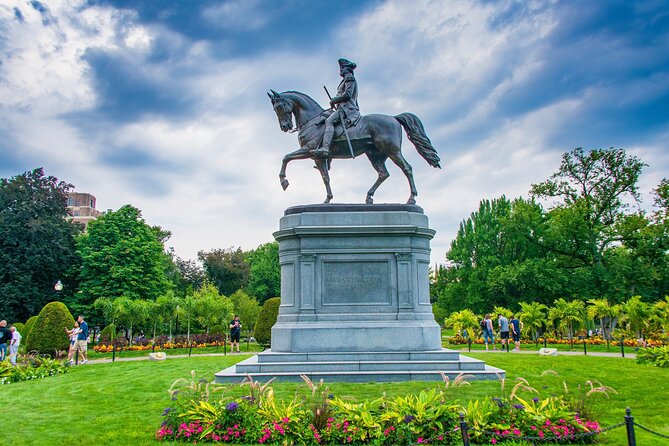
- Small group size (10 max) means you can stay oriented and talk with your guide.
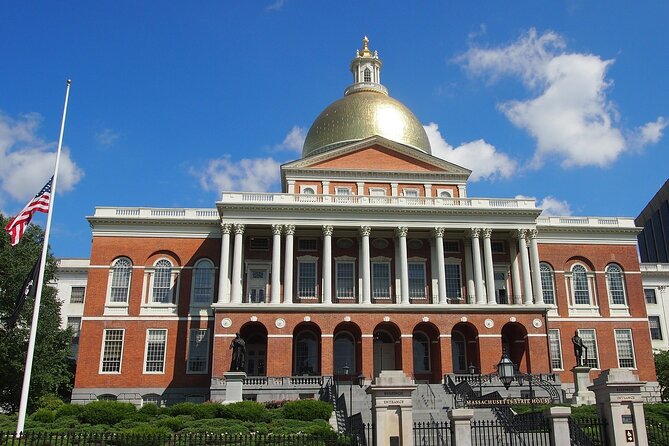
- Gold-domed Massachusetts State House is a top photo moment and a useful architectural stop.
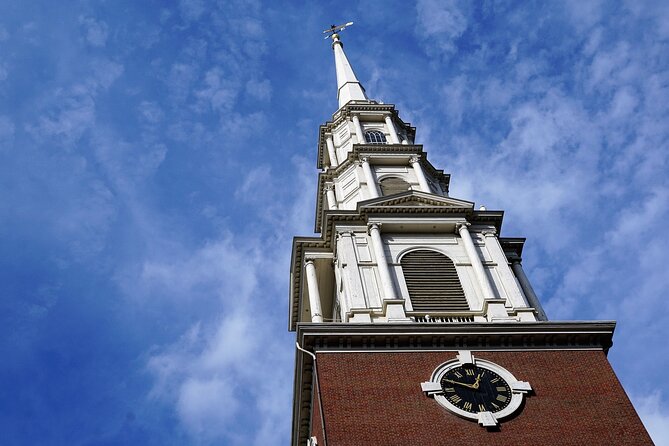
- Park Street Church connects directly to the abolitionist movement, not just early America in general.
- Granary Burying Ground lets you pay respects where major leaders are laid to rest.
- Faneuil Hall’s Cradle of Liberty framing helps you understand resistance planning, not just dates.
- Quincy Market finish gives you an easy place to grab food and keep exploring after the tour.
Why the Freedom Trail hits differently with a local guide
The Freedom Trail works best when you understand how each place fits the chain of events. This tour is designed for that. You’re guided along the route with stop-by-stop context, so you’re not just looking at buildings, you’re learning why they mattered when people were making decisions that changed everything.
I also like the pacing. You spend about 15 minutes at each main stop, which is enough time to see the key points, hear the stories, and still keep moving. That matters in Boston, where you can waste a lot of time just figuring out where to stand.
And because it is a small-group tour, the guide can adapt. If you’re curious about architecture, church history, or revolutionary leaders, you can usually steer the conversation a bit without derailing the whole walk. With Steve in particular, the tone is upbeat, the facts are specific, and the humor keeps it from feeling like a textbook.
More ways along the Freedom Trail:
- Boston: Freedom Trail History Small Group Walking Tour★ 5.0 · 6,450 reviews
- Boston Freedom Trail Walking Tour with Costumed Guide★ 4.5 · 2,531 reviews
- Boston Food & History: Pizza, North End & Freedom Trail★ 5.0 · 1,772 reviews
Beacon Hill: Federal-style rowhouses and gas-lit street vibes
You start in Beacon Hill, a neighborhood that instantly explains why Boston looked the way it did in the early days. Expect Federal-style rowhouses, classic streetscape character, and the kind of compact, walkable streets that make it easy to feel the city’s old layout.
This is also a smart opening stop because Beacon Hill sets the mood. Before you hit the big institutions, you get the lived-in, neighborhood scale first. You’re not jumping straight to monuments. You’re learning how the city’s geography and architecture shaped everyday life, and how that life fed into public debate later.
If you care about visuals, this is a strong early segment. The area is described as having scenic views, and the setting helps you orient before the tour moves into the major civic sites.
Practical note: start with comfortable shoes. Beacon Hill streets are not the type where you want to be fussing with footwear.
Boston Common: the oldest public park and a natural gathering point
Next up is Boston Common, recognized as America’s oldest public park. This matters more than it might sound at first. When you understand the park as a long-time gathering place, you start seeing it as a public stage, not just open green space.
The guide’s job here is to connect the park to civic life, and that sets you up for the rest of the route. It’s one of those places where you can stand quietly and still feel how important it was for people to meet, talk, and organize.
You get time to walk through the park area, with historic monuments and gardens in view. Even if you are not the type who loves parks, this stop is valuable because it gives you a “town square” anchor for the political story the tour tells.
Massachusetts State House: what that gold dome communicates
Then you move to the Massachusetts State House, famous for its striking gold-domed appearance and for being home to the state government. This stop works on two levels: the architecture and the meaning.
The architecture part is practical because it helps you understand why people cared about civic buildings. The political part is practical because it frames how government, law, and public debate fit into revolutionary momentum. You get an easy introduction to the building’s architectural significance, and it’s a visual payoff that stands out even on a cloudy day.
You’ll also appreciate the timing. Right after Boston Common, the State House feels like a logical next step, the shift from public gathering space to formal power.
Park Street Church: abolitionist connections you can actually follow
At Park Street Church, the tour shifts into social movements, especially its role as a key site in the abolitionist movement. This stop is a reminder that the road to revolution was not only about military conflict. It was also about arguments over rights, morality, and human dignity.
What I like about including this church is that it gives you a fuller view of Boston. You’re not only learning about prominent political figures, you’re seeing how churches and public spaces supported major reform efforts.
It’s also a good moment to slow down mentally. You can step back and consider how activism worked in the 1700s and early 1800s context, and how that shaped public opinion. The guide helps you connect the dots so it doesn’t feel like an unrelated detour.
If you plan to take photos, this is one of the spots where your camera will feel useful, not just decorative.
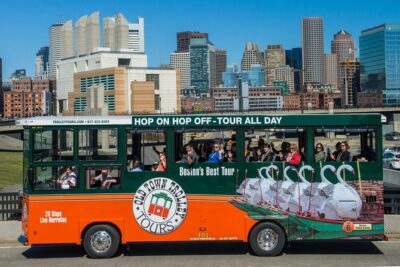
Another way the same afternoon could go around Boston:




King’s Chapel Burying Ground: early religious and social clues
From there, you visit King’s Chapel and its adjacent King’s Chapel Burying Ground. This is one of those stops that can quietly become a favorite because it turns a cemetery and church setting into something informative about how early Boston functioned socially and religiously.
You get insights into early religious and social history, which is the kind of context that makes the rest of the revolution story land better. Cemeteries can feel like background until you realize they show community priorities over time, including who mattered and how the city memorialized its people.
This stop also gives you a break from the biggest civic buildings. It is still part of the Freedom Trail arc, but it feels more personal and grounded.
Granary Burying Ground: where Paul Revere and others are laid to rest
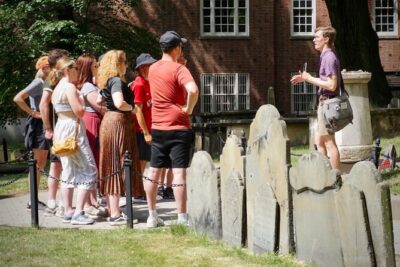
Then comes Granary Burying Ground, one of the emotional stops on the route. You pay respects at the final resting place of notable figures like Paul Revere, Samuel Adams, and John Hancock.
This is a powerful place to visit because you can connect the names you hear throughout the revolutionary story to real people. The guide’s job is to bring those names into focus so you remember them for more than their last names and famous portraits.
Also, this is where the tour becomes more reflective. Even with a fast walking pace, the setting encourages a different energy. You’re not hunting for facts. You’re absorbing them.
Tip: if you’re photographing headstones, be patient and keep your space. This is a respectful stop.
Old State House, Faneuil Hall, and the Cradle of Liberty story
After Granary, the tour continues through key revolutionary-era sites including Old State House and then Faneuil Hall.
The Old State House portion matters because it ties the political arguments of the time to a specific civic location. From there, the story points toward major events leading up to the American Revolution, including the site of the Boston Massacre. That connection helps you understand how tensions built, rather than treating the revolution as a single sudden moment.
Then you reach the Faneuil Hall stop, where the guide frames it as the Cradle of Liberty. This is where revolutionary leaders once gathered to discuss and organize resistance. That phrase helps you remember what made Faneuil Hall different. It was not only a meeting room, it was an engine for coordination and public momentum.
You’ll spend time here looking at the hall’s role in the city’s political conversation. If you care about how people formed arguments and organized action, this is one of the strongest sections of the whole tour.
Quincy Market finish: a convenient place to keep exploring
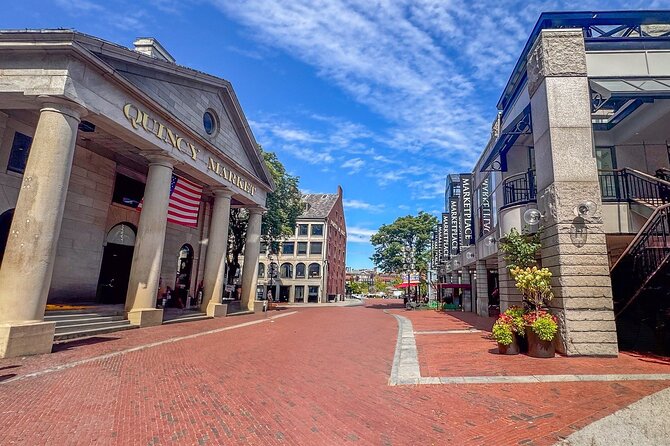
The tour concludes at Quincy Market. This is a practical ending point because it gives you instant options after the walking. You can grab something to eat, take a breather, and keep exploring at your own pace.
I like finishing here because it avoids the awkward “now what” moment that many walking tours create. You still get value from the tour, and you also leave with a neighborhood plan for the rest of your afternoon or early evening.
If you’re hungry, this is your cue. If you want to shop, this is also a sensible stop.
Just remember: you’ve already covered a lot of ground. Treat Quincy Market as your reward and your reset, not a second full tour.
Price and value: is $45 worth 150 minutes?
At $45 per person for a 150-minute small-group tour, the value comes from what’s included and how much you cover without wasting time.
You’re getting:
- a local expert guide
- small group time (limited to 10 participants)
- guided visits to multiple major stops along the Freedom Trail, including Beacon Hill, Boston Common, the Massachusetts State House, Park Street Church, King’s Chapel and Burying Ground, Granary Burying Ground, Faneuil Hall, and Quincy Market
- key supporting stops like Old State House
Where this price tends to make sense is for people who want clarity. If you tried to do this on your own, you’d still need to line up the route, interpret what you’re seeing, and decide where to spend time. Here, the guide is doing the “connect-the-dots” work for you.
And because Steve’s style was described as informative and entertaining, you’re not just buying access to places. You’re buying a smoother experience. That matters when you’re dealing with names, dates, and multiple buildings in one walking loop.
How to plan your walk: shoes, water, and quick weather sense
This tour is in English and is described as small-group, so you should prepare for a lot of outdoor walking and short stops. You’ll get the best experience with comfortable shoes, water, and weather-appropriate clothing. If the sun is out, bring sunscreen.
A camera helps, because several stops are genuinely photo-friendly, especially Beacon Hill streets and the gold dome of the State House. Just remember that some of the sites, like burial grounds, call for respectful pacing.
Finally, keep in mind the tour is not suitable for wheelchair users, so plan alternative arrangements if mobility access is needed.
Should you book Boston’s Revolutionary Path Freedom Trail tour?
I think you should book this tour if you want the Freedom Trail experience to feel like a guided story, not a checklist. The small group size makes it easier to ask questions, and the selection of stops covers more than just politics. You get civic sites like Boston Common and the State House, social-movement context at Park Street Church, and a grounded, human connection at Granary Burying Ground.
If you prefer a self-paced wander, you might feel the 15-minute stop rhythm is too structured. But if you like clarity, a friendly guide, and a route that ends where you can eat and relax, this one is a strong pick for a first or refresher visit to Boston.
FAQ
How long is the Freedom Trail tour?
The tour lasts 150 minutes.
Where is the meeting point?
Meet at Beacon Hill, corner of Boston Common, near the entrance by Park Street and Beacon Street.
What’s included in the tour price?
It includes a local expert guide, small group tours, and guided visits to Beacon Hill, Boston Common, the Massachusetts State House, Park Street Church, Granary Burying Ground, King’s Chapel and Burying Ground, Old State House, Faneuil Hall, and Quincy Market.
Is the tour wheelchair accessible?
No. It is not suitable for wheelchair users.
What should I bring?
Bring comfortable shoes, a camera, sunscreen, and water, plus weather-appropriate clothing.
Can I cancel and get a full refund?
Yes. You can cancel up to 24 hours in advance for a full refund.
Written up lately around the harbor
- Boston’s Beacon Hill: Private Walking Tour
★ 5.0 · 1 review - Boston’s Chinatown: Small Group Walking Tour
★ 5.0 · 1 review - Self-Guided Scavenger Hunt: Boston Back Bay & Beyond
★ 4.0 · 1 review - Flynn Cruise Port Boston to Boston hotels – Arrival Private Transfer
★ 5.0 · 1 review - Boston to Woods Hole & Martha’s Vineyard Ferry Private Chauffeur Service
★ 4.0 · 1 review - Classic Martha’s Vineyard 1-Day Escape from Boston
★ 5.0 · 1 review - Private Vacation Photoshoot with Photographer in Boston
★ 5.0 · 1 review
Freedom Trail Tours, compared.
Freedom Trail History Small Group Walking Tour
Read our review →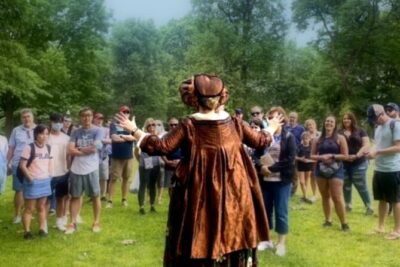
Boston Freedom Trail Walking Tour with Costumed Guide
Read our review →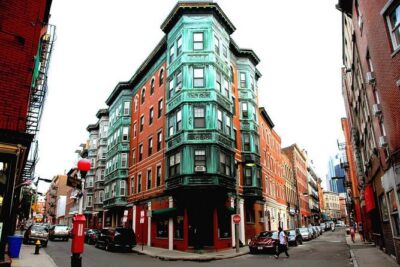
Boston Food & History: Pizza, North End & Freedom Trail
Read our review →
Boston’s Freedom Trail: A Revolutionary Walking Tour
Read our review →Freedom Trail History Small Group Walking Tour
Read our review →Boston’s Freedom Trail: A Revolutionary Walking Tour
Read our review →

Boston Freedom Trail History Pub Crawl Small-Group Tour
Read our review →Browse the lists this tour appears in