
Reviewed · FREEDOM TRAIL TOURS
Boston’s Revolutionary Path The Freedom Trail Tour
History walks fast in Boston. This 2-hour Freedom Trail style tour threads major landmarks together with clear, human-scale storytelling, from The Embrace to the Revolution sites downtown. I especially liked the way it slows down for places that feel meaningful, like the cemeteries, and the small group pace keeps it from feeling like you’re sprinting between plaques. One thing to consider: the stop times are short, so if you want deep museum time inside every building, you’ll need to plan extra time on your own.
The price, $45 per person, feels fair for what you get: a local guide, a tight route, and free admission type access for the included stops, without you having to figure out the puzzle of where everything connects. You’ll use a mobile ticket, start at 139 Tremont St, and end near Faneuil Hall Marketplace and Quincy Market area, where you can keep wandering after the tour. Most travelers can participate, and it’s offered in English.
For me, the value lands in the details. The best moments are when the guide adds behind-the-scenes context that helps the famous names make emotional sense, not just dates and distances. Still, the route is built for walking and orientation, not for long sit-down time, so come ready to move and use your legs and eyes.
In This Review
- Key highlights to watch for
- Freedom Trail in Two Hours, what you really get
- Starting at The Embrace on Boston Common
- Beacon Hill cobblestones, gas lamps, and Acorn Street energy
- Boston Common to the Massachusetts State House golden dome
- Park Street Church and King’s Chapel burying ground, two stops with different moods
- Granary Burying Ground, where Paul Revere and friends are close by
- Old State House, the Declaration read, and why this spot matters
- Faneuil Hall and Quincy Market, history plus something you can do afterward
- Price and logistics, when it’s the best buy
- Tips to get more from every stop
- Should you book this Freedom Trail walk?
- FAQ
- How long is Boston’s Revolutionary Path the Freedom Trail Tour?
- What does it cost?
- Where does the tour start?
- Where does the tour end?
- What is the group size?
- Is it offered in English?
- Can I cancel for free?
- Are service animals allowed?
Key highlights to watch for
- The Embrace (2023), a bronze MLK and Coretta Scott King sculpture with a specific inspiration behind it
- Beacon Hill’s Old Boston look, including gas lamps, cobblestones, and Acorn Street vibes
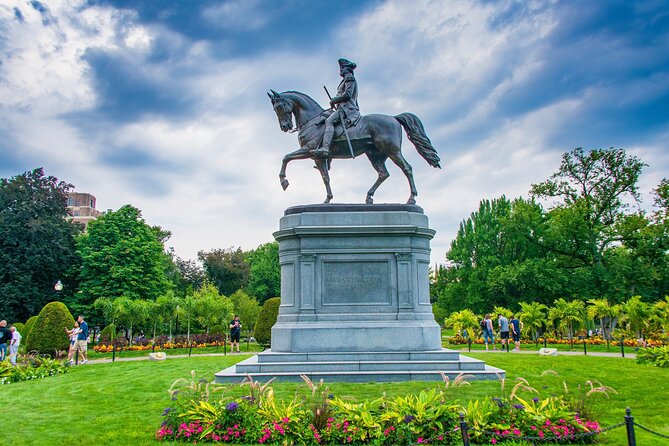
- Boston Common, the oldest public park in the U.S., with a calm break from city motion
- Massachusetts State House, especially that golden dome and the political story around it
- Granary and King’s Chapel burying grounds, where the Revolution is written directly on stone
- Faneuil Hall and Quincy Market, where history meets practical food and shopping stops
Freedom Trail in Two Hours, what you really get
This is a guided walking tour designed to give you the big spine of central Boston in about 2 hours. The group stays small, capped at 10 travelers, which makes it easier to hear the guide and ask quick questions as you move.
You start at 139 Tremont St by The Embrace and you finish at Faneuil Hall Marketplace. The ending matters because that area is packed with food vendors and shops, so you can transition from “tour mode” to “wandering mode” without changing neighborhoods.
At $45 per person, the value is mostly in the guide’s interpretation plus the fact that the stops you hit are all free to access. You’re paying for the route and the context, not entry fees. The tour is offered in English, and you’ll receive confirmation when you book.
If you’re a first-timer, this format helps you get your bearings fast. If you already know the Revolution storyline well, you may still enjoy the way the tour connects modern Boston landmarks to the same historical thread. Just don’t expect museum-level time at every stop.
More ways along the Freedom Trail:
- Boston: Freedom Trail History Small Group Walking Tour★ 5.0 · 6,450 reviews
- Boston Freedom Trail Walking Tour with Costumed Guide★ 4.5 · 2,531 reviews
- Boston Food & History: Pizza, North End & Freedom Trail★ 5.0 · 1,772 reviews
Starting at The Embrace on Boston Common
The walk kicks off at The Embrace, a bronze sculpture on Boston Common that opened in 2023. It honors Dr. Martin Luther King Jr. and Coretta Scott King, and the design is inspired by a photo of them hugging after Dr. King won the Nobel Peace Prize in 1964.
What I like here is that it’s not just “history as monuments.” It’s history as body language and solidarity, the intertwined arms and the idea of partnership in the fight for justice. You’ll also get a quick, focused moment to orient yourself at the start of Boston Common, before the tour shifts into neighborhoods and government landmarks.
Tip: treat this as your mental warm-up. Look at the sculpture first, then listen to the guide’s context, and you’ll feel how the tour’s theme connects civic action across different eras.
Beacon Hill cobblestones, gas lamps, and Acorn Street energy
Next comes Beacon Hill, one of Boston’s most charming neighborhoods to walk through on foot. Here you’ll get that classic old-Boston scene: cobblestone streets, gas lamps, and Federal-style brick homes.
This is the part where you slow down just enough to enjoy the streetscape. Beacon Hill also gives you variety because it’s not only scenery. You can spot small shops, cafés, and parks while staying close to the route, so you feel like you’re moving through a real neighborhood, not a set.
A consideration: this stop is fairly timed (about 15 minutes), so it’s great for a quick taste, not enough time to do a deep wander down every side street. If you want more Beacon Hill exploring later, plan to return after.
Boston Common to the Massachusetts State House golden dome
You’ll stop back at Boston Common for another short window, about 15 minutes. It’s the oldest public park in the U.S., and it gives you a break from city intensity. You can enjoy walking paths, greenery, and ponds, plus seasonal activity depending on the time of year.
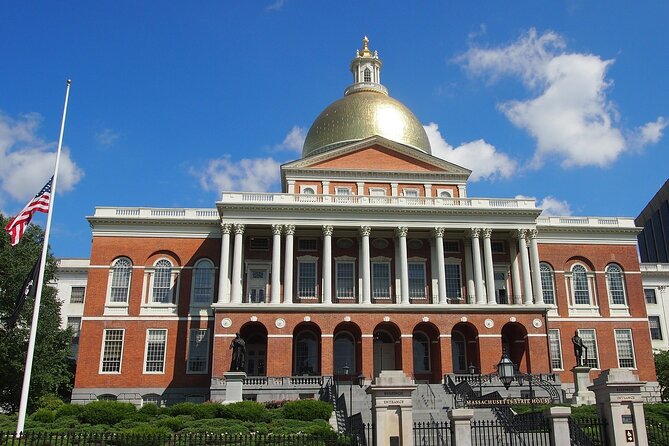
Then the tour moves to the Massachusetts State House, an iconic government building on Beacon Hill with its stunning golden dome. The dome is the obvious visual star, but the more interesting part is what the guide connects it to: Massachusetts political history and how government decisions shape the daily lives of people in the city.
One practical note: since this is an active government area, you may find yourself doing more “outdoor viewing plus guided explanation” than a long indoor wander. The tour lists guided tours as available at the State House, but your time on-site is limited, so don’t assume you’ll explore every room.
For photographers, this section is strong. Get your angles at the dome quickly, then let the guide’s story do the work.
Park Street Church and King’s Chapel burying ground, two stops with different moods
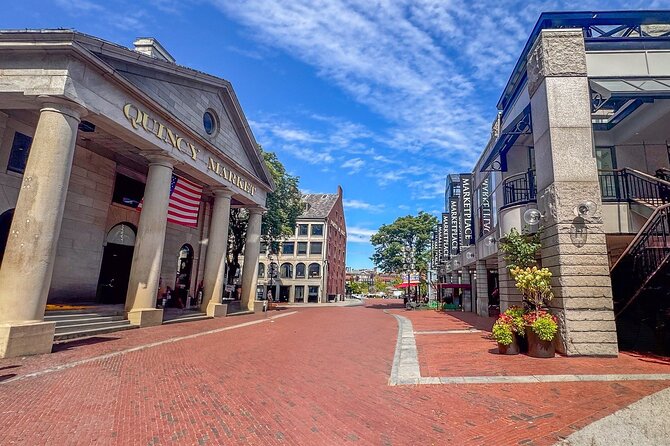
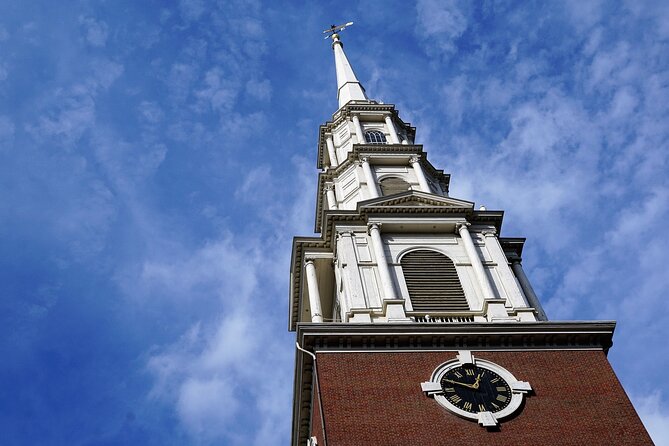
Park Street Church is a quick stop, about 5 minutes, and it’s easy to spot thanks to the towering white steeple. Built in 1809, it has played a role in Boston’s religious and social history and it still functions as a community landmark, with services and events.
After that, the tour turns reflective at King’s Chapel Burying Ground, Boston’s oldest cemetery dating back to 1630. This is the kind of place where the pace changes. The guide’s job here is to help you read the names and stones as more than background decoration, especially with early Boston settlers like John Winthrop.
What makes this stop valuable is the contrast. You go from a tall steeple pointing toward civic faith, to a quiet burial ground where the city’s earliest story lives in stone and time.
If cemeteries aren’t your thing, you still might appreciate the historical grounding. They make the Revolution-era people feel real, because these are the roots of the community the Revolution grew out of.
Another way the same afternoon could go around Boston:





Granary Burying Ground, where Paul Revere and friends are close by
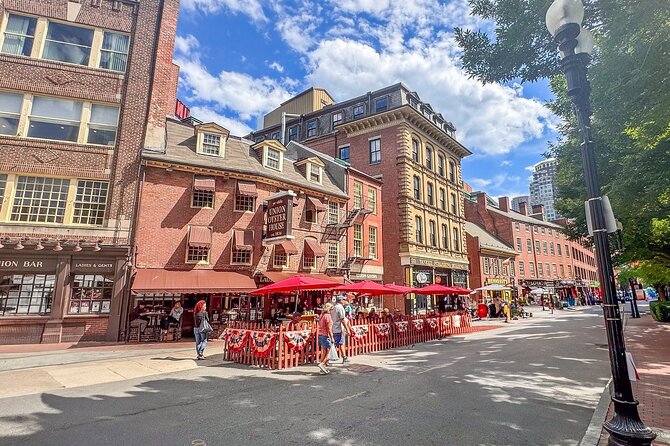
Granary Burying Ground is another cemetery stop, about 15 minutes. It dates back to 1660 and sits near Boston Common, which makes it a convenient, emotionally heavy stop in the middle of a walk.
This is where the Revolution names come into focus in a personal way. You’ll see prominent figures including Paul Revere, Samuel Adams, and John Hancock. The guide helps connect these names to the larger events you’re hearing about, so it doesn’t feel like random famous people scattered across a lawn.
A small caution: like many historic cemeteries, the “best” viewing depends on the stone layout and your walking comfort. Take your time to look, but keep moving so you don’t hold up the group. In a timed tour, patience is part of the experience.
I also like that this stop gives you a calm moment before downtown takes over again. It helps the Old State House section land harder, because you’ve already been close to the human side of the story.
Old State House, the Declaration read, and why this spot matters
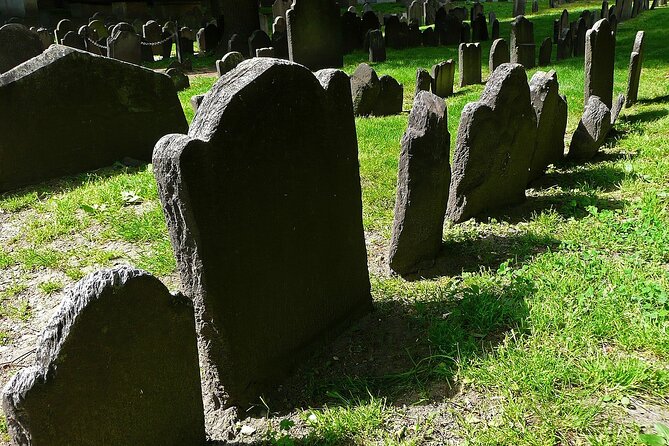
The Old State House is another short stop, about 5 minutes, but it carries a lot of weight. Built in 1713, it was a key stage for events in the American Revolution, including the reading of the Declaration of Independence.
Even if you only get a quick view, this is one of those buildings where the exterior and exhibits together create a clear snapshot of the era. The tour includes time to explore early American history exhibits, so you’re not just looking at architecture. You’re getting the story in a more literal way.
What I’d do if you want the most impact: listen first, then read the exhibit details second. The guide’s framing helps you notice what to focus on.
Faneuil Hall and Quincy Market, history plus something you can do afterward
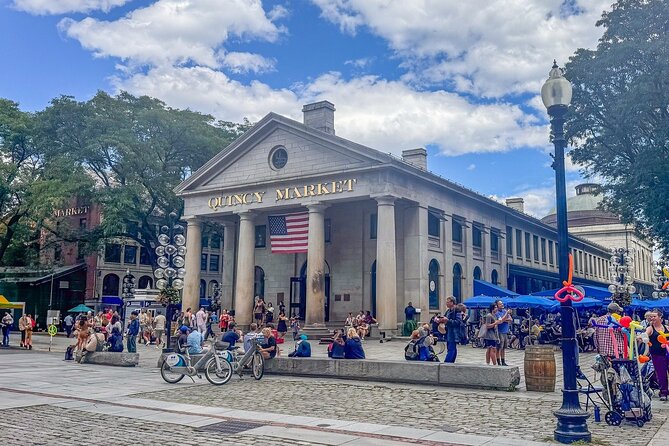
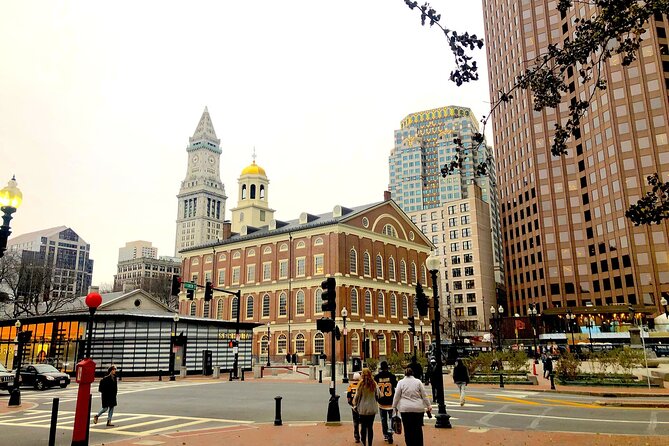
The tour wraps up at Faneuil Hall, often called the Cradle of Liberty. Built in 1742, it was a center for early protests against British rule, and today it includes a marketplace and museum space.
This part is the practical payoff. After so many civic and memorial stops, you get a place where you can actually eat, browse, and keep living your day in the same area as the story.
From there, you’re near Quincy Market, a busy food and shopping hub where local vendors offer meals, snacks, and treats. Street performers add to the street-level atmosphere, so you get a sense of Boston as a working city, not a frozen postcard.
Consideration: since the tour ends here, you’ll likely have more interest in lingering than you might in other stops. That’s a good problem to have. Just remember the timing of your next plans and keep an eye on your schedule.
Price and logistics, when it’s the best buy
Let’s talk value in plain terms. At $45 per person for about 2 hours, you’re paying for three things that are hard to replicate on your own without planning: a tight walking route, a guide who can connect the dots, and a small group size that keeps you from feeling lost.
The included stops are free to access, including major public landmarks like Boston Common and public historic sites like the cemeteries and Old State House. So the money mostly buys interpretation and flow, not entry fees.
Booking timing also matters. The tour is often booked about 58 days in advance on average, which tells me it’s a popular choice for first-time visitors who want a guided route. If your trip dates are firm, I’d lock it in early, especially in busy seasons.
Also note: you’ll use a mobile ticket and you’ll be near public transportation. That makes it easier to fit into a longer day without stress about where to park or how to arrive.
If you have limited time in Boston, this tour is a smart anchor. It’s not a full replacement for museum days, but it sets up your whole city visit by showing where the major landmarks connect.
Tips to get more from every stop
Come in with comfortable shoes. This is a walking route through uneven, historic parts of Boston, and the tour relies on you keeping up with a steady pace.
Dress for the weather and plan for quick changes. Boston can feel different block to block, and time outdoors matters in this itinerary.
Use a simple strategy for listening: pick one stop you care about most, then let the guide’s story carry you through the others. The cemeteries and the Old State House are usually the strongest for many people, but if you’re more into architecture, focus your attention on the golden dome and Park Street Church.
Finally, give yourself a little buffer after the tour ends. Since it finishes near the marketplace area, you’ll probably want snacks or a browse. Even if you don’t have a big appetite, you’ll enjoy the street energy before heading on.
Should you book this Freedom Trail walk?
Book it if you want a guided way to understand central Boston, especially if it’s your first visit or you’re short on time. The small group size helps a lot, and the route hits major landmarks that connect the Revolution theme to the city’s later civic identity.
Skip it or add extra planning if you want deep museum time inside buildings or you already know the Freedom Trail story well. The stop windows are brief, so you won’t get hours in each place.
My call: this is a good value for people who like walking, crisp explanations, and a route that ends in an area where you can keep enjoying the city right away. If your goal is orientation plus context, not a slow day of gallery-level exploring, this tour fits nicely.
FAQ
How long is Boston’s Revolutionary Path the Freedom Trail Tour?
It runs for about 2 hours.
What does it cost?
The price is $45.00 per person.
Where does the tour start?
The tour starts at The Embrace, 139 Tremont St, Boston, MA 02108.
Where does the tour end?
The tour ends at Faneuil Hall Marketplace, Boston, MA 02109.
What is the group size?
The tour has a maximum of 10 travelers.
Is it offered in English?
Yes, it is offered in English.
Can I cancel for free?
Yes. You can cancel for a full refund up to 24 hours in advance. If you cancel less than 24 hours before the start time, the amount paid is not refunded.
Are service animals allowed?
Yes, service animals are allowed.
If you tell me your travel month and what you care about most, history speeches, architecture, or cemeteries, I can suggest the best way to pair this with a few self-guided hours afterward.
Written up lately around the harbor
- Boston’s Beacon Hill: Private Walking Tour
★ 5.0 · 1 review - Boston’s Chinatown: Small Group Walking Tour
★ 5.0 · 1 review - Self-Guided Scavenger Hunt: Boston Back Bay & Beyond
★ 4.0 · 1 review - Flynn Cruise Port Boston to Boston hotels – Arrival Private Transfer
★ 5.0 · 1 review - Boston to Woods Hole & Martha’s Vineyard Ferry Private Chauffeur Service
★ 4.0 · 1 review - Classic Martha’s Vineyard 1-Day Escape from Boston
★ 5.0 · 1 review - Private Vacation Photoshoot with Photographer in Boston
★ 5.0 · 1 review
Freedom Trail Tours, compared.
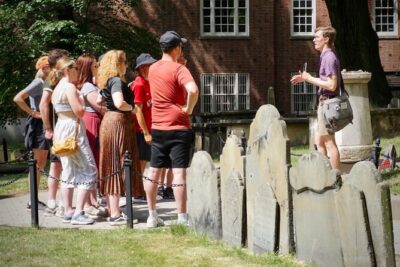
Freedom Trail History Small Group Walking Tour
Read our review →
Boston Freedom Trail Walking Tour with Costumed Guide
Read our review →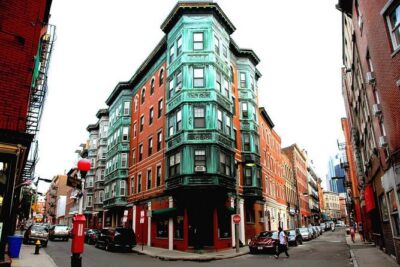
Boston Food & History: Pizza, North End & Freedom Trail
Read our review →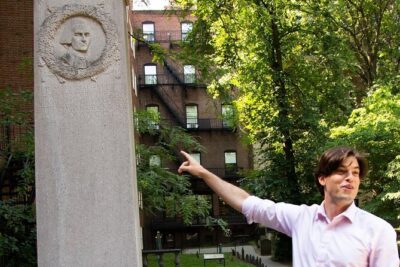
Boston’s Freedom Trail: A Revolutionary Walking Tour
Read our review →Freedom Trail History Small Group Walking Tour
Read our review →Boston’s Freedom Trail: A Revolutionary Walking Tour
Read our review →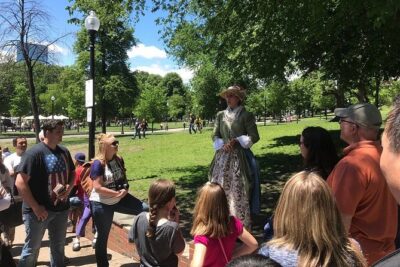

Boston Freedom Trail History Pub Crawl Small-Group Tour
Read our review →Browse the lists this tour appears in