
Reviewed · FREEDOM TRAIL TOURS
Downtown Freedom Trail Walking Tour – History & Architecture
Boston history moves fast here. This guided walk along the Freedom Trail turns landmarks like Faneuil Hall, the Old State House, and Boston Common into an easy-to-follow story of how the city grew. I also like that it is built for a small group (up to 20), so you can actually hear your guide and keep up with the pace.
One thing to plan for: it runs in all weather, and when Boston gets busy, you may hit extra foot traffic or noise near the end of the route.
In This Review
- Key Things I’d Put on Your Radar
- The Downtown Freedom Trail, Made Walkable in 70 Minutes
- Where You Start, Where You End, and Why It Matters
- The Freedom Trail Stops That Shape the Story
- Faneuil Hall and the Marketplace Protest Tradition
- The Old State House: Power, Switching Hands, and a Balcony Moment
- The Boston Massacre Site: A Quiet Trigger in Cobblestones
- Old South Meeting House and the Build-Up to Public Action
- The Old Corner Bookstore: Where Ideas Actually Gathered
- King’s Chapel and the Boston Tea Party Signals
- Boston Irish Famine Memorial: A Different Kind of Revolutionary Memory
- Old City Hall and Architectural Clues to Civic Power
- Boston Latin School and the First Public School Angle
- Old Granary Cemetery: Paul Revere, Samuel Adams, and John Hancock
- Tremont Temple: A Church Story That Includes Integration and Public Events
- Park Street Church and the Route Into Boston Common
- The New State House: The Gold Dome Finish
- The Guides: Humor, Flow, and Small Group Real Talk
- Price and Value: Why $45 Can Be a Smart Shortcut
- Weather, Crowds, and How to Have a Smoother Walk
- Who Should Book This Freedom Trail Tour
- Should You Book This Downtown Freedom Trail Walking Tour?
Key Things I’d Put on Your Radar
- A tight 70-minute format that still hits major Freedom Trail sites without dragging.
- Small group size (max 20), which helps hearing and question time.
- Architecture + history pairing, so buildings make sense, not just memorized dates.
- A long list of stops from Faneuil Hall through churches, schools, and cemeteries to Boston Common.
- Multiple guides mentioned by name in the reviews, including Alan and Andrew, with strong humor and storytelling.
The Downtown Freedom Trail, Made Walkable in 70 Minutes
The core idea here is simple: instead of wandering the Freedom Trail alone, you get a guided route that connects the dots between downtown Boston’s biggest Revolutionary-era moments and the buildings that still shape the city. The tour is about 1 hour 10 minutes, and it is paced for a real walk, not a stop-and-stand-in-one-place lecture.
What makes that time window work is the route choice. You are moving through the densest historic stretch in downtown Boston, starting near State Street at Congress Street and ending at the Brewer Fountain on the Freedom Trail. That means you see a lot without spending your whole day stuck in transit or crisscrossing neighborhoods.
The $45 price point also makes sense when you think of it as paying for direction and interpretation. This is not just “look at that building.” The tour is designed to explain why each stop matters and how Boston’s architecture helped people live, govern, protest, worship, learn, and remember. You also get a pass experience for major landmarks mentioned in the tour details, and the itinerary notes admission is free.
More ways along the Freedom Trail:
- Boston: Freedom Trail History Small Group Walking Tour★ 5.0 · 6,450 reviews
- Boston Freedom Trail Walking Tour with Costumed Guide★ 4.5 · 2,531 reviews
- Boston Food & History: Pizza, North End & Freedom Trail★ 5.0 · 1,772 reviews
Where You Start, Where You End, and Why It Matters
You begin at State Street at Congress Street. That is a useful starting point because it is in the thick of downtown, and the tour notes it is near public transportation. If you are doing other sights the same day, this helps you avoid wasting time getting oriented.
You finish at the Brewer Fountain on the Freedom Trail. That ending location is more than a convenience. It drops you right by Boston Common, so you can extend your day easily. Want to keep exploring on your own? Boston Common is right there, and the tour also includes the New State House overlook, so you close the loop with the city’s modern seat of government facing the historic park.
If you like finishing with a “big view,” this route does that. A lot of Freedom Trail tours end at a single landmark. This one ends with the civic heart of downtown.
The Freedom Trail Stops That Shape the Story
This walk is built around a long arc: the city’s protest energy, the governing power, the churches that signaled public action, and the institutions that taught and shaped Boston for centuries. Here is how the major stops fit together and what you should watch for at each one.
Faneuil Hall and the Marketplace Protest Tradition
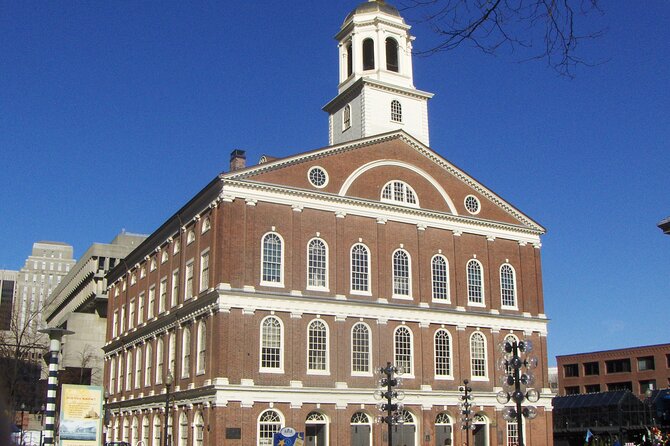
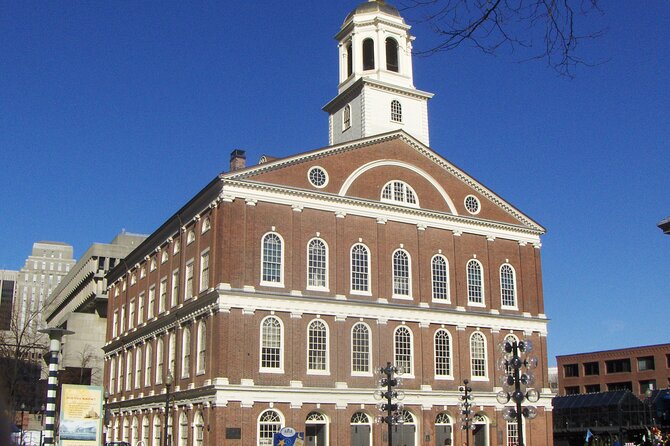
You start with the dramatic energy of Faneuil Hall, often called the Cradle of Liberty. This is a place tied to protest culture that helped push events toward the American Revolution. One small detail you should not miss: look up at the grasshopper weathervane, which is mentioned for a reason, it is the kind of visual cue that makes the site stick in your mind.
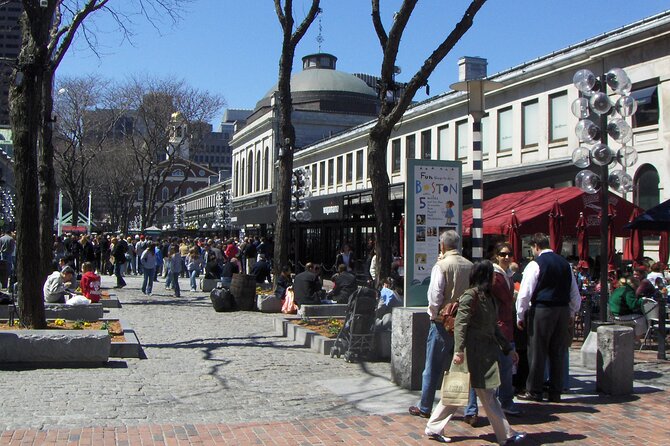
Around this area, you will also encounter the Quincy Market context that keeps the downtown historic core feeling alive, even when you are learning about the past.
What to expect on the ground: a fast-moving start where your guide sets the timeline and gives you a mental map for the next hour.
Possible drawback: if you dislike being on your feet early, plan for a warm-up walk mindset.
The Old State House: Power, Switching Hands, and a Balcony Moment
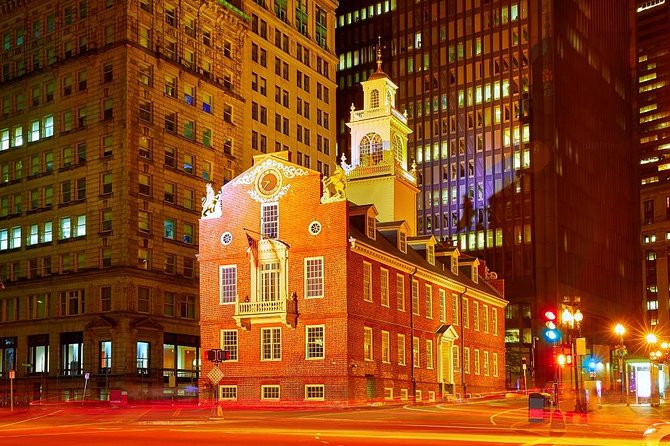
Next comes the Old State House, built in 1713 and described as the seat of British colonial government. The tour also points out a pivotal moment tied to independence: the Declaration of Independence was first read to Bostonians from its balcony.
Even if you already know the headline, this stop helps you connect “events” to “places.” A guide-led explanation matters because the building is doing two jobs in your head at once: it is a symbol of control, then a symbol of change. That shift is easier to grasp when a guide frames the transition as you stand there.
More of Boston crossed at walking pace:

The Boston Massacre Site: A Quiet Trigger in Cobblestones
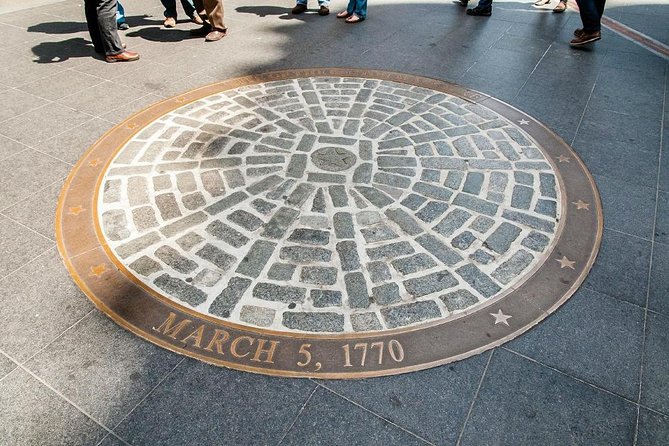
At the Boston Massacre site, you will see the exact marker described by a cobblestone ring in the pavement. The tour frames this as the moment where a 1770 skirmish between Redcoats and colonists ignited rebellion.
This is the kind of stop that works especially well with a guide. If you walk past without context, it can look like just another street detail. With context, it becomes a physical trigger point in the story.
Old South Meeting House and the Build-Up to Public Action
You are also guided to the Old South Meeting House. The tour information emphasizes that you get time to explore it, not just a quick look. That matters because meeting houses are not only historic structures, they are where public communication became collective action.
If you are traveling with family, this is a good checkpoint. It tends to feel less abstract than political documents.
The Old Corner Bookstore: Where Ideas Actually Gathered
The Old Corner Bookstore is a standout for turning Boston’s literary energy into something tangible. The tour explains that the building was built in 1718 as a residence and apothecary, then became a bookstore in 1828. It also points out that famous authors once gathered there, including Ralph Waldo Emerson and Charles Dickens.
This is one of those stops you can appreciate even if you are not a history superfan. A bookstore built into a colonial-era building makes the past feel less like a museum exhibit and more like daily life.
King’s Chapel and the Boston Tea Party Signals
At King’s Chapel, the tour highlights the massive brick church connection to the Boston Tea Party. It notes that this was where the signals were given to start the action in 1773.
King’s Chapel also gets its own deeper framing in the tour details, including its long timeline from its founding in 1686, through the American Revolution and beyond. That long view helps you understand why places of worship also functioned as community hubs where major public events could be launched.
Boston Irish Famine Memorial: A Different Kind of Revolutionary Memory
You will also encounter the Boston Irish Famine Memorial, a memorial park located between Washington Street and School Street. The description is direct: the park uses two groups of statues to contrast an Irish family suffering during the Great Famine of 1845 to 1852 with a prosperous family that had immigrated to America.
This is not “Revolution only” territory, and that is a good thing. The Freedom Trail is often sold as a single plotline. This tour reminds you that Boston keeps rewriting what it means to remember, protest, and rebuild.
Old City Hall and Architectural Clues to Civic Power
The tour includes Old City Hall, described as the home of the Boston City Council from 1865 to 1969. It also mentions the architectural approach: an early use of French Second Empire style in the United States, plus design credit for Gridley James Fox Bryant and Arthur Gilman.
Here’s why architecture matters on a walk like this. When you understand the design style, civic buildings start to look intentional, not accidental. You also start seeing how Boston communicated authority through materials, scale, and form.
Boston Latin School and the First Public School Angle
You will stop near or at the story of Boston Latin School, founded on April 23, 1635, described as the first public school in America. The tour notes that it was originally on School Street, with Puritans setting it up for free classical education to boys. The tour also mentions a statue of Benjamin Franklin and a sidewalk mosaic marking the original site.
If your focus is history, this is a good pivot from rebellion and governance into education and civic formation. If your focus is architecture, it is also a chance to notice how long-lived institutions shape the look of a street.
Old Granary Cemetery: Paul Revere, Samuel Adams, and John Hancock
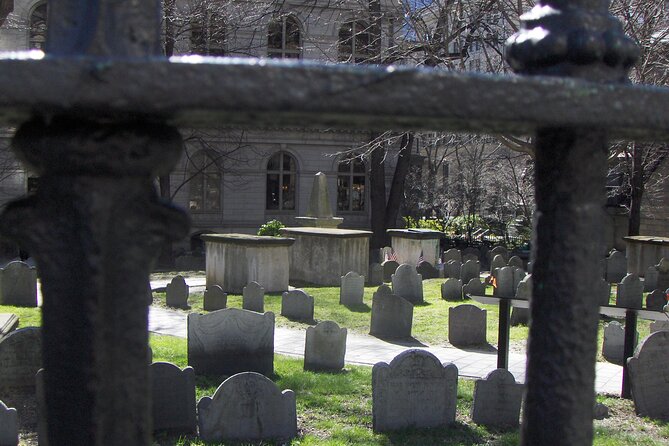
The tour includes Old Granary Cemetery, described as a final resting place for Paul Revere, Samuel Adams, and John Hancock. The tour details note it is one of the most visited cemeteries in the country, and you do get time to explore.
Cemeteries on the Freedom Trail are powerful because they humanize the names. It is one thing to memorize Revolutionary leaders. It is another to connect them to real ground, real stone, and real layout.
Tremont Temple: A Church Story That Includes Integration and Public Events
One of the most interesting stops is Tremont Temple, described as formed in 1839 under the name The Free Baptist Church. The tour notes that Timothy Gilbert resigned his membership over the refusal to seat a black family, then he bought the Tremont Theater location and made it a place with open attendance and no charge.
This stop is famous in the tour details for being described as the first integrated church in America and for hosting public events beyond worship, including an Egyptian mummy display in 1850 and speeches against slavery by Sam Houston and Frederick Douglass.
This is also where guides who can tell stories well tend to shine. If your guide has a good sense of humor and pacing, this becomes the most memorable stop on the walk.
Park Street Church and the Route Into Boston Common
Near the end you will see Park Street Church, another major piece in the Freedom Trail puzzle. Then the tour guides you to Boston Common, described as the oldest city park in the United States.
The tour notes Boston Common covers 50 acres and sits bounded by five major streets: Tremont Street, Park Street, Beacon Street, Charles Street, and Boylston Street. When you hear those street names spoken as you stand there, the park becomes legible.
The New State House: The Gold Dome Finish
The tour ends with the new State House built in 1798, highlighted for its 23-karat gold dome and its role as the modern seat of government overlooking Boston Common.
This is a satisfying closing note because it connects the past to the present in one glance. You do not leave with a list of names. You leave with a view of civic Boston, past and present sitting in the same frame.
The Guides: Humor, Flow, and Small Group Real Talk
A major reason people rate this tour highly is the way the guide handles pacing and tone. In the reviews, you will see names like Alan and Andrew, and you will notice a pattern: friendly delivery, clear explanations, and humor used to keep the group moving.
Small group size is not just a “nice to have” here. At 20 people max, your guide can read the room and adjust. That also helps when questions come up, including for families.
Two practical notes based on feedback patterns:
- Some people noted it can be hard to hear at times. If you are sensitive to audio, aim to stand closer to the guide early, especially at indoor or crowded edges.
- This tour uses modern-day presentation rather than costume style, and it focuses on architecture tied to history. If you expect a more theatrical approach, adjust your expectations.
One more thought: guides can handle lost guests and late arrivals with real problem-solving, including helpful rerouting if you miss the meet point. That alone can save a day.
Price and Value: Why $45 Can Be a Smart Shortcut
At $45 per person, this is not a budget “just walk it yourself” activity. But you are paying for several things that are hard to replicate alone:
- A clear timeline from Revolutionary events to later civic and cultural landmarks
- Interpretive stop-by-stop explanations
- Time to explore certain sites rather than just pass by
- A small group that keeps the walking experience manageable
Also, the tour notes admission ticket free for the stops covered, plus passes for major landmarks like Faneuil Hall, King’s Chapel, and Boston Common. That means you are not paying extra at each stop for entry as you go, which helps value hold up.
If you are on a tight schedule or you want context fast, this is one of the best-value ways to get your bearings in central Boston.
Weather, Crowds, and How to Have a Smoother Walk
The tour operates in all weather conditions, so you should dress for Boston reality. It is a downtown walk, and you will be outside enough that rain, wind, and cold can shift your comfort level.
Plan for crowds too. Boston can have demonstrations and busy foot traffic, especially near the end by Boston Common. When that happens, your guide does not control it, but a good guide works the group around it and keeps the tour moving.
My practical advice:
- Wear shoes you can walk in comfortably for about an hour plus.
- Bring a light layer even if the day starts warm.
- Arrive early enough that you can get a good position near the guide.
Who Should Book This Freedom Trail Tour
This tour is a strong match if:
- You are a first-time visitor who wants a tight downtown orientation
- You love history with buildings, not just dates
- You are traveling with families who need stories that stay interesting
- You want a guide-led walkthrough that helps the Freedom Trail feel organized
It is less ideal if:
- You want a longer, super-deep Freedom Trail session focused only on Revolution-era politics, with minimal architecture and culture
- You strongly prefer a highly theatrical or costumed style
Should You Book This Downtown Freedom Trail Walking Tour?
Yes, I’d book it if you want a smart first pass through downtown Boston with storytelling that connects architecture to the American Revolution and beyond. The route is packed but not frantic, the group size stays small, and the finish by Boston Common and the New State House gives you a great sense of where Boston’s civic identity lives.
If you are the type who learns best from a guide while walking, this tour is a solid use of your time. If you are already comfortable reading the Freedom Trail on your own, you may find the value depends on whether you enjoy guided interpretation more than self-guided wandering.
Revolutionary Boston on Foot
- Tour of Historic Fenway Park, America’s Most Beloved Ballpark
★ 4.5 · 3,013 reviews - City Cruises Boston Historic Sightseeing Harbor Cruise
★ 4.5 · 1,388 reviews - Boston’s North End Food Tour: Italian Flavors & Heritage Walk
★ 5.0 · 1,322 reviews - Boston Pizza Lovers Food and History Walking Food Tour
★ 4.5 · 1,082 reviews
Written up lately around the harbor
- Boston’s Beacon Hill: Private Walking Tour
★ 5.0 · 1 review - Boston’s Chinatown: Small Group Walking Tour
★ 5.0 · 1 review - Self-Guided Scavenger Hunt: Boston Back Bay & Beyond
★ 4.0 · 1 review - Flynn Cruise Port Boston to Boston hotels – Arrival Private Transfer
★ 5.0 · 1 review - Boston to Woods Hole & Martha’s Vineyard Ferry Private Chauffeur Service
★ 4.0 · 1 review - Classic Martha’s Vineyard 1-Day Escape from Boston
★ 5.0 · 1 review - Private Vacation Photoshoot with Photographer in Boston
★ 5.0 · 1 review
Freedom Trail Tours, compared.
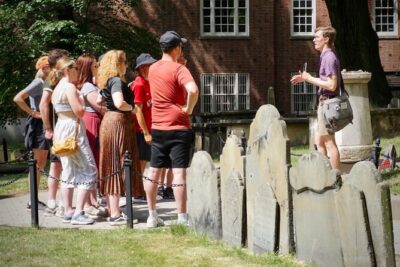
Freedom Trail History Small Group Walking Tour
Read our review →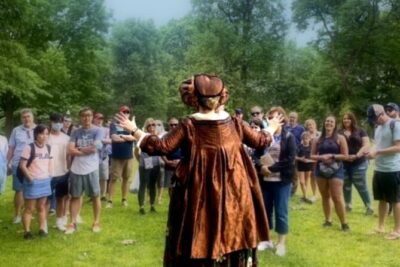
Boston Freedom Trail Walking Tour with Costumed Guide
Read our review →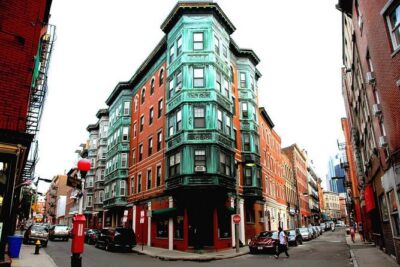
Boston Food & History: Pizza, North End & Freedom Trail
Read our review →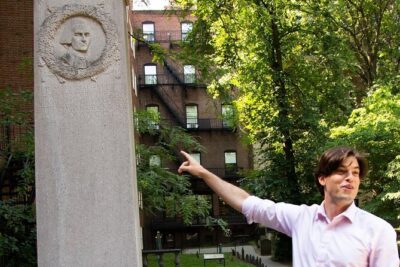
Boston’s Freedom Trail: A Revolutionary Walking Tour
Read our review →Freedom Trail History Small Group Walking Tour
Read our review →Boston’s Freedom Trail: A Revolutionary Walking Tour
Read our review →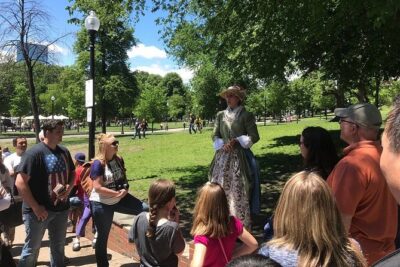

Boston Freedom Trail History Pub Crawl Small-Group Tour
Read our review →Browse the lists this tour appears in