
Reviewed · FREEDOM TRAIL TOURS
Freedom Trail: Boston Common, Old State House, Faneuil Hall
Boston history hits you fast. This guided Freedom Trail highlights tour packs the key Revolutionary-era stops into an easy, two-hour walk, with stories that connect Boston Common to the speeches and power struggles around Old State House and Faneuil Hall.
What I like most is how the guide ties each landmark to a specific turning point, so the Revolution stops feeling like a textbook chapter. I also love the built-in pacing, you start on the calm green of Boston Common, then the tension ramps up as you move toward the sites tied to the Tea Party, the Boston Massacre, and the Declaration of Independence. One catch: two hours is a sprint, so you will not linger long at any single site.
You meet outside Park St. T Station on the eastern edge of Boston Common, then the walk ends at Faneuil Hall. With a price of $39 per person for a licensed, English-speaking guide, it can be a good value if your goal is to get your bearings fast and leave with a clear storyline of early America. If you want a slower, museum-heavy day, you might feel a bit rushed.
In This Review
- Key things I’d circle before you go
- The Freedom Trail highlights tour, in plain terms
- Boston Common: the oldest park, and your smart starting point
- Park Street Church and the Mass and the message of change
- Granary Burying Ground: where the people behind the story are named
- Boston’s churches tied to the Revolution, King’s Chapel in context
- Old South Meeting House: where the Tea Party plan took shape
- Old Corner Bookstore and the power of publishing
- Old State House and the balcony moment of the Declaration
- The Boston Massacre site: why this spot feels heavy
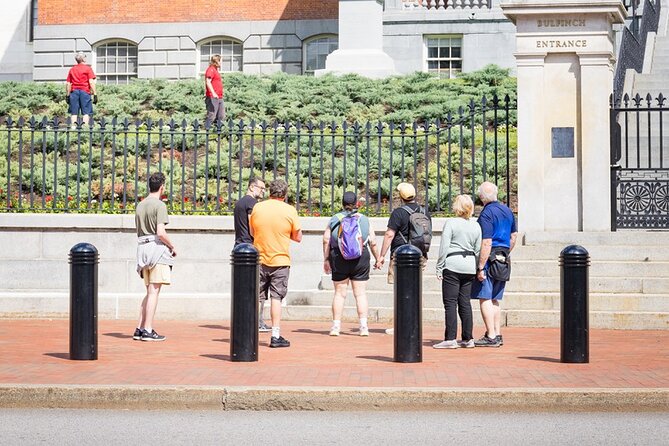
- Massachusetts State House and the modern government thread
- Faneuil Hall: the Cradle of Liberty and the end of your walk
- Price and value: is $39 a good deal for two hours?
- Who should book this walk?
- Should you book it?
- FAQ
- Where is the tour meeting point, and where does it end?
- How long is the guided tour?
- What is included in the price?
- Is food or drinks included?
- What is the price per person?
- Is the tour offered in English?
- Is the tour wheelchair accessible?
- What is the language and cancellation policy?
Key things I’d circle before you go
- Boston Common first, so you start with breathing room before the Revolution stories get intense
- One guide, many eras, linking Puritan-era rules to rebellion, war, and independence
- Graves that teach, including the resting place of Paul Revere, Samuel Adams, John Hancock, and Crispus Attucks
- Tea Party planning site, Old South Meeting House, tied to the famous turn in colonists’ tactics
- Old State House to Faneuil Hall, where independence drama moves from declaration to public debate
The Freedom Trail highlights tour, in plain terms
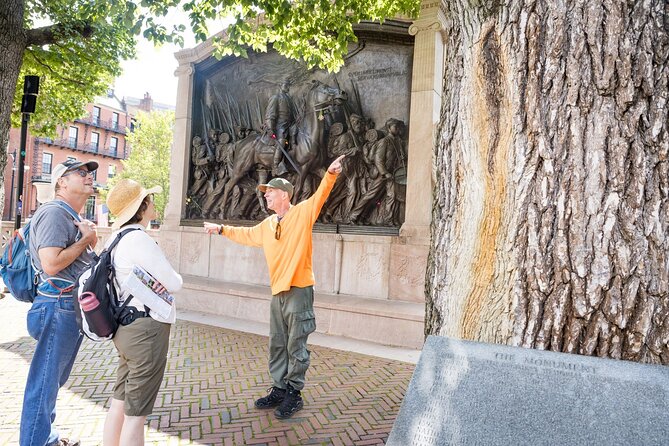
This is the kind of walking tour that works best when time is tight and you want the backbone of the story. Boston’s historic core is compact, but the ideas are huge: Puritan exclusiveness, growing protest, open conflict, then the political language of liberty taking over the streets.
In this two-hour format, you are not trying to “complete” the full Freedom Trail by yourself. Instead, you hit the headline stops that explain why Boston became the launchpad for American independence. A huge plus here is the live guide, a licensed pro who keeps things moving while still answering practical questions.
Many reviews mention the guide, Brian, as the reason the experience feels fun instead of like a lecture. He uses an engaging, story-first style, and even when weather turns, he keeps the energy up.
More ways along the Freedom Trail:
- Boston: Freedom Trail History Small Group Walking Tour★ 5.0 · 6,450 reviews
- Boston Freedom Trail Walking Tour with Costumed Guide★ 4.5 · 2,531 reviews
- Boston Food & History: Pizza, North End & Freedom Trail★ 5.0 · 1,772 reviews
Boston Common: the oldest park, and your smart starting point
Most people associate the Revolution with crowds, conflict, and dramatic speeches. Boston Common adds a different layer: it shows how public space shapes public life.
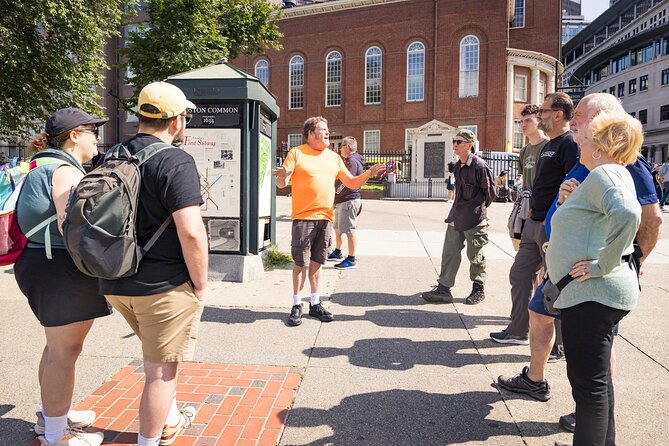
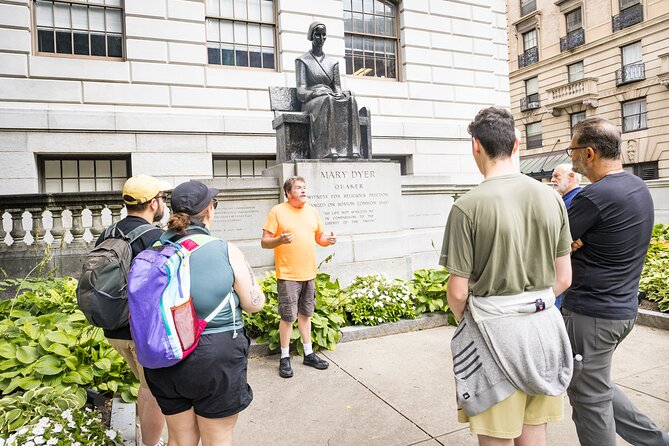
Founded in 1634, Boston Common is America’s oldest public park. On this tour, it acts like your reset button. You start here at the Park St. T Station edge, and the setting helps you absorb the big historical shift: from a society that once tried to control who belonged, to a city that later became more open and public.
It also puts a lot of later events into perspective. The park has seen British troop encampments during the Revolutionary War, and it has hosted civil rights rallies in the 20th century. That span matters. You get the sense that streets and squares do not just “remember” history, they help create it.
Practical note: since you are about to walk between several outdoor stops, this is a nice place to do a quick photo, take a breath, and fix your route in your head.
Park Street Church and the Mass and the message of change
From the Common, you move into the area where faith, public speech, and social pressure intersect. Park Street Church, built in 1809, is one of the key landmarks tied to moral activism in Boston.
The tour highlights a specific milestone: Park Street Church hosted the first public anti-slavery address in the United States. That detail is the kind that makes you rethink the Revolution timeline, because it shows that liberty is not a one-day event. Ideas keep evolving, and Boston keeps talking.
You also get views from the church’s famous steeple, which helps the walk feel like more than passing storefronts. For me, this stop is a reminder that political change in Boston often came through public messaging, not just battlefields.
Granary Burying Ground: where the people behind the story are named
Then the tour turns somber, in a good way. Granary Burying Ground is one of the oldest cemeteries in Boston, and it serves as a who’s-who of the Revolution.
Here you can see the final resting places of major figures such as Paul Revere, Samuel Adams, and John Hancock. That alone makes the stop worth it, but the strongest emotional impact comes from the grave of Crispus Attucks, listed here as the first casualty of the Boston Massacre and a symbol of the fight for freedom.
If you care about history, you’ll like how this stop turns biographies into faces you can hold onto. If you are traveling with kids, this is often where the stories click because names are easy to connect to the events you just heard about.
A small consideration: cemeteries are quiet places. You’ll want to keep your voice down and be ready to stand for a bit while the guide points out key locations.
Boston’s churches tied to the Revolution, King’s Chapel in context
King’s Chapel, built in 1754, brings another useful twist: loyalty was complicated. The tour points out the church’s Georgian architecture and its ties to loyalist congregants during the Revolution.
That detail matters because it complicates the usual “good guys vs. bad guys” storyline. You start to see Boston not as one single opinion, but as a mix of communities wrestling with risk, identity, and power.
I like this stop because it makes the walk feel human. People were not just roles in a timeline. They had beliefs, social circles, and fears. Even if you disagree with them, you can understand why they acted as they did.
Another way the same afternoon could go around Boston:





Old South Meeting House: where the Tea Party plan took shape
Now you get back to the spark. Old South Meeting House was built in 1729 and served as a pivotal meeting place for colonists advocating for freedom and justice. This is also the site where plans for the Boston Tea Party were famously set into motion.
This is the kind of stop where you can almost feel the logic of protest changing. It is one thing to argue with words. It is another to shift into coordinated action. A good guide will help you connect the meeting house to the broader theme of escalation, why tensions grew, and why colonists felt they needed a dramatic response.
If you like cause-and-effect history, you’ll appreciate how this stop often functions like a turning point in the guide’s storytelling.
Old Corner Bookstore and the power of publishing
Between major political events, the tour also includes a more cultural stop: Old Corner Bookstore. In the 19th century it was a hub for the literary elite, and it published works of iconic authors like Louisa May Alcott.
Even though this is not a battlefield or a courthouse, it belongs in the Liberty story. Words travel. Ideas travel. Publishing helps turn individual beliefs into public culture.
I like including this kind of stop because it widens your lens. You see independence as more than government. It also shows up in literacy, publishing, and how Americans learned to tell their own stories.
Old State House and the balcony moment of the Declaration
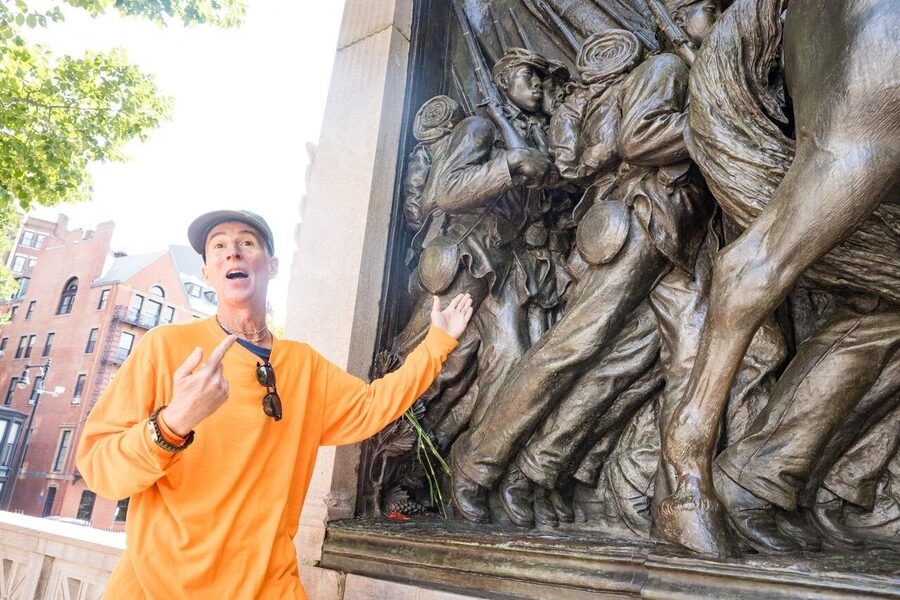
Then you land in one of the most important areas on the Freedom Trail. The Old State House dates to 1713 and was the seat of colonial government. It also played a stage role in key events leading to the Revolution.
The guide specifically calls out that the Declaration of Independence was read from its balcony. That single detail is a jolt. You’re not just hearing that independence happened. You’re hearing that it was announced publicly, in a space where power had been displayed before.
This is one of the reasons I like this tour format: you do not wait until the end to get the high-stakes moments. You see them as the route closes in on the “core” of the story.
The Boston Massacre site: why this spot feels heavy
No Freedom Trail highlight walk is complete without addressing the Boston Massacre of 1770. The tour includes the site marking where tensions between colonists and British soldiers escalated into that infamous event.
This stop serves as a stark reminder of how close protest, fear, and violence sat to each other. It is also where the tour’s earlier cemetery information links back. Crispus Attucks is again in your mind, because the story connects the human cost to the political shift that followed.
If you want a hopeful, upbeat day, this stop may feel intense. But it is part of understanding how liberty was paid for.
Massachusetts State House and the modern government thread
The tour also highlights the Massachusetts State House, completed in 1798. Its iconic golden dome is described as a shining symbol of Boston, and the building serves as the seat of Massachusetts’ government.
The practical value of this stop is that it bridges past and present. You get a sense that this is not just a preserved set of ruins. Boston kept building institutions, and the legislative process kept moving forward after the Revolution.
Even if you do not go inside, the sight of the dome and the explanation of its role helps you connect “the Revolution happened” to “government continued.”
Faneuil Hall: the Cradle of Liberty and the end of your walk
Finally, the tour ends at Faneuil Hall. This is a big finish. Faneuil Hall has served as a marketplace and meeting hall since 1742, and it is strongly tied to fiery debates and speeches advocating for independence.
You’ll hear it described as the Cradle of Liberty, and the reason is practical: it is a place built for public talk. That makes sense for a city where ideas were argued in streets and gathered rooms.
By the time you arrive, you have covered the arc: cemeteries and casualties, planning sessions, public announcements, and escalating conflict. Faneuil Hall becomes the reward stop, where the story turns toward organized speech and political momentum.
Price and value: is $39 a good deal for two hours?
At $39 per person for a two-hour guided highlights walk, the value depends on what you want from Boston.
If you want a quick hit of the most meaningful Freedom Trail sites, this price can make sense. You are paying for a licensed guide to connect major stops into one understandable story, without you having to do the heavy research.
You also get a format that tends to be low-stress: you start at Park St., walk key sites, and end at Faneuil Hall. Since hotel pickup and drop-off are not included, this is best when you are already in the area or willing to reach the meeting point on your own.
Not included: food and drinks. That means you should plan a snack stop either before you start or after you finish, depending on the time of day.
Who should book this walk?
This tour fits best if you:
- Want a guided route through Boston Common, Old State House, and Faneuil Hall plus the core Revolution-related stops
- Like your history connected to names, buildings, and specific events
- Need an efficient way to cover major landmarks in a short visit
- Are traveling with kids, since reviews specifically mention that the pace and storytelling hold attention
It might be less ideal if you:
- Want a long, slow day with museum time at every stop
- Prefer self-paced exploring without a structured narrative
Also, it is wheelchair accessible, which is a big practical plus for mobility planning.
Should you book it?
Yes, you should book this tour if you want a fast, coherent Freedom Trail experience where the major sites make sense in one storyline. Brian’s reputation for humor and clear, detailed answers is a strong sign that you will not just hear dates, you will understand why these places mattered.
If you only have a couple of hours in Boston and you want your day to feel organized and meaningful, this is a solid choice. If you have more time and want to linger, you can still book it, then spend the rest of the day returning to the stops that hit you hardest.
FAQ
Where is the tour meeting point, and where does it end?
The tour meets outside the Park St. T Station on the eastern edge of Boston Common. The tour ends at Faneuil Hall.
How long is the guided tour?
The tour lasts 2 hours.
What is included in the price?
It includes a guided highlights tour with an expert licensed guide. It is designed as the best option to cover the highlights in a short amount of time.
Is food or drinks included?
No. Food and drinks are not included.
What is the price per person?
The price is $39 per person.
Is the tour offered in English?
Yes, the live tour guide is in English.
Is the tour wheelchair accessible?
Yes, it is wheelchair accessible.
What is the language and cancellation policy?
The tour is English. It also offers free cancellation, with cancellation allowed up to 24 hours in advance for a full refund.
Written up lately around the harbor
- Boston’s Beacon Hill: Private Walking Tour
★ 5.0 · 1 review - Boston’s Chinatown: Small Group Walking Tour
★ 5.0 · 1 review - Self-Guided Scavenger Hunt: Boston Back Bay & Beyond
★ 4.0 · 1 review - Flynn Cruise Port Boston to Boston hotels – Arrival Private Transfer
★ 5.0 · 1 review - Boston to Woods Hole & Martha’s Vineyard Ferry Private Chauffeur Service
★ 4.0 · 1 review - Classic Martha’s Vineyard 1-Day Escape from Boston
★ 5.0 · 1 review - Private Vacation Photoshoot with Photographer in Boston
★ 5.0 · 1 review
Freedom Trail Tours, compared.
Freedom Trail History Small Group Walking Tour
Read our review →
Boston Freedom Trail Walking Tour with Costumed Guide
Read our review →
Boston Food & History: Pizza, North End & Freedom Trail
Read our review →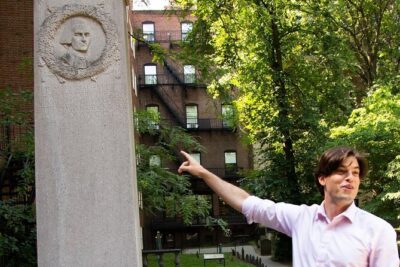
Boston’s Freedom Trail: A Revolutionary Walking Tour
Read our review →Freedom Trail History Small Group Walking Tour
Read our review →Boston’s Freedom Trail: A Revolutionary Walking Tour
Read our review →

Boston Freedom Trail History Pub Crawl Small-Group Tour
Read our review →Browse the lists this tour appears in