
Reviewed · FREEDOM TRAIL TOURS
Freedom Trail: Boston Common, Old State House, Faneuil Hall
Boston history in a walk you can actually follow.
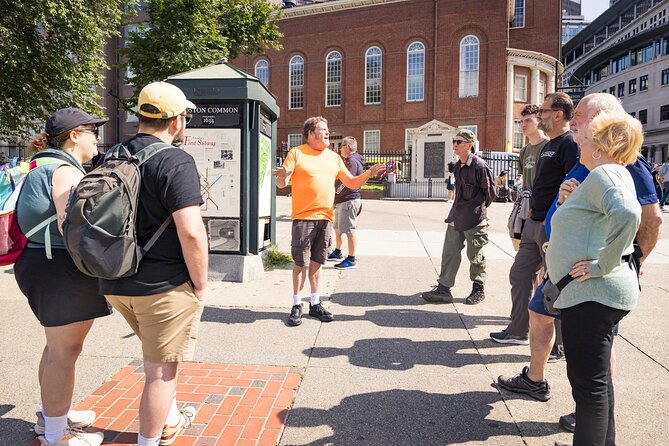
This small-group Freedom Trail tour strings together the big names and the human stories, with a live guide who explains what you are seeing and why it mattered. You start downtown, cover major sites like Boston Common, Old State House, and Faneuil Hall, and you keep moving without getting lost in random plaques.
I especially like the small-group size and the chance to ask questions, with Brian leading in a way that feels personal, not like a lecture. I also like that it is a walking tour that pays attention to details you usually skip when you are wandering on your own.
The main drawback to consider is the fast pace of short stops. You get about 15 minutes at each site, so if you want long looks inside buildings or slow, quiet time to read everything, you may feel rushed.
In This Review
- Key Things I’d Watch for on This Freedom Trail Tour
- A Small-Group Freedom Trail with Brian Leading the Way
- Boston Common: The Calm Start That Sets the Timeline
- From the Massachusetts State House to Park Street Church
- Granary Burying Ground and the Names You Should Know
- King’s Chapel and Old South Meeting House for Revolution Ready
- Old State House Balcony to Faneuil Hall Cradle of Liberty
- How the 2-Hour Walking Pace Works for First-Timers
- Is the $39 Price Fair, and What You Get for It
- Should You Book This Freedom Trail Walk?
- FAQ
- What sites are included on this Freedom Trail tour?
- How long is the tour?
- How much does it cost?
- Is the tour guided, and what language is it in?
- Do I need to buy tickets for the stops?
- Where do I meet the tour, and where does it end?
- What time does the tour start?
- How big is the group?
- Are service animals allowed?
Key Things I’d Watch for on This Freedom Trail Tour
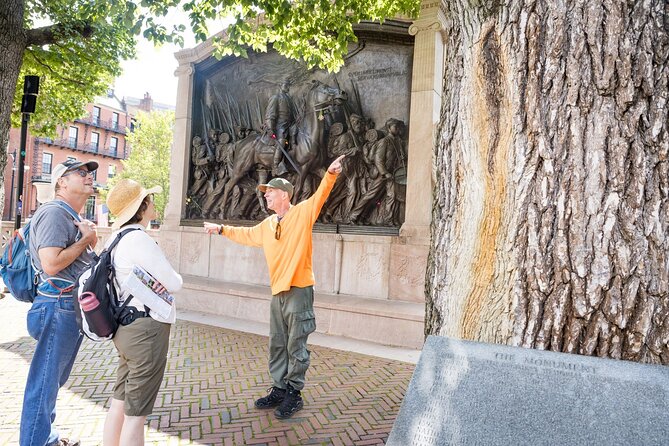
- Max 15 people, so the guide can actually respond when you ask something
- Brian as the local guide and historian, with lively explanations and tight focus
- 8+ Freedom Trail stops covered in about 2 hours, so it works well for first-time visitors
- Most admissions are free, and Granary Burying Ground ticket is included
- English language tour with mobile ticket convenience
- Expect quick 15-minute stop pacing, great for momentum, less ideal for slow readers
A Small-Group Freedom Trail with Brian Leading the Way
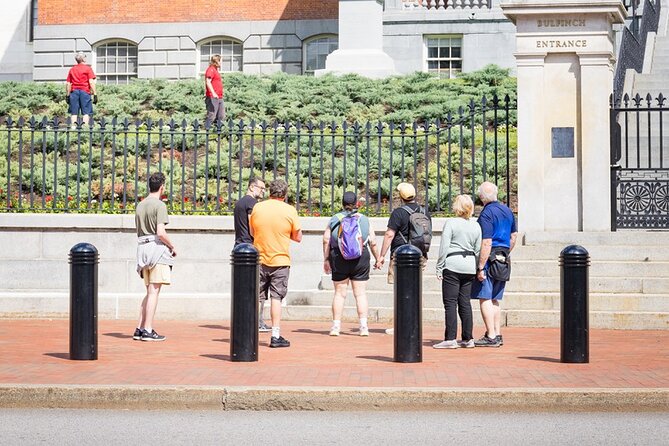
If you have ever walked the Freedom Trail and thought, I know I am seeing something important, but I wish someone could connect the dots, this is the format you want. The tour is designed as a guided walking experience with live commentary throughout, which means you are not just staring at buildings and hoping you guess the story correctly.
The group stays small, with a maximum of 15 travelers. That matters more than people think. In a bigger crowd, you hear bits, you miss details, and asking follow-ups can feel awkward. Here, you can actually raise your hand, say you are curious about something, and get an answer that keeps you oriented.
Brian is the guide name that comes up again and again in accounts of this tour. The tone is energetic, and he shares small, memorable angles, including fun quirky details tied to what you are looking at. That is a smart way to learn, because you remember stories, not just dates.
One more practical note: you use a mobile ticket and the tour is offered in English. Service animals are allowed, and the meeting area is near public transportation, which helps if you are planning the rest of your day in Boston.
More ways along the Freedom Trail:
- Boston: Freedom Trail History Small Group Walking Tour★ 5.0 · 6,450 reviews
- Boston Freedom Trail Walking Tour with Costumed Guide★ 4.5 · 2,531 reviews
- Boston Food & History: Pizza, North End & Freedom Trail★ 5.0 · 1,772 reviews
Boston Common: The Calm Start That Sets the Timeline
You begin at the corner area near Tremont St and Park Street, plus Winter St. The first stop is Boston Common, founded in 1634. Starting here is a clever move, because the park gives you breathing room before you get into the harder revolutionary-era stuff.
Boston Common is described as America’s oldest public park, and it works like an outdoor “first chapter.” The guide points out how the place has hosted major eras, from British troop encampments during the Revolutionary War to later civil rights rallies in the 20th century. That jump across centuries is useful. It helps you understand the Freedom Trail is not a single event, it is a long thread of political change.
Even if you feel like you already know Boston’s big revolutionary talking points, Boston Common is where you get a clearer timeline and a better sense of how public space shaped public action. It is also where you can reset your expectations: the tour is not just about fancy colonial architecture, it is about people using the city to argue, organize, and fight for what they believed.
Practical tip: wear comfortable shoes. You are starting in a walk-friendly downtown area, but this tour is built on steady movement, not frequent stops for deep sitting down.
From the Massachusetts State House to Park Street Church
From Boston Common, the tour moves to the Massachusetts State House, completed in 1798. The famous golden dome is the visual hook, but the real value is hearing how the building connects to the state’s legislative process and its long political role. This is one of those stops where the exterior tells you the mood, and the guide explains the function.
If you like understanding how power works, this stop is a good bridge between the Revolution years and the political system that followed. You are still in “history mode,” but now the story becomes about governance, not just uprisings.
Next up is Park Street Church, built in 1809. The standout detail here is that it was at the heart of significant events, including what is described as the first public anti-slavery address in the U.S. The tall steeple also makes it easy to orient yourself in the Boston skyline, which matters because you are moving between landmarks that can feel close but still spread out on foot.
Here is what I find smart about this pairing, State House and Park Street Church. One anchors you in government, the other anchors you in moral reform and activism. Together, they show that Boston’s “liberty” story is not only about independence from Britain. It also includes internal debates about human rights.
A small caution: both of these stops are time-limited, roughly 15 minutes each. You will get key points and visuals, but if you want to linger and read every sign or picture every angle, you will need to schedule extra solo time after the tour.
Granary Burying Ground and the Names You Should Know
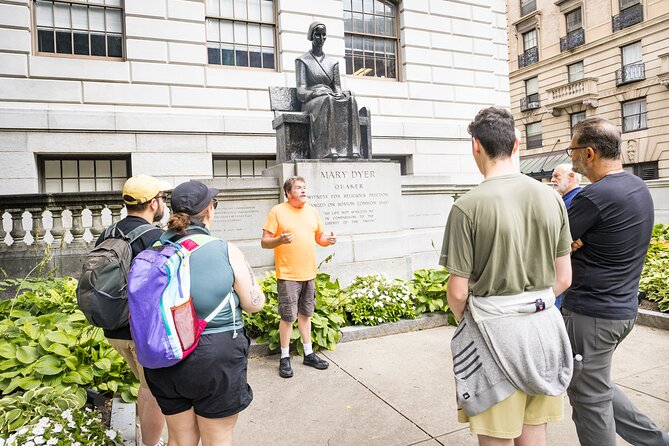
Then the tour takes you to Granary Burying Ground, one of Boston’s oldest historic cemeteries. This is where the story becomes personal. Instead of just hearing about events, you are walking past the names tied to the American Revolution, including Paul Revere, Samuel Adams, and John Hancock.
The stop also highlights Crispus Attucks, described as the first casualty of the Boston Massacre, and a symbol of the fight for freedom. That focus matters. It shifts the usual “big names” story and reminds you that the Revolutionary era involved people whose contributions do not always get equal spotlight in casual telling.
A practical plus: the admission ticket for Granary Burying Ground is included. For many historic sites, you pay for entry or you arrive and realize you have another fee. Here, this is one of the places where the tour bundle removes a common hassle.
This is also where those small guide details can really stick. One example from what people report about Brian is that he points out a fun twist connected to a memorial area at Granary, described as the Franklin Memorial where Ben is not there. Whether you love quirky facts or prefer strictly serious facts, these small touches keep the stop from feeling flat.
Etiquette note you should follow: cemeteries are quiet places. Keep your voice down, look where the guide indicates, and take a moment to read names closely if you can.
King’s Chapel and Old South Meeting House for Revolution Ready
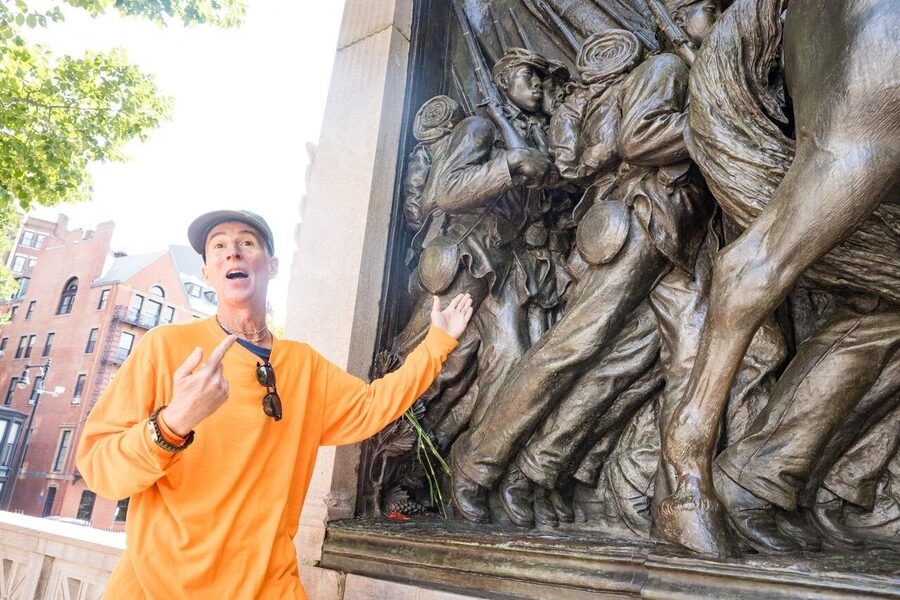
After the cemetery, you head to King’s Chapel, built in 1754. This is a Georgian architecture stop that feels different from the Revolutionary buildings you might picture in your head. The guide connects it to the spiritual community, including ties to loyalist congregants during the Revolution. That is an important angle because it complicates the simple good-versus-bad story people sometimes carry.
Seeing that loyalists also had a place in Boston helps you understand the Revolution was not one single, unified block. It was arguments within communities, inside churches, and across neighborhoods.
Next comes Old South Meeting House, built in 1729. This stop connects to the Boston Tea Party, with the detail that plans were famously set into motion here. It is easy to know the Tea Party story as a headline. It is harder to picture the meeting energy, the planning, the back-and-forth. This stop gives you that context by focusing on what these buildings actually hosted: discussions that turned into action.
For me, Old South works because it is a place where the Revolution became organized. You can almost imagine the noise of a meeting, even if the room is not exactly the same as it was then. The guide’s job is to make that mental picture clear.
What to watch for: since each stop is short, the guide usually hits the essential details and points out the most helpful features to notice. If you are the type who likes to photograph every surface, give yourself a plan, pick a couple of angles, and move on with the group so you do not get left behind.
Another way the same afternoon could go around Boston:





Old State House Balcony to Faneuil Hall Cradle of Liberty
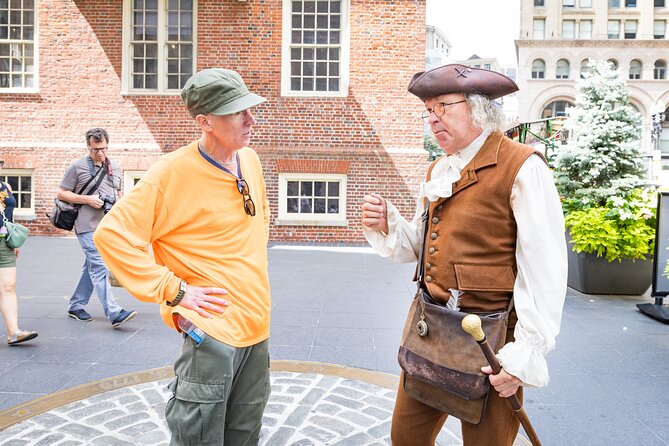
The tour continues to the Old State House, dating back to 1713. This is described as a seat of colonial government and a stage for key moments leading to the Revolution. The big highlight is that the Declaration of Independence was read from its balcony. That detail is one of those things that sounds straightforward until you stand there and realize the balcony was part of how the message landed in public.
This stop is especially good for first-timers because it ties together the Revolution’s ideas with the practical act of making them public. The balcony moment is not just a story, it is the start of a new political era.
Finally, you end at Faneuil Hall, often called the Cradle of Liberty. It has been a marketplace and meeting hall since 1742, which matters because it shows how debate and commerce lived in the same space. People gathered to talk, argue, and persuade, and the building became part of the city’s decision-making culture.
This is a good finish point because Faneuil Hall Marketplace is lively and easy to keep exploring after the tour. You finish with a place that still feels active, so the history does not end when the walking ends.
How the 2-Hour Walking Pace Works for First-Timers
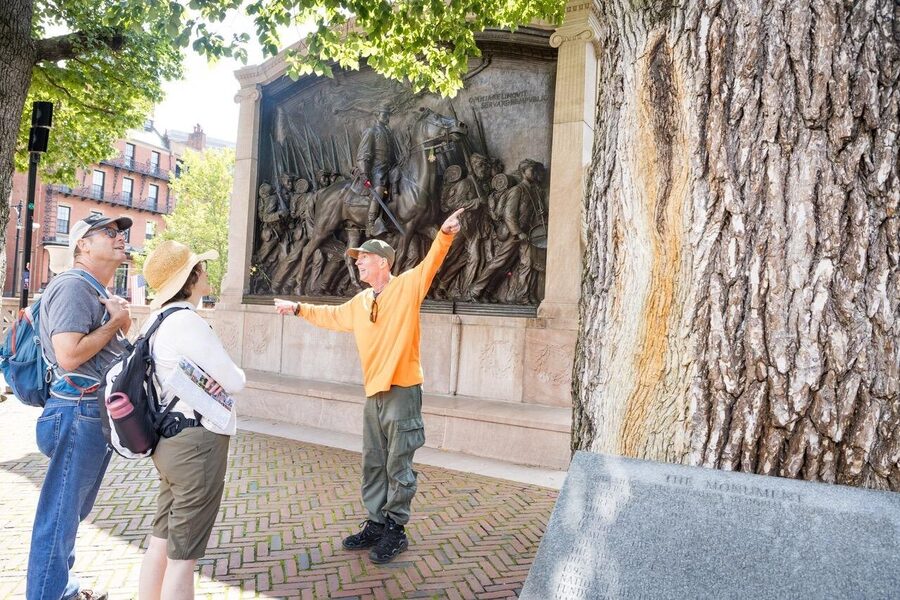
This tour is about 2 hours total and is built around quick, focused visits of roughly 15 minutes each. That pacing is a trade. You do get a lot of major sites without spending your whole trip inside, and the guide can connect the dots as you move. But it also means you will not have long stretches to read independently or go deep into each building’s interior details.
It is ideal if you are:
- visiting Boston for a day or two and want an efficient Freedom Trail overview
- the kind of person who learns best by listening and seeing landmarks in motion
- curious about the people behind the events, not only the events themselves
It may be less ideal if you:
- want a slow, quiet stroll with lots of free time for photos and reading
- are traveling with very young kids who need more frequent stops to break the routine
- dislike guided tours that move at an energetic tempo
One consistent theme in accounts is that Brian brings a lively energy. That is often a plus because you stay engaged. If you are the type who prefers gentle pacing and slower explanations, it might feel like a lot at first. My advice is simple: bring a notebook app or notes page and jot down one question you want answered. When you ask it, you turn the pace into something useful instead of something overwhelming.
Is the $39 Price Fair, and What You Get for It
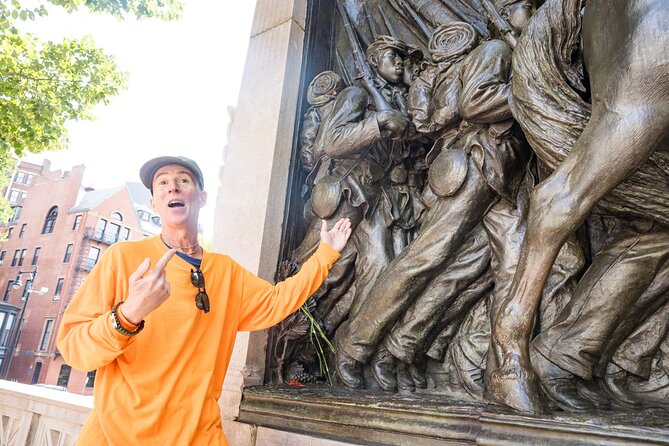
At $39 per person for about 2 hours, the cost can feel high if you think of it as paying to walk around outside. But this tour is not priced like a casual stroll. You are paying for a live guide who is a local historian, plus structured stops and context that you would otherwise have to piece together yourself.
The value is strongest if you compare what you get that self-guided trips rarely provide:
- guided storytelling tied to exactly what you are seeing
- time-saving route focus across the major landmarks
- small-group interaction, with room for questions
- mobile ticket convenience
- Granary Burying Ground admission included, while most other stops are free
Most stops are listed as free admissions, and only Granary Burying Ground is called out as included. That matters because it keeps the tour from turning into an add-on surprise. You should still plan on gratuity, since it is not included.
If you do decide to book, my best value tip is to treat it like a foundation. Use the tour to learn the names and themes. Then, after the walk, pick one or two sites where you want more time, and give them the extra attention you did not have during the guided pace.
Should You Book This Freedom Trail Walk?
Book this tour if you want a smart, small-group way to understand Boston’s Revolution landmarks and the reform-minded side of liberty too. It is a solid choice for first-timers because the guide connects the stops in a way that makes the Freedom Trail feel like a coherent story, not just a line of buildings.
Skip it or choose a different format if you need slower pacing, lots of solo time, or a tour built around heavy indoor exploring. The stops are short by design, and the guide’s energetic style is meant to keep you moving and thinking, not to slow everything down.
If you like getting oriented fast, picking up names like Crispus Attucks, and ending with a place that you can keep exploring, this one fits.
FAQ
What sites are included on this Freedom Trail tour?
You will visit Boston Common, the Massachusetts State House, Park Street Church, Granary Burying Ground, King’s Chapel, Old South Meeting House, Old State House, and Faneuil Hall.
How long is the tour?
The tour lasts about 2 hours.
How much does it cost?
The price is $39.00 per person.
Is the tour guided, and what language is it in?
Yes, it is a live guided walking tour with local Boston tour historian commentary. It is offered in English.
Do I need to buy tickets for the stops?
Most stops are listed as free. Granary Burying Ground has an admission ticket that is included.
Where do I meet the tour, and where does it end?
Meet at Tremont St & Park Street & Winter St, Boston, MA 02108. The tour ends at Faneuil Hall Marketplace, Boston, MA 02109.
What time does the tour start?
The start time listed is 10:30 am.
How big is the group?
The tour has a maximum size of 15 travelers.
Are service animals allowed?
Yes, service animals are allowed.
Written up lately around the harbor
- Boston’s Beacon Hill: Private Walking Tour
★ 5.0 · 1 review - Boston’s Chinatown: Small Group Walking Tour
★ 5.0 · 1 review - Self-Guided Scavenger Hunt: Boston Back Bay & Beyond
★ 4.0 · 1 review - Flynn Cruise Port Boston to Boston hotels – Arrival Private Transfer
★ 5.0 · 1 review - Boston to Woods Hole & Martha’s Vineyard Ferry Private Chauffeur Service
★ 4.0 · 1 review - Classic Martha’s Vineyard 1-Day Escape from Boston
★ 5.0 · 1 review - Private Vacation Photoshoot with Photographer in Boston
★ 5.0 · 1 review
Freedom Trail Tours, compared.
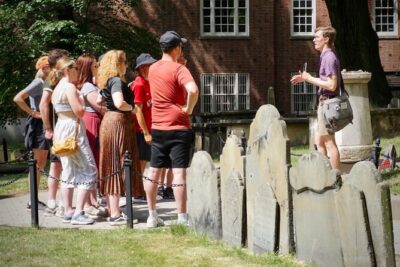
Freedom Trail History Small Group Walking Tour
Read our review →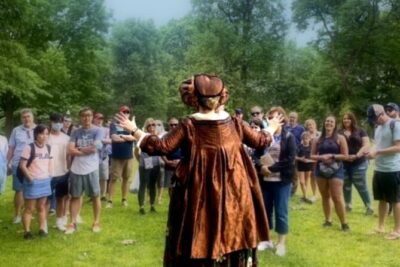
Boston Freedom Trail Walking Tour with Costumed Guide
Read our review →
Boston Food & History: Pizza, North End & Freedom Trail
Read our review →
Boston’s Freedom Trail: A Revolutionary Walking Tour
Read our review →Freedom Trail History Small Group Walking Tour
Read our review →Boston’s Freedom Trail: A Revolutionary Walking Tour
Read our review →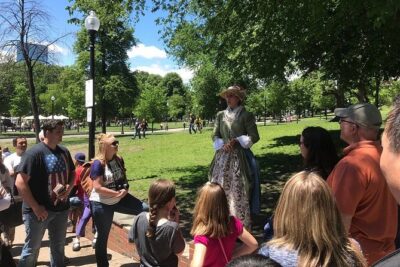

Boston Freedom Trail History Pub Crawl Small-Group Tour
Read our review →Browse the lists this tour appears in