
Reviewed · FREEDOM TRAIL TOURS
Freedom Trail: Small Group or Private 2 Hour Walking Tour
Revolution starts with a street corner. This 2-hour Freedom Trail walk is interesting because it connects Boston’s protest culture to the big American Revolution questions, and it’s told by a guide who makes the history feel immediate. I like the private groups of up to 2, and I also like how guides such as Chad, Tressa, and John bring the stories to life with humor and clarity.
One possible drawback: this tour is set up around a simple street-corner meeting point, so if you arrive late or you are waiting around with no guide in sight, you can lose time. I strongly suggest arriving early and double-checking the exact corner before you start wandering.
In This Review
- Key Highlights You Will Feel Right Away
- Entering the Freedom Trail, but With a Sharp Point
- Meeting at Tremont and Beacon, Then Getting Oriented Fast
- Downtown Boston: Learning Why People Were Angry Enough to Act
- The Tea Party Moment, Plus the March 5, 1770 Question
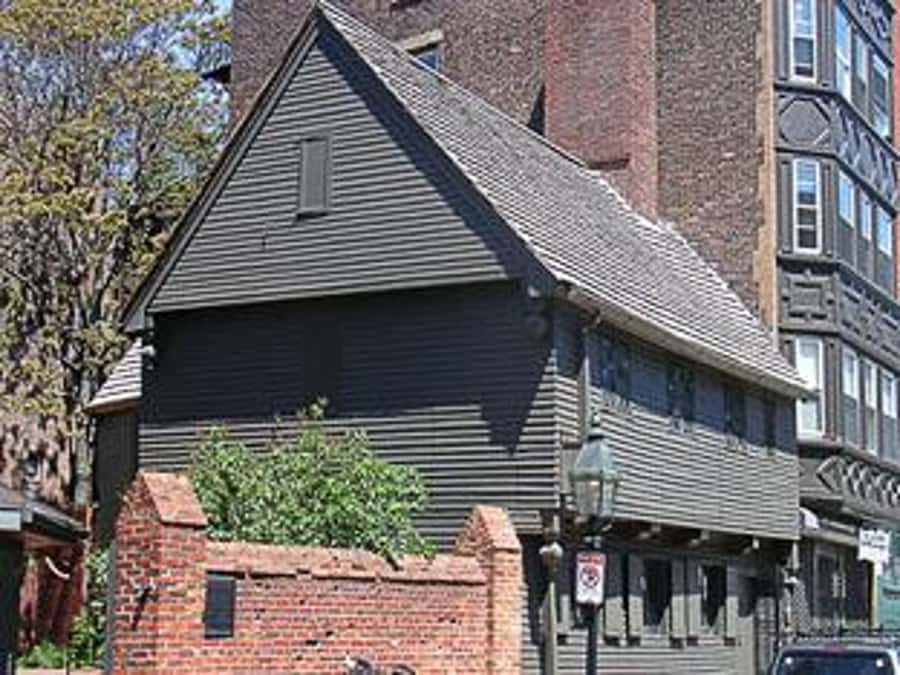
- Paul Revere as a Messenger, Not Just a Myth
- North End to Copps Hill Terrace: Ending With Perspective
- Why Private Groups Up to 2 Make a Big Difference
- Price and Value: $20 for a Two-hour, Guide-led Narrative
- How to Prepare So You Get the Most Out of the Walk
- Who Should Book This Freedom Trail Tour?
- Should You Book It?
- FAQ
- Where does the tour start?
- How long is the walking tour?
- Where does the tour end?
- Is this a private tour?
- What is the group size?
- Is the tour offered in English?
- Is the tour wheelchair accessible?
- Do I need to arrive early?
Key Highlights You Will Feel Right Away
- A focused 2-hour Freedom Trail story that moves from downtown to the North End without turning into a marathon
- Private groups up to 2, so you get time for questions instead of sharing one earshot with a crowd
- Tea Party context and the March 5, 1770 debate, including the push to decide what word to use for what happened
- Paul Revere framed as a messenger, not just a name on a poster
- Print and protest, including how Boston’s presses helped shape emotions and opinions
Entering the Freedom Trail, but With a Sharp Point
The Freedom Trail can feel like a checklist if you rush it on your own. This tour is different. You still walk in the historic downtown and into the North End, but you are not just seeing old buildings. You are learning why people argued, organized, and acted like they did in the years leading up to independence.
What makes this 2-hour format work is the way the guide chooses emphasis. Instead of trying to cover every stop perfectly, the tour leans into cause and effect: how Boston turned into a place where rebellion became normal conversation, how economic and social pressure built, and how messages spread through printing. You come away with a clearer sense of how the roots of American democracy grew out of street-level conflict, not just documents.
I also like that the tour is explicitly designed for smaller groups, up to 2. When it is just you and one other person, a lot changes. You hear things more clearly. The guide can slow down if you have questions. And you are not stuck smiling through someone else’s route plan.
More ways along the Freedom Trail:
- Boston: Freedom Trail History Small Group Walking Tour★ 5.0 · 6,450 reviews
- Boston Freedom Trail Walking Tour with Costumed Guide★ 4.5 · 2,531 reviews
- Boston Food & History: Pizza, North End & Freedom Trail★ 5.0 · 1,772 reviews
Meeting at Tremont and Beacon, Then Getting Oriented Fast
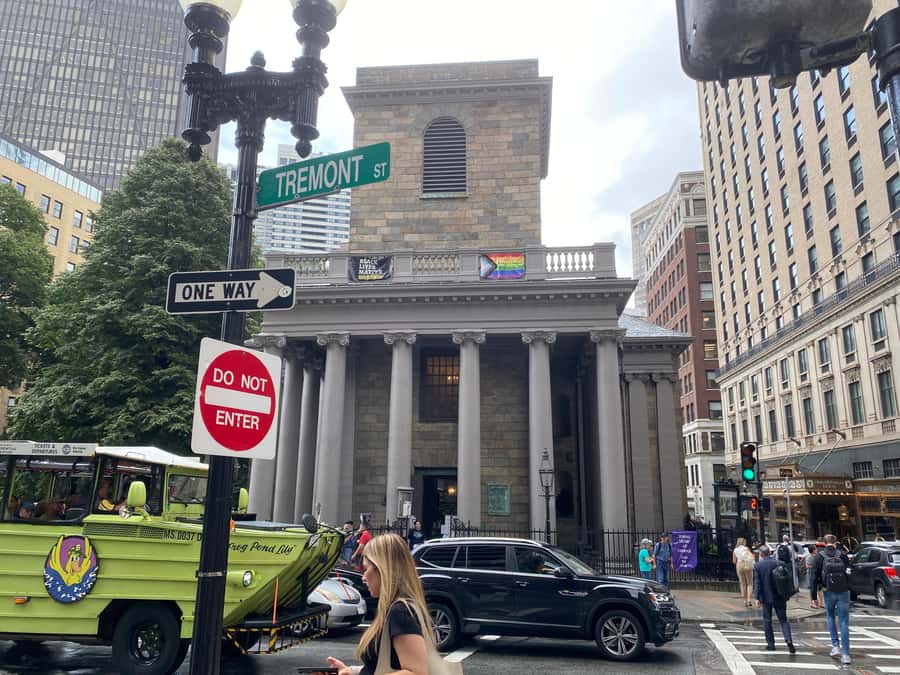
Your meeting point is the corner of Tremont and Beacon streets, across from King’s Chapel. You also see One Beacon Street listed as the starting location, so just treat this as a nearby downtown starting area and aim to be standing at the exact corner you are told.
Arrive 10 minutes early. This is the kind of walk where being a few minutes late can feel like a lot, because you are starting a guided story right away. If you are the type who needs time to get your phone out, take a quick photo, and settle your route, arriving early keeps you from starting the tour flustered.
Also, because the group is private, the “what happens if I am not sure where to look” problem matters more than on a big group tour. If you do not see the guide at first, wait a moment at the correct corner rather than wandering off. That simple habit prevents the kind of awkward no-show stress that can happen when a meeting spot is easy to miss.
Downtown Boston: Learning Why People Were Angry Enough to Act
As you start the walking portion, you are set up to understand Boston in the period leading up to the American Revolution. The guide points out buildings and sites of importance, but the real value is how those stops become evidence in a bigger argument.
Here is the practical takeaway I think you will appreciate: the tour teaches you to read the city. Streets and buildings stop being scenery. They become clues about power, trade, fear, and persuasion. Boston is presented as a city that changed through economic, environmental, and social shifts. Even when you already know the general Revolution story, that lens helps you understand why specific events mattered to everyday people.
You are also pushed to notice the human side of political conflict. Revolutionary history can get packaged into dates and famous names. This tour keeps bringing it back to decisions people made, and the emotional pressure behind those decisions.
If you are a novice, you will feel guided rather than overwhelmed. If you are a history buff, you will likely appreciate that the tour includes lesser known stories behind major events. Either way, you should feel like the tour is building a narrative, not listing facts.
The Tea Party Moment, Plus the March 5, 1770 Question
One of the tour’s biggest draw points is how it handles the infamous Tea Party. You are not just told what happened. You hear the details behind it, including how the event played into the broader pattern of protest.
Then comes the moment that turns the walk from “history overview” into “history thinking.” The tour includes discussion around the event on 5 March 1770 and prompts you to decide whether it is truly a Massacre.
That detail matters because it trains you to pay attention to wording and framing. In Revolutionary-era history, language is not a decoration. It is part of the fight. What people called an event influenced how others reacted, how protests organized, and what future actions felt justified. You do not have to arrive with a strong opinion. The tour gives you enough context to form your own.
This is also where your guide’s style really shows. In the past, guides like Chad, Tressa, and John have been described as friendly, knowledgeable, and able to bring the stories to life. On a tour like this, that does not just mean they can answer questions. It means they can make you care, even if you normally skim history pages.
Paul Revere as a Messenger, Not Just a Myth
Paul Revere often gets treated like a symbol. The tour keeps him grounded by focusing on why he was such an effective messenger.
That emphasis is practical for your understanding. It shifts your attention from the famous ride to the actual purpose of communication. In a time when information could spread slowly, get distorted, or arrive too late, messenger networks were part of political strategy. Hearing it explained on the street makes it feel less abstract.
This section of the walk also pairs nicely with the tour’s printing theme. The guide talks about the words and images printed on Boston’s presses and how those messages stirred the emotions of a generation of colonial Americans.
The connection is the real lesson. The Revolution was not only fought with muskets and tactics. It was also shaped by persuasion, story, and urgency. You leave this part of the walk understanding why printed material could feel like fast-moving fuel for the public mood.
More of Boston crossed at walking pace:

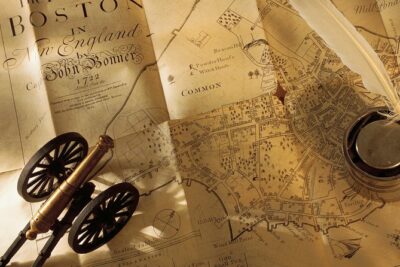
North End to Copps Hill Terrace: Ending With Perspective
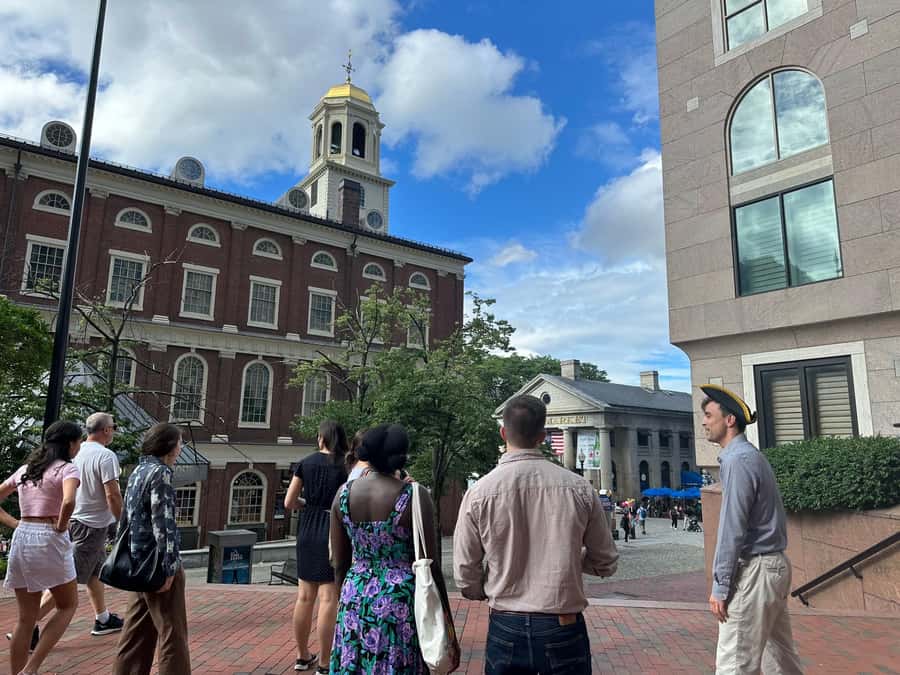
After moving through the downtown story, you head into the North End portion of the walk. That shift matters. The guide is setting you up to see how the rebellion was not confined to one tidy storyline. It was woven into neighborhoods and daily life.
The tour ends at Copps Hill Terrace. By this stage, you should feel like the city is making sense. The ending location also gives you a chance to catch your breath and mentally sort out what you just learned. A good finale for a walking history tour does not just mark the endpoint. It gives you a final perspective that helps you remember the connections.
If you tend to forget what you heard a few hours later, you will likely like this format. Two hours is short enough that your brain stays engaged, but long enough for a real narrative arc.
Why Private Groups Up to 2 Make a Big Difference
This is not a big bus tour. The group size is up to 2, and it is designed as a private guided walking tour. For you, that usually means three things.
First, you can ask questions without feeling like you are interrupting a class of strangers. Second, the guide can pace the story based on your level. If you are new to the Freedom Trail, the guide can keep things clear. If you know the basics already, the guide can spend more time on the lesser known stories and the reasoning behind key arguments.
Third, you get a more personal tone. In the tour experience you provided, guides such as John have been credited with strong knowledge and even a sense of humor. That mix matters on a two-hour walk, because it keeps the story from turning into lectures.
There is one trade-off. Private tours can feel more sensitive to timing and meeting-point clarity. That is why the practical advice is simple: show up early, stand at the correct corner, and communicate if anything feels off.
Price and Value: $20 for a Two-hour, Guide-led Narrative
At $20 per person for a 2-hour guided walk, you are paying for interpretation. You are not just paying for someone to walk with you. You are paying for someone to point at specific places and explain why they mattered during the Revolution era.
Here is the value logic that matters for real travelers. If you are going to spend two hours anyway on a self-guided Freedom Trail route, a guide can save you time and frustration by sorting the story for you. You do not have to decide what to read first, what to skip, or which events connect.
Also, the private group format is a bonus for value. Even if you are only two people, the guide still has to do the work of moving you through a coherent narrative. If you can split the cost with a companion, the cost per hour can feel very reasonable for what you learn.
If you are traveling solo and you want the maximum social energy of a big group tour, this may feel too quiet. But for focused history learning and lots of questions, it is a strong setup.
How to Prepare So You Get the Most Out of the Walk
You do not need a textbook for this tour, but you will get more out of it if you arrive mentally ready to think. The guide asks you to consider questions like whether the March 5, 1770 event should be called a Massacre. That is not trivia. It is historical interpretation.
For your comfort and your attention span:
- Wear comfortable walking shoes, since the format is a guided stroll rather than a sit-and-stare museum break
- Bring water if you are visiting on a warm day, because two hours is long enough to feel it
- Have a simple note-taking setup, even just your phone notes, so you can capture the key story connections you want to remember
If you are the type who likes to connect your tour to your evening plans, you can also skim general background on the American Revolution before you go. Not to memorize, just to give your brain hooks for what the guide is explaining.
Who Should Book This Freedom Trail Tour?
You will probably love this tour if you:
- Want a guided Freedom Trail experience that actually explains the “why,” not just the “what”
- Like your history with debate and interpretation, especially around the March 5, 1770 question
- Prefer a smaller group setup, where you can ask questions and get more direct answers
- Are curious about how communication worked in the Revolution era, including messenger networks and printing
You might want to skip or choose a different format if you:
- Only want broad headlines and do not want to think through phrasing and framing
- Prefer to see many distinct landmarks with minimal explanation and maximum walking distance
Should You Book It?
Yes, I think you should book this tour if you want a tight, story-driven Freedom Trail walk with time for questions and a guide who can make Revolutionary events feel understandable in context. The $20 price for a two-hour guided experience is a fair deal, especially with the private groups up to 2.
My final practical nudge: show up early at Tremont and Beacon across from King’s Chapel, and plan to treat the meeting point as important. If you do that, you will get the best part of the experience, the one where Boston’s protest culture and communication network make sense as a system, not just a collection of famous moments.
FAQ
Where does the tour start?
The tour meets at the corner of Tremont and Beacon streets, across from King’s Chapel. One Beacon Street is listed as the starting location nearby.
How long is the walking tour?
It lasts 2 hours.
Where does the tour end?
The tour finishes at Copps Hill Terrace.
Is this a private tour?
Yes. It is a private guided walking tour, and private group options are available.
What is the group size?
The tour is designed for groups of up to 2.
Is the tour offered in English?
Yes, the live tour guide is in English.
Is the tour wheelchair accessible?
Yes, wheelchair accessible is listed.
Do I need to arrive early?
Yes. Please arrive 10 minutes prior to the scheduled departure.
Written up lately around the harbor
- Boston’s Beacon Hill: Private Walking Tour
★ 5.0 · 1 review - Boston’s Chinatown: Small Group Walking Tour
★ 5.0 · 1 review - Self-Guided Scavenger Hunt: Boston Back Bay & Beyond
★ 4.0 · 1 review - Flynn Cruise Port Boston to Boston hotels – Arrival Private Transfer
★ 5.0 · 1 review - Boston to Woods Hole & Martha’s Vineyard Ferry Private Chauffeur Service
★ 4.0 · 1 review - Classic Martha’s Vineyard 1-Day Escape from Boston
★ 5.0 · 1 review - Private Vacation Photoshoot with Photographer in Boston
★ 5.0 · 1 review
Freedom Trail Tours, compared.
Freedom Trail History Small Group Walking Tour
Read our review →
Boston Freedom Trail Walking Tour with Costumed Guide
Read our review →
Boston Food & History: Pizza, North End & Freedom Trail
Read our review →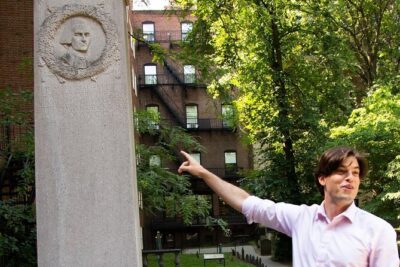
Boston’s Freedom Trail: A Revolutionary Walking Tour
Read our review →Freedom Trail History Small Group Walking Tour
Read our review →Boston’s Freedom Trail: A Revolutionary Walking Tour
Read our review →

Boston Freedom Trail History Pub Crawl Small-Group Tour
Read our review →Browse the lists this tour appears in