
Reviewed · FREEDOM TRAIL TOURS
Freedom Trail Walking Tour in Boston in French
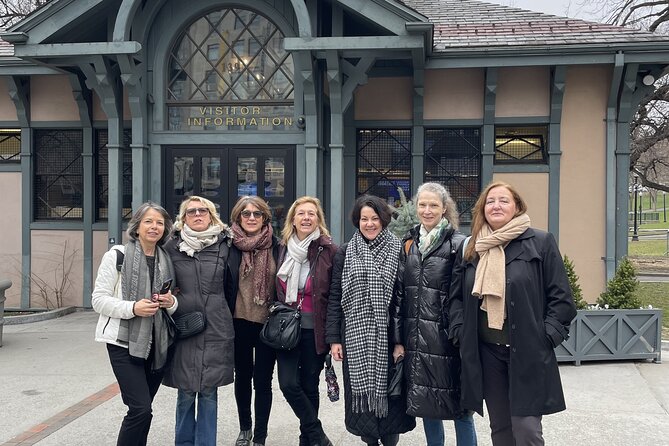
Boston history, on foot, in French. This Freedom Trail walking tour is a smart way to see the key stops you keep hearing about, from Boston Common to Copp’s Hill Terrace, with a French-speaking guide named Maria bringing the American Revolution to life through clear stories and original anecdotes. I especially liked how she connects monuments to everyday choices people made, and how the walk keeps you oriented as you move, so downtown Boston starts to feel like an open-air museum. One thing to consider: this is mostly outdoor walking, and there are no museum visits built in, so you’ll want good shoes and weather-ready layers.
In practice, the tour is short enough to fit into a busy trip, yet long enough to feel like a real backbone tour of the center of Boston. You get a mobile ticket, and the group is capped at 12, which helps Maria keep the pace conversational and interactive, even when it’s cold. With most stops offering free outdoor viewing, the value comes from the guide and timing more than from paid entry.
The route ends in the North End Italian quarter area, so you finish near great dinner options and a classic post-walk stroll. If you’re here for architecture, abolition-era stories, immigration threads, and the “then and now” feel of Boston, this walk hits that sweet spot fast.
In This Review
- Key highlights I’d target on this Freedom Trail walk
- Why a Freedom Trail walk in French is such a good first move
- Boston Common to the Freedom Trail start, the city’s green anchor
- Shaw Memorial to Beacon Hill landmarks, history plus architecture
- Old Corner Bookstore and the Old South Meeting House, the city’s long memory
- Old State House and the Boston Massacre site, where words and actions collide
- Faneuil Hall to Quincy Market and Union Oyster House, liberty meets the lunch break
- Old pedestrian streets, Blackstone Block, and the modern sculptures you notice after dark
- North End, Paul Revere, and Old North Church, the story gets personal
- Copp’s Hill Burying Ground, the panorama that turns the walk into a memory
- Price and time, what $45 buys you in practical terms
- Who this Boston Freedom Trail tour suits best
- Should you book this French Freedom Trail walk?
- FAQ
- What is the duration of the Freedom Trail walking tour?
- How much does the tour cost?
- Where does the tour start and where does it end?
- What time does the tour begin?
- Is it a walking tour and will I need transportation?
- What is included in the tour price?
- Are museum visits included?
Key highlights I’d target on this Freedom Trail walk
- A French guide named Maria with energetic, story-driven explanations that keep the sites meaningful, not just dated
- Boston Common to the North End in about 2.5 hours, so you learn the shape of downtown quickly
- Revolution-era stops plus modern Boston moments, including The Embrace sculpture and the Holocaust Memorial
- A tight group size (max 12), which makes Q and A feel real instead of rushed
- All the big outdoor landmarks you want for photos, including Faneuil Hall, Old State House, Paul Revere sites, and Copp’s Hill views
Why a Freedom Trail walk in French is such a good first move
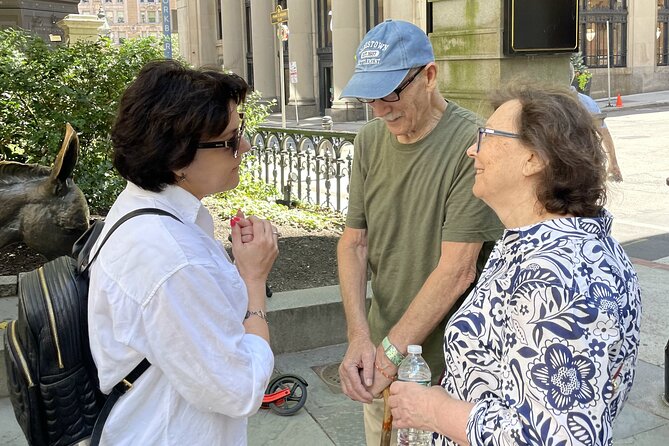
If Boston is your first major stop on the US East Coast, you need two things fast: context and orientation. This tour gives you both. Maria doesn’t just point at plaques. She uses the Freedom Trail sequence to help you understand why Boston mattered, how the city was built and rebuilt, and how old tensions echo into daily life today.
I liked that the stories cover more than one chapter. Yes, you get the American Revolution timeline you expect. But you also pick up threads on abolition, American education, immigration, and how city life functions now. That matters because Boston is not only monuments. It’s people, neighborhoods, and a layout you’ll keep using after the tour.
The tour also works well in French, which is rare for this type of “essentials” sightseeing. When you’re learning a city’s past in your language, you remember details. You also ask better questions.
One small caution: the route is packed with meaningful stops, but there are no indoor museum breaks. If you’re hoping for curated galleries or ticketed exhibits, plan other time for that.
More ways along the Freedom Trail:
- Boston: Freedom Trail History Small Group Walking Tour★ 5.0 · 6,450 reviews
- Boston Freedom Trail Walking Tour with Costumed Guide★ 4.5 · 2,531 reviews
- Boston Food & History: Pizza, North End & Freedom Trail★ 5.0 · 1,772 reviews
Boston Common to the Freedom Trail start, the city’s green anchor
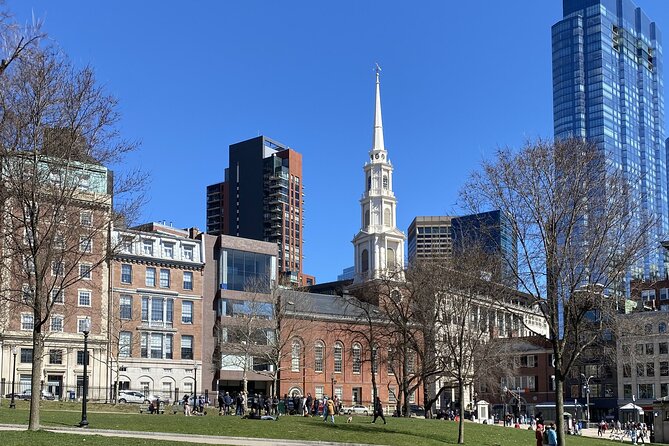
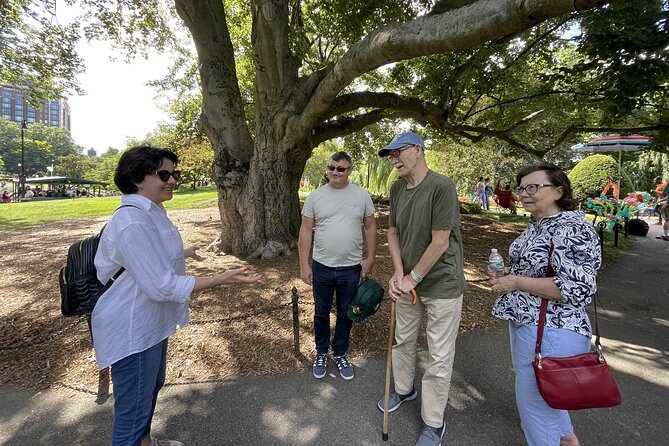
The tour opens at the Boston Common Visitors Center, then steps into Boston Common, the oldest public park in the United States (dating to 1634). This park is part of the Emerald Necklace, a linked system of 6 parks. If you’ve ever seen Boston described as an open-air museum, this is where that idea begins to make sense. Green space here is not filler. It is part of how the city tells its story.
You’ll hear unexpected facts tied to Boston’s founding and the early landscape, and you’ll make a quick stop linked to Telegraph Hill, a historic hill associated with the city’s origins. The park has monuments you can spot easily, including the Boston Massacre Memorial, the Great Elm Tree, and the Soldiers and Sailors Monument.
This is also where the Freedom Trail starts. The practical value is huge. By the time you’re leaving Boston Common, you start to feel the “logic” of the route, so later stops do not feel like random highlights.
If you’re visiting with kids or as a couple who likes photos, this first segment is friendly because it is mostly open, easy to see, and full of landmarks without entry lines.
Shaw Memorial to Beacon Hill landmarks, history plus architecture
Next comes the Robert Gould Shaw and the 54th Regiment Memorial. It is a striking bronze bas-relief by sculptor Augustus Saint-Gaudens. Even if you only have a few minutes here, this stop anchors the tour beyond battles and dates. It pushes the conversation toward emancipation and the people connected to the fight for freedom.
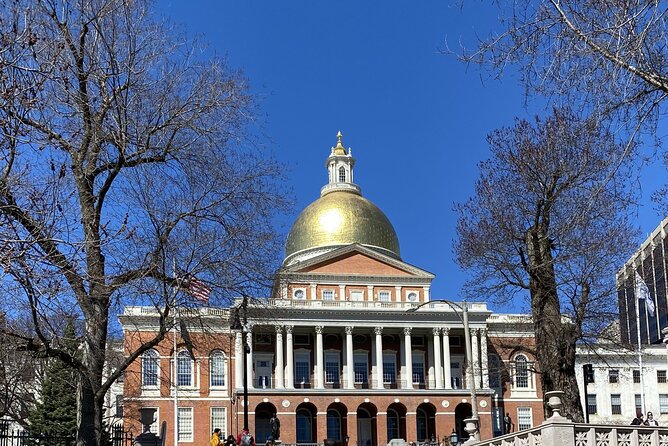
From there, you move into Beacon Hill with a stop at the Massachusetts State House. Maria points out it is built end of the 18th century by the architect Bullfinch, and that it is Federal style, with a golden dome that visually dominates the neighborhood. This is one of those stops where the architecture itself is the lesson. You’ll understand how power and civic identity were expressed in stone and design.
Then you walk by Old City Hall, built in 1865 in French Second Empire style, in the same design spirit as the Garnier Opera in Paris. The tour notes that it hosted Boston’s city council from 1865 to 1969. I love this kind of comparison, because it reminds you the city was not operating in isolation. It watched European styles, then adapted them locally.
Two quick notes that make this part of the walk feel efficient:
- Several stops are short, so you’re always moving toward the next “big” visual moment.
- Maria keeps the connections clear, so the history does not blur together.
Old Corner Bookstore and the Old South Meeting House, the city’s long memory
A short stop near the Old Corner Bookstore is a fun angle shift. Built in 1718 and located in the oldest commercial building in downtown Boston, it connects the Freedom Trail to publishing and ideas. The tour explains that this 19th century publishing house produced multiple famous American classics.
Why I think this matters: abolition, revolution, and education do not happen only because people fight. They also happen because ideas spread. A bookstore stop in a political walking tour is a helpful reminder that culture and law move together.
You continue to Old South Meeting House, built in 1729. This former Puritan church was a gathering place for nearly three centuries. It’s the kind of place where “meeting” becomes the point, not the building itself. You can almost picture people arriving with news, arguments, and plans.
If you like your history practical and human-scale, this portion delivers. If you prefer purely monumental architecture, you might still enjoy it, because even short stops here feel like chapters, not interruptions.
Old State House and the Boston Massacre site, where words and actions collide
At Old State House, built in 1713, the vibe is time-warp enough to make you look twice. You’re surrounded by modern buildings, but the building reads like it paused. The key moment you’ll focus on is July 18, 1776, when the text of the United States Declaration of Independence was read from the balcony.
Then you move to the Boston Massacre site, in front of a public building where a squadron of the British army opened fire on five Bostonians in 1770. This incident gets its own name, Boston Massacre, and it’s remembered because it sparked outrage and fueled revolutionary momentum.
These two stops together work well because they show two sides of protest:
- declaration and political language,
- violence and consequences.
Maria’s approach makes these scenes easier to place, especially if this is your first time working through the Revolution in Boston.
More of Boston crossed at walking pace:

Faneuil Hall to Quincy Market and Union Oyster House, liberty meets the lunch break
The tour hits Faneuil Hall Marketplace next, often called the Cradle of Liberty. The building dates to 1741, and there is a golden weathervane shaped like a huge grasshopper. The grasshopper becomes Boston’s first and most famous symbol, and the tour makes that visual detail feel important rather than random.
From there you walk through the feel of historic Boston markets at Quincy Market. Built in 1824 as a former market, it now operates as a food court with stalls and shops in an alley setting. It’s a good stop for photos because you see how the city kept the bones of older commerce while turning it into something modern you can actually enjoy.
Finally, there is a stop at Union Oyster House. It is described as the oldest restaurant in the United States (1826), located in a historic building from 1704. The tour also notes that Louis-Philippe, who would become king of France, lived in that building in a modest apartment on the second floor.
This trio of stops gives you a real-world perspective: revolutionary energy still had to feed people. Boston’s story is not only speeches and battles. It’s also businesses, meals, and the constant churn of daily life.
If you’re hungry, this is where you’ll appreciate that the tour keeps these moments quick. It doesn’t trap you in a restaurant, but it puts you near real food options.
Old pedestrian streets, Blackstone Block, and the modern sculptures you notice after dark
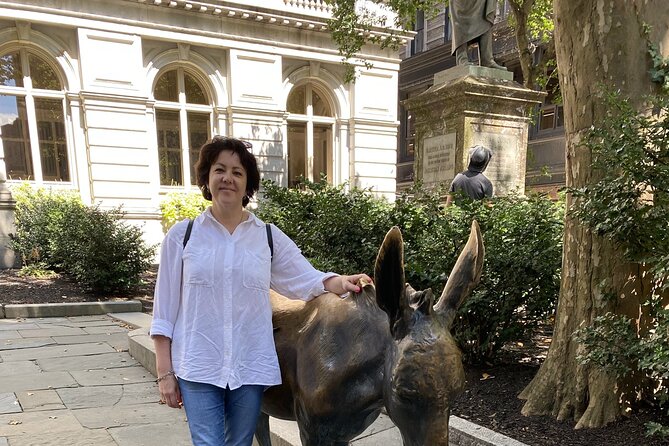
Between the lunch-area landmarks and the North End, the route includes older pedestrian streets, including Blackstone block, listed on the National List of Historic Places. These are short segments, but they are the kind of connective tissue that helps Boston feel walkable and layered.
The overview also includes modern Boston sculptures along the way, including The Embrace and the Holocaust Memorial. I like when tours do this. It prevents “history tour” tunnel vision. You see how the city remembers difficult events and how public art keeps the story in the present.
If you’re planning photos, this is also where you should pay attention to lighting. Some sculptures photograph better in softer daylight, and even in overcast conditions they can be striking.
North End, Paul Revere, and Old North Church, the story gets personal
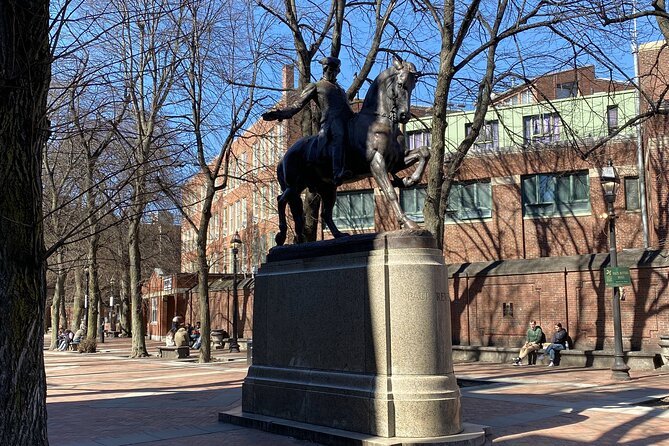
Now the walk leans into the North End, literally the northern district. The tour gives it time, about 30 minutes, because this neighborhood is where colonial-era stories feel close to the street.
You’ll stop at the Paul Revere House, built in 1676, one of the last colonial remnants. The tour notes Paul Revere lived there from the 1780s to 1800. This is a stop that helps you shift from public events to private residence, which is where many people get lost in the Revolution story.
Next is the Paul Revere Statue honoring the Midnight Ride from 1775. Then you reach Old North Church and Historic Site. The church built here traces back to 1650, and during the colonial period, it was described as the most influential church in the Northeast and a stronghold of Puritan faith. Even if you don’t go inside, the stop gives you the moral and community context that often gets ignored when people only focus on military action.
These stops work well because they build a “chain of urgency.” A rider on a mission needs a network. A church and neighborhood shape values. A home becomes the background for decisions.
Copp’s Hill Burying Ground, the panorama that turns the walk into a memory
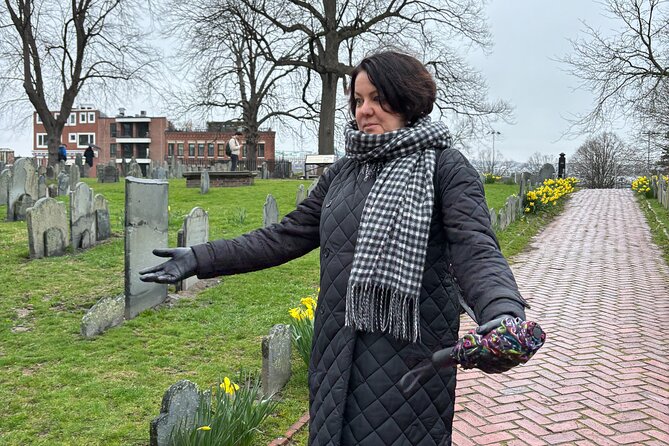
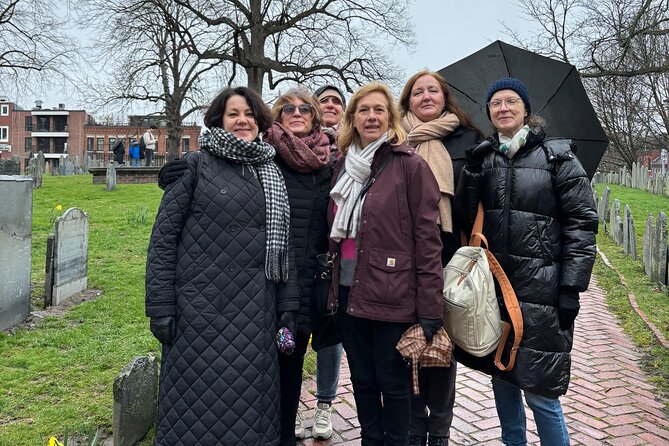
The final stop is Copp’s Hill Burying Ground. Copp’s Hill was erected in 1632 and is the highest point in Boston’s North End. At the top sits an old cemetery dating back to 1659. The big payoff here is the view.
From Copp’s Hill Terrace, the tour points you toward a panorama of the Charles River, plus the Bunker Hill Obelisk and the USS Constitution across the water. It’s a fitting ending because you get distance, geography, and a feeling of scale. You can look back at what you learned and see how the city’s story connects across neighborhoods.
It also makes logistical sense. The tour ends steps from Old North Church and the Italian quarter, which is a great place to eat after 2.5 hours of walking and absorbing history.
Price and time, what $45 buys you in practical terms
At $45 per person for about 2 hours 30 minutes, the value is in the guiding, not in tickets. Many of the stops you’ll see are free to view, including major monuments and exterior landmarks. The tour includes local guide services for the full time window, plus fees and taxes, and you get a mobile ticket.
If you were to do this on your own, you’d still need to:
- read up on context,
- map the route,
- connect names and dates to locations,
- and understand why one site matters to the next.
Maria’s job is exactly that, and the French language adds major comfort if you’re not traveling in English all day. The cap of 12 travelers also supports the feeling that you’re not just herded through.
My only caution on value is personal: if you’re the type who wants mostly indoor museums and you dislike walking, you might feel this is too “outdoor essentials.” If you like streets, architecture, monuments, and story connections, it is a strong spend.
Who this Boston Freedom Trail tour suits best
I think this tour is a great match if you:
- want a French-speaking guide to make Boston’s Revolution era make sense,
- like walking routes that keep momentum,
- care about more than one theme, including abolition and the present-day city,
- want an efficient overview that still includes personal stories like Paul Revere.
It can also be a good choice for first-time visitors to Boston who want to leave downtown understanding how neighborhoods connect. The small group size helps, and the free outdoor viewing keeps the tour from turning into a ticket-pulling contest.
Should you book this French Freedom Trail walk?
Yes, if your goal is to learn the core of Boston quickly, in French, with a guide who tells stories in a way you can actually follow. The combination of Freedom Trail essentials, architectural stops like the Massachusetts State House, and a memorable ending at Copp’s Hill Terrace makes it feel like a complete downtown-to-North-End orientation.
Skip it only if you want mostly indoor museum time or you prefer a slower pace with long breaks. This tour is built for movement and meaning on the sidewalk.
If you’re ready to connect the dots between monuments, people, and the shape of the city, this is one of those tours that makes the rest of your Boston days easier.
FAQ
What is the duration of the Freedom Trail walking tour?
It runs for about 2 hours 30 minutes.
How much does the tour cost?
The price is $45.00 per person.
Where does the tour start and where does it end?
It starts at Boston Common Visitors Center, 139 Tremont St, Boston, MA 02111. It ends at Copp’s Hill Terrace, Boston, MA 02113.
What time does the tour begin?
The start time is 11:00 am.
Is it a walking tour and will I need transportation?
Yes. Transportation is not included, and it is a walking tour.
What is included in the tour price?
Included features are visits to the most emblematic Freedom Trail and North End sites, a guide experienced in the destination, fees and taxes, and local guide services for 2.5 hours.
Are museum visits included?
No. Museum visits are not planned on this tour.
Written up lately around the harbor
- Boston’s Beacon Hill: Private Walking Tour
★ 5.0 · 1 review - Boston’s Chinatown: Small Group Walking Tour
★ 5.0 · 1 review - Self-Guided Scavenger Hunt: Boston Back Bay & Beyond
★ 4.0 · 1 review - Flynn Cruise Port Boston to Boston hotels – Arrival Private Transfer
★ 5.0 · 1 review - Boston to Woods Hole & Martha’s Vineyard Ferry Private Chauffeur Service
★ 4.0 · 1 review - Classic Martha’s Vineyard 1-Day Escape from Boston
★ 5.0 · 1 review - Private Vacation Photoshoot with Photographer in Boston
★ 5.0 · 1 review
Freedom Trail Tours, compared.
Freedom Trail History Small Group Walking Tour
Read our review →
Boston Freedom Trail Walking Tour with Costumed Guide
Read our review →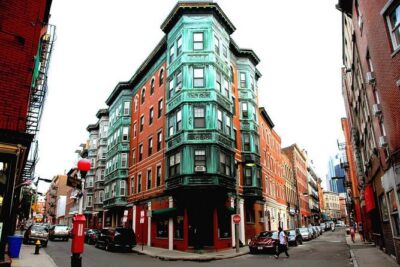
Boston Food & History: Pizza, North End & Freedom Trail
Read our review →
Boston’s Freedom Trail: A Revolutionary Walking Tour
Read our review →Freedom Trail History Small Group Walking Tour
Read our review →Boston’s Freedom Trail: A Revolutionary Walking Tour
Read our review →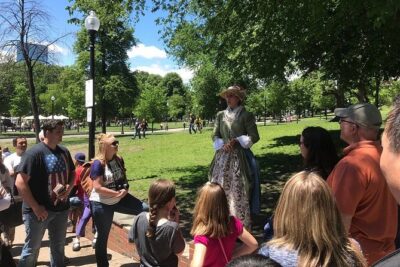

Boston Freedom Trail History Pub Crawl Small-Group Tour
Read our review →Browse the lists this tour appears in