
Reviewed · FREEDOM TRAIL TOURS
Private Walking tour of Boston’s Freedom Trail and more!
Boston’s Freedom Trail is famous, but the best version is on foot. This private walk threads together the classic sites with a guide who can shift pace and route to match your group. You start downtown, then end in the North End, with a mix of meeting-places, churches, cemeteries, and Revolutionary-era stories.
I especially like how private guide time turns into a real conversation, not a rushed slideshow. I also like that so many stops along the way are free, so your money goes to learning and walking, not constant ticket lines. The one watch-out is simple: it is still a 3-hour walking route, so bring comfortable shoes and plan for a moderate pace.
In This Review
- Key points at a glance
- Freedom Trail, but with room to breathe
- Meeting Point to North End finale: how the 3-hour route fits together
- Boston Common and the Massachusetts State House: power at the start
- Park Street Church and Granary Burying Ground: the church steeple and the cemetery that explains Boston
- Boston Latin School site, the Old Corner Bookstore, and the stories behind downtown streets
- Faneuil Hall Marketplace and the Boston Stone: where speech meets street-level facts
- Paul Revere House and Old North Church: the North End, walkable and dramatic
- Copp’s Hill and the North End streets: cemeteries, markets, and small-city texture
- Why the private guide experience is worth it (and what to expect from great ones)
- Price and value: free stops do the heavy lifting, optional tickets are your choice
- Practical pacing tips for a 3-hour Freedom Trail walk
- Who this tour suits best
- Should you book this private Freedom Trail walk?
- FAQ
- How long is the private Freedom Trail walking tour?
- What language is the tour offered in?
- Is this a private tour or shared with other groups?
- What is included in the tour price?
- What admission tickets are not included?
- Are there many stops with free admission?
- Where do I meet the tour, and where does it end?
- What time does the tour start?
- Do I need good weather?
- Can I bring a service animal?
Key points at a glance
- Private guide, not a bus group: You get flexibility in timing and where you linger.
- Free landmarks make it good value: Many big-name stops have free entry.
- Easy start location: The meeting point at 139 Tremont St makes it straightforward to begin.
- North End ending means a smooth next step: You finish near Hanover Street, ideal for lunch or dessert.
- Your guide may add nearby side stops: Some guides work in places like Pi Alley, the Spite House, or the Holocaust Memorial if time allows.
Freedom Trail, but with room to breathe
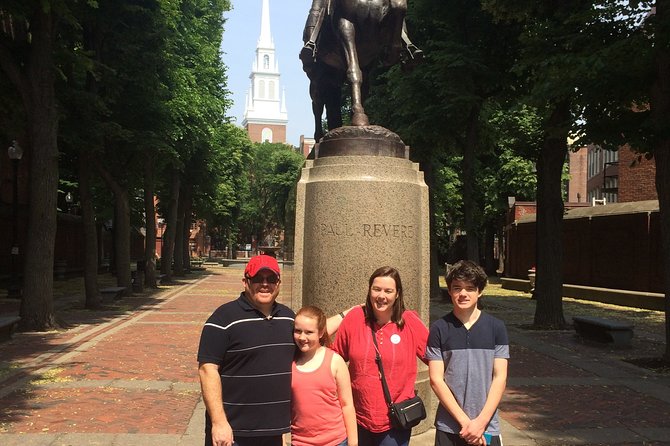
Boston’s Freedom Trail can feel like a race if you follow the crowds. I like this format because it is designed to be done at human speed, with one guide for your group. When you are not squeezed into a large schedule, you can ask questions as you go, then spend extra time where something actually grabs you.
In three hours, you cover a lot of ground downtown and into the North End. Your route is built around the big names most people come for, plus smaller stops that make the story click. Many landmarks are outdoors or in easy-to-access areas, so you spend more time seeing and less time waiting around.
One thing I want you to know up front: this is not a costume show, and it is not about memorizing dates. A strong guide focuses on how Boston worked, argued, and organized itself during the colonial and Revolutionary periods, and then ties the landmarks to daily life.
More ways along the Freedom Trail:
- Boston: Freedom Trail History Small Group Walking Tour★ 5.0 · 6,450 reviews
- Boston Freedom Trail Walking Tour with Costumed Guide★ 4.5 · 2,531 reviews
- Boston Food & History: Pizza, North End & Freedom Trail★ 5.0 · 1,772 reviews
Meeting Point to North End finale: how the 3-hour route fits together
You meet at 139 Tremont St, Boston, MA 02111 and the tour starts at 10:00 am. The walk is about 3 hours, and you end at 282 Hanover St, in the North End Italian District area, where there are lots of lunch and snack options.
That end point matters. The North End is compact, walkable, and packed with places to eat, so you do not have to think too hard about what comes next. If your group wants a long lunch, you can choose one nearby and keep the morning momentum going.
Time management is also part of the value. Some stops are quick photo-and-story moments, while others get longer. For example, Boston Common and the Granary Burying Ground get solid time, while certain landmarks like the Boston Stone are brief but fun, because your guide tells the story in a way that makes the small detail feel important.
Boston Common and the Massachusetts State House: power at the start
The walk often begins at Boston Common, founded in 1634. This is America’s oldest public park at 44 acres, and the details here are not just trivia. Your guide can help you picture how colonists treated this space as a shared civic area, not just scenery.
What I like about starting here is that you get a sense of Boston as a community before the Revolutionary drama. The land rights story adds a practical layer too. The Puritan colonists purchased the land rights from Anglican minister William Blackstone, so even at the start you see how control, property, and community decisions worked.
From there, you head to the Massachusetts State House. The building you see today is tied to Charles Bulfinch, and it has served as the seat of Massachusetts government since 1798. It is adjacent to the former site of the historic Hancock mansion, which helps your guide connect the political story to the people behind it.
One consideration: admission here is not included. Even if you do not go inside, the exterior context helps. If you do want interior access, you will need to plan for that extra step.
Park Street Church and Granary Burying Ground: the church steeple and the cemetery that explains Boston
A major highlight is Park Street Church, founded in 1809 at the corner of Park and Tremont Streets. It sits on top of the site of Boston’s old town grain storage building, the granary. The church steeple rises 217 feet, and historically it was the first big landmark travelers noticed when entering the city.
I like this stop because it connects architecture to everyday function. Grain storage sounds like a boring utility until your guide explains how central that kind of infrastructure was. It is a great reminder that religious landmarks are often built on top of earlier, practical city needs.
Next comes Granary Burying Ground, established in 1660. This cemetery is where you find many notable citizens and founding figures, and it has about 2,300 markers. The name is tied to the nearby 12,000-bushel grain storage building that once stood next door.
If you want to understand Boston fast, this is a strong anchor. Your guide can help you read what is around you, from the density of markers to what people chose to remember. Cemeteries can feel heavy, but explained well, they become a map of the city’s social networks.
Both of these stops are marked as free entry, so you can focus on time, not ticket hassles.
Boston Latin School site, the Old Corner Bookstore, and the stories behind downtown streets
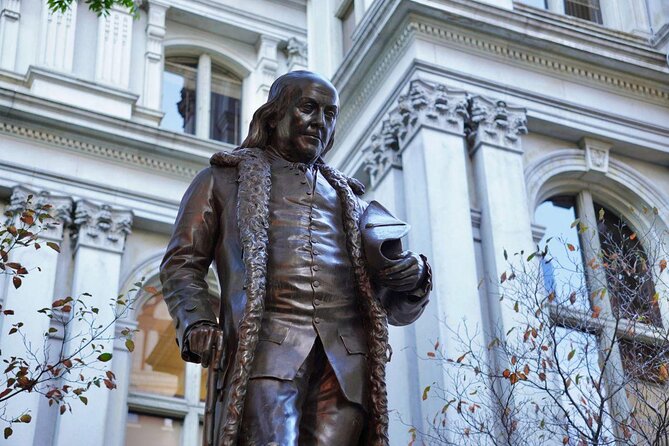
One stop that is short but memorable is the Boston Latin School site marked by a mosaic and a statue of Benjamin Franklin. Boston Latin School was founded on April 23, 1635, and it is described as the oldest public school in America. Your guide may point out the contrast in schooling: free education for boys from rich and poor families, while girls typically went to private schooling at home.
There is also a neat detail tied to the early schoolhouse. Until the schoolhouse was completed in 1645, classes met in the home of the first headmaster, Philemon Pormont. That helps you imagine education as something much more local and improvised than you might expect.
Right after that, you pass by Old Corner Bookstore, constructed in 1718. This downtown building is Boston’s oldest commercial structure and once housed Ticknor and Fields, a publishing giant behind many classic American titles. The building also survived demolition in 1960, and the leases help fund historic preservation projects across Boston’s neighborhoods.
I find this stop especially valuable if you enjoy the idea that cities preserve themselves through ordinary businesses, not only grand monuments. It is also a good pause from the heavy Revolutionary sites, because it reminds you that ideas spread through books, printers, and shops.
More of Boston crossed at walking pace:

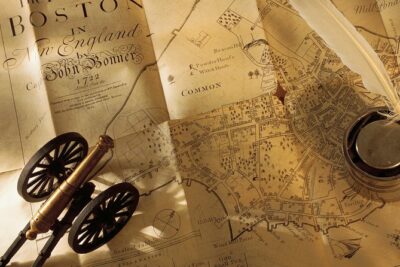
Faneuil Hall Marketplace and the Boston Stone: where speech meets street-level facts
You spend time at Faneuil Hall Marketplace, which is often described as the home of free speech and the cradle of liberty. Faneuil Hall hosted America’s first town meeting, and it became a key stage for events that shaped revolutionary politics. Your guide can explain how the hall’s role evolved beyond its original design, which makes the site feel less like a museum label and more like something that actively grew into importance.
Then you have an easy win: the adjacent marketplace. Even if you do not stop for a full meal, it is a practical place for a quick snack or rest break while still staying close to the historic core. The stop is free, and the location makes it hard to feel stranded.
A quick detour for curiosity is the Boston Stone. It is a round rock embedded in a wall of an 18th-century building. Your guide tells the story behind why that specific rock is there, and the point is bigger than rocks. It is a reminder that Boston marked itself with physical details, not just documents.
I like these smaller roadside stories because they make the Freedom Trail feel like a living city. You notice details you would normally walk right past.
Paul Revere House and Old North Church: the North End, walkable and dramatic
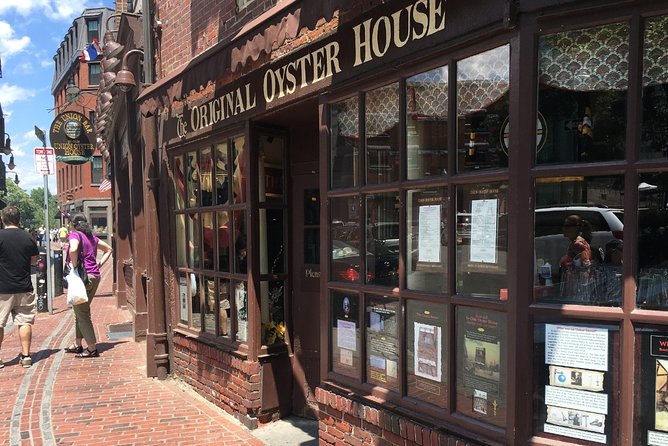
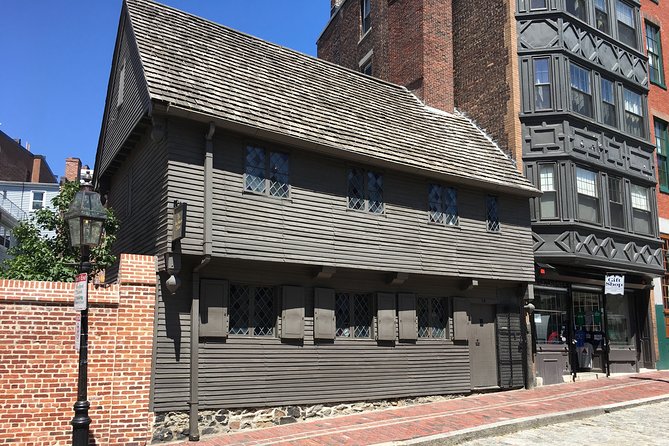
The tour heads into the kind of streets that make Boston feel instantly familiar once you are there. The Paul Revere House at 19 North Square is downtown Boston’s oldest building and one of the few remaining 17th-century dwellings in a large urban area. Your guide ties it to the night of April 18, 1775, when the silversmith left his home and rode on a mission that turned him into a legend.
This stop is not included for admission, but it is optional. If you care about seeing inside a preserved dwelling tied to that moment, this is the easiest place to decide if you want to add a ticket step.
Then you reach Old North Church and its historic site. The famous story is the lantern signal on April 18, 1775, when sexton Robert Newman climbed the steeple and held up two lanterns. The signal communicated that the British were marching by sea across the Charles River rather than going by land to Lexington and Concord.
Old North is built in 1723, and your guide can help you understand why it became so tied to the Revolution narrative. Admission is also not included, so again, this is a decision point. If you are short on time or want to keep your morning fully outdoors, you can still get a lot from the exterior experience and the storytelling.
From a value standpoint, I like that most of the big sights in this route are free, so you can choose whether you want to spend money on the two optional indoor experiences.
Copp’s Hill and the North End streets: cemeteries, markets, and small-city texture
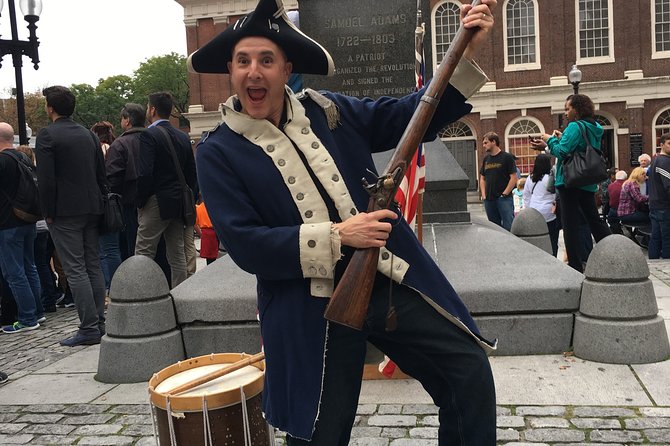
The route includes Copp’s Hill Burying Ground, named after shoemaker William Copp. It is the final resting place of merchants, artisans, and craftspeople who lived in the North End. This is not where you go for the biggest scenic views, but it is where you get the most human scale.
I like it because it balances the Revolutionary focus with everyday life. If Paul Revere and lantern signals feel like big drama, Copp’s Hill grounds the story back in the people who made the city run.
Along the way, you also pass areas that help you picture Boston as a working place, not just a commemorative one. You may see parts around Haymarket and the Union Oyster House area, plus brief stops like Scollay Square/Government Center and Boston Stone. Even when you are only getting a few minutes at some stops, a good guide can connect each location to what was happening there historically.
One bonus that can make the morning feel extra personal is when your guide steps off the main path for nearby side stops. Some guides work in places like Pi Alley, the Spite House, and the Holocaust Memorial if time and energy allow. That kind of detour is exactly the point of going private.
Why the private guide experience is worth it (and what to expect from great ones)
The strongest praise for this tour format is consistency in guide quality and pacing. Many guides described by name, including Tracy, Manny, Ernie, Cindy, Ellen, and Neil, are singled out for being engaging, accommodating, and easy to understand. That matters on a walking tour, because you want clear explanations without shouting over traffic noise.
Here is what I look for in a great Freedom Trail guide, and it lines up with the common themes from guide praise:
- Clear storytelling that turns landmarks into real moments
- Flexibility when someone needs to slow down or skip a step
- Enough energy to keep kids and adults both paying attention
- Willingness to answer questions without rushing you
If your group includes teens, this is often the sweet spot. A private, no-costume style keeps things moving, and you can steer around what does not interest your group. One of the best parts is simply that your guide can let your pace set the rhythm. If your group wants to linger at Faneuil Hall’s speech-and-politics angle, you can. If you want more North End focus around Revere and Old North, you can lean that direction.
Price and value: free stops do the heavy lifting, optional tickets are your choice
There is no getting around the fact that you are paying for a private guide. But the math here can work well because many of the stops you hit are free. Boston Common and Granary Burying Ground are free. Faneuil Hall Marketplace is free. Boston Stone is free. Copp’s Hill Burying Ground is free. Even shorter stops like Old Corner Bookstore are free.
The main ticket considerations are:
- Massachusetts State House, where admission is not included
- Old North Church, admission not included
- Paul Revere House, admission not included, with an optional special low rate offered
So you do not have to pay for every indoor site. You can budget based on what you care about most. If you are the kind of person who loves interiors and historic rooms, add one or both optional admissions. If you prefer outdoor walking and stories, you can keep costs down while still seeing the key landmarks.
Practical pacing tips for a 3-hour Freedom Trail walk
A Freedom Trail morning feels straightforward until you start walking. You can keep it comfortable with a few basics:
- Wear shoes that handle cobblestones and quick turns
- Bring water, even if it is cool out
- Plan on stops that are short and story-heavy, not slow museum browsing
Also, remember that some stops are time-coded. For example, Boston Common is a longer early anchor, while a landmark like the Boston Stone is a quick burst. If you go in with the mindset that each stop has a different job, the pacing feels natural.
Finally, you end in the North End. If you want to eat right away, I suggest you have a simple plan in mind for lunch before you start, or at least a shortlist. You will be walking past plenty of options, so it is easy to get indecisive at the exact moment you want food.
Who this tour suits best
This tour style is ideal if you want:
- A classic Freedom Trail overview without bus crowds
- A guide who can adjust the day to your interests
- A route that stays efficient, not exhausting
It also works well for families, including kids and teens, because a private guide can keep attention on what matters to your group. If your group wants a more lively pace, an energetic guide like the ones named in past experiences can make the morning fun without turning it into a performance.
If your group is very sensitive to walking time, you might consider whether a 3-hour moderate-walk schedule fits. The tour expects moderate physical fitness, and it moves along a line of downtown streets and historic sites.
Should you book this private Freedom Trail walk?
I think you should book it if you want a Boston orientation that feels personal, efficient, and story-driven. The biggest advantage is that you get a private guide who can pace the morning and keep you from being stuck in a crowded herd. With many free stops, you also keep your spending focused on the optional sites that truly matter to you.
I would skip or at least rethink it if your group wants a strictly indoor, ticket-heavy museum-style day. This is a walking tour built around outdoor landmarks and interpretive storytelling, with optional admissions for two major indoor experiences.
If you do book, you can set yourself up for a great day by wearing comfortable shoes, bringing curiosity, and being ready to ask questions. That is where a private Freedom Trail tour pays off the most.
FAQ
How long is the private Freedom Trail walking tour?
It runs about 3 hours.
What language is the tour offered in?
The tour is offered in English.
Is this a private tour or shared with other groups?
It is private, meaning only your group participates.
What is included in the tour price?
A private tour guide is included.
What admission tickets are not included?
Admission to the Massachusetts State House is not included, and admission to the Old North Church and Paul Revere House is optional.
Are there many stops with free admission?
A number of major stops are listed as free, including Boston Common, Granary Burying Ground, Faneuil Hall Marketplace, Boston Stone, and Copp’s Hill Burying Ground.
Where do I meet the tour, and where does it end?
You start at 139 Tremont St, Boston, MA 02111. You end near the North End Italian District at 282 Hanover St, Boston, MA 02113.
What time does the tour start?
The start time is 10:00 am.
Do I need good weather?
Yes. The tour requires good weather. If it is canceled due to poor weather, you will be offered a different date or a full refund.
Can I bring a service animal?
Yes, service animals are allowed.
Written up lately around the harbor
- Boston’s Beacon Hill: Private Walking Tour
★ 5.0 · 1 review - Boston’s Chinatown: Small Group Walking Tour
★ 5.0 · 1 review - Self-Guided Scavenger Hunt: Boston Back Bay & Beyond
★ 4.0 · 1 review - Flynn Cruise Port Boston to Boston hotels – Arrival Private Transfer
★ 5.0 · 1 review - Boston to Woods Hole & Martha’s Vineyard Ferry Private Chauffeur Service
★ 4.0 · 1 review - Classic Martha’s Vineyard 1-Day Escape from Boston
★ 5.0 · 1 review - Private Vacation Photoshoot with Photographer in Boston
★ 5.0 · 1 review
Freedom Trail Tours, compared.
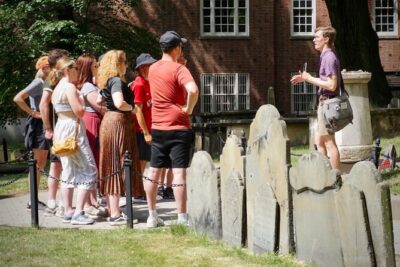
Freedom Trail History Small Group Walking Tour
Read our review →
Boston Freedom Trail Walking Tour with Costumed Guide
Read our review →
Boston Food & History: Pizza, North End & Freedom Trail
Read our review →
Boston’s Freedom Trail: A Revolutionary Walking Tour
Read our review →Freedom Trail History Small Group Walking Tour
Read our review →Boston’s Freedom Trail: A Revolutionary Walking Tour
Read our review →

Boston Freedom Trail History Pub Crawl Small-Group Tour
Read our review →Browse the lists this tour appears in