
Reviewed · FREEDOM TRAIL TOURS
Private Walking Tour of Freedom Trail and Little Italy
Freedom Trail on foot, with real punchlines. This private walking tour covers the full route with all 16 Freedom Trail stops, plus a short walk through historic Little Italy, told by a local historian who keeps the pace lively. I especially like the way it turns landmarks into stories you can actually remember, and I love the local guide energy, like Jenny, who’s friendly and clearly loves the job. One thing to consider, you’ll be walking for about 4 hours 30 minutes, so moderate fitness helps, and you will want good weather.
For $475 per group (up to 15), it also feels like a smart way to experience Boston Common, Beacon Hill, the Revolution sites, and the North End in one go, without juggling multiple tickets. You get a mobile ticket, a professional guide, and a route that ends with views over the harbor and Charlestown.
In This Review
- Key highlights before you go
- Why this Freedom Trail tour works better than a checklist
- Boston Common to Beacon Hill: the walk starts with the “small stuff”
- Massachusetts State House: the pinecone question is the kind of detail you’ll remember
- Granary Burying Ground and King’s Chapel Burying Ground: names, beliefs, and conflict
- Old Corner Bookstore: history that includes ideas, not just battles
- Old South Meeting House and Faneuil Hall: where rebellion becomes a plan
- Paul Revere House and North Square Park: the North End seen through everyday life
- Old North Church and Copp’s Hill: midnight ride stories, then a view that ends the loop
- Little Italy: a short walk that adds color without stealing time
- Price and value: $475 for up to 15 people can be a good deal
- What to bring, wear, and plan around
- Who this tour suits best
- Should you book this Freedom Trail and Little Italy private tour?
- FAQ
- How long is the Freedom Trail and Little Italy private walking tour?
- How much does the tour cost, and what is the group size?
- What does the tour include?
- Where does the tour start and end?
- Is lunch included?
- What if the weather is bad?
Key highlights before you go
- All 16 Freedom Trail stops in one morning-style walk, from Boston Common to Copp’s Hill Terrace
- Comedic, story-driven history, including corrections to the famous Paul Revere poem
- Beacon Hill details you can spot on the ground, including Louisburg Square and original cobblestones
- Revolution scenes in the graveyards, where names and dates come with context
- Old North Church plus harbor views, with the midnight ride and big lookout moments
- A quick Little Italy walk in the North End, so you see more than just colonial sites
Why this Freedom Trail tour works better than a checklist
The Freedom Trail is easy to admire and harder to absorb when you’re doing it solo, because you end up moving from plaque to plaque. What I like about this format is that you get a single thread connecting places that otherwise feel separate: politics, publishing, religion, rebellion, and the immigrant layers of the North End.
This is also genuinely private, meaning only your group participates. That matters on a tour like this, because the best parts are the little story moments, the side comments, and the questions that come up when you’re standing in the right spot.
And yes, the route packs a lot in. You cover major sites like Boston Common, Old South Meeting House, Faneuil Hall, the Paul Revere House, Old North Church, Copp’s Hill Burying Ground, and Bunker Hill area viewpoints. The payoff is that by the end, you feel you understand the city’s geography, not just its dates.
More eating and walking in the North End:
- Boston Food & History: Pizza, North End & Freedom Trail★ 5.0 · 1,772 reviews
- Boston North End Food Tour of 6+ Tastings, Cannoli, Lobster Roll★ 5.0 · 1,404 reviews
- Boston’s North End Food Tour: Italian Flavors & Heritage Walk★ 5.0 · 1,322 reviews
Boston Common to Beacon Hill: the walk starts with the “small stuff”
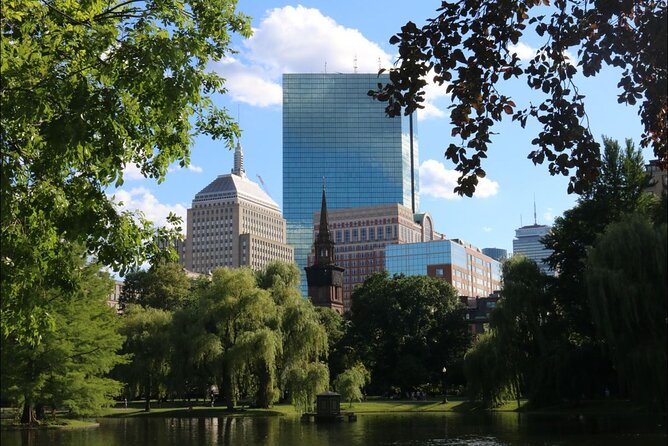
Your tour starts at Parkman Plaza (Tremont St & West St), right where you can orient yourself quickly. The first stop is Boston Common, the country’s oldest public park. This is the right beginning, because it gives you space to slow down before the history ramps up. You’ll notice the “forgotten plaques and monuments” as you stroll, and those quieter markers often explain more than the big, obvious ones.
From there you head to Beacon Hill, Boston’s brownstone-lined neighborhood where even the streets feel curated. You’ll visit Louisburg Square and you also get to find the “Most Photographed Street in North America,” with some of the original cobblestone still there. This stop is useful because it teaches you how Boston’s power, money, and history are built into the street pattern and architecture, not just museum walls.
Practical tip: Beacon Hill can be visually demanding in a good way. If you like photos, pace yourself so you don’t burn energy before the real Revolution stops.
Massachusetts State House: the pinecone question is the kind of detail you’ll remember
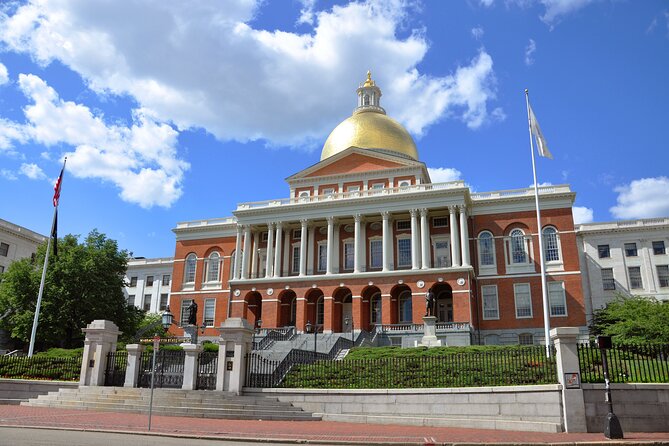
Next up is the Massachusetts State House, and this stop is all about interpretation. The building’s architecture matters, but what I like is that the guide doesn’t stop at looks. You’ll hear why there’s a pine cone on top of the dome, plus what people mean when they talk about the King’s Pines and how the pine tree ended up as a symbol.
Even if you’re not an architecture person, you’ll find this kind of story helps. You start looking at the building as a political artifact, not a landmark. And since your tour is private, you can ask questions as you stand right there.
Granary Burying Ground and King’s Chapel Burying Ground: names, beliefs, and conflict
A big portion of this walking tour’s emotional punch comes in two cemetery stops.
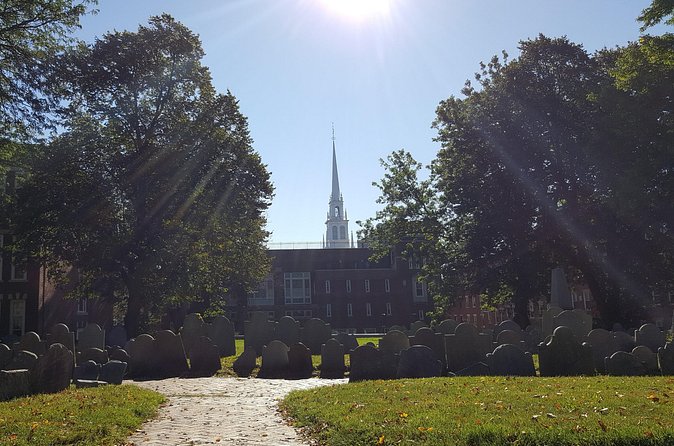
At Granary Burying Ground, you’ll visit one of America’s most historic cemeteries and hear Revolution-era stories connected to the graves of major figures like Sam Adams, Paul Revere, and John Hancock. The value here is perspective. You’re not just learning who fought, you’re also seeing how the city memorialized leadership and what it chose to highlight.
Then you move to King’s Chapel Burying Ground, Boston’s oldest cemetery. Here, you’ll hear about graves of John Winthrop and William Dawes, and you’ll also get the religious angle. The tour explains King’s Chapel as Boston’s first Anglican Church, which local Puritans deeply disliked. That tension is a key thread in understanding why Boston history swings between governance, faith, and public life.
One consideration: cemeteries are calm places. If your group tends to be loud, agree on a volume level before you arrive so everyone can hear the guide.
Old Corner Bookstore: history that includes ideas, not just battles
The Old Corner Bookstore stop is short, but it adds a different dimension. You see the site of an early American publishing center, where important works were released, including Walden and other notable titles.
This matters because a lot of Freedom Trail experiences focus heavily on protests and speeches. Publishing was part of the same ecosystem. Ideas traveled, pamphlets spread, and arguments hardened into action. Even in a quick stop, the guide’s framing helps you see the Revolution as an information story too.
If you like thinking about how societies change, this stop gives you something to carry forward into the next places where crowds gather.
More ways along the Freedom Trail:
Old South Meeting House and Faneuil Hall: where rebellion becomes a plan
Next you hit two buildings tied to the public spark of revolution.
At Old South Meeting House, you’ll see the place where the Boston Tea Party started. The guide tells the story of how Sam Adams rallied the crowd to storm the ships in Boston Harbor. This is one of the stops where humor and serious history blend well, because you’re learning a real turning point without it turning into a lecture.
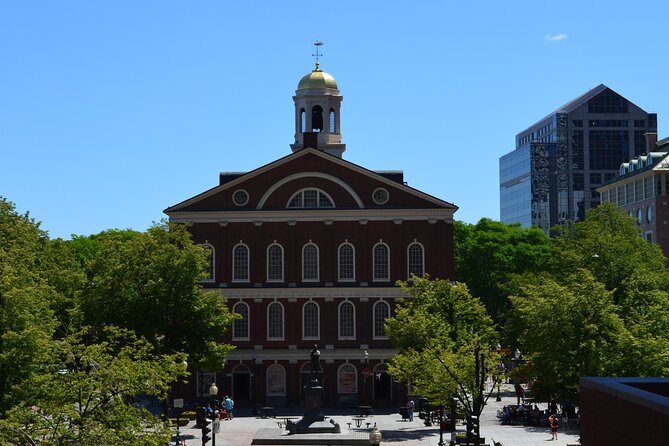
Then comes Faneuil Hall Marketplace, described here as the Cradle of Liberty. You’ll learn about Sam Adams giving speeches there and how the building’s financial backstory involved Peter Faneuil. The quirky details are the point. They help explain why public spaces like this mattered so much: they were built to hold the crowd and keep attention on politics.
If you’re planning photos, these two stops are great. If you’re planning snack breaks, do it later. This section is more about listening than lingering.
Paul Revere House and North Square Park: the North End seen through everyday life
The tour then steps into the North End’s older lanes.
At the Paul Revere House, you’ll see the oldest wooden building in downtown Boston, where Revere lived for about 20 years. You’re also in North Square, one of the oldest continually inhabited areas of Boston, so the stop connects the revolutionary figure to an actual neighborhood, not just a historical stage set.
Right after that is North Square Park, where you’ll learn about the neighborhood’s immigrant past through public artwork installed there. I like this stop because it prevents the tour from becoming “just 1770s Boston.” It reminds you that Boston kept changing, and the city’s identity kept getting reshaped by new residents.
If your group likes street-level history, this is a good moment to slow down and look around, because the surroundings matter just as much as the guide’s words.
Old North Church and Copp’s Hill: midnight ride stories, then a view that ends the loop
Two of the most memorable stops happen in quick succession.
First is Old North Church and Historic Site. You’ll learn about Paul Revere’s midnight ride, including historical inaccuracies tied to the famous poem. This is a great teaching moment. Most people know the poem line, but learning what’s accurate helps the whole story click into place. It also makes you more careful when you spot dramatic details in history, because sometimes the myth sticks harder than the facts.
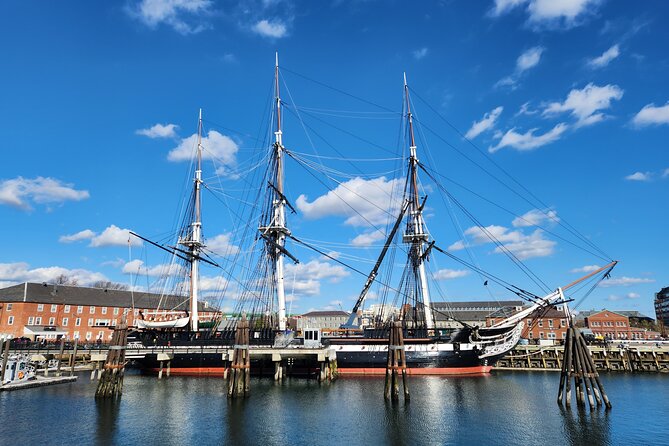
Then you head to Copp’s Hill Burying Ground, Boston’s second oldest burying ground. This stop is built for both storytelling and scenery. You’ll take in views toward the harbor and Charlestown, with the USS Constitution and the Bunker Hill Monument visible from the area. The guide explains Boston’s role in the American Revolution, using the view as a map in your head. That combination, history plus geography, is what turns a walk into understanding.
Finally, the tour reaches Copp’s Hill Terrace, which is timed as a viewpoint stop. From here, you can see Bunker Hill, the Charlestown Naval Yard, and also the site connected to the Great Molasses Flood. It’s a reminder that the Revolutionary era is only part of Boston’s story. Big disasters and big ambition shaped the city too.
Little Italy: a short walk that adds color without stealing time
After all that Revolution and early America, you get a short, focused walk through historic Little Italy in the North End. It’s not presented as a full food crawl, and you shouldn’t treat it like that. Instead, it works like a palate cleanser, giving you a sense of how the neighborhood has evolved and how culture shows up in the streets.
If you want to extend the experience afterward, this is the moment. Head into nearby streets on your own, grab a coffee, or pick up a snack, then keep moving toward your next destination.
Price and value: $475 for up to 15 people can be a good deal
The price is $475 per group, up to 15 people, for about 4 hours 30 minutes. That’s not cheap if you’re pricing as a solo traveler. But it starts to make sense when you look at it as a group experience.
Here’s why:
- You’re paying for a professional guide and a structured route with many major stops.
- You avoid the time sink of figuring out how to link all sites efficiently.
- You get a private group format, so the guide can keep the pace and stories tailored to your questions.
For couples, friends, or families traveling together, it can be a strong value. For solo travelers, it might be less appealing because you’re effectively paying for the whole group capacity even if you fill only one or two seats.
One more thing: this tour is booked far in advance on average, which usually signals demand. If you have flexible dates, you might still find openings, but if you’re traveling peak season, plan ahead.
What to bring, wear, and plan around
You should plan on moderate walking, since the itinerary moves through multiple neighborhoods. I’d treat it like a long city walk, not a quick stroll.
Bring:
- Comfortable walking shoes
- Water (bottled water is recommended to bring)
- A light plan for hunger since lunch isn’t included
Also, the experience depends on good weather, so have a backup day in mind. If the tour gets canceled because of poor weather, you should expect to be offered a different date or a full refund.
The tour uses a mobile ticket, so make sure your phone battery is reliable before you start.
Who this tour suits best
This private Freedom Trail and Little Italy combo is especially good if you:
- Want the main Freedom Trail sites covered in one organized walk
- Prefer a guide who tells stories and keeps things lively
- Like combining landmarks with perspective, not just photos
- Travel in a small group that can share the cost
If you hate walking, or you need lots of long breaks, you might feel squeezed by the time. But if you can handle a sustained city walk, you’ll likely appreciate how the guide ties the whole route together.
Should you book this Freedom Trail and Little Italy private tour?
Book it if you want a single, guided Freedom Trail path that covers the full set of stops, plus a quick Little Italy look, without you having to piece together the route yourself. The guide style, highlighted by the kind of feedback Jenny received, seems built for both humor and clarity, and that mix makes the history easier to carry with you later.
Skip it or reconsider if you’re looking for a relaxed, slow-paced tour with lots of downtime, or if you know you’re sensitive to walking time. This is a “move and learn” kind of half-day.
FAQ
How long is the Freedom Trail and Little Italy private walking tour?
It’s approximately 4 hours 30 minutes.
How much does the tour cost, and what is the group size?
The price is $475 per group, with up to 15 people.
What does the tour include?
It includes a professional tour guide, all 16 stops on the Freedom Trail, and a short walk through historic Little Italy. You also get a mobile ticket.
Where does the tour start and end?
The tour starts at Parkman Plaza (Tremont St & West St, Boston, MA 02108) and ends at Copp’s Hill Terrace (520 Commercial St, Boston, MA 02109).
Is lunch included?
No. Lunch is not included, and bottled water is recommended to bring.
What if the weather is bad?
This experience requires good weather. If it’s canceled due to poor weather, you’ll be offered a different date or a full refund.
Boston at Walking Pace
- Harvard University Campus Guided Walking Tour
★ 4.5 · 3,632 reviews - The Full Revolutionary Story Epic Small Group Boston Walking Tour
★ 5.0 · 2,356 reviews - Freedom Trail Walking Tour 250
★ 4.5 · 1,118 reviews - Boston Pizza Lovers Food and History Walking Food Tour
★ 4.5 · 1,082 reviews
Written up lately around the harbor
- Boston’s Beacon Hill: Private Walking Tour
★ 5.0 · 1 review - Boston’s Chinatown: Small Group Walking Tour
★ 5.0 · 1 review - Self-Guided Scavenger Hunt: Boston Back Bay & Beyond
★ 4.0 · 1 review - Flynn Cruise Port Boston to Boston hotels – Arrival Private Transfer
★ 5.0 · 1 review - Boston to Woods Hole & Martha’s Vineyard Ferry Private Chauffeur Service
★ 4.0 · 1 review - Classic Martha’s Vineyard 1-Day Escape from Boston
★ 5.0 · 1 review - Private Vacation Photoshoot with Photographer in Boston
★ 5.0 · 1 review
Freedom Trail Tours, compared.
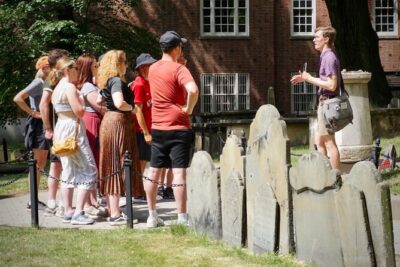
Freedom Trail History Small Group Walking Tour
Read our review →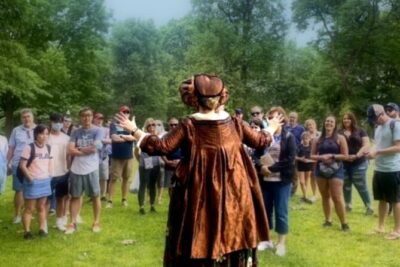
Boston Freedom Trail Walking Tour with Costumed Guide
Read our review →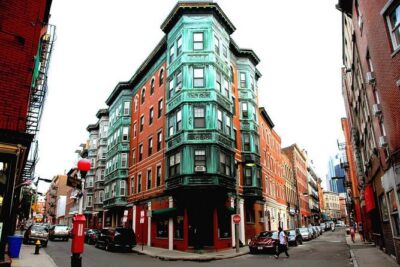
Boston Food & History: Pizza, North End & Freedom Trail
Read our review →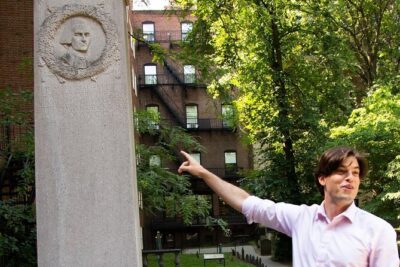
Boston’s Freedom Trail: A Revolutionary Walking Tour
Read our review →Freedom Trail History Small Group Walking Tour
Read our review →Boston’s Freedom Trail: A Revolutionary Walking Tour
Read our review →

Boston Freedom Trail History Pub Crawl Small-Group Tour
Read our review →Browse the lists this tour appears in