

Reviewed · FREEDOM TRAIL TOURS
Relive 1776: Interactive AR Experience on The Freedom Trail
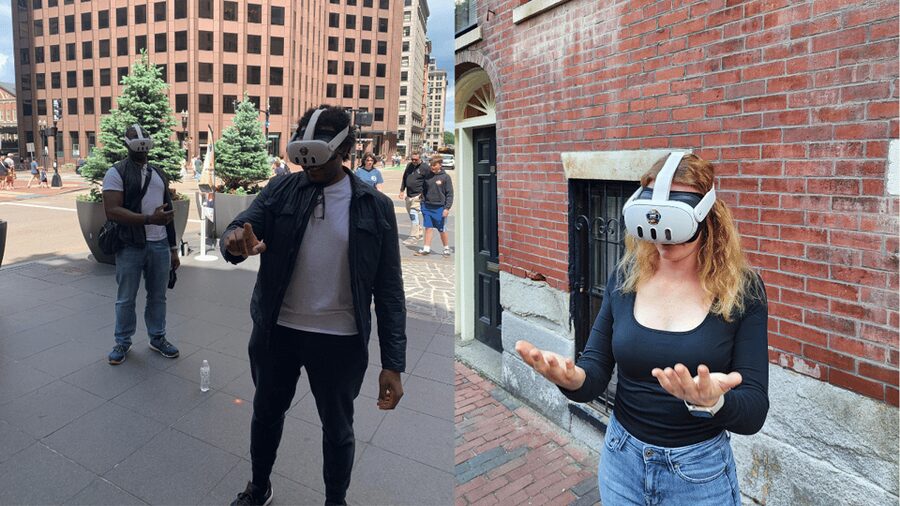
This AR tour turns the Freedom Trail into a choose-your-own 1776-style story, with British soldiers and colonists appearing right where you’re standing. I like how it swaps the usual photo-stop routine for short, guided scenes you control, from colonial clothing to operating a historically accurate field cannon.
Two things I really enjoy: the look of the characters and their historically grounded details, and the fact that it uses AR instead of VR, so you keep seeing the real world around you. The main thing to consider is that the simulation includes guns, so if that worries you or your kids, you’ll want the kids version.
In This Review
- Key takeaways before you go
- Relive 1776 makes Boston Common feel like 1776 again
- Meeting near the Old State House, plus your two start options
- Boston Common under the Great Elm Tree: meeting leaders first
- Granary Burying Ground: using AR to make the ground itself matter
- Old State House scenes: the guide and the tech do the heavy lifting
- Paul Revere House: colonial details and choices that change the feeling
- The cannon and Bunker Hill finale: AR ends on a high-stakes note
- How the AR vs VR setup affects your comfort and your attention
- Price and value: what $30 buys you in real experience
- Who should book this Freedom Trail AR tour, and who might skip it
- A few practical tips to get the best experience
- Should you book Relive 1776?
- FAQ
- How long is Relive 1776?
- Where do I meet for the tour?
- Are there different starting locations?
- Is this VR or AR?
- How many parts does the tour include?
- Is there gore in the simulation?
- Are guns included, and is there a kids version?
- Is it suitable for everyone with health concerns?
- What languages are offered, and is it a small group?
- What is included in the tour besides the AR experiences?
Key takeaways before you go
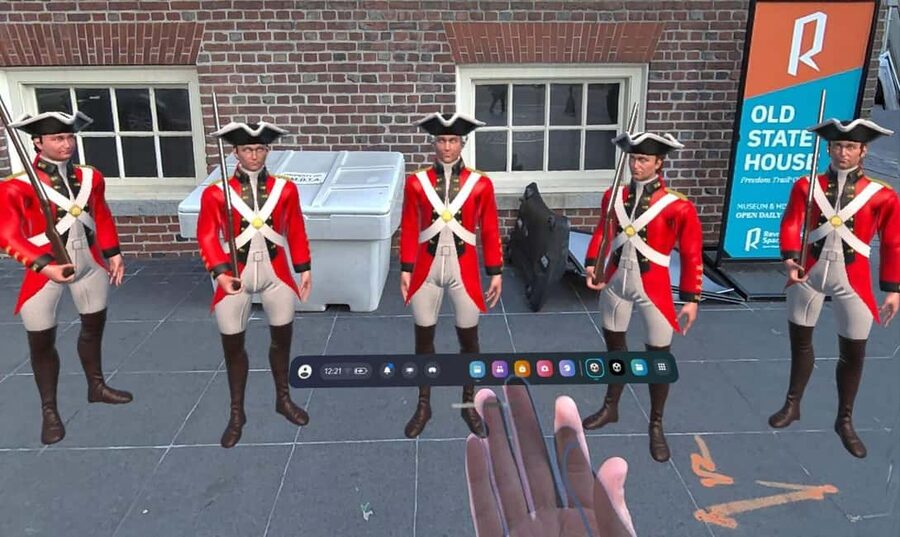
- 5-part AR tour across major Freedom Trail stops, ending at Bunker Hill
- AR headset + phone AR mix, with two parts using sanitized headsets provided by the team
- Small group (max 8) and an English-only live guide who helps the tech make sense
- No gore, and you can use the kids version if you want to avoid gun scenes
- You can go at your own pace, including skipping stops if you’re on a tight schedule
- A memorable Boston Massacre moment, designed to be experienced on site
Relive 1776 makes Boston Common feel like 1776 again
I love how this experience uses your location on the Freedom Trail like a stage. You’re not watching a screen in a dark room, and you’re not stuck listening to a lecture while you pass historic spots. Instead, you get short scenes where people from the 1765-1775 period react to choices you make, and those moments play out right in the real streets.
The format is also practical. You’re looking at multiple short experiences, roughly 5 to 15 minutes each, with a total duration of about 30 minutes for the full tour. That length is long enough to feel satisfying, but short enough that it won’t derail a day of walking and museum-hopping.
What makes it feel different from a standard Freedom Trail walk is the interaction. The story isn’t just told at you. You’re prompted to make decisions while historically accurate English soldiers and colonists appear in the real world. It’s history as an event, not history as a slideshow.
More ways along the Freedom Trail:
- Boston: Freedom Trail History Small Group Walking Tour★ 5.0 · 6,450 reviews
- Boston Freedom Trail Walking Tour with Costumed Guide★ 4.5 · 2,531 reviews
- Boston Food & History: Pizza, North End & Freedom Trail★ 5.0 · 1,772 reviews
Meeting near the Old State House, plus your two start options
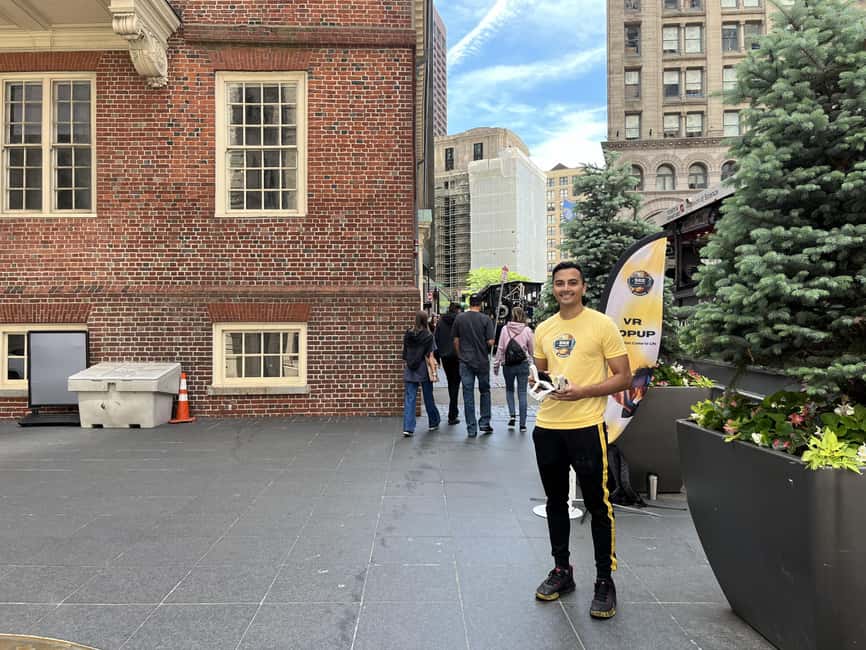
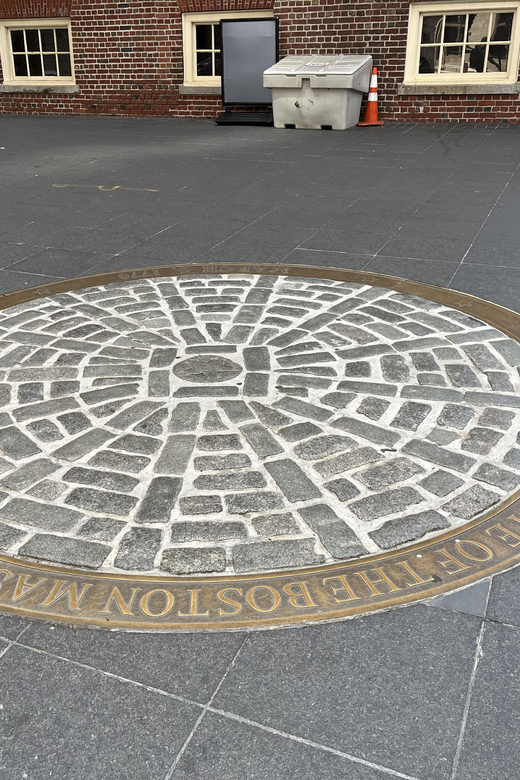
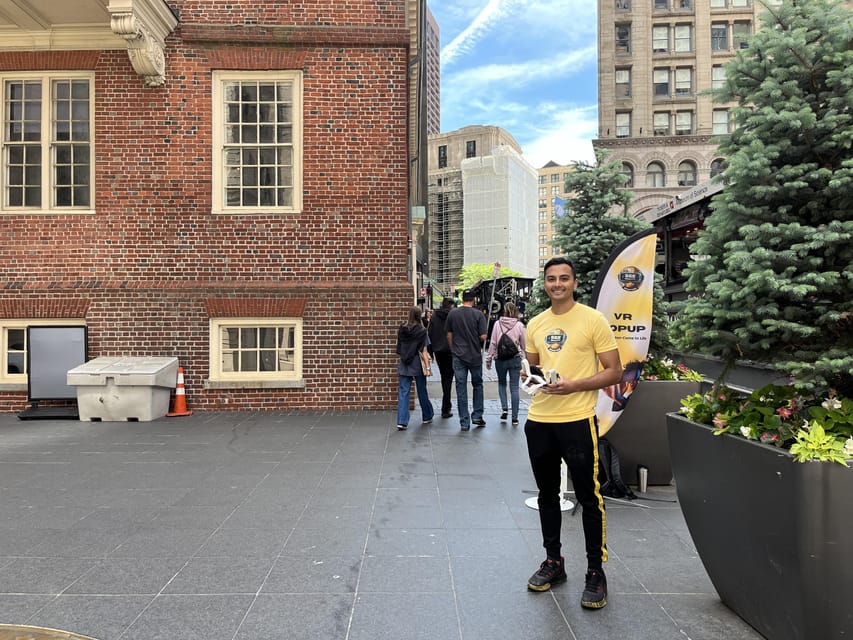
Your day begins at the Relive 1776 booth between plants outside the Old State House. Look for it next to the Boston Massacre marker in the ground. It’s a good anchor point, because that’s already a key Freedom Trail location, so you’re not wandering around trying to find the right corner.
There are also two starting location options depending on your schedule: the Boston Massacre Site or the Commodore John Barry Memorial. If you’re aiming to time this perfectly with the rest of your Boston day, this flexibility helps.
One small but important detail: there are two possible drop-off locations at the end. You’ll finish either back at the Boston Massacre area or at Bunker Hill Monument. That means you’re not necessarily locked into retracing your steps after the last scene, which is useful if you have dinner reservations or a museum plan.
Boston Common under the Great Elm Tree: meeting leaders first
The first big stop is Boston Common. Expect a guided introduction and then an AR scene that brings the period to life. This is where you connect with figures like Paul Revere, John Hancock, and Samuel Adams under the Great Elm Tree.
This is a smart way to start. Before the tour moves into cannon fire and street-level conflict, you get oriented in the story and the stakes. The AR portion here is less about spectacle and more about getting you into the time period, so later stops feel like “what happens next,” not random history facts.
For this part, the tour is designed to feel guided but not rigid. You can go at your own pace, and if you’re moving fast through Boston for the day, you can even skip stops. That flexibility matters because Freedom Trail days often include other sites, and Boston weather can change quickly.
Granary Burying Ground: using AR to make the ground itself matter
Granary Burying Ground is one of those places where, on a typical walk, you’re mostly absorbing details from signs and your guide’s voice. Here, you bring the timeline closer by pairing the physical location with AR storytelling.
You’ll spend about 10 minutes at this stop, guided and paired with AR elements as the tour continues building toward resistance against tyranny. The time is short, but the payoff is that you’re not just “looking at graves.” You’re experiencing how that setting fits into the period you’re learning about.
A practical consideration: because the tour keeps scenes short, you need to stay mentally switched on. The best experience comes when you follow along with the prompts while you’re standing in the right spot.
Old State House scenes: the guide and the tech do the heavy lifting
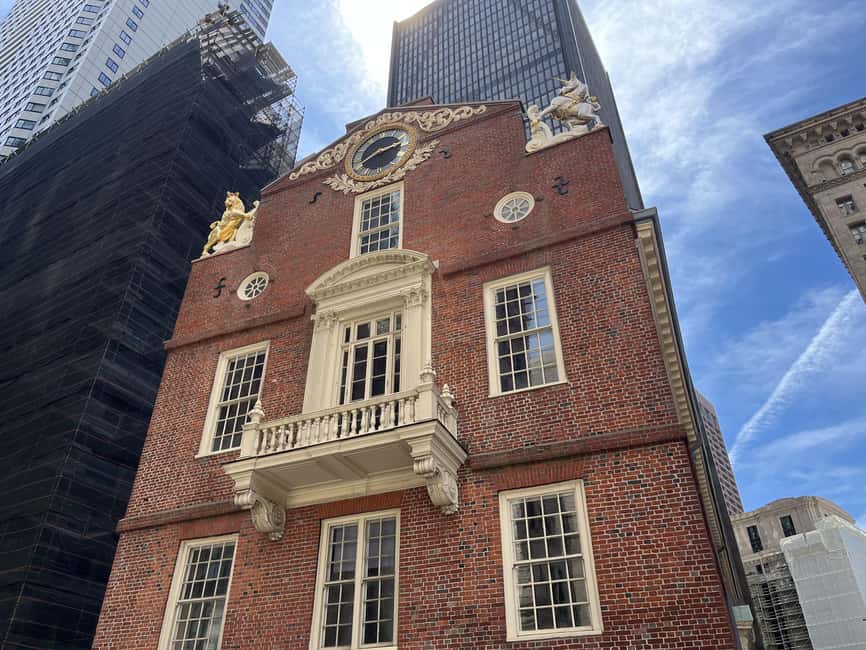
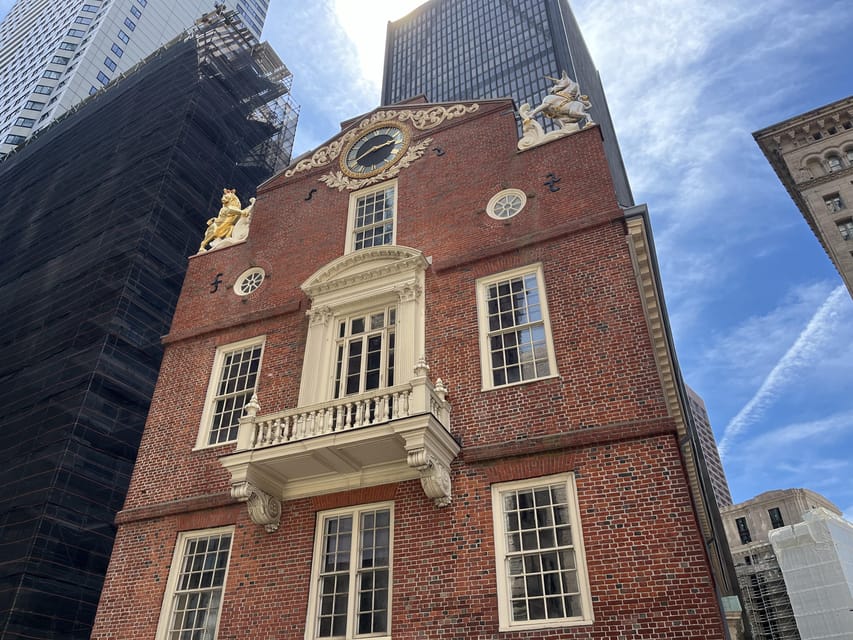
Old State House is where the tour leans into you as a participant. You spend about 20 minutes here, guided, while the story continues around the political tensions of the time.
I like this stop because it’s exactly where an AR experience can pay off. Old State House is already a powerful anchor for Revolutionary-era events. Adding interactive characters and historically accurate soldiers gives you a way to connect the dots without reading every plaque.
The technical side also gets explained along the way. One of the recurring positives from people who tried the experience is that the guide can help you understand what you’re seeing and how to interact. Dylan is specifically mentioned for strong technical knowledge and clear explanations, which makes a big difference when you’re dealing with AR.
If you’re the type who wants to figure out the “how” of the tech, you’ll probably appreciate having someone guide you through it. If you’re not tech-focused, don’t worry. The tour still works as a guided narrative. You just need to be willing to stand where the tour wants you to stand for the overlays to line up.
Another way the same afternoon could go around Boston:





Paul Revere House: colonial details and choices that change the feeling
At Paul Revere House, the tour shifts into another quick guided segment, about 10 minutes. This is one of the stops where the experience can feel extra fun because the story brings you directly into the era.
The tour includes a mix of activities, and part of the adventure is trying on colonial fashion. Even if it’s light, it helps you understand the “feel” of the period more than words alone do.
This is also where the experience becomes more than an info stop. You’re not just hearing what happened. You’re making choices that affect how events unfold. That interactive layer is why the tour gets such high praise for turning a typical city walk into something more like a living scene.
If you get nervous about not doing it right, aim for calm. The format supports a steady pace. You don’t have to race through, and you’re allowed to skip stops if needed.
The cannon and Bunker Hill finale: AR ends on a high-stakes note

Bunker Hill is the ending point for the full tour, and you spend about 20 minutes at Bunker Hill Monument, Boston. This stop is designed to be the climax, where the story tightens and the stakes feel immediate.
The experience includes the chance to operate a historically accurate field cannon. This is the kind of moment that makes AR special, because the “object lesson” becomes an action. The cannon is not just talked about. It’s part of what you do inside the scene.
One reason people love the finale is that it’s where the AR characters and environment feel most like you’re inside an unfolding event. And the feedback is clear: the detail is convincing enough that the gun scenes can genuinely frighten some people. If you’re sensitive to that, choose the kids version.
Another upside: the AR setup avoids nausea in the way VR sometimes can. Since you’re using AR and can keep seeing the real world, you stay grounded in what’s around you while the story overlays appear.
How the AR vs VR setup affects your comfort and your attention
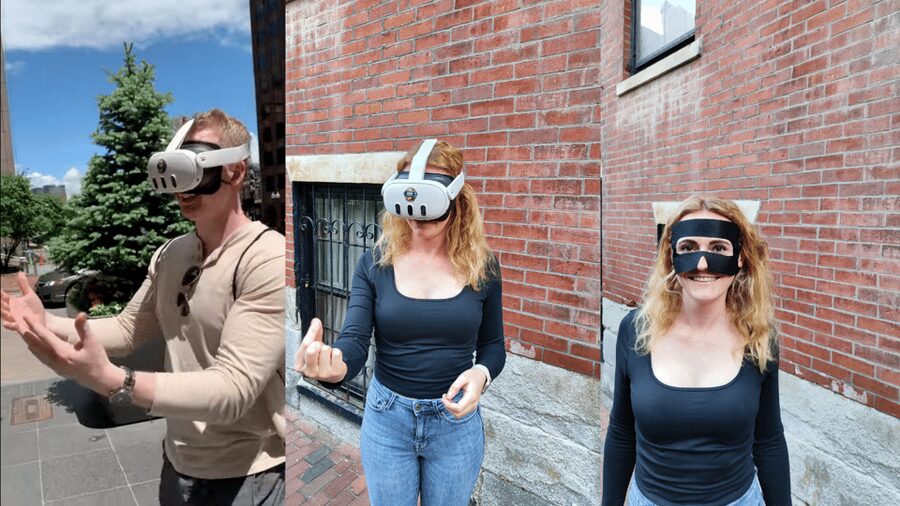
This is one of the smartest decisions in the whole concept. AR means you’re not wearing total-vision VR that cuts off the street. You keep awareness of where you are, what’s happening around you, and where you need to stand.
That matters for a Boston visit, because you’re often already walking, checking maps, and dodging the usual crowds. AR keeps the experience from feeling like a separate “activity bubble.”
There’s also a practical safety claim that you’ll care about: the tour notes that AR avoids nausea and safety issues associated with VR. Even if you’ve never had a problem, it’s still helpful when you’re scheduling around other plans.
Device handling is another practical concern. Headsets are sanitized for each participant to kill 99.99% of bacteria and viruses, and fresh facial covers are available and optional. That gives extra peace of mind when you’re traveling.
Price and value: what $30 buys you in real experience
At $30 per person for about 30 minutes, this isn’t “cheap,” but it also isn’t trying to replace a full museum day. It’s priced like a premium, time-boxed activity where the value comes from the combination of: location-specific storytelling, interactive choices, and AR that is designed to match real historic settings.
Here’s the value equation I’d use:
- You’re paying for an experience you can’t easily replicate on your own.
- You’re paying for the Freedom Trail context, so the AR doesn’t float in a generic space.
- You’re paying for a live guide who helps you interact with the tech instead of just watching.
If you already know the Freedom Trail basics, this can still be worth it because it adds an emotional layer. People single out the Boston Massacre moment as especially memorable, and that’s the whole point. If your goal is “I want one standout, experiential thing in Boston,” this does that better than most standard tours.
If your goal is deep academic detail, you may still enjoy it, but you should see it as a storytelling experience with education baked in, not a full lecture.
Who should book this Freedom Trail AR tour, and who might skip it
I think this tour fits best if you want something hands-on during a day that would otherwise be mostly walking and sightseeing. It’s also a strong pick for first-time visitors to Boston, because it gives you a fresh anchor for big events you might otherwise only remember in a checklist way.
It also works for families, with a kids version that skips guns. If your kids get excited by interactive tech, this can beat the typical “walk and read plaques” approach.
That said, the tour is not suitable for everyone. It’s not recommended if you have heart problems or epilepsy. Also, if gun scenes sound like a deal-breaker for you or your group, plan for the kids version.
A few practical tips to get the best experience
Keep these in mind so you spend less time figuring out the format and more time enjoying the story.
- Be ready to stand still when the AR cues come in. AR overlays work best when you’re in the right place.
- Follow the guide’s instructions closely. This is what helps the tech look seamless in the real world.
- If you’re short on time, don’t force yourself to see every stop. The tour supports skipping.
- If you’re traveling with kids or anyone who startles easily, ask about the kids version and steer away from gun scenes.
Should you book Relive 1776?
Yes, if you want a Freedom Trail experience that feels like you’re stepping into events instead of only learning about them. The tour’s strongest points are the convincing, historically grounded characters, the interactive choices, and the fact that it’s AR built for real-world viewing. People also consistently praise the guide support, including Dylan’s technical clarity, which helps a lot when you’re dealing with headsets and AR prompts.
Skip it or choose the kids version if you know gun scenes will worry you. Also skip it if you fall into the listed health categories of heart problems or epilepsy.
If you want one memorable, tech-forward hour in Boston that still stays anchored to real historic places, this is an easy yes. If you’d rather spend that time on guided walking alone, or you prefer traditional museum-style explanations, you might not feel the payoff. For many people, though, this is the Freedom Trail highlight because it makes the story move while you’re standing in it.
FAQ
How long is Relive 1776?
The total experience lasts about 30 minutes.
Where do I meet for the tour?
Look for the Relive 1776 booth between the plants outside of the Old State House, next to the Boston Massacre marker in the ground.
Are there different starting locations?
Yes. You can start at either the Boston Massacre Site or the Commodore John Barry Memorial.
Is this VR or AR?
It’s an AR experience, designed so you can see the real world at all times. Some parts use mobile phone AR and two parts use AR headsets provided for participants.
How many parts does the tour include?
It’s a 5-part experience that follows the Freedom Trail stops from Boston Common through to Bunker Hill.
Is there gore in the simulation?
No. The experience includes no gore.
Are guns included, and is there a kids version?
The simulation includes guns, but there is also a kids version that is available without guns.
Is it suitable for everyone with health concerns?
It is not suitable for people with heart problems or people with epilepsy.
What languages are offered, and is it a small group?
The tour guide is English only, and the group is limited to 8 participants.
What is included in the tour besides the AR experiences?
You get a tour guide, 5 AR experiences, sanitized AR headset(s) with optional fresh facial cover, transportation from Paul Revere House to Bunker Hill, and an Illegal Tea souvenir (a reusable tea bag with a discount card).
Written up lately around the harbor
- Boston’s Beacon Hill: Private Walking Tour
★ 5.0 · 1 review - Boston’s Chinatown: Small Group Walking Tour
★ 5.0 · 1 review - Self-Guided Scavenger Hunt: Boston Back Bay & Beyond
★ 4.0 · 1 review - Flynn Cruise Port Boston to Boston hotels – Arrival Private Transfer
★ 5.0 · 1 review - Boston to Woods Hole & Martha’s Vineyard Ferry Private Chauffeur Service
★ 4.0 · 1 review - Classic Martha’s Vineyard 1-Day Escape from Boston
★ 5.0 · 1 review - Private Vacation Photoshoot with Photographer in Boston
★ 5.0 · 1 review
Freedom Trail Tours, compared.
Freedom Trail History Small Group Walking Tour
Read our review →
Boston Freedom Trail Walking Tour with Costumed Guide
Read our review →
Boston Food & History: Pizza, North End & Freedom Trail
Read our review →
Boston’s Freedom Trail: A Revolutionary Walking Tour
Read our review →Freedom Trail History Small Group Walking Tour
Read our review →Boston’s Freedom Trail: A Revolutionary Walking Tour
Read our review →

Boston Freedom Trail History Pub Crawl Small-Group Tour
Read our review →Browse the lists this tour appears in