
Reviewed · FREEDOM TRAIL TOURS
Rockstars of the Revolution: Blazing the Boston Freedom Trail
History here walks beside you. I like how this Boston Freedom Trail tour turns the Revolution into street-level moments, from the Massachusetts State House to the dramatic finish at the Old North Church. You get a mix of major historical beats and smaller details that make the timeline feel real, not textbook-ish, and the guide keeps the energy up.
I especially like that the tour is built around an expert local guide who’s focused on accurate, thoroughly researched history, while still making it fun. One drawback to plan for: admissions are not included at every stop, and the tour is outside only, so you will rely on the weather and your shoes for the full experience.
In This Review
- Key highlights before you go
- Rockstars of the Revolution: how the Freedom Trail stays human
- Quick info: price, duration, and the value of a guided walk
- Meeting at 139 Tremont St: start where Boston’s story begins
- Boston Common: the bonfire idea starts on the grass
- Massachusetts State House: freemasons, cornerstone drama, and early power
- Park Street Church, or Brimstone Corner: the first public patriotic song
- Granary Burying Ground: Paul Revere’s final resting place
- King’s Chapel: the Puritan backlash you can feel
- Old Corner Bookstore: publishing power right on the street
- Old South Meeting House: the Boston Tea Party connection
- Old State House and the Boston Massacre site: where things tip
- Paul Revere House: the private space tied to a public legend
- Old North Church: Paul Revere’s midnight ride becomes a place
- What you will feel during the walk: pace, group size, and attention span
- Who this tour suits best
- Should you book Rockstars of the Revolution? My straight answer
Key highlights before you go

- A tight 2-hour loop through central Boston tied to key Revolutionary events
- Professional local guide with researched, accurate storytelling that feels entertaining
- Mobile ticket for easy check-in
- Free or included admissions at a couple stops, but not at all sites
- All-outdoor walking with a moderate fitness level
Rockstars of the Revolution: how the Freedom Trail stays human
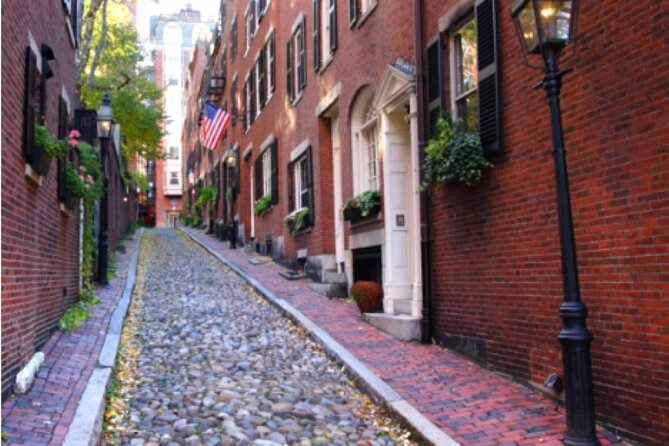
Boston can feel like it’s packed with history on every corner. This tour helps you connect those dots fast, without making you study a timeline on your phone for the whole day. You start at Boston Common, then move through the core Freedom Trail sites where real people made real choices under pressure.
What makes the experience work is the pacing. Each stop is short enough to keep your attention, but long enough for the guide to set the scene and explain why it mattered. I also like the tone: it’s not just dates and names, it’s how those events felt when they were unfolding.
You will be only outside the attractions, so think of this as a walk-and-talk tour. Bring comfortable shoes and plan to stand and listen in busy downtown areas as you go.
More ways along the Freedom Trail:
- Boston: Freedom Trail History Small Group Walking Tour★ 5.0 · 6,450 reviews
- Boston Freedom Trail Walking Tour with Costumed Guide★ 4.5 · 2,531 reviews
- Boston Food & History: Pizza, North End & Freedom Trail★ 5.0 · 1,772 reviews
Quick info: price, duration, and the value of a guided walk
The tour runs about 2 hours and costs $24 per person. For Boston, that is solid value because you are paying for a professional guide plus a focused route that covers a big chunk of the Freedom Trail without you figuring out the order yourself.
You do need to factor in admissions. The tour includes a guided experience and some site access details, but several stops note that admission tickets are not included. The good news is that at least a couple sites are listed as free or included, so your cost is not unknown every step of the way.
You can also plan around small-group comfort. The max group size is 35 travelers, and the tour is near public transportation, which makes it easier to fit into a busy day.
Meeting at 139 Tremont St: start where Boston’s story begins
The tour meets at 139 Tremont St, Boston, MA 02108, and it ends back at the meeting point. Starting in this area is practical because you are already in the middle of the city’s Freedom Trail action.
It starts at 11:00 am, and you’ll get confirmation within 48 hours of booking, depending on availability. If you want to be safe, I’d plan ahead because the tour is commonly booked about 8 days in advance on average.
The ticket is a mobile ticket, which is handy. You should still bring your phone with a charged battery and your confirmation details ready at check-in.
Boston Common: the bonfire idea starts on the grass
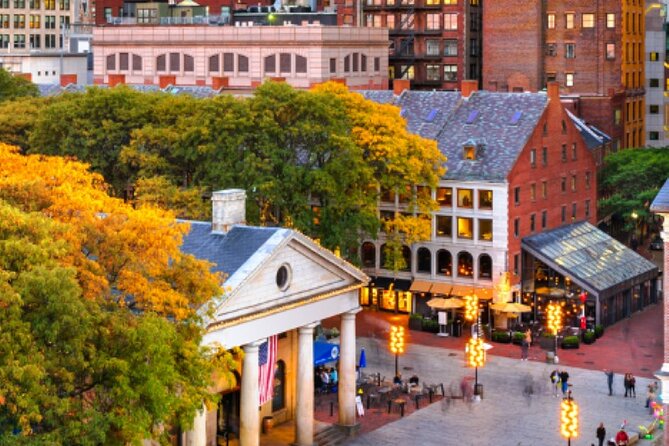
Your first stop is Boston Common, and the guide kicks things off with the run-up to the Declaration of Independence. This is where the story gets framed, not just memorized.
I like the way this opening ties the Freedom Trail to motivations and momentum. You also get the sense that the trail itself is a map of decisions, not just scenery. The tour guide also flags how figures could be labeled as rebels or traitors at the time, then remembered as patriots later.
Boston Common is also listed as having an admission ticket included. That matters because it lowers friction early on. If you’re trying to keep the day simple, getting one covered entry right away is a small win.
Massachusetts State House: freemasons, cornerstone drama, and early power
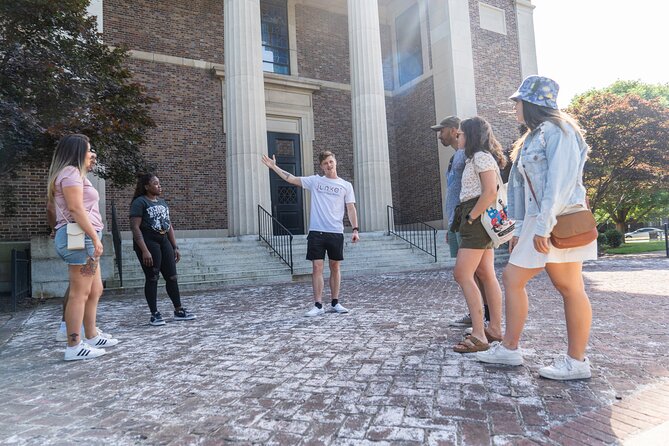
Next comes the Massachusetts State House, a building just over two centuries old. The guide explains how this site fits into the political world that was shaping the colonies long before the war headlines.
There’s a specific detail here that helps you picture the past: Paul Revere and Samuel Adams presided over the laying of the cornerstone. That kind of fact makes the architecture feel less like a backdrop and more like part of the story.
One note for planning: admission here is not included. So if you want to go inside deeper, you should be ready for extra costs or decide to focus on the exterior explanation during the walking portion.
Another way the same afternoon could go around Boston:





Park Street Church, or Brimstone Corner: the first public patriotic song

At Park Street Church, the tour highlights why the place earned the nickname Brimstone Corner. The key moment is that it was the site of the first public performance of a popular patriotic song.
That detail is a great reminder that the Revolution was not only military. It was also persuasion, morale, and public emotion. Hearing about a patriotic song in a church setting helps you understand how communities carried the cause through culture and sound.
This stop also notes that admission tickets are not included. So I recommend treating it like a listening stop, not a long museum visit. You’ll get the story angle from the guide without committing to extra entry time.
Granary Burying Ground: Paul Revere’s final resting place

Then you shift from performance and protest to remembrance at Granary Burying Ground. This is a small plot, but it carries big names, including Paul Revere.
I like cemetery stops on a guided route because the guide can tie the person to the place you are standing on. It is one thing to read about Revere as a character in a textbook. It feels different when you pause on the ground where he is buried, and the guide links that legacy back to the tensions that led to independence.
As with other stops in the middle of the trail, admission tickets are not included here. Still, the value is the context the guide gives you while you stand there.
King’s Chapel: the Puritan backlash you can feel
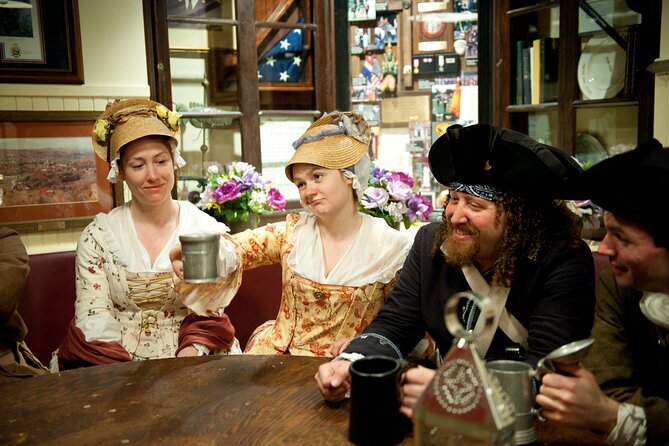
At King’s Chapel, the guide connects architecture to conflict. The church was founded in 1686, and it was the first Anglican church in Boston, which angered Puritans.
The story includes a blunt image: when the cornerstone was laid, Puritans threw garbage and curses at celebrants. That is not subtle, and it’s exactly the kind of moment that makes early American religious and political friction feel immediate.
Admission tickets are not included at this stop. So the focus stays on the outside setting and the explanation you get as you walk.
Old Corner Bookstore: publishing power right on the street
Next is the Old Corner Bookstore, in Boston’s oldest commercial building. Here the tour changes gears from churches and graves to words and printing, because influence also travels through books.
This building was home to a leading publisher in the 19th century. Famous authors who paid visits are mentioned, including Charles Dickens, Harriet Beecher Stowe, and Nathaniel Hawthorne.
Even if you are more into the Revolution than literature, this stop helps you see how ideas spread. The American story is not only about battles. It is also about who gets read, who gets quoted, and how arguments turn into public opinion.
Admission tickets are not included here either, so again, you are there for the guide-led context rather than a long interior stop.
Old South Meeting House: the Boston Tea Party connection
The Old South Meeting House is recognized by many as the origin of the Boston Tea Party. The guide points out that while the site is simple, it is still beautiful.
This is one of those stops where you get a strong emotional cue. The Freedom Trail is full of moments that feel like turning points, and the lead-up to the Boston Tea Party is a major one. It shows how protest escalated from political complaint into direct action.
Admission tickets are not included here. That’s normal for a walking tour, but it’s good to know so you do not expect this to function like a ticketed museum time slot.
Old State House and the Boston Massacre site: where things tip
The tour then reaches Old State House, recognized as Boston’s oldest public building. The guide also brings in why this spot is sometimes called the Cradle of Liberty, tied to the first town meeting in the colonies.
This matters because town meetings are the “how do people govern themselves” part of the story. It is easy to think independence only happens at midnight or on battlefields, but these smaller civic scenes set the stage for larger action.
Old State House is listed as free, which helps value. You get this important context without adding another entry fee.
From there, you walk to the Boston Massacre Site, and this stop gets a bit more time, about 15 minutes. Five civilians were killed in a confrontation between Bostonians and British soldiers, and the guide frames it as a breaking point in the build-up to war.
I like this timing shift, because it signals that the tour slows down when emotions and consequences get heavier. Even if you already know the outline, the guide’s explanation helps connect the tragedy to why the Revolutionary War accelerated from tension into open conflict.
Boston Massacre Site is listed as free, so you should feel good about the cost-to-content here.
Paul Revere House: the private space tied to a public legend
After the massacre moment, you head to the Paul Revere House. This is built in 1680 and is described as the only private home of the Freedom Trail.
That detail is powerful for a simple reason. It turns Paul Revere from a symbol into a neighbor. The guide’s framing gives you the sense that these famous events happened to people who lived ordinary lives on specific streets.
The tour notes that the house was once owned by Paul Revere. You’ll get the story behind that ownership as part of the final push toward the climax of the trail.
Admission tickets are not listed as included at this stop, so treat it as another guided story pause unless you have separate plans for deeper entry.
Old North Church: Paul Revere’s midnight ride becomes a place
You close at Old North Church & Historic Site, one of the most iconic stops on the entire Freedom Trail. This is where the guide focuses on Paul Revere and his midnight ride, including his warning of a British invasion.
I like ending here because it ties everything together. Earlier stops show the causes, the conflicts, and the civic decisions. The final stop gives you the single moment that people remember, and the guide places it in the physical setting so it feels less like a legend and more like action.
Admission tickets are listed as not included here. Still, the tour is designed to finish strong with the story wrapped around the site.
What you will feel during the walk: pace, group size, and attention span
This is a moderate physical fitness level tour. That does not mean it is a hard workout, but you should be ready for continuous street walking, frequent regrouping, and standing to hear the guide.
Because the tour is outside only, you also want to wear shoes you trust. Downtown streets plus historic stop-and-start moments add up over about two hours.
The guide keeps the flow moving. Each stop is roughly around ten minutes, with the Boston Massacre Site getting more focus. That structure works well when you want a guided overview rather than a slow, museum-heavy day.
Who this tour suits best
I think this tour is a great fit if you want:
- A focused Revolution-themed walk across core Freedom Trail stops
- A guide who keeps the tone fun and informative, not dry
- A quick way to build a mental map of Boston’s revolutionary geography
It is also a good option if you do not want to self-guide the Freedom Trail. You still see the key sights, but you do not have to plan the order or figure out what matters at each one.
If you prefer deep, ticketed museum time at every stop, you might find that the shorter guided pauses leave you wanting more inside time. In that case, you could use this as a primer, then return later on your own.
Should you book Rockstars of the Revolution? My straight answer
Book it if you want a well-paced, guided Freedom Trail walk that connects major Revolutionary moments to the exact places in Boston. At $24 for about two hours, you are getting a professional guide plus accurate history, and you hit multiple key locations without needing to stitch the day together yourself.
Hold off if you know you want lots of inside admissions or if you are already set on self-guiding with a book and maps. With several stops listing admission tickets as not included, your final cost might creep up if you decide to add entry fees on top.
If you want a memorable introduction to Boston’s Revolution story with a guide who makes it engaging, this one is worth your time.
Written up lately around the harbor
- Boston’s Beacon Hill: Private Walking Tour
★ 5.0 · 1 review - Boston’s Chinatown: Small Group Walking Tour
★ 5.0 · 1 review - Self-Guided Scavenger Hunt: Boston Back Bay & Beyond
★ 4.0 · 1 review - Flynn Cruise Port Boston to Boston hotels – Arrival Private Transfer
★ 5.0 · 1 review - Boston to Woods Hole & Martha’s Vineyard Ferry Private Chauffeur Service
★ 4.0 · 1 review - Classic Martha’s Vineyard 1-Day Escape from Boston
★ 5.0 · 1 review - Private Vacation Photoshoot with Photographer in Boston
★ 5.0 · 1 review
Freedom Trail Tours, compared.
Freedom Trail History Small Group Walking Tour
Read our review →
Boston Freedom Trail Walking Tour with Costumed Guide
Read our review →
Boston Food & History: Pizza, North End & Freedom Trail
Read our review →
Boston’s Freedom Trail: A Revolutionary Walking Tour
Read our review →Freedom Trail History Small Group Walking Tour
Read our review →Boston’s Freedom Trail: A Revolutionary Walking Tour
Read our review →

Boston Freedom Trail History Pub Crawl Small-Group Tour
Read our review →Browse the lists this tour appears in