
Reviewed · FREEDOM TRAIL TOURS
The Freedom Trail and a whole lot more 3 hour Boston walking tour
Boston can feel like a history textbook. This tour turns it into a walk you actually want to finish.
I love that it hits more than the usual Freedom Trail loop, showing 16 trail sites from Boston Common all the way through Copp’s Hill, and then adding extra stops and side stories that keep things lively. You also get a clear, easy pace, and the guide style is story-first, no costumes, no heavy lectures.
The second thing I like is the mix of eras. You’re not stuck in the Revolution era the whole time. You’ll also see newer memorials and learn how Boston became a place of innovation and vitality in the 21st century, with a friendly nod to the city’s food scene.
One possible drawback to know up front: with so much ground covered in about 3 hours, this is not a sit-down, linger-all-day tour. If you want slow pacing or lots of free time at every single stop, you may feel a little rushed.
In This Review
- Key highlights you will feel on this walk
- A Freedom Trail and More route that goes past the usual half
- Timing and flow: how the 3-hour walk actually works
- Starting at The Embrace memorial: modern Boston memory at the front door
- Boston Common to the Massachusetts State House: where power meets public space
- Granary Burying Ground and the stories hidden in names
- Boston Latin School site and the Tea Party era: education and protest in the same orbit
- Old Corner Bookstore, Irish famine memory, and the human side of migration
- Old State House and the Boston Massacre: when government tension turns into street violence
- Faneuil Hall, Haymarket, and the city as a debate stage
- The North End: Paul Revere House and Old North Church in narrow streets
- Copp’s Hill burial ground and the waterfront payoff: Bunker Hill and USS Constitution
- Restroom, snack break, and the food momentum at the end
- Price and value: is $39.95 worth it?
- How the guide style keeps the tour fun, not draining
- Who should book this tour, and who might want something else
- Should you book Freedom Trail and a whole lot more?
- FAQ
- How long is the Boston Freedom Trail and More tour?
- What time does the tour start and where does it end?
- How much does the tour cost?
- What do I need to bring or use for tickets?
- Is there a restroom or snack break?
- Does the tour run in all weather?
- Are service animals allowed?
Key highlights you will feel on this walk
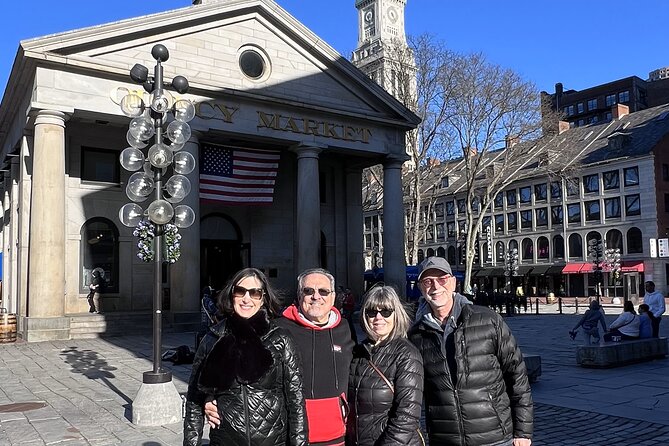
- 16 Freedom Trail sites plus extra, quirky stops that other tours often skip
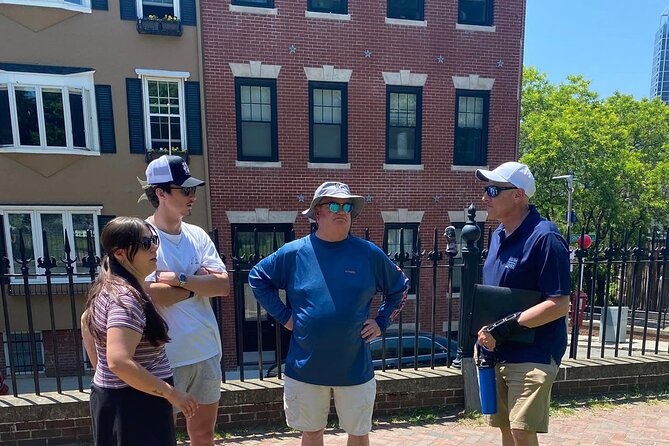
- A guide who checks in to make sure everyone is keeping up and okay
- Restroom and snack break included, so you can stay focused on stories
- Modern memorials alongside Revolutionary landmarks, for a fuller Boston picture
- North End finish with serious food energy, including Italian pastry options
- Waterfront views of Bunker Hill Monument and USS Constitution before you head on your own
A Freedom Trail and More route that goes past the usual half
Most Freedom Trail tours feel like they sprint to the next major landmark and then call it a day. This one is different because it is built to cover the Freedom Trail in a longer, more complete way.
You start with the Freedom Trail concept right away, the brick path that connects historic sites like a timeline you can walk. But you also get bonus context at each segment, so the stops do not feel like random photo ops. Instead, they connect to real people, real conflict, and real turning points, including the parts of Boston that shaped identity beyond the Revolution.
And because the tour keeps moving without trying to overwhelm you, it works for a wide range of ages and interests. If you like history, you get plenty. If you like atmosphere and stories, you still get plenty.
More ways along the Freedom Trail:
- Boston: Freedom Trail History Small Group Walking Tour★ 5.0 · 6,450 reviews
- Boston Freedom Trail Walking Tour with Costumed Guide★ 4.5 · 2,531 reviews
- Boston Food & History: Pizza, North End & Freedom Trail★ 5.0 · 1,772 reviews
Timing and flow: how the 3-hour walk actually works
This is a 3-hour walking tour that starts at 10:15 am and ends around 1:15 pm in the North End. The tour begins at 139 Tremont St and finishes at Copp’s Hill Terrace, 520 Commercial St.
That finish matters. You do not end in a dead zone. You end in the North End, where you can immediately transition from learning mode into eating mode, with plenty of places to grab lunch and Italian pastries nearby. It’s a great design if you are trying to make one morning count.
The group size is capped at 35 travelers, which usually keeps things organized without turning into a huge stampede. There is also a mobile ticket, and service animals are allowed. If you want a tour where you do not constantly worry about “Where’s the group?” that structure helps.
Starting at The Embrace memorial: modern Boston memory at the front door
You begin at a striking memorial called The Embrace, honoring Rev. Dr. Martin Luther King, Jr. and Coretta Scott King. Starting here sets a tone: Boston is not only a Revolutionary story town. It is also a city still actively shaping how people remember, protest, and move forward.
It is also a smart first stop because it gives you a quick emotional anchor before the tour shifts into colonial-era streets. You get a sense of how public memory works, and how the city chooses what to honor out loud, in stone and bronze.
If you are the type who likes to understand why landmarks matter, this opener gives you that lens immediately.
Boston Common to the Massachusetts State House: where power meets public space
Next comes Boston Common, the oldest public park in the United States, dating to 1634. It is more than a green patch. It is tied to major events and civic life, and you even learn something practical and surprising: Boston Common is also home to the oldest subway station in the Western Hemisphere.
Then you move to the Massachusetts State House on Beacon Hill. The current building, designed by Charles Bulfinch, has served as the seat of Massachusetts government since 1798. It is called a masterpiece of Federal architecture, and it is easy to see why once you are standing in the right spot.
Why I think this section works: you get a clear sense of how Boston used public space and government space together. You are not just touring buildings, you are tracking how a city organizes itself.
Granary Burying Ground and the stories hidden in names
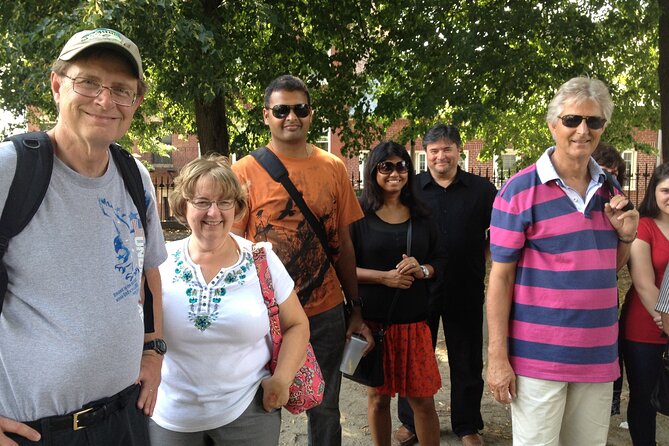
One of the best parts of this tour is how it uses cemeteries and memorials to explain history as something personal.
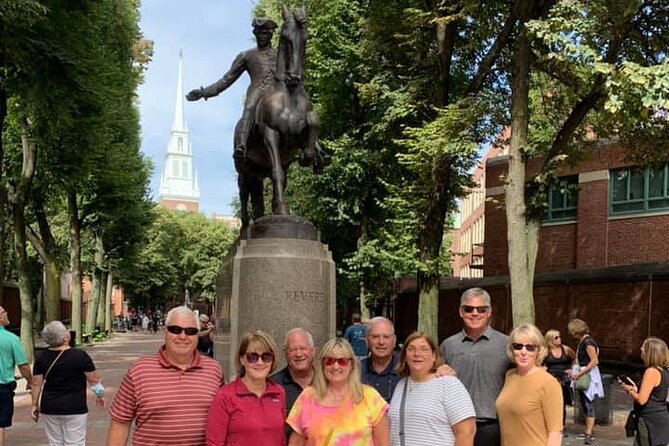
At Granary Burying Ground, founded in 1660, you see why this cemetery matters to the Revolution. It is Boston’s third-oldest cemetery, and it includes the final resting place of Revolutionary-era patriots such as Paul Revere, plus the five victims of the Boston Massacre.
Walking through a cemetery as part of a city tour can be hit-or-miss on other routes, but here the framing helps. You are not asked to read every stone. You’re guided to the bigger theme: how conflict leaves traces long after the fighting stops.
If you are sensitive to the tone of the site, this portion stays respectful and focused. It feels like learning, not spectacle.
More of Boston crossed at walking pace:

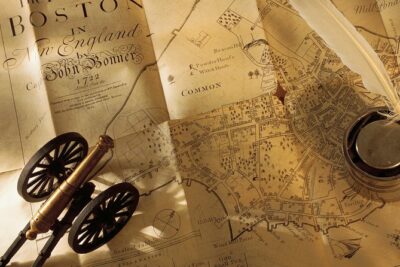
Boston Latin School site and the Tea Party era: education and protest in the same orbit
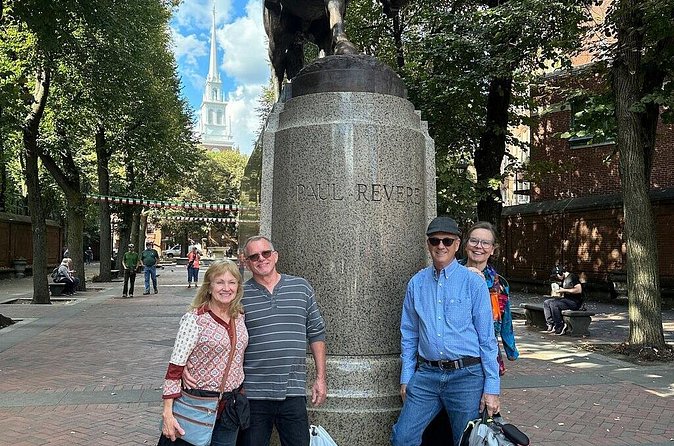
You also get a stop connected to Boston Latin School, founded on April 23, 1635, which is the oldest public school in America. The tour highlights an important social detail: education was free for boys, whether rich or poor, while girls generally attended private schools.
Then you move to a building site where the Boston Tea Party began. You get a sense of the room’s emotional texture: sermons, public meetings, and tea tax debates all echo in that setting. Even if you cannot see every original detail, the story makes the place feel like it was built for arguments.
This pairing is smart because it shows how Boston’s Revolution was not only about soldiers and streets. It was also about institutions and ideas. Schools, meetings, and public speech were part of the fuel.
Old Corner Bookstore, Irish famine memory, and the human side of migration
Downtown Boston has a way of layering eras on top of each other. Here, that layering comes through in the stops that feel slightly unusual.
You visit Old Corner Bookstore, built in 1718. It’s downtown Boston’s oldest commercial building, and it was connected to the publishing house Ticknor and Fields, a name tied to famous American titles. If you like the history of how ideas got printed and spread, this is a nice pivot.
Then there is a sculpture connected to Irish families, showing one side starving during the famine and another side thriving after finding prosperity in the United States. It is an emotional reminder that Boston’s story is not only Anglo-British conflict. It is also immigration, loss, survival, and rebuilding.
These stops are a big reason the tour feels like “Freedom Trail and a whole lot more,” because it refuses to make the Revolution the only theme in town.
Old State House and the Boston Massacre: when government tension turns into street violence
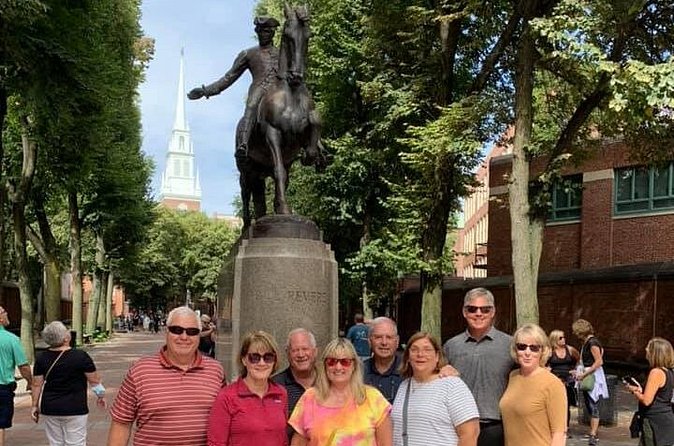
At the Old State House, you learn how it functioned as the seat of the Massachusetts General Court until 1798, and how it is also tied to the Boston Massacre.
Then the tour moves into the Boston Massacre site, focused on March 5, 1770, when tensions tied to occupation and taxation boiled over into a clash between civilians and Redcoats. The story includes Crispus Attucks and the fact that five civilians were killed by gunfire.
What I appreciate here is that you do not get lost in names. You get the cause-and-effect. You learn why the conflict was not random, why it came from pressure building over months, and how those moments changed the Revolution’s momentum.
Faneuil Hall, Haymarket, and the city as a debate stage
You spend time at Faneuil Hall Marketplace, a place that has hosted meetings, protests, celebrations, ceremonies, and debates for 275 years and counting. When you stand there, it is easy to picture how public shouting and public listening worked side by side.
Then you shift toward Haymarket, one of America’s oldest open-air markets and a cultural cornerstone. This is a change of pace from marble memorials and stone cemeteries. It brings you back to daily life.
That contrast is useful. You end up seeing Boston as both a place of big events and a place of ordinary commerce and community. The tour keeps the balance, so the city feels real, not frozen in the 1700s.
The North End: Paul Revere House and Old North Church in narrow streets
Your walk continues into the North End, often called Boston’s Little Italy. The streets here are narrow, older buildings line the blocks, and you get the sense of getting slightly off the main storyline while still staying on the Freedom Trail.
The tour includes the Paul Revere House, built around 1680, where he lived during the Revolutionary era. Then you move to the Old North Church & Historic Site, founded in 1723, described as the oldest standing church in the City of Boston and a key location that helped launch the Revolution.
This section hits the best sweet spot for most people: you get the big names, but also the sense of place. The narrow streets make it easier to imagine how events could unfold quickly, because everything feels close together.
If you are traveling with kids, this part is also great because you can keep giving them concrete anchors: who lived where, why a church mattered, and why the area still has so much character.
Copp’s Hill burial ground and the waterfront payoff: Bunker Hill and USS Constitution
Just before you finish, you reach Copp’s Hill Burying Ground, dating back to 1659, the second oldest burial ground in Boston. It serves as a final resting place for merchants, artisans, and craftspeople who lived in the North End, which adds a broader picture of the people behind the Revolution.
Then you get views across the water, including Bunker Hill Monument, built to commemorate the Battle of Bunker Hill, described as one of the first major battles between British and Patriot forces.
Finally, there is a classic Boston “wow” moment. You look toward USS Constitution, nicknamed Old Ironsides, a three-masted heavy frigate of the U.S. Navy. The tour frames it as the world’s oldest commissioned naval vessel still afloat.
Even if you already know the ship’s reputation, seeing it as part of a walking narrative makes it feel like one more chapter of how Boston shaped national stories.
Restroom, snack break, and the food momentum at the end
A small thing that matters a lot: the tour includes a restroom and snack break. In a 3-hour walking schedule, that kind of built-in pause helps you stay alert for the stories and not start counting minutes.
And then you finish in the North End around 1:15 pm with over 100 places to eat nearby, plus Italian pastry shops. That is a practical win. You do not have to hunt for a plan immediately after the tour.
If you are deciding between tours that end far from lunch, this ending location is a big reason to pick it. It turns your morning into an easy, low-stress lunch outing.
Price and value: is $39.95 worth it?
At $39.95 per person, you are paying for a guided walk that does more than the standard Freedom Trail cut.
The value comes from three things the price covers:
- You get 16 Freedom Trail sites plus additional stops and stories, so the tour feels “complete” rather than partial.
- The guide approach is designed to teach without overload, and the group stays controlled at a maximum of 35.
- You get built-in comfort with a restroom and snack break, which is rare enough that it has real value when you are on your feet.
If you are visiting Boston for the first time and you want to understand how the city connected public places, protest, and government from place to place, this price makes sense as an upfront investment of time and clarity.
If you are already deeply familiar with the Freedom Trail and only want a quick highlights loop, you might feel this is more than you need. But for most first-timers, it is a fair deal.
How the guide style keeps the tour fun, not draining
One theme in the feedback I’m using to shape this review is that the experience stays enjoyable even when conditions are not perfect. A guide approach that keeps people organized helps a lot when it is hot, rainy, or just uncomfortable.
There are also practical cues that matter on a walking tour: checking in with the group, making sure people know where they are headed next, and ending by guiding you toward where to go for the next step. In real life, that reduces stress.
The tour also emphasizes good pacing and clear storytelling, with no costumes. That makes it more accessible if you do not want entertainment skits layered over factual information.
Who should book this tour, and who might want something else
This tour is a strong fit if you want:
- A structured Freedom Trail experience with less guesswork
- A mix of Revolution landmarks plus modern memorials
- A walk that includes a food-friendly finish in the North End
- A group size that stays manageable at 35
You might want a different option if:
- You need long breaks and lots of time to sit and read at each site
- You are looking for costumed reenactment style rather than guided storytelling
- You prefer a shorter route that covers fewer sites
Should you book Freedom Trail and a whole lot more?
My recommendation: book it if you want an organized, story-led Boston morning that covers the Freedom Trail in a more complete way than the usual half-day shortcuts. The stops feel connected, and the tour’s design helps you learn without turning into a slog.
I would especially say yes if you like the idea of ending in the North End with a plan for lunch and pastry, while still getting the dramatic waterfront finale toward USS Constitution and Bunker Hill Monument.
If you are trying to pick one guided walk for your first Boston trip, this is a solid choice.
FAQ
How long is the Boston Freedom Trail and More tour?
It lasts about 3 hours.
What time does the tour start and where does it end?
It starts at 10:15 am. The tour ends around 1:15 pm near Copp’s Hill Terrace, 520 Commercial St, in the historic North End area.
How much does the tour cost?
The price is $39.95 per person.
What do I need to bring or use for tickets?
You’ll use a mobile ticket.
Is there a restroom or snack break?
Yes. A restroom & snack break is included.
Does the tour run in all weather?
The experience requires good weather. If canceled due to poor weather, you’ll be offered a different date or a full refund.
Are service animals allowed?
Yes, service animals are allowed on this tour.
Written up lately around the harbor
- Boston’s Beacon Hill: Private Walking Tour
★ 5.0 · 1 review - Boston’s Chinatown: Small Group Walking Tour
★ 5.0 · 1 review - Self-Guided Scavenger Hunt: Boston Back Bay & Beyond
★ 4.0 · 1 review - Flynn Cruise Port Boston to Boston hotels – Arrival Private Transfer
★ 5.0 · 1 review - Boston to Woods Hole & Martha’s Vineyard Ferry Private Chauffeur Service
★ 4.0 · 1 review - Classic Martha’s Vineyard 1-Day Escape from Boston
★ 5.0 · 1 review - Private Vacation Photoshoot with Photographer in Boston
★ 5.0 · 1 review
Freedom Trail Tours, compared.
Freedom Trail History Small Group Walking Tour
Read our review →
Boston Freedom Trail Walking Tour with Costumed Guide
Read our review →
Boston Food & History: Pizza, North End & Freedom Trail
Read our review →
Boston’s Freedom Trail: A Revolutionary Walking Tour
Read our review →Freedom Trail History Small Group Walking Tour
Read our review →Boston’s Freedom Trail: A Revolutionary Walking Tour
Read our review →

Boston Freedom Trail History Pub Crawl Small-Group Tour
Read our review →Browse the lists this tour appears in